
Most people come to yoga the same way: they want relief. Relief from stress, stiffness, restlessness, back pain, insomnia, anxiety, or the general weight of modern life. Yoga offers something real, so they stay. They learn postures, breathe more consciously, perhaps meditate, perhaps chant. Over time, their body changes. Their minds have become a little steadier.
And then something subtle happens.
Practice starts to feel repetitive.
Not because yoga stops working, but because the practitioner stops asking. The sequence becomes familiar. The cues become predictable. The body learns how to comply. The mind learns how to perform “calm.” The deeper intelligence of yoga, its ability to reorganize the way we perceive, respond, and live, can get buried under routine.
The shift that revives yoga is surprisingly simple: ask better questions.
Why questions matter in yoga
In classical yoga, the goal isn’t to master shapes. It’s to see clearly. Yoga is a training in perception: what you notice, what you ignore, what you react to automatically, and what you can choose instead. A good question is like a lamp. It illuminates unconscious patterns.
A pose can reveal a limitation, but a question reveals why the limitation persists. A breath technique can change state, but a question reveals whether the change is regulation, or avoidance. A meditation method can create stillness, but a question reveals what you do with the stillness when life becomes messy again.
Questions turn yoga from “doing” into “understanding.”
The most common misunderstanding: calm is always good
One of the most misunderstood outcomes in yoga is calmness. We assume that if we feel quiet, we’re progressing. But every experienced teacher has seen the paradox: a student feels calm on the mat but becomes reactive off the mat. Or a practitioner is “peaceful” but strangely disconnected from real emotions, intimacy, or discomfort.
A question helps here:
Is my calm actually peace, or is it shutdown?
True regulation feels spacious and present. Shutdown feels numb, heavy, distant, and sometimes “blank.” Both can look calm from the outside, but they lead very different lives. Yoga can support regulation, but it can also unintentionally reinforce bypassing if we use it to escape feelings.
A simple practice experiment: after your final relaxation, ask yourself:
- Do I feel more present, or more distant?
- Do I feel capable of having a hard conversation today, or avoiding it?
- Is my calm awake, or dull?
The quality of calm matters more than the intensity of calm.
Breathwork isn’t automatically soothing
Breath is a powerful lever, but it’s not one-size-fits-all. Many people assume that pranayama will calm everyone, always. Yet some breathing practices can create agitation, dizziness, irritability, or anxiety, especially if done with too much force, too long, or without proper grounding.
A question helps:
Why does this breath practice make me restless instead of calm?
Possible reasons include:
- Over-breathing (excessive ventilation) that drops CO₂ too quickly
- Breath retention done too intensely
- Practicing on an already stressed nervous system
- A mismatch between practice and the day’s state (heat vs. depletion)
Yoga becomes safer and more effective when the practitioner learns to listen to the after-effect. It’s not about forcing a state. It’s about understanding the nervous system’s language.
A simple rule: if a breath practice leaves you more reactive, less present, or overly stimulated, scale down the intensity, shorten the duration, or choose a more grounding approach for that phase of life.
Alignment: tradition, habit, or intelligence?
Alignment cues are often taught as universal truths: feet must be here, pelvis must be there, spine must do this. Some alignment principles are genuinely protective and clarifying. But others come from cultural habits, body types, or historical contexts that don’t translate cleanly to everybody.
A question helps:
Is this alignment of instruction rooted in function, or in tradition and habit?
Function asks: does this cue help you breathe better, stabilize safely, distribute effort intelligently, and reduce unnecessary strain? Habit asks: does this cue look “right” even if it doesn’t feel right?
A practical inquiry:
- Does this cue improve my breath?
- Does it reduce pain or create it?
- Does it increase stability and ease, or increase gripping?
Yoga respects tradition best when it is applied with discernment rather than imitation.
The hidden skill: staying curious under discomfort
Many people think yoga is about becoming calm. But another equally important skill is learning how to stay curious under pressure, physical or emotional. When discomfort appears, most of us do one of two things:
- Push harder and override sensation, or
- Quit and avoid the edge.
Yoga trains a third option: stay present, adjust intelligently, and learn.
A question helps:
What is this sensation asking me to change?
Sometimes it asks you to get back off. Sometimes it asks you to stabilize yourself. Sometimes it asks you to soften unnecessary effort. Sometimes it asks you to examine your impatience.
In this way, yoga becomes a mirror for how we handle challenges everywhere: relationships, career, health, and self-worth.
Micro-experiments: small tests that make yoga personal
The most powerful yoga learning doesn’t happen through grand spiritual experiences. It happens through small, repeatable experiments that create reliable insight.
Examples:
- Practicing the same sequence with two different breath styles and noticing the emotional difference
- Holding a posture shorter but with better end-range strength and seeing if pain reduces
- Doing less practice but with higher attention and observing whether the mind becomes clearer
- Introducing one yama/niyama focus for a week and seeing how it changes relationships
When yoga becomes experimental, it becomes personal. And when it becomes personal, it becomes sustainable.
Yoga that transfers into life
Ultimately, yoga practice is meaningful only if it transfers. Not as perfection, but as capacity: more awareness, more choice, more steadiness, more honesty, more compassion.
A final question worth asking regularly is:
Is my practice changing how I speak, eat, work, rest, and relate?
If the answer is yes, even in small ways, you are practicing yoga in its fullest sense.
If the answer is no, you don’t necessarily need a new pose. You need a better question.
Here is a concise description that balances Yogita’s impressive background with the unique inquiry-driven approach of her book.
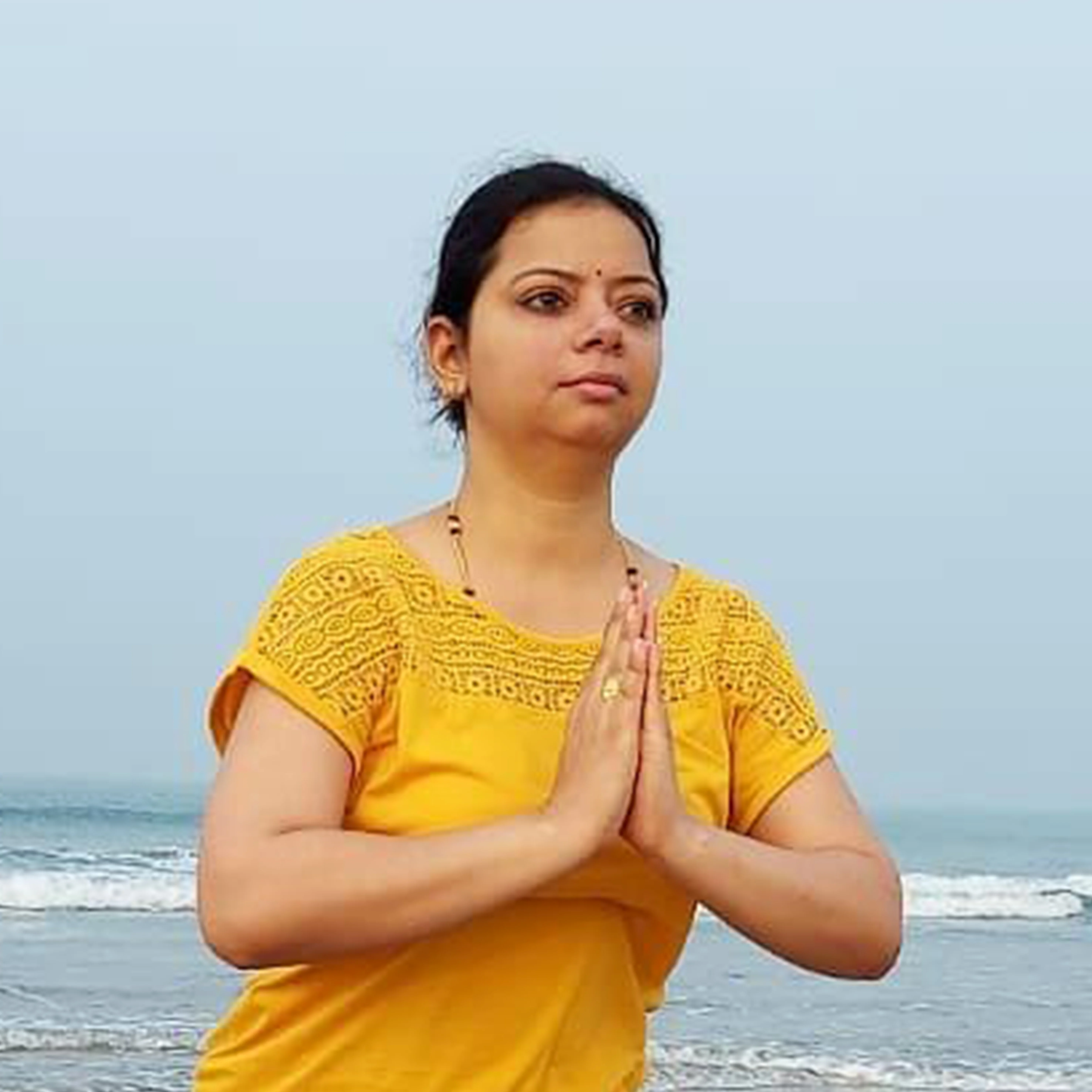
Yogita Rani
Yogita Rani is a seasoned yoga teacher and trainer based in Bengaluru, with over 11 years of international experience across India and Europe. Trained in Ashtanga, Hatha, and Iyengar Yoga, she has mentored thousands of students and aspiring teachers with a signature blend of traditional wisdom and deep compassion.
Driven by a lifelong curiosity, she authored 100 Questions in Yoga You Didn’t Know You Should Ask. Moving beyond standard pose manuals, the book tackles the “why” behind the practice, exploring breath, alignment, and the nervous system. Through “micro-experiments” and provocative questions, Yogita ji empowers practitioners to move past rote routine into a more intelligent, personal, and sustainable practice.

