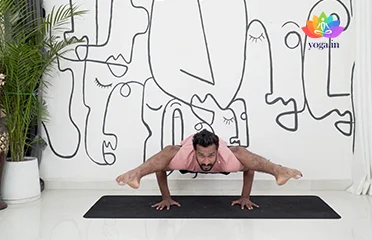
Start with a wide-legged squat or a standing forward bend.
Introduction to the Asana
The Sanskrit name is derived from Koundinya (कौण्डिन्या) is the name of a sage and asana (आसन) meaning posture or seat.
Step to get in the pose
-
-
Position your palms shoulder-width apart on the mat.
-
Spread the fingers evenly to create a strong base.
-
Firmly press through the fingertips for better grip and balance.
-
Slightly lean the upper body forward.
-
Lift the knees high onto the upper arms or triceps.
-
Engage and tighten the core muscles.
-
Keep the chest lifted and shoulders steady.
-
Gradually transfer your body weight onto the hands.
-
Slightly bend the elbows similar to Chaturanga position.
-
Activate the inner thighs and legs.
-
Lift one foot off the floor, followed by the other.
-
Find balance completely on the palms.
-
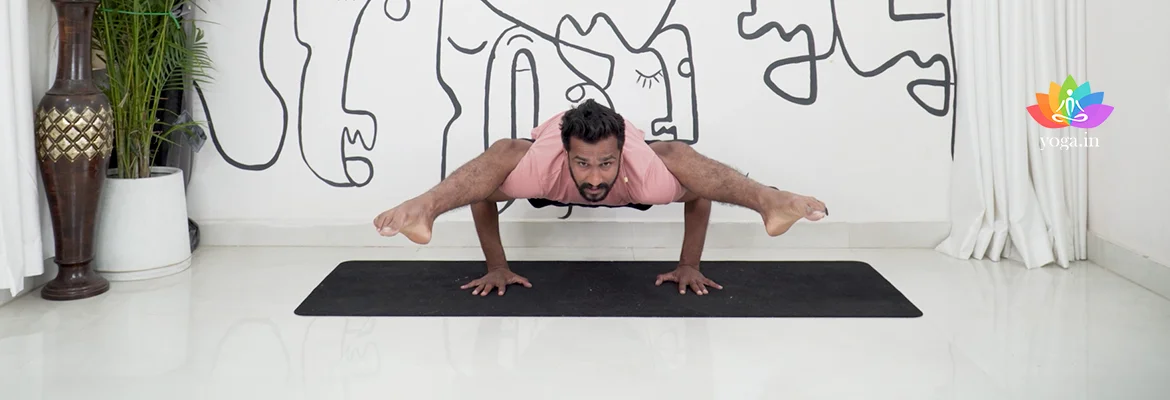
Extend both legs outward into a wide straddle shape.
-
Keep the legs active and toes engaged.
-
Maintain the hips lifted and parallel to the ground.
-
Focus the gaze slightly ahead instead of looking down.
-
Continue breathing smoothly and evenly.
-
Stay in the pose for about 3–5 breaths to begin with.
-
Now to release the pose gently bend the knees.
-
Slowly lower the feet back onto the mat with control.
Common mistakes and pitfalls
-
Not keeping your elbows pinned to the sides·
-
Collapsing the shoulder
-
Upper arms not positioned to your sides, but outwards.
Benefits
-
Builds muscles strength at the arms, shoulders, chest, abdomen, core, hips, spine and hamstrings.
-
Strengthens the spine and hips.
-
Increases blood circulation.
-
Stimulates internal organs and strengthens the abdominal muscles.
-
Revitalizes the digestive organs and aids healthy digestion.
-
Burns belly fat.
-
Builds immunity.
-
Aids in detoxification of the body.
-
Eliminates stress and anxiety.
-
Builds self-confidence, increases focus and stability.
Contraindication
-
Avoid in case of wrists, elbows, hips or shoulder injuries, or arthritis.
-
Avoid if undergone lower back pain or abdominal surgery.
-
Avoid if suffering from ulcers or irritable bowel syndrome.
-
Avoid if suffering from Carpel Tunnel Syndrome or spondylitis.
-
Avoid if suffering from high blood pressure.
-
Avoid in suffering from hernia.
-
Avoid during pregnancy and mensuration.
Yoga Props Guide Gallery
Rate us and Write a Review