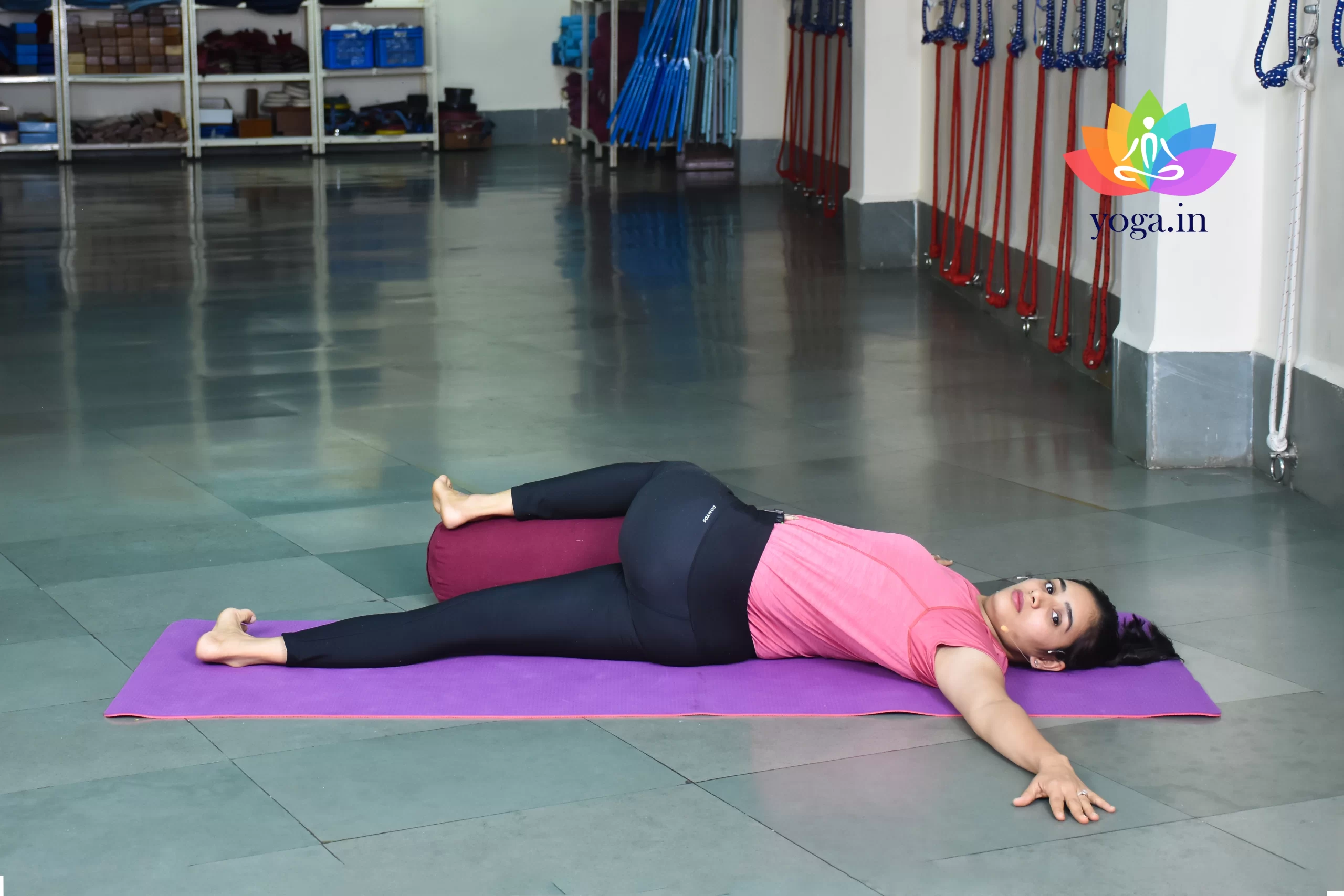
The Sanskrit name is derived from “supta” means “reclined” “vira” meaning “hero” and “asana” means “pose”.
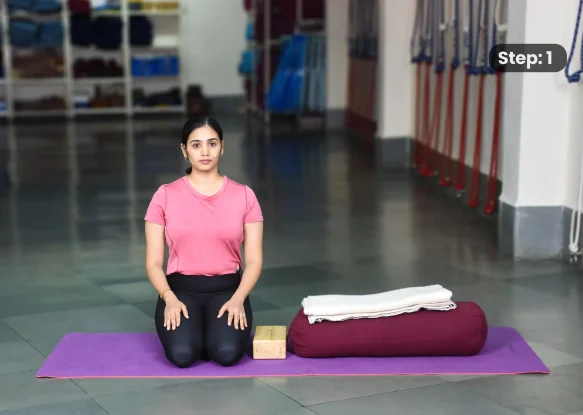
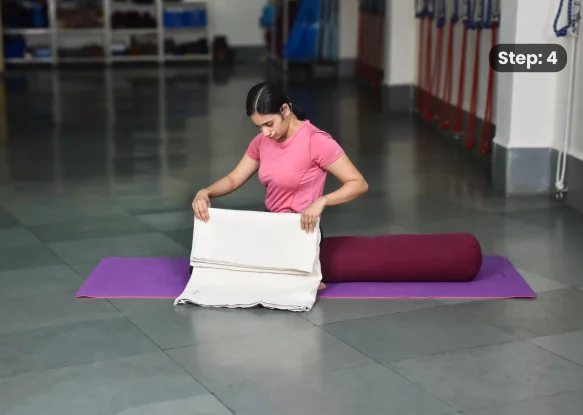
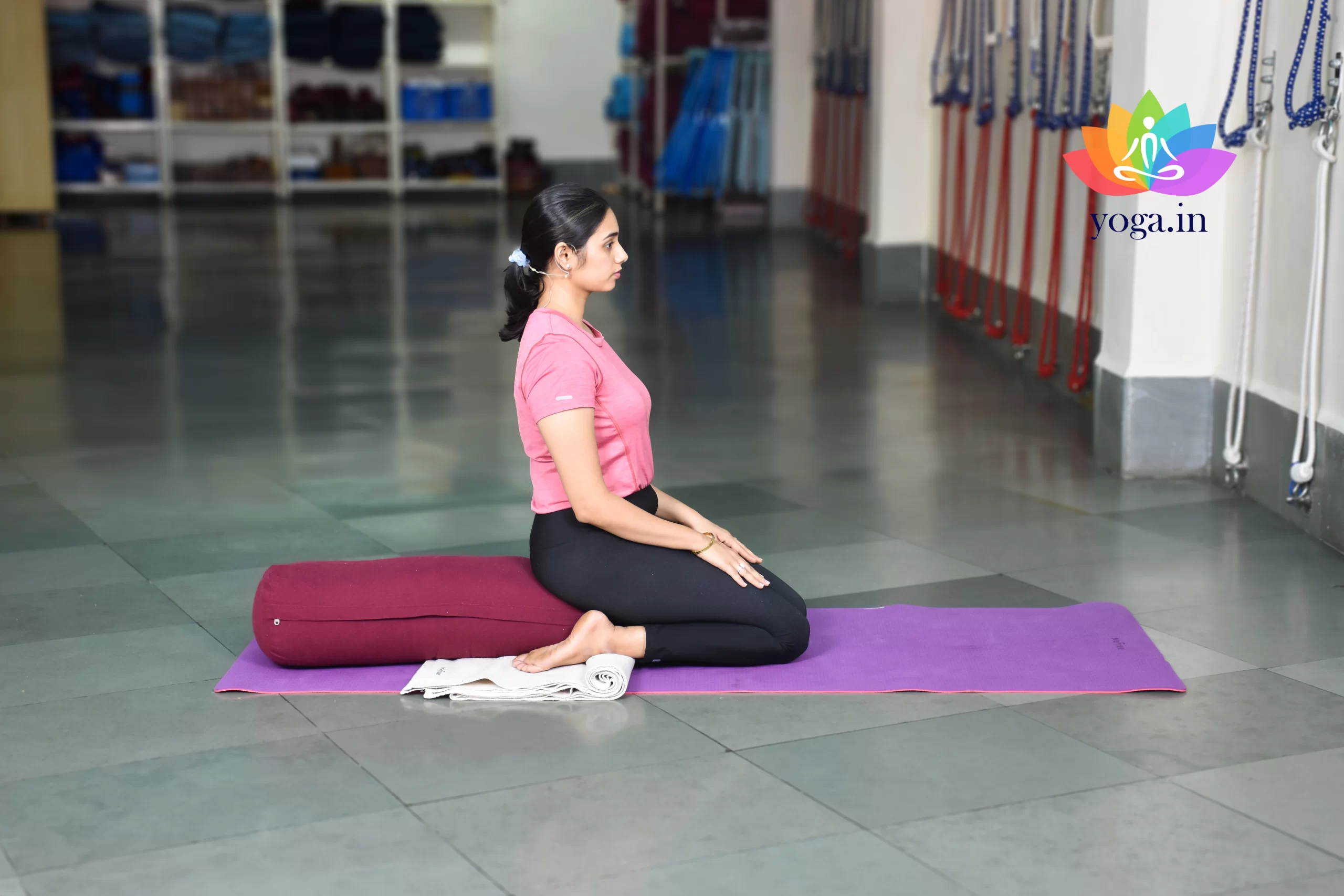
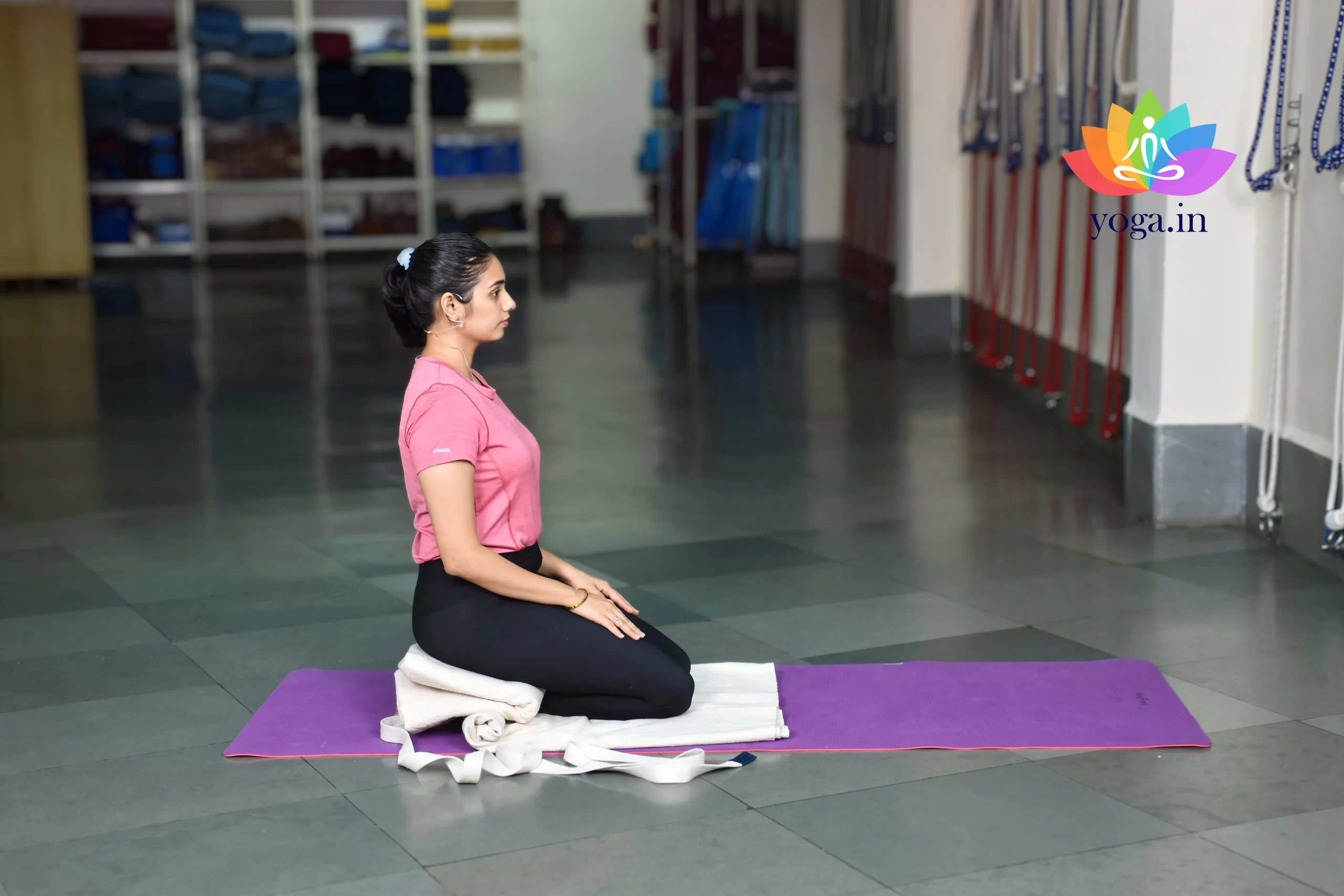
Start by placing a yoga mat on the floor. Place a yoga bolster and Blanket vertically on the mat.
Kneel on the floor with your knees together and your feet slightly wider than hip-width apart.
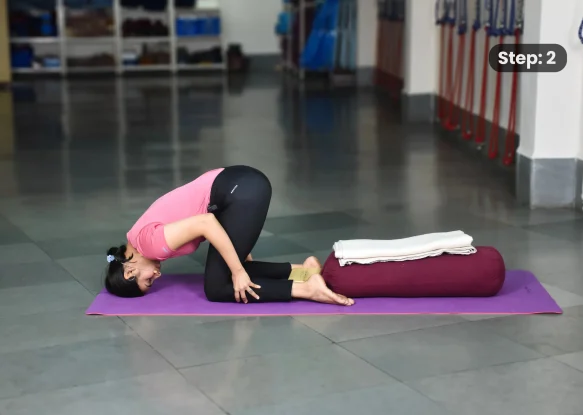
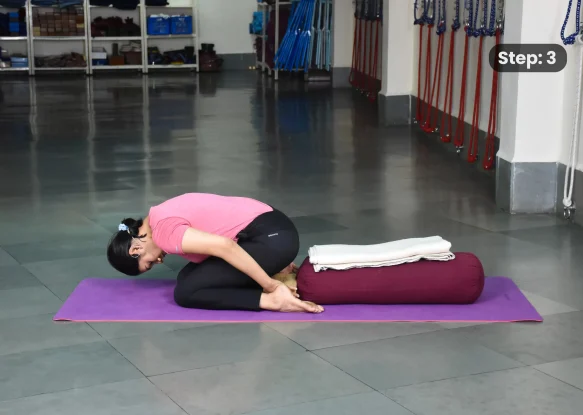
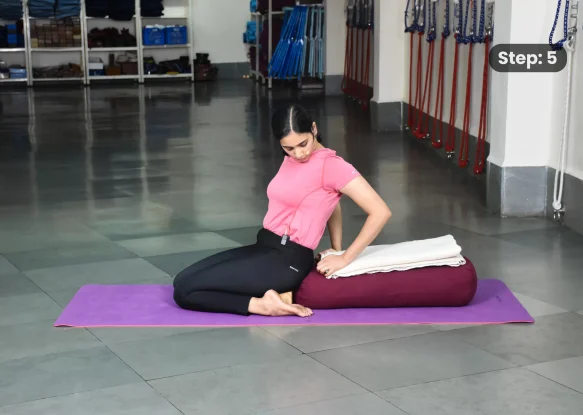
Sit back between your feet and place the bolster or blankets behind you, perpendicular to your body.
Ensure that the bolster or blankets are positioned to support your spine and head when you recline onto them.
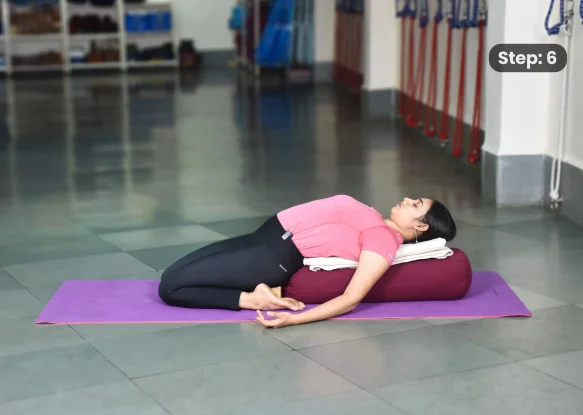
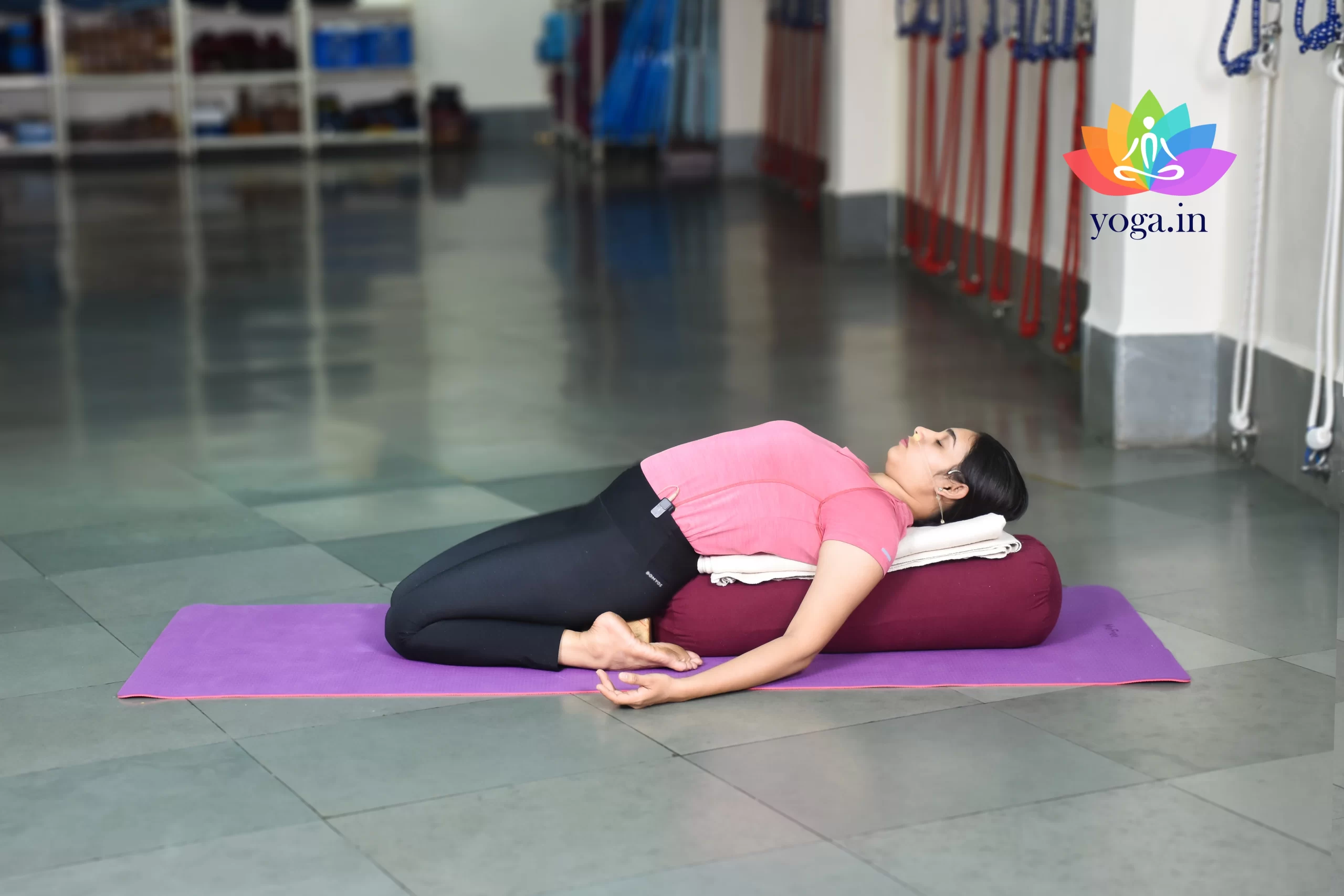
Slowly lower yourself onto the bolster OR Blankets allowing your spine to rest comfortably along the length of the props.
Adjust the position of the props as needed to ensure that your entire spine is supported, from your tailbone to your head.
Extend your arms out to the sides with your palms facing up, allowing your chest to open and shoulders to relax.
Close your eyes and take a few deep breaths, allowing your body to relax into the pose with each exhale.
Hold Supta Virasana for 1-3 minutes, breathing deeply and evenly.
By taking the support of elbows gently come up into seated position and release the legs.
Avoid forcing your hips to the floor if you feel discomfort; instead, use props for support.
Keep your spine lengthened and your chest lifted as you recline onto the props.
Relax your shoulders away from your ears and broaden your collarbones.
Allowing the knees to splay outward instead of keeping them in line with the hips.
Allowing the lower back to arch excessively, which can compress the lumbar spine.
Holding tension in the hips or knees, leading to discomfort or pain.
Avoid in case of any hip & Knee Injury
Avoid in High Blood Pressure
Avoid during Pregnancy
Avoid in any discomfort in the abdominal region
The sanskrit name is derived from Vira
The Sanskrit term Vajra (वज्र) meaning thunderbolt
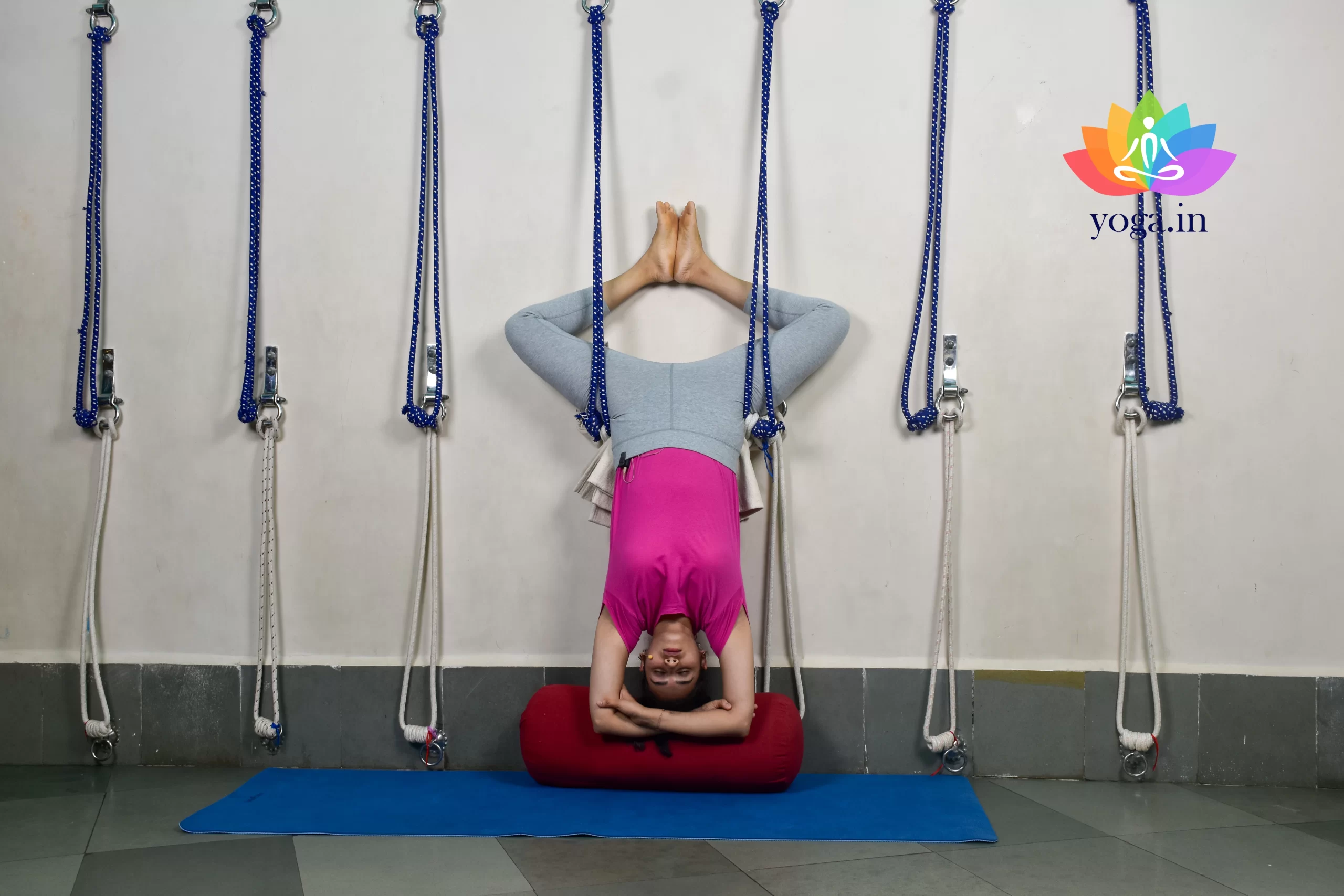
The sanskrit name is derived from sirsa
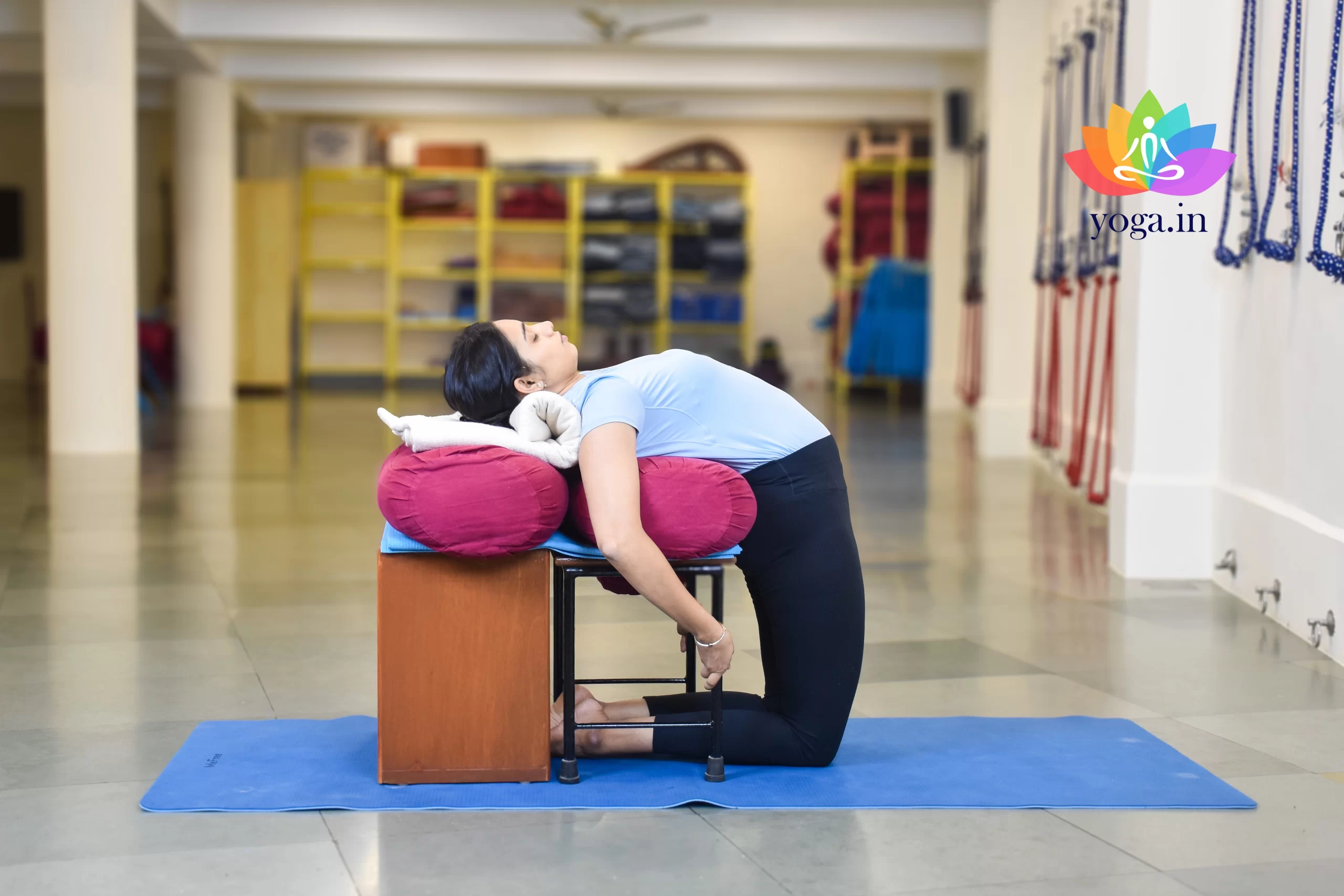
The name is derived from Ushtra (उष्ट्रासनI)
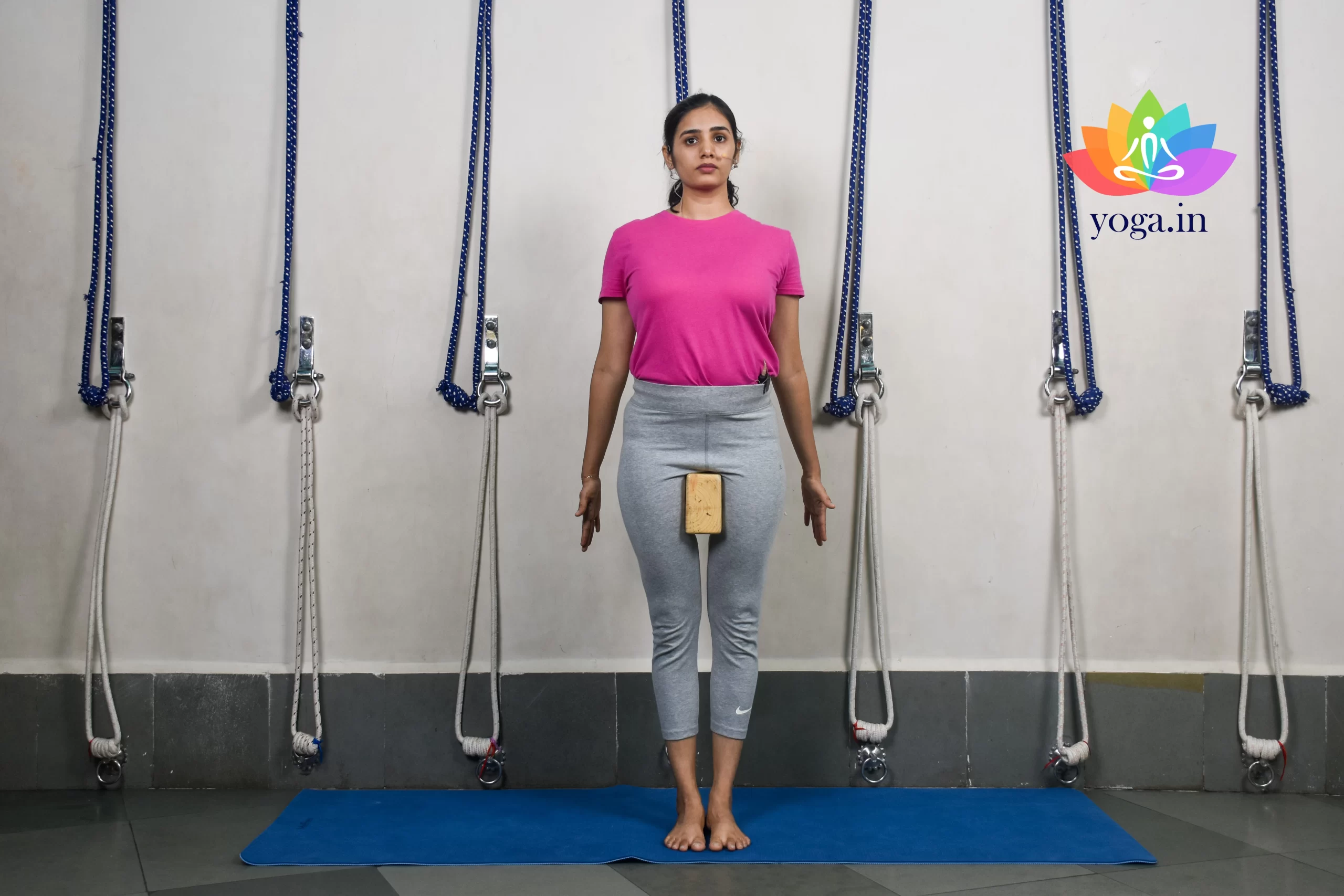
The Sanskrit name is derived from Tada
The sanskrit name is derived from supta
Please login with social account to support this post.