The name is derived from Ushtra (उष्ट्रासनI) meaning camel and Asana (आसन) meaning a pose.
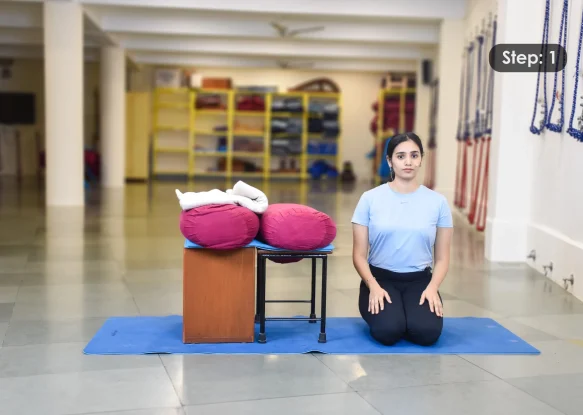
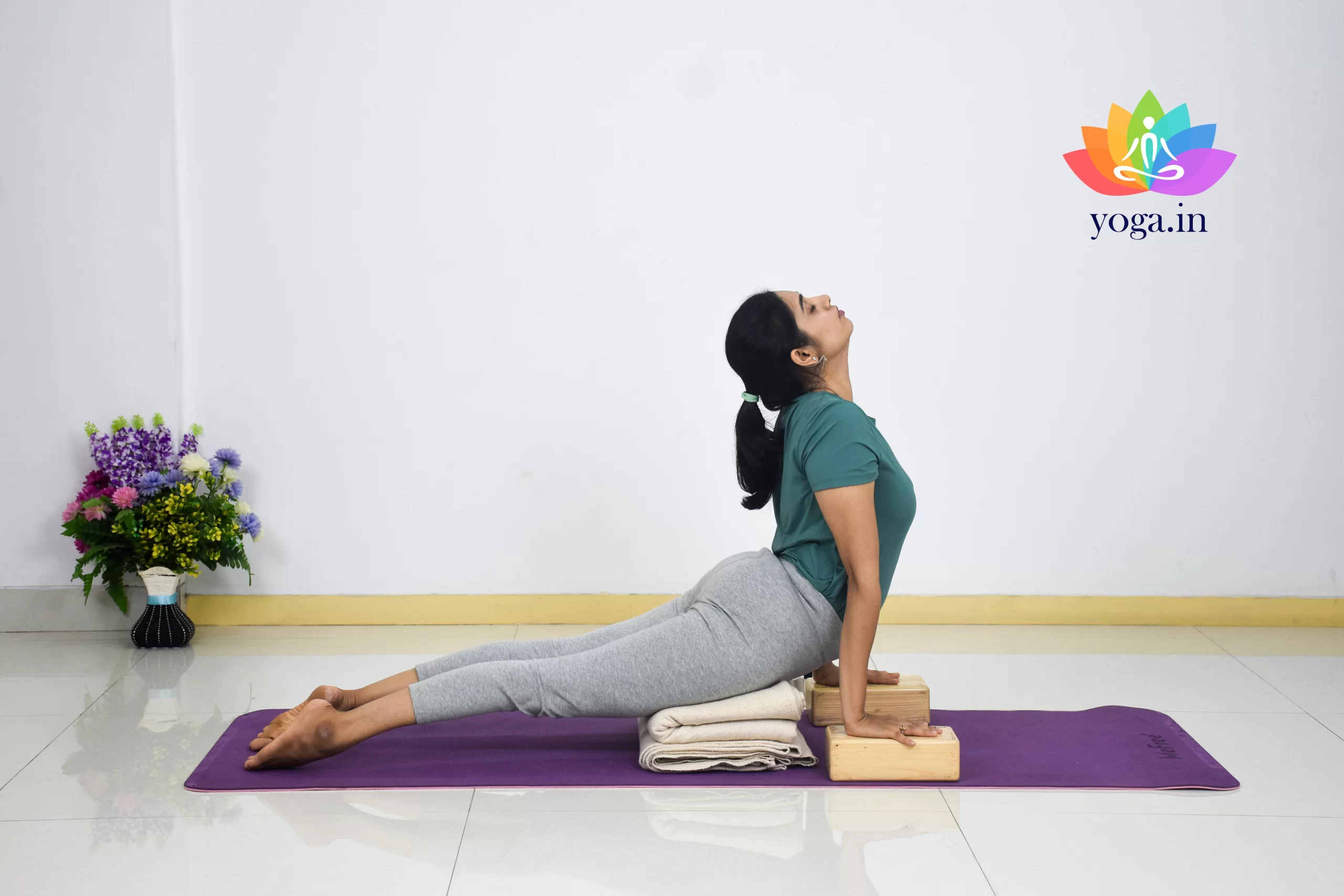
Place a yoga mat on the floor.
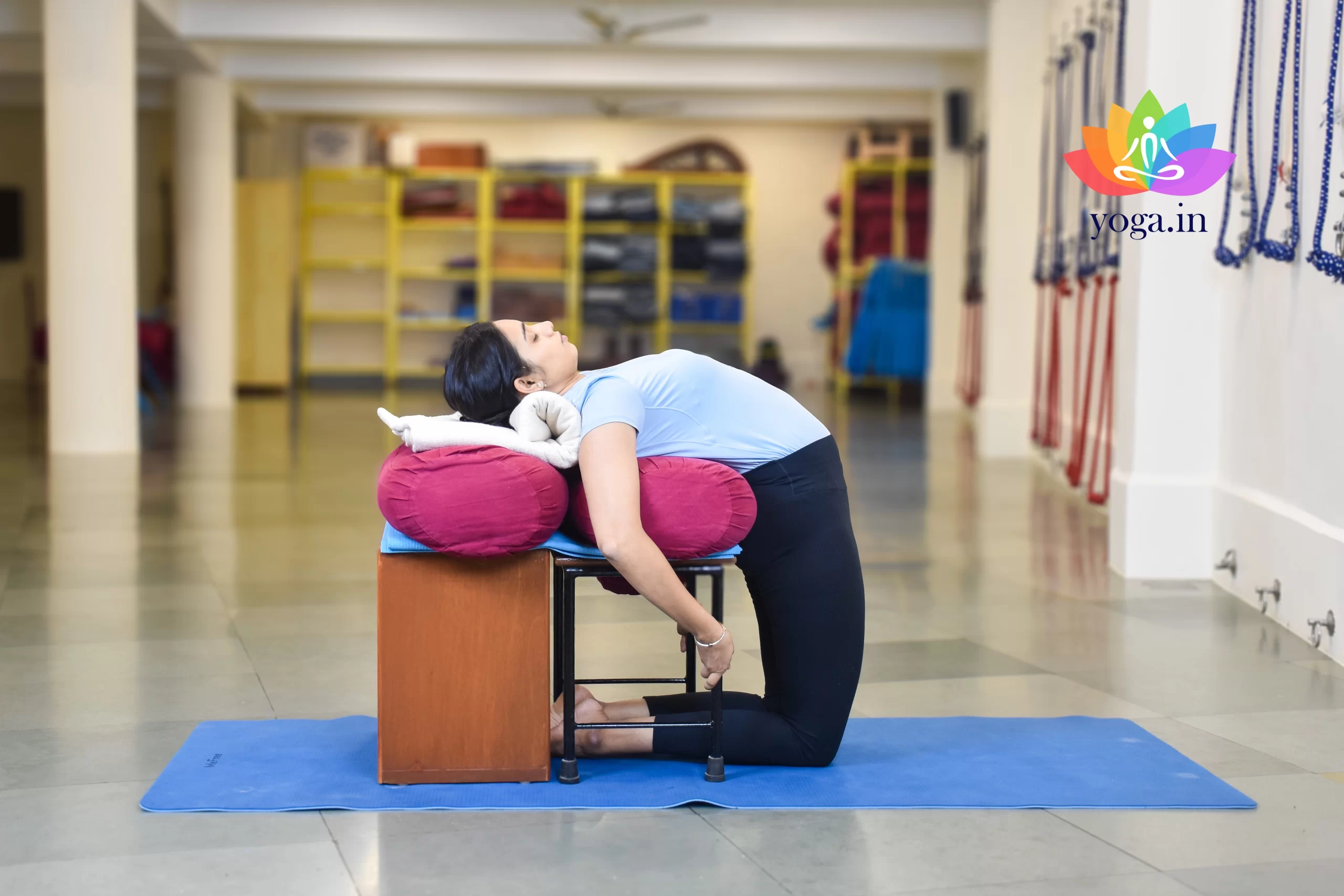
Position two Halasana benches on the mat, facing the long edge of the mat.
Place a sticky mat on the bench & on top of it place 2 bolsters inline.
Begin by kneeling on the mat with your knees hip-width apart and your toes pointing back.
Make sure your knees are directly below your hips.
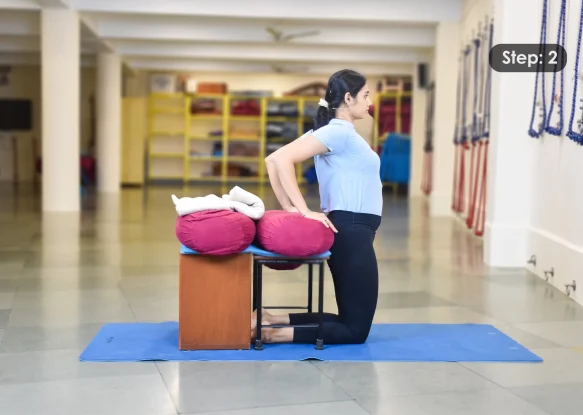
Reach back and hold onto the backrest of the bench with your hands.
Keep your elbows slightly bent and close to your body.
Press your shoulders down and away from your ears.
Open your chest by drawing your shoulder blades toward each other.
Engage your thigh muscles and draw your tailbone.
Place your knees on the folded blanket for added cushioning and support.
Ensure that your pelvis is in a neutral position, neither tilting forward nor backward.
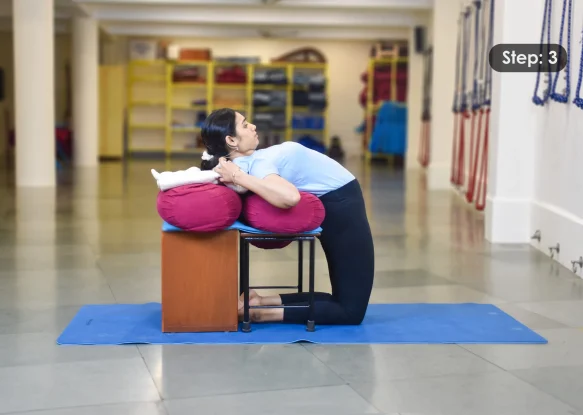
Inhale and lift your chest upward and slightly forward, arching your back gently.
Avoid straining your neck.
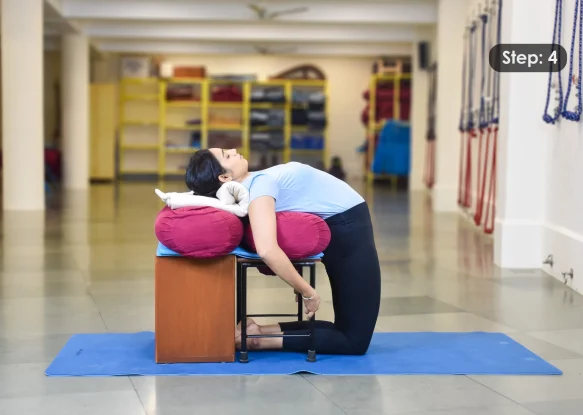
Drop your neck on the bolster for support, avoiding excessive backward bending of the neck.
Engage your core muscles to support your lower back and stabilize your torso.
Maintain a lengthened spine throughout the pose.
Breathe deeply and evenly as you hold the pose, focusing on expanding your chest with each inhale.
To release, exhale and gently lower your chest back down, releasing your hands from the chair.
After releasing the pose, sit back on your heels in balasana or a comfortable seated position to relax and rest.
Keep your thighs perpendicular to the floor, with your knees directly under your hips.
Avoid hyperextending your knees or locking them into place.
Engage your lower abdominals to support your lower back and pelvis, finding stability and length in the spine.
Keep your neck long and in a neutral position, avoiding any strain or compression in the cervical spine.
Not lifting your pelvis upward
Overarching neck
Hips and thighs falling back
Avoid Sciatica pain
Avoid in case of Lumbago sacral issues and Osteoarthritis
Avoid during Injury Surgery
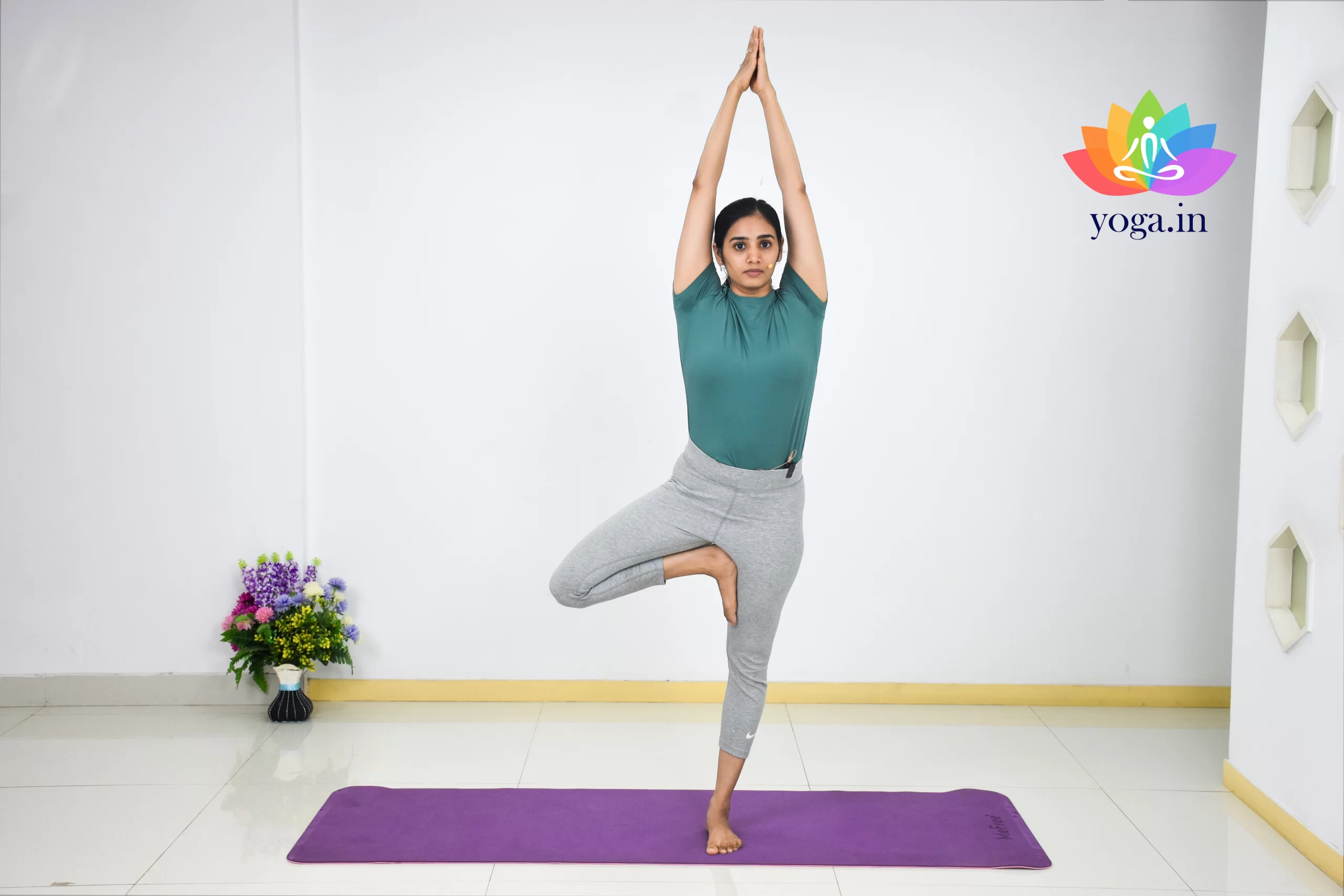
The Sanskrit name is derived from vrksa
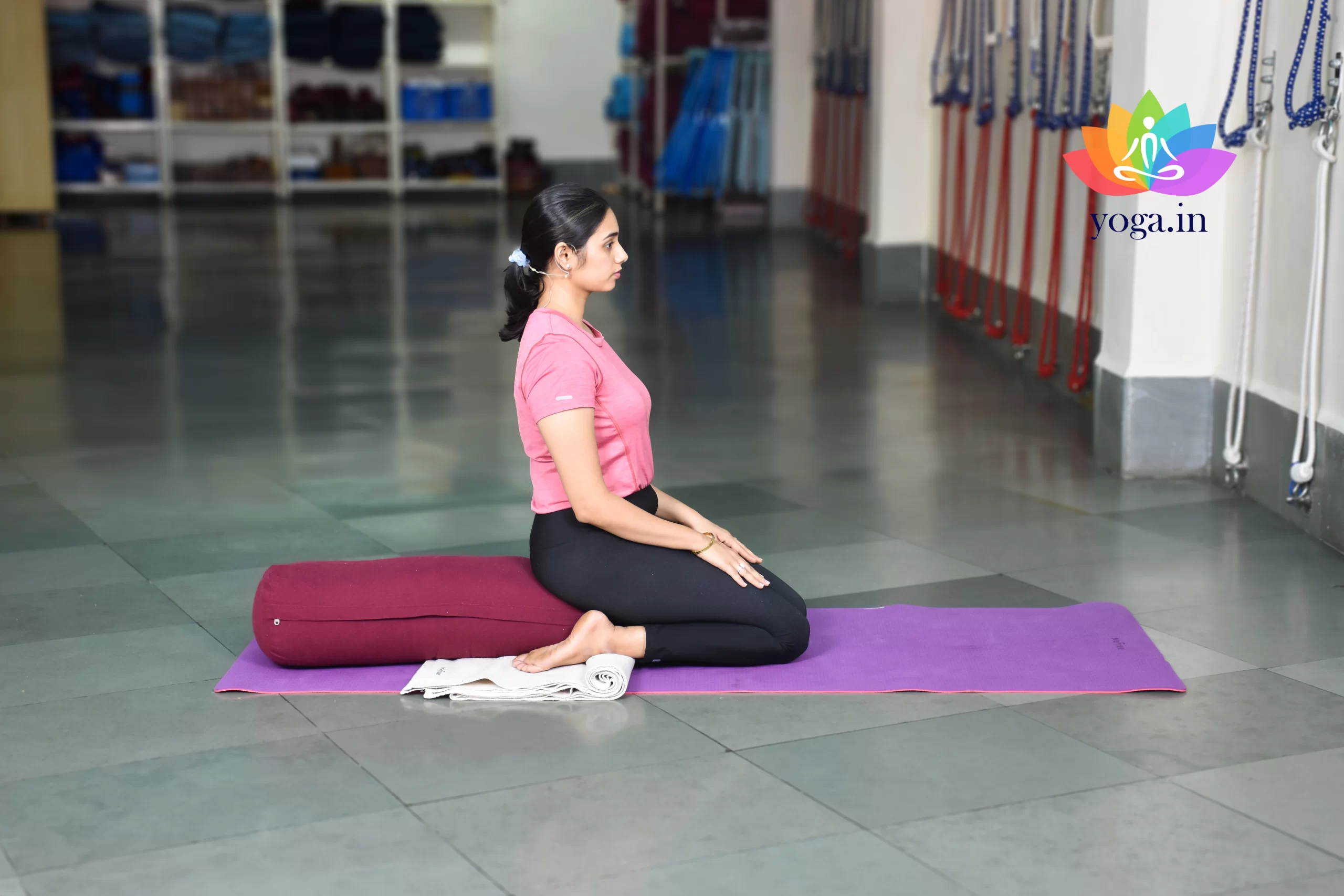
The sanskrit name is derived from Vira
The Sanskrit name is derived from vira
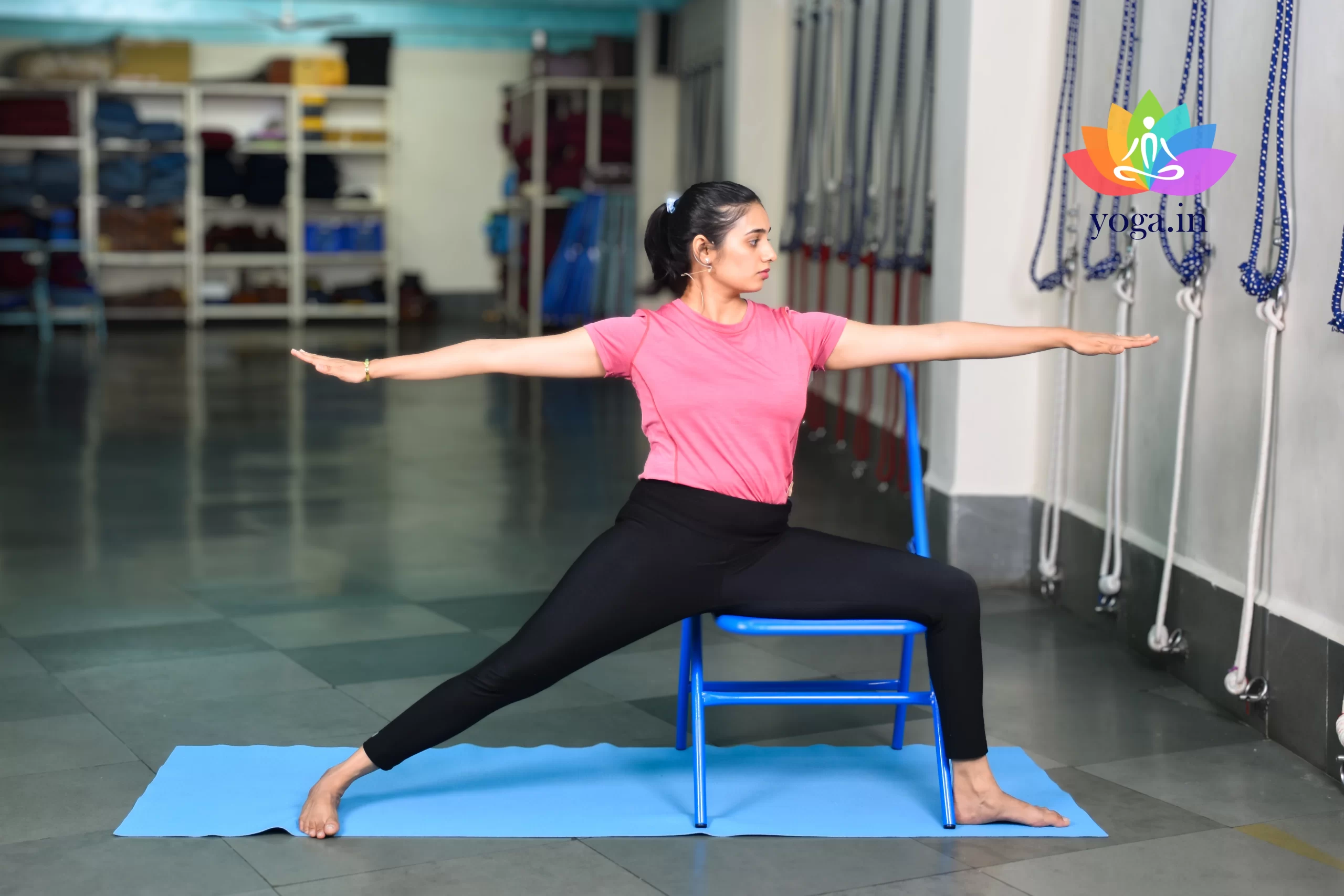
The Sanskrit name comes from the Utthita,
The Sanskrit name is derived from Utthita
The Sanskrit name is derived from ऊर्ध्व
Please login with social account to support this post.