The sanskrit name is derived from Vira (वीरा) meaning hero or a warrior and āsana (आसन) meaning “posture” or “seat”.
Steps to perform the Asana: Virasana (Therapy)
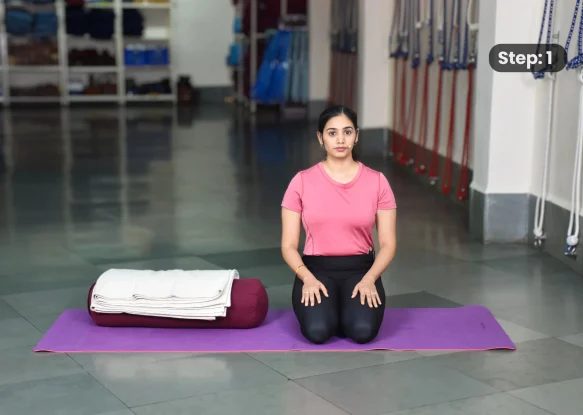
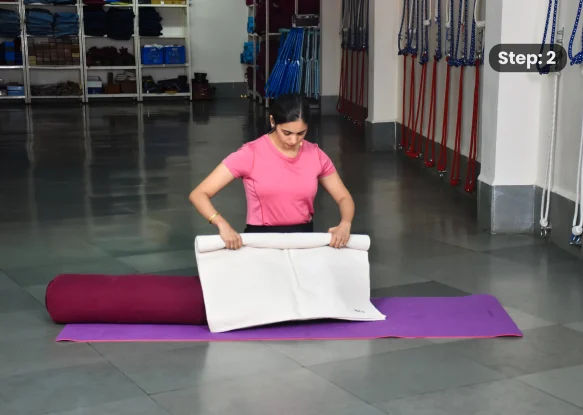
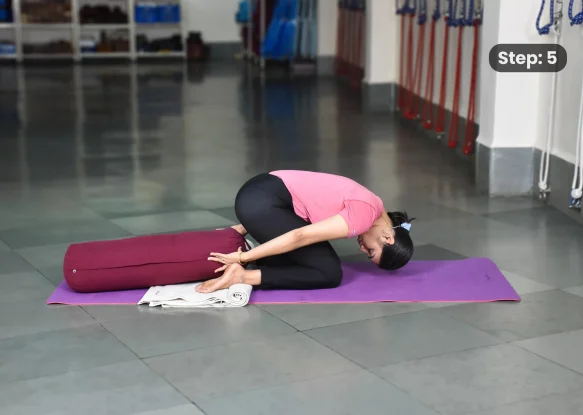
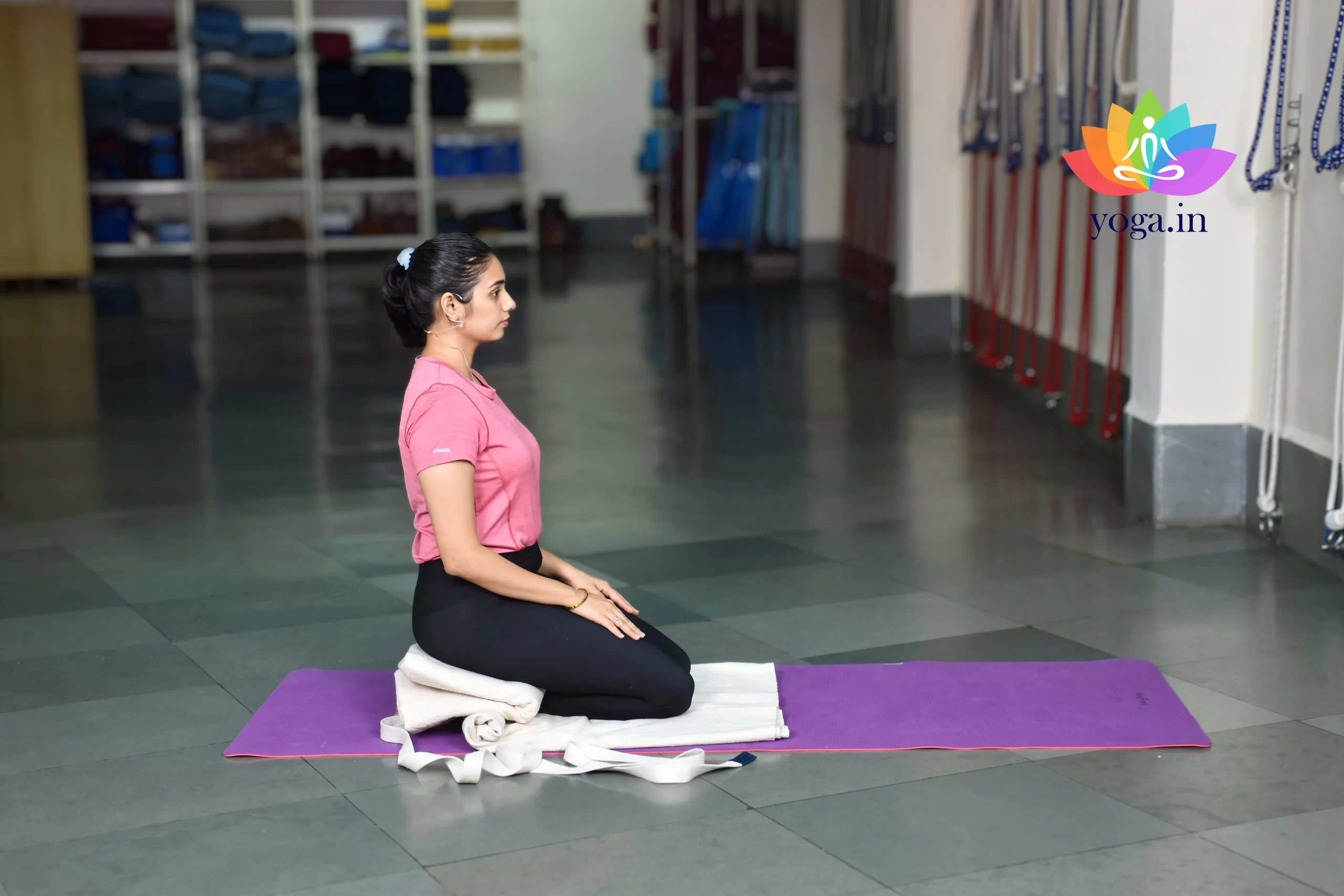
Start by placing a yoga mat on the floor and a yoga bolster or arranging folded blankets vertically on the mat.
Start by kneeling on the mat with your knees together. Your feet should be slightly wider than your hips.
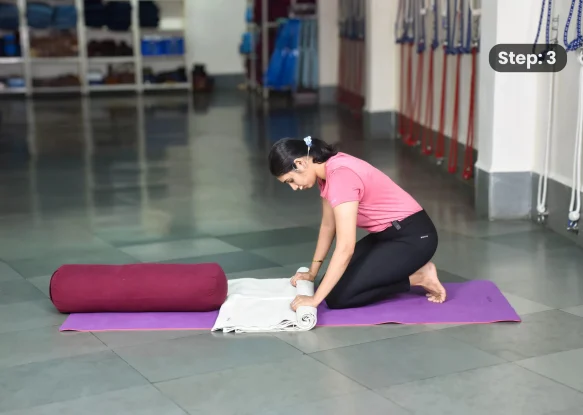
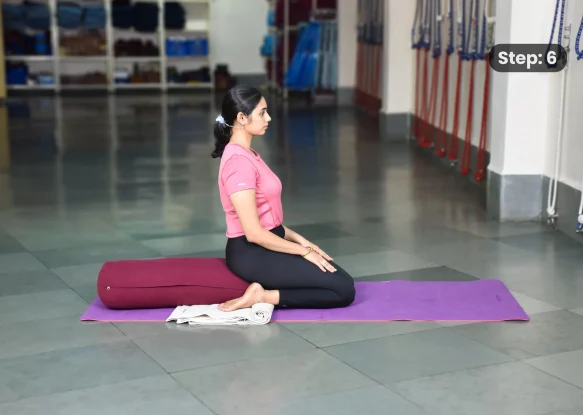
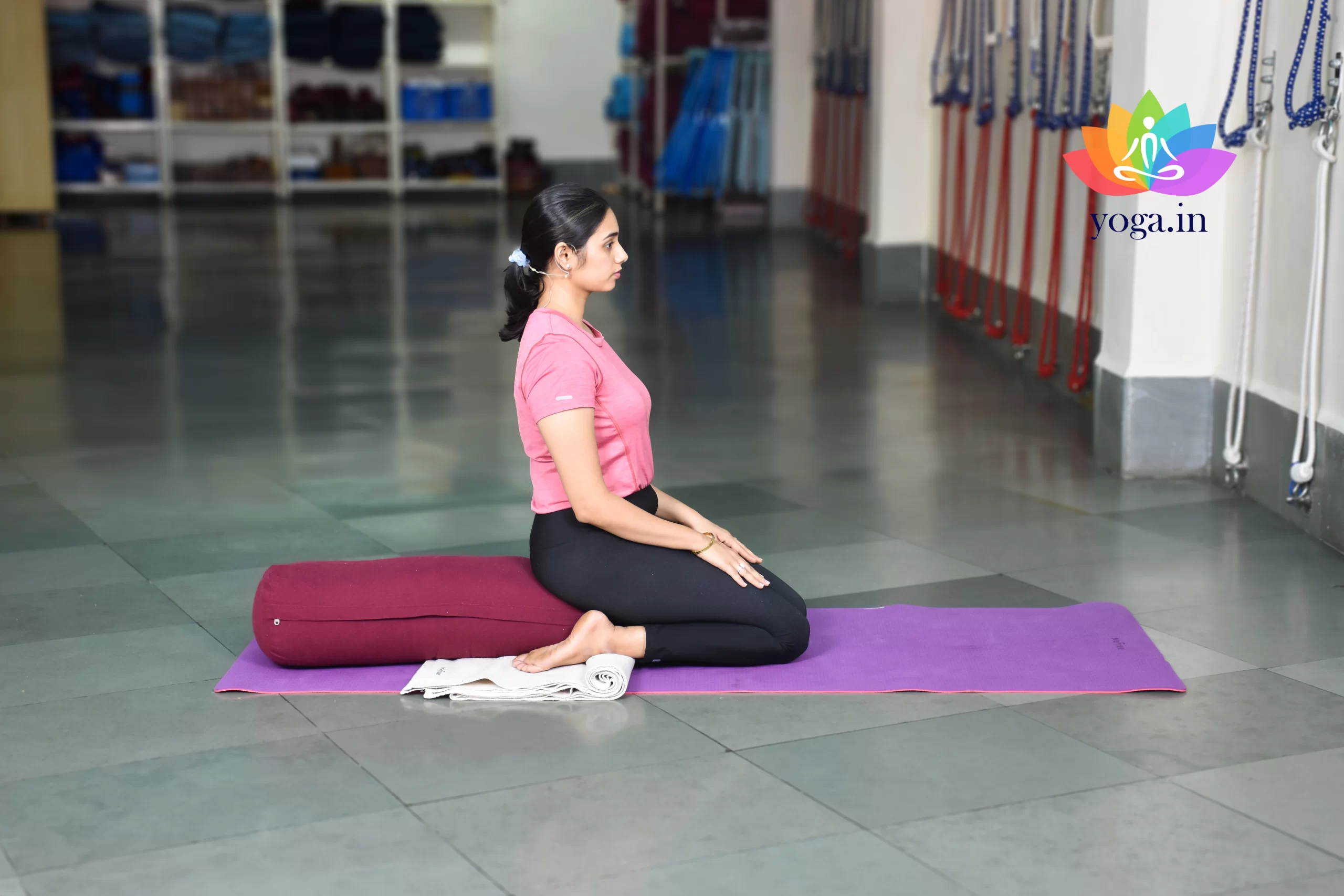
Place the folded blanket horizontally on the mat below your ankles. The bolster should be positioned vertically behind the blanket.
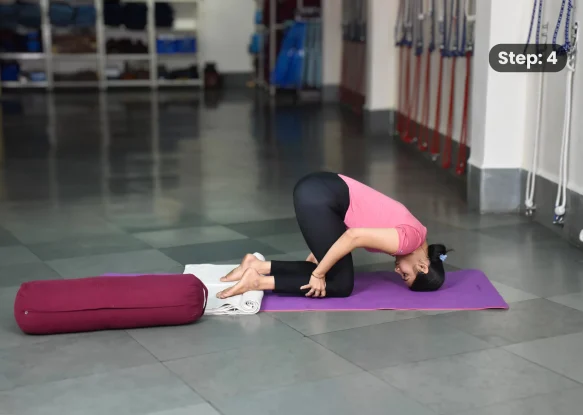
Sit back between your heels onto the blanket. As you lower down, ensure that your knees are supported by the blanket and your feet are pointing straight back.
Lean back slightly and place your hands behind you to support yourself as you adjust the bolster. The bolster should be positioned vertically along your spine, supporting your lower back and reaching up to the back of your head.
Once you’ve found a comfortable position with the support of the blanket and bolster, relax your arms by your sides or on your thighs.
Remain in Virasana for 1-5 minutes, or as long as feels comfortable for your body.
Begin by gently lifting your hips off your heels. Place your hands on the floor beside you for support if needed.
Extend one leg at a time out in front of you. Stretch your legs out straight or cross them in front of you and release the pose.
Key Alignment Points
Try to maintain the natural curve of your lower back.
Avoid tucking your tailbone under too much or overarching your lower back excessively.
Common Misalignments / (Mistakes)
Not distributing your weight across the sitting bones.