The sanskrit name is derived from sirsa (शीर्ष) meaning head and asana (आसन) meaning posture or seat.
Steps to perform the Asana: Sirsasana (Therapy)
Find a wall with enough space around it to safely hang ropes. Ideally, there should be enough space for you to extend your legs upward.
Hang two ropes from a secure anchor point on the wall, ensuring they are spaced apart slightly wider than your shoulders.
Adjust the height of the ropes so that they reach just above your shoulders when you stand with your arms extended.
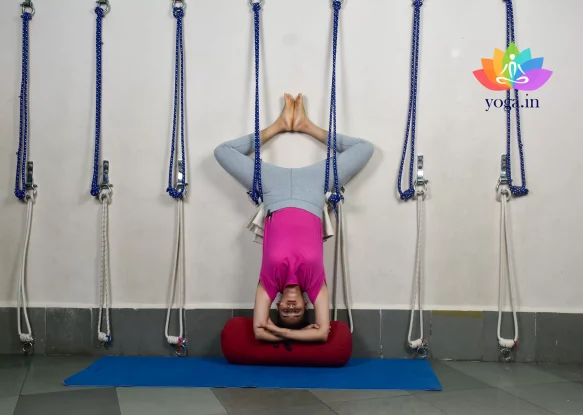
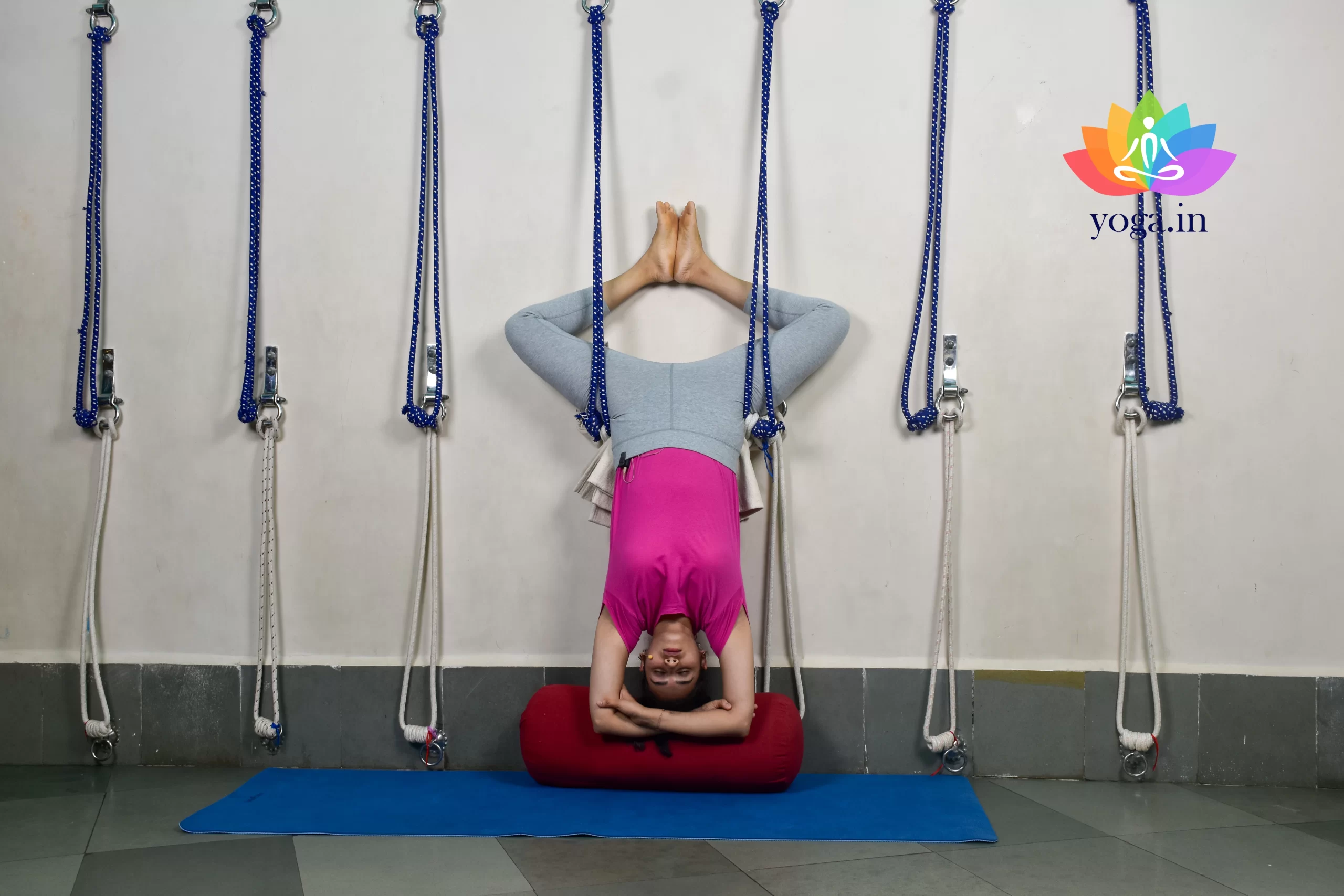
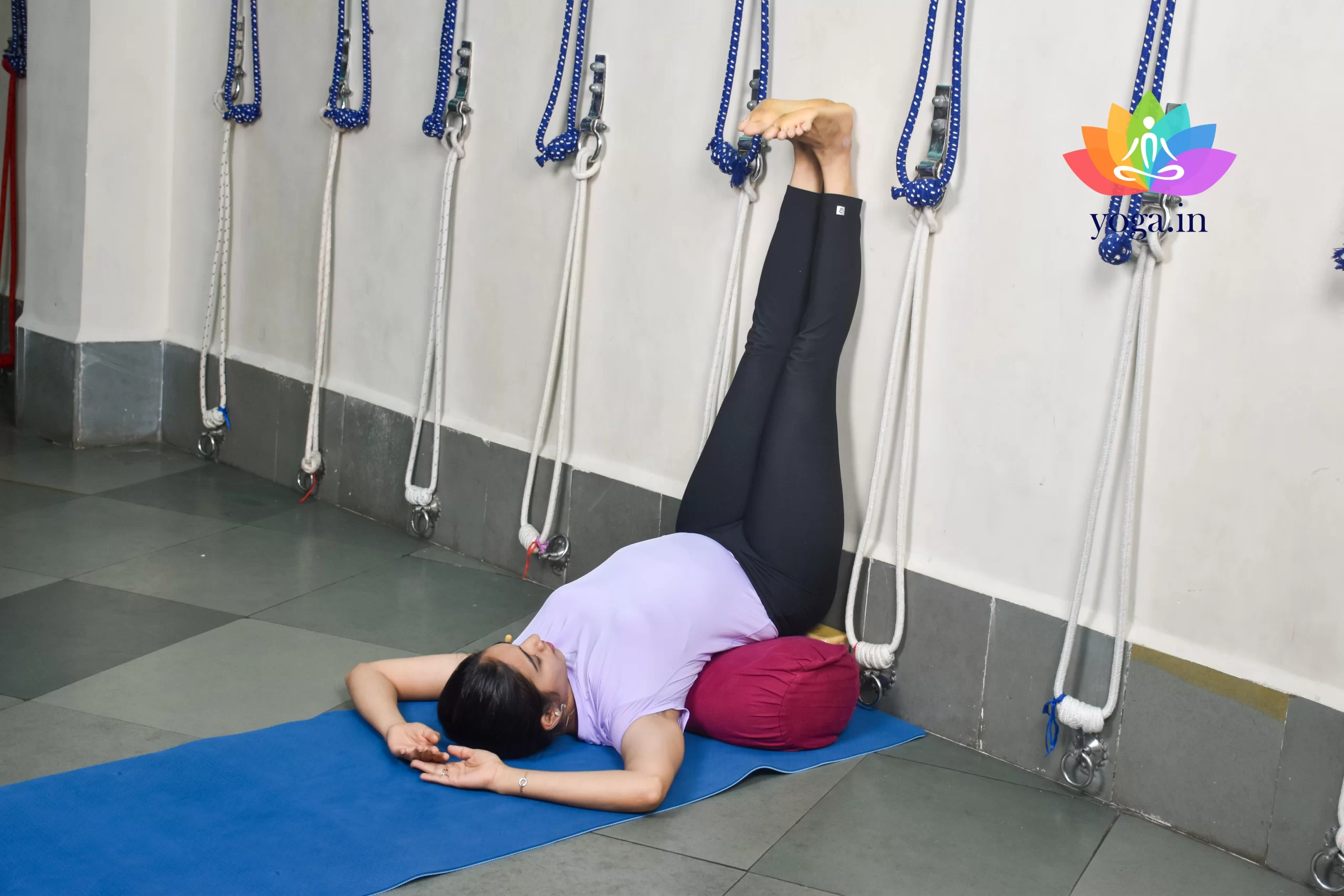
By holding the ropes bring your legs up to the wall just like it shows sitting on the ropes.
Make sure your feet on the wall should be parallel to the hip joints by pushing your legs on the wall.
Hold the ropes. The ropes provide support and stability for your arms in the headstand position.
Engage your core muscles and slowly walk upward on the wall and gently drop your upper body by folding your legs below the ropes. It will look like supta baddhakonasana on the wall.
Now release your hands towards the head by interlocking them. Gently rest your head on the bolster.
Be in the final pose for 30-60 seconds.
To come out of the pose, hold the ropes and lift your torso upward towards the wall. By taking the support of the ropes lower down your legs and come out of the ropes.
Key Alignment Points
Engage your core muscles and lift one leg up toward the ceiling, bringing your knee towards your chest