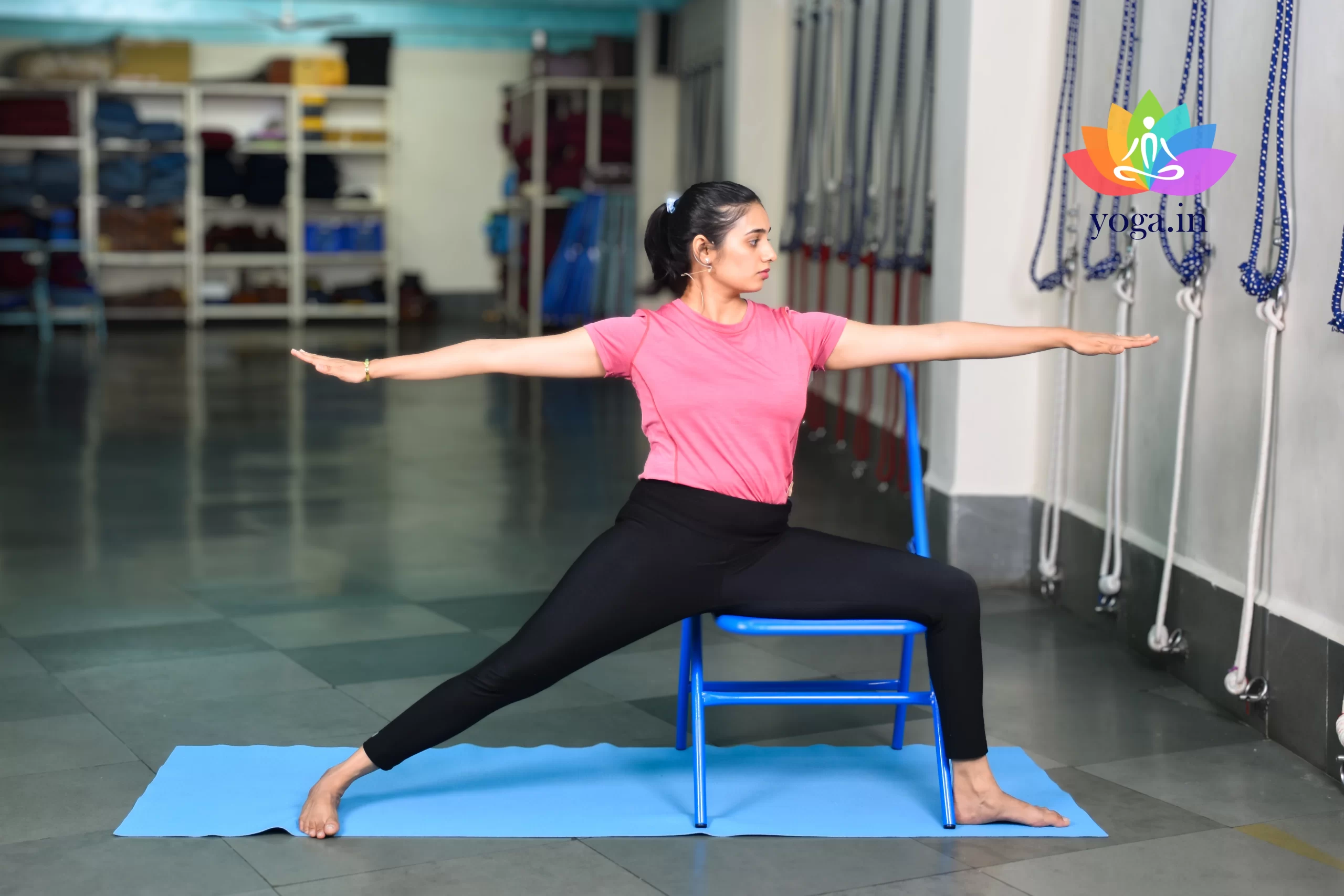
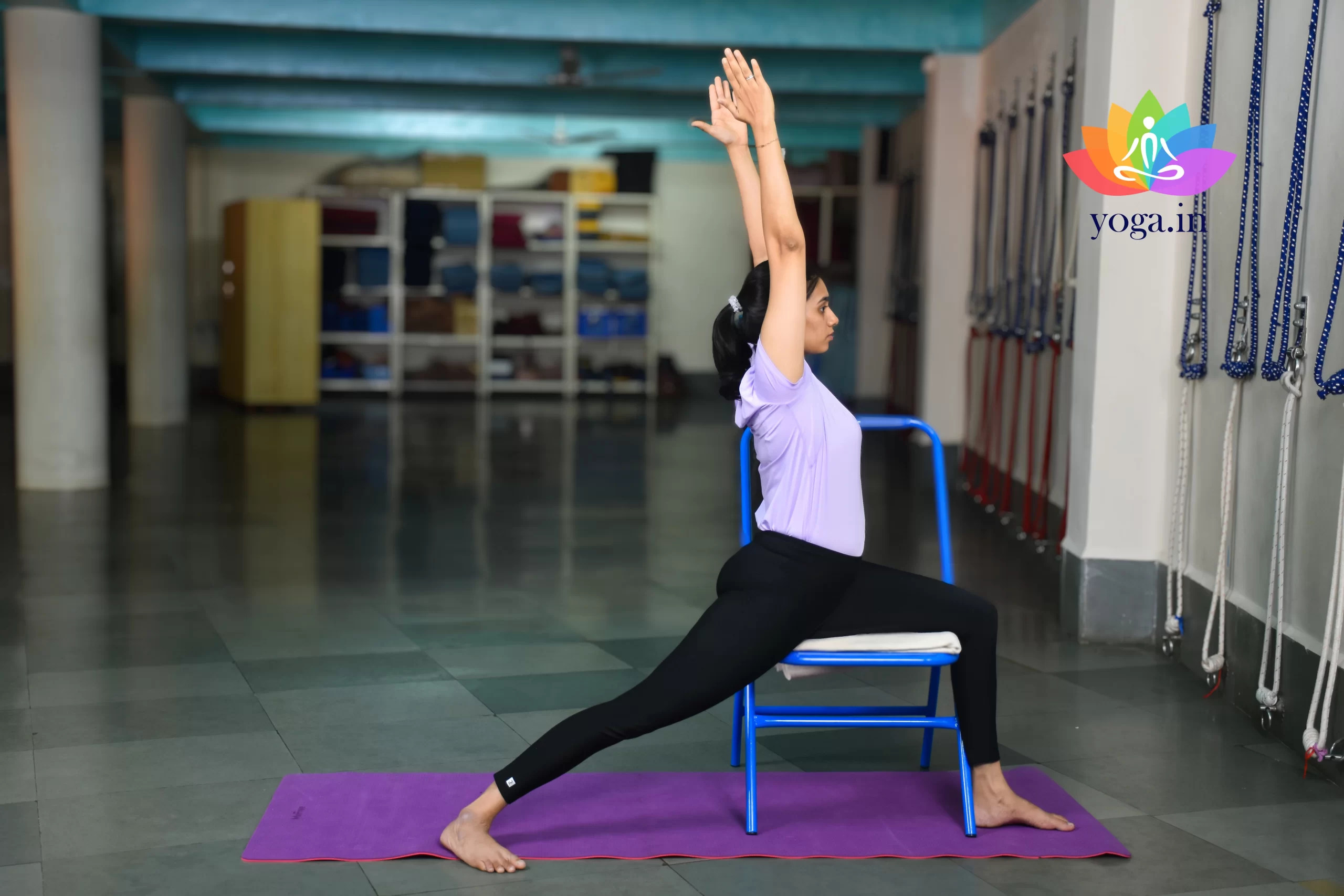
The Sanskrit name is derived from Vira (विरा) meaning hero, Bhadra (भद्रा )meaning friend and Asana (आसन) meaning “posture” or “seat”.
Steps to perform the Asana: Virabhadrasana-III (Therapy)
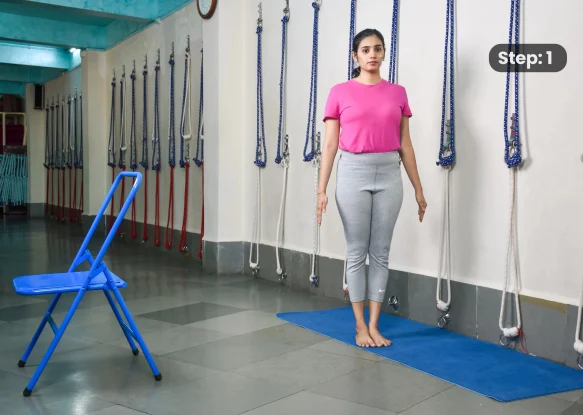
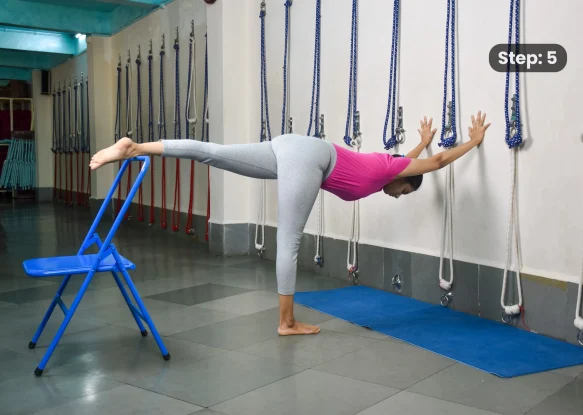
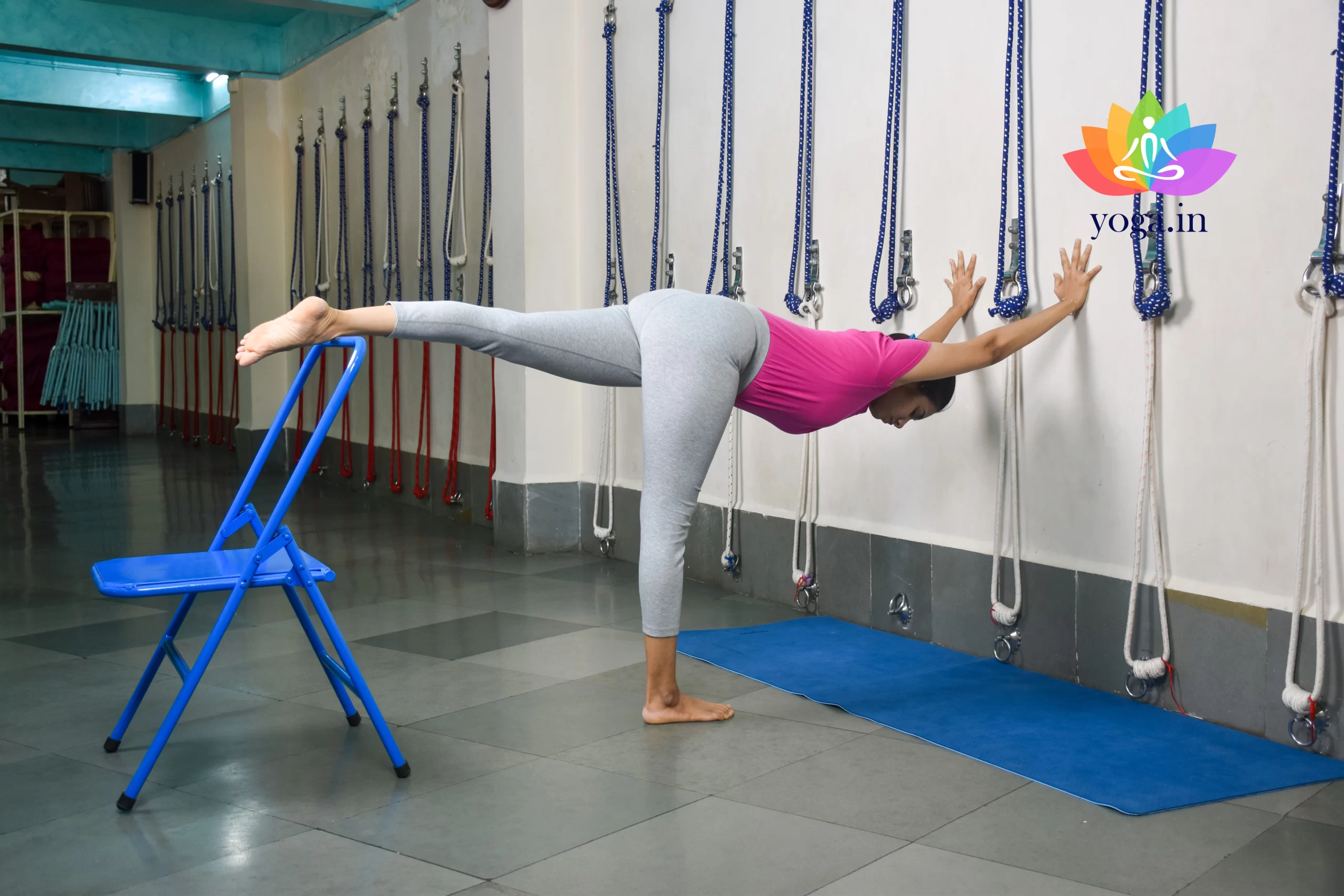
Place a sturdy chair against a wall. Stand facing the wall with your feet hip-width apart and parallel to each other.
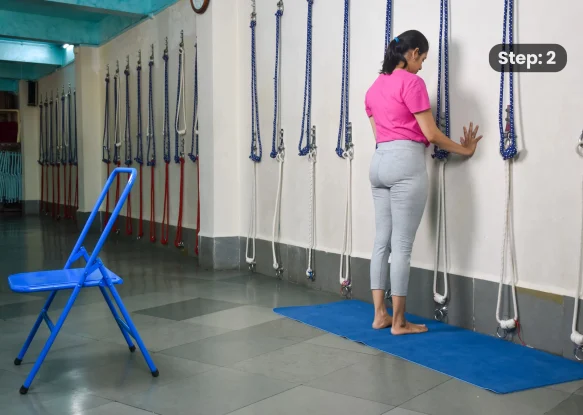
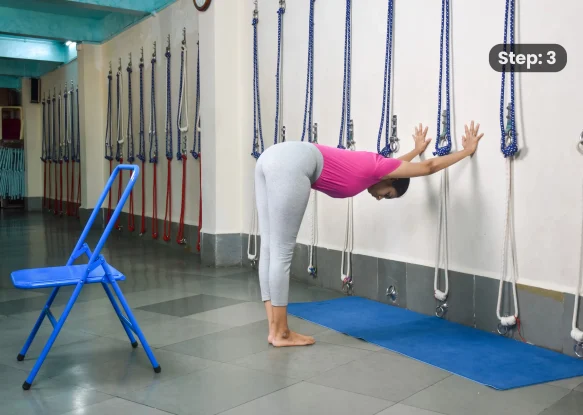
Place your hands on the wall for support. Keep your arms straight and shoulders relaxed.
Shift your weight onto your right foot. Engage your core muscles to stabilize your torso.
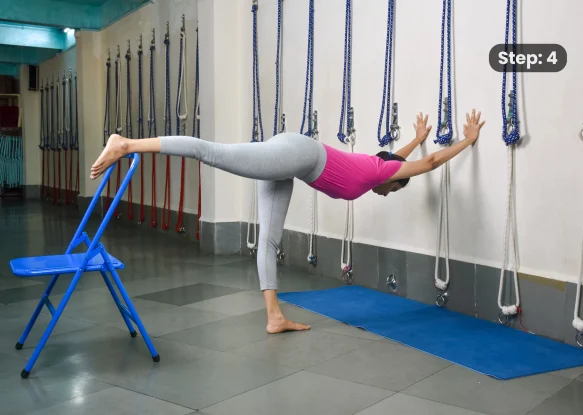
Inhale and slowly lift your left leg behind you and place it on the back rest of the chair, extending it straight back. Keep your toes pointing toward the floor and your leg in line with your torso.
Maintain a straight line from your head to your lifted heel. Keep your torso parallel to the floor, avoiding arching or rounding your back.
Square your hips toward the floor. Avoid letting your hip open outward on the lifted leg side.
Extend your arms straight forward alongside your ears. Keep your shoulders relaxed and away from your ears.
Maintain steady and controlled breathing throughout the pose. Focus on deep inhales and exhales to help you stay balanced and focused.
Hold the pose for several breaths, maintaining proper alignment and engagement of muscles.
When ready to release, exhale and lower your lifted leg back to the floor.
Repeat the pose on the opposite side, shifting your weight to your left foot and lifting your right leg behind you.
Gently by lowering your lifted leg release the pose.
Key Alignment Points
Square your hips toward the front of the mat
Avoid letting your hip open outward on the lifted leg side.
Keep your torso parallel to the ground, forming a straight line from your head to your extended heel.
Keep your neck in line with your spine, avoiding craning the neck upward.
Common Misalignments / (Mistakes)
Arching and straining the low back
Hyper-extending or locking the supporting knee
Not keeping the hips squared
Losing control of the back leg and not keeping the hips level
Contraindication / Cautions
Avoid in case of high blood pressure
Avoid in case of hamstring strains, hips or knees injury