The Sanskrit name is derived from Setu (सेतु) meaning bridge, Bandha (बन्धा) meaning lock and āsana (आसन) meaning “posture” or “seat”.
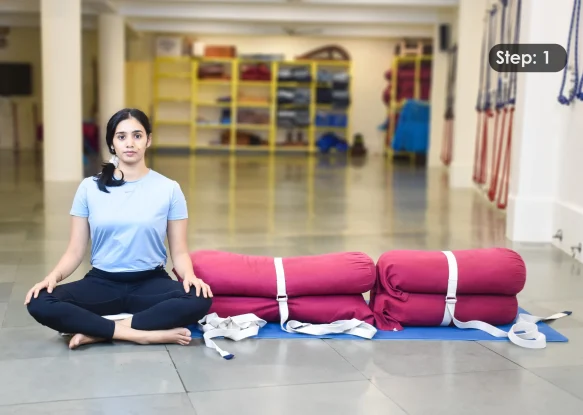
Position the Pawanmuktasana bench (a bench used in yoga for various supported postures) on the mat. This bench will be used to support your back.
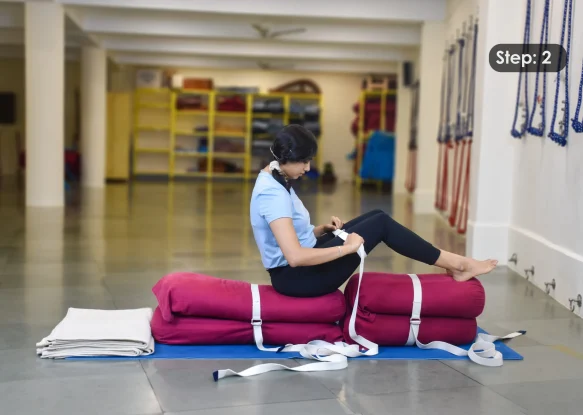
Place a folded yoga sticky mat on the bench for the lower back support.
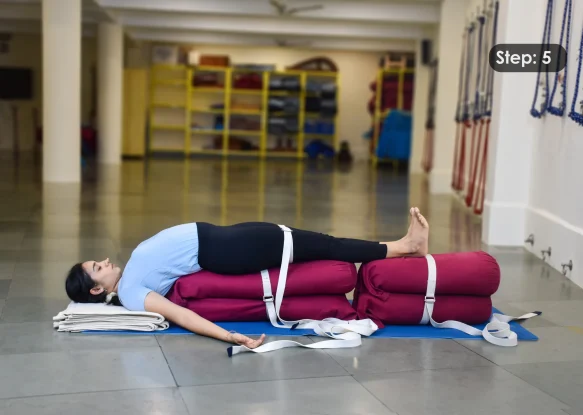
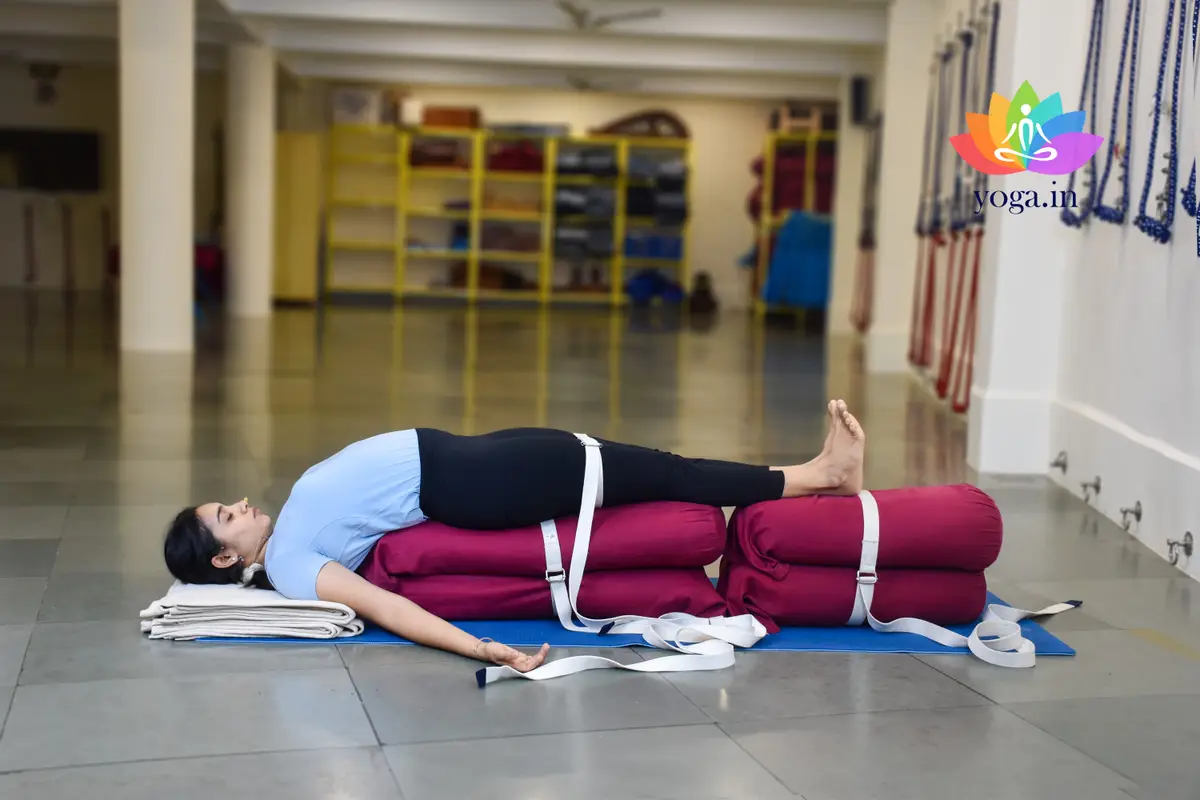
Place a yoga bolster horizontally on the mat and sticky mat for your head and shoulder support.
Sit on the bench covered with sticky mat and gently tie your thighs with yoga belt to keep legs aligned.
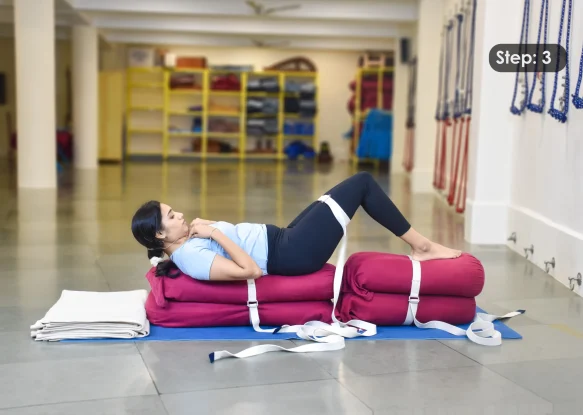
Gently lie down towards the back by resting your head on the Bolster.
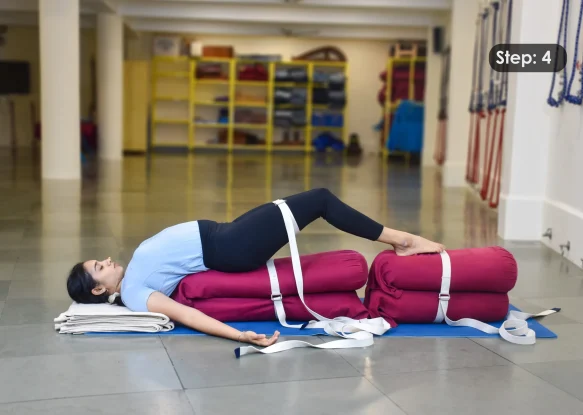
Ensure that your arms are resting on the mat with your palms facing up.
Keep your knees aligned with your ankles and parallel to each other.
Roll your shoulders back and down to broaden your chest and open your heart.
Hold the pose for 30 seconds to 1 minute, breathing deeply and evenly.
Now hold the bench and lift yourself up
Keep your chin slightly tucked to lengthen the back of your neck and avoid compressing your cervical spine.
Focus on maintaining stability in your lower body while opening your chest and heart centre.
Knees not in line with hips
Chest is not lifted
Toes out to the side
Avoid in case of neck and shoulder injuries or sprains, or in case of spinal, shoulder or hip surgeries
Avoid if suffering from acute cervical spondylitis or herniated disc
Avoid if you have undergone knee replacement surgery or are suffering from severe osteoporosis
Heart surgery patients should avoid
Avoid if suffering from abdominal hernias
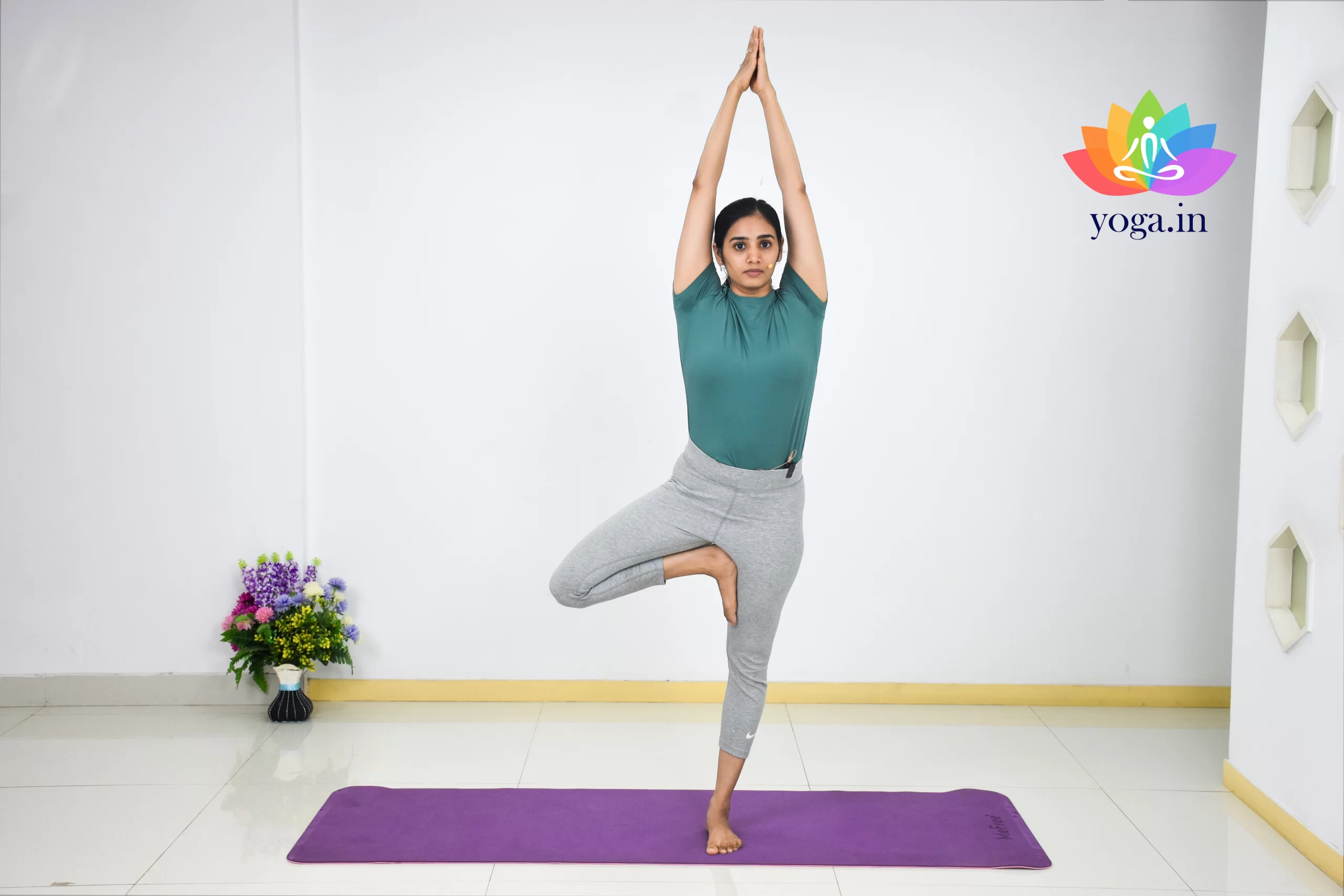
The Sanskrit name is derived from vrksa
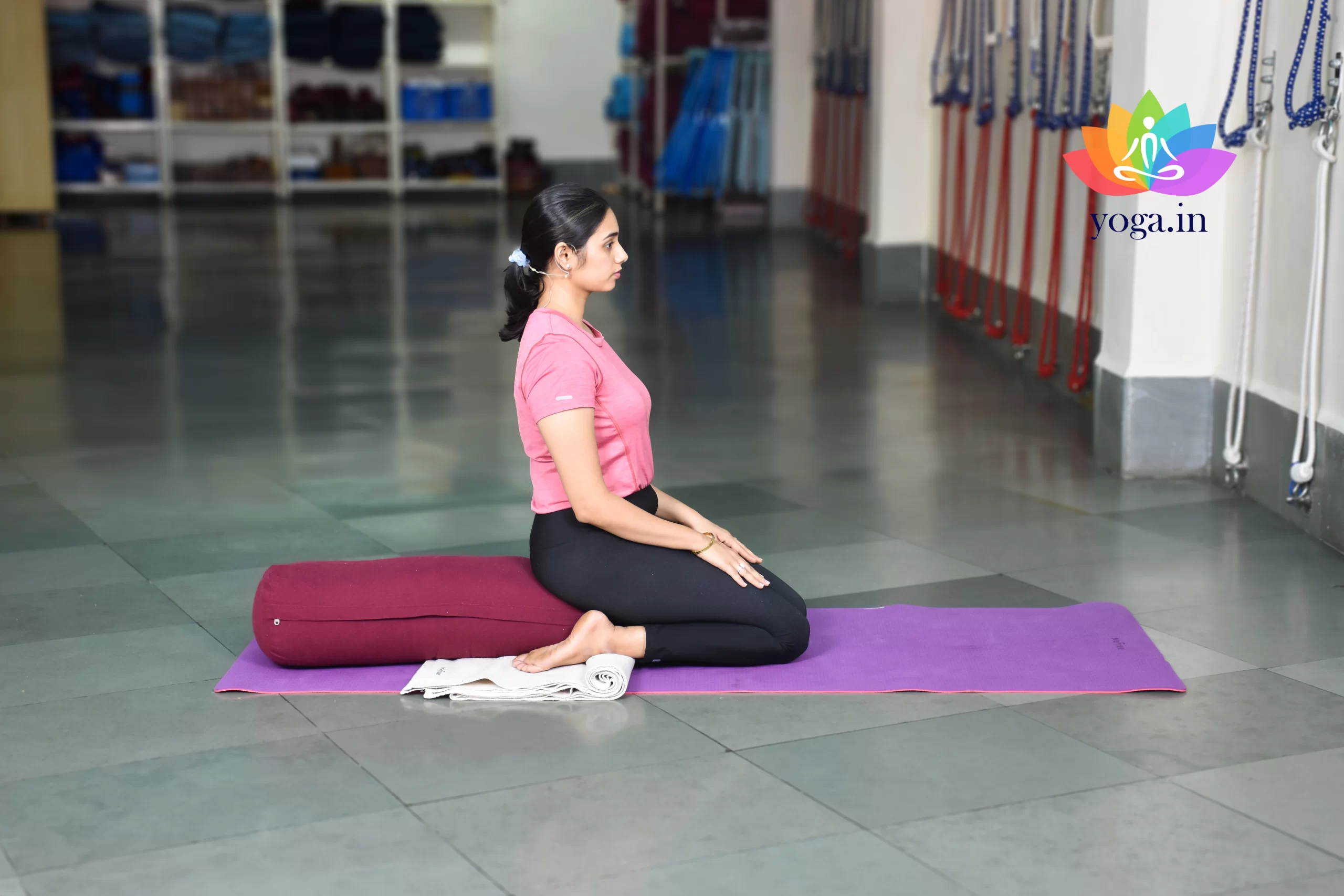
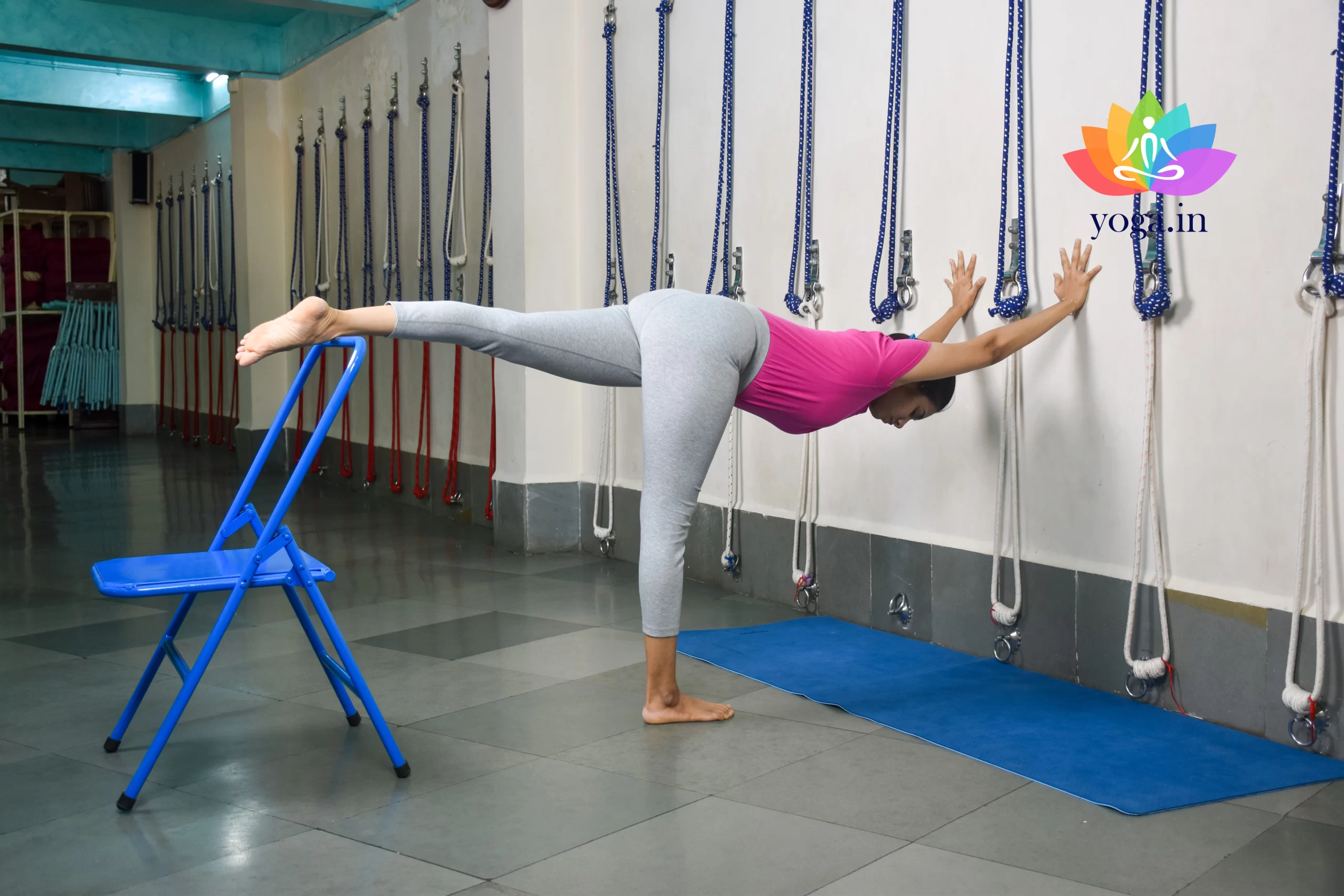
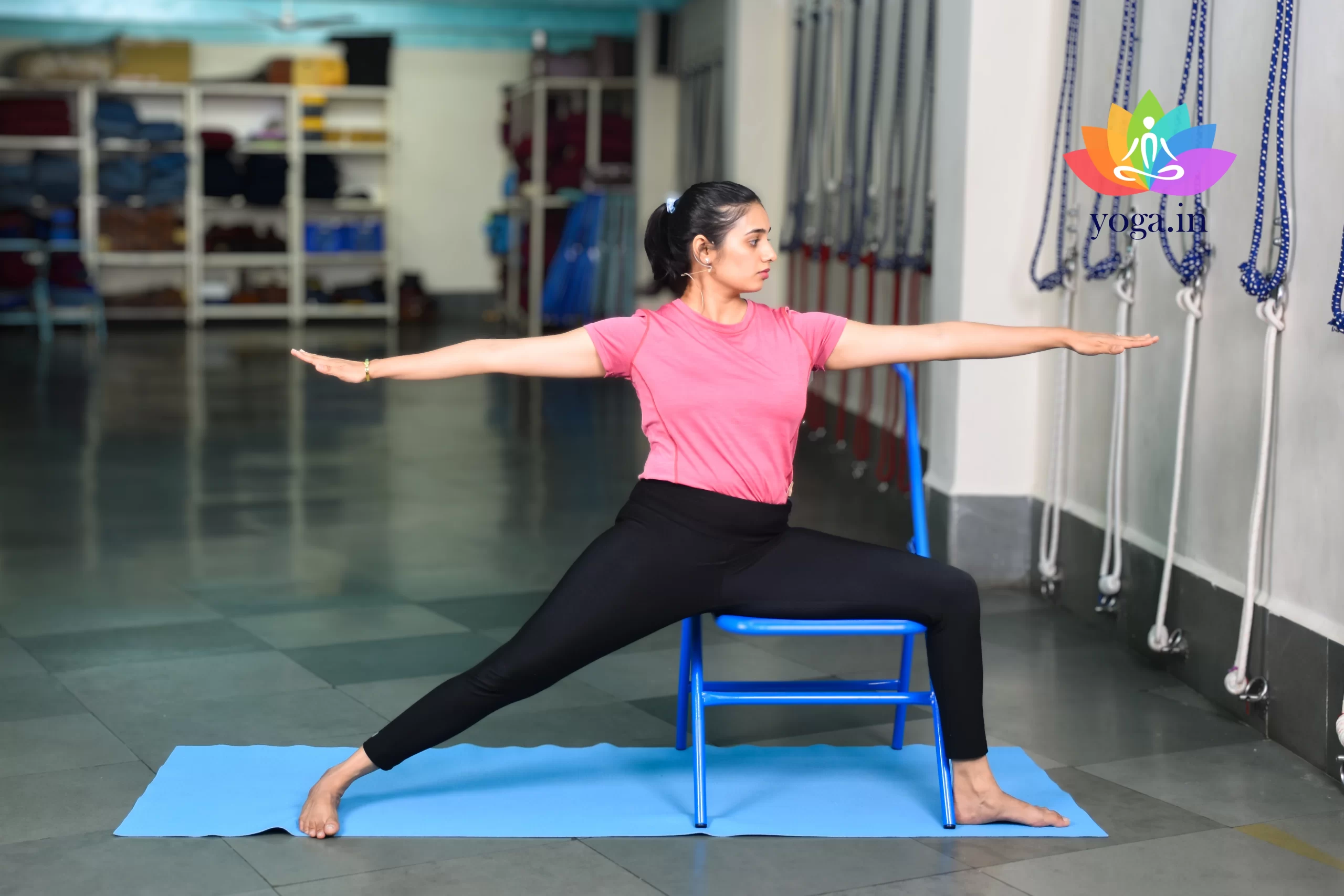
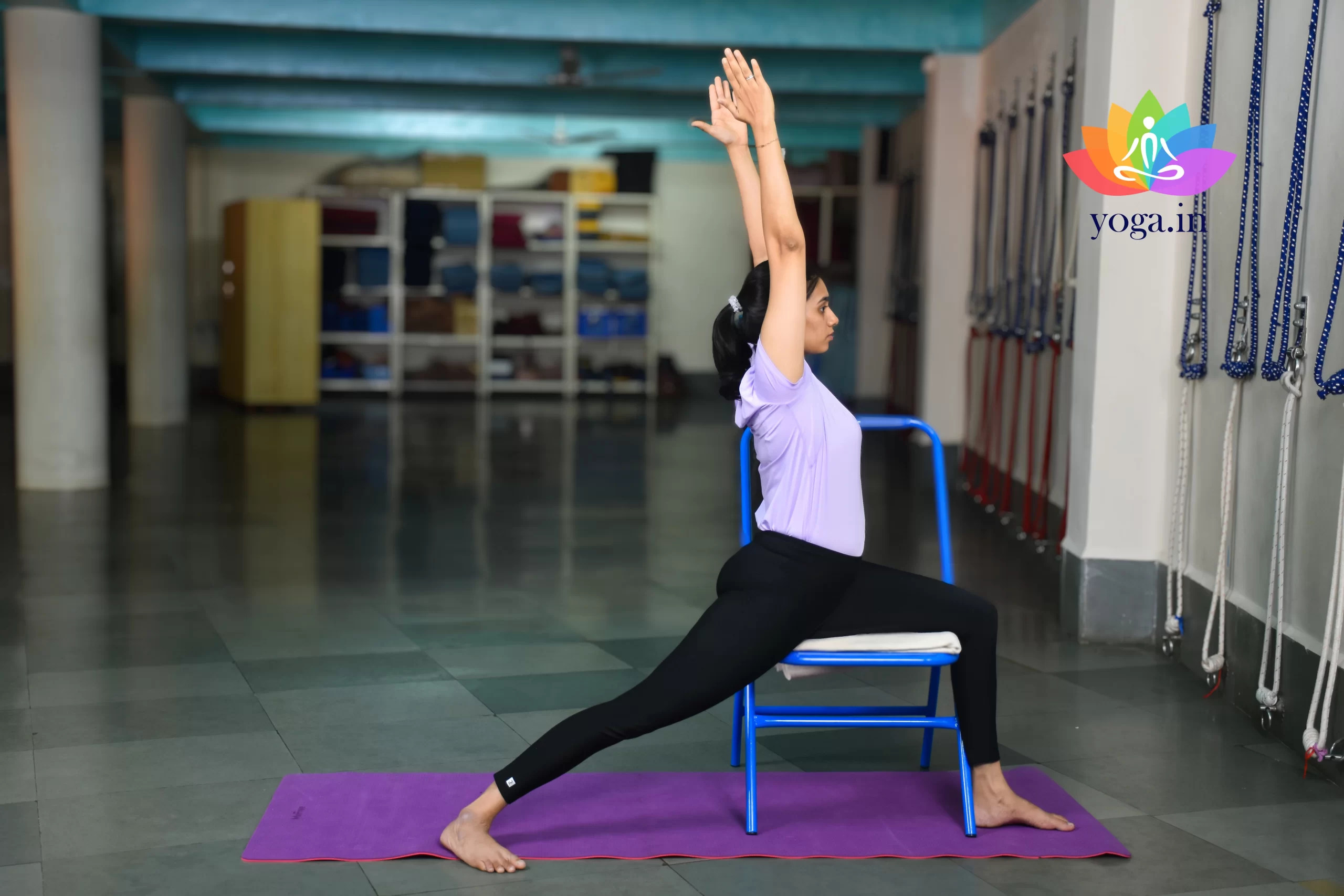
The sanskrit name is derived from Vira
The Sanskrit name is derived from Vira
The Sanskrit name is derived from vira
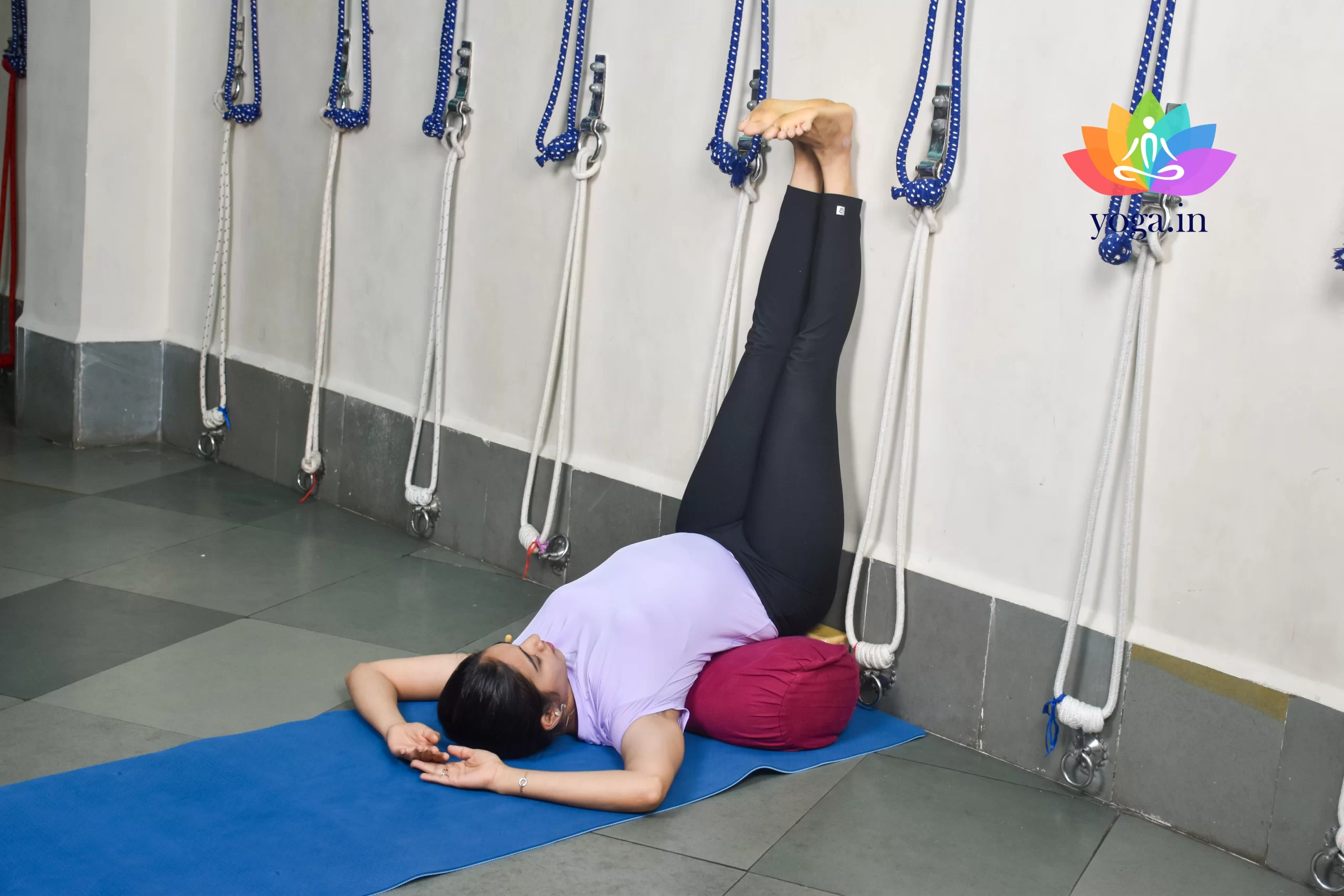
The Sanskrit name is derived from Viparita
Please login with social account to support this post.