The sanskrit name is derived from supta (सुप्त) means supine, matsya (मत्स्य) meaning fish, Indra (इन्द्र) meaning king and asana (आसन) meaning posture or seat Matsyendra was a yogi and student of the Hindu god, Lord Shiva.
The sanskrit name is derived from supta (सुप्त) means supine, matsya (मत्स्य) meaning fish, Indra (इन्द्र) meaning king and asana (आसन) meaning posture or seat Matsyendra was a yogi and student of the Hindu god, Lord Shiva.
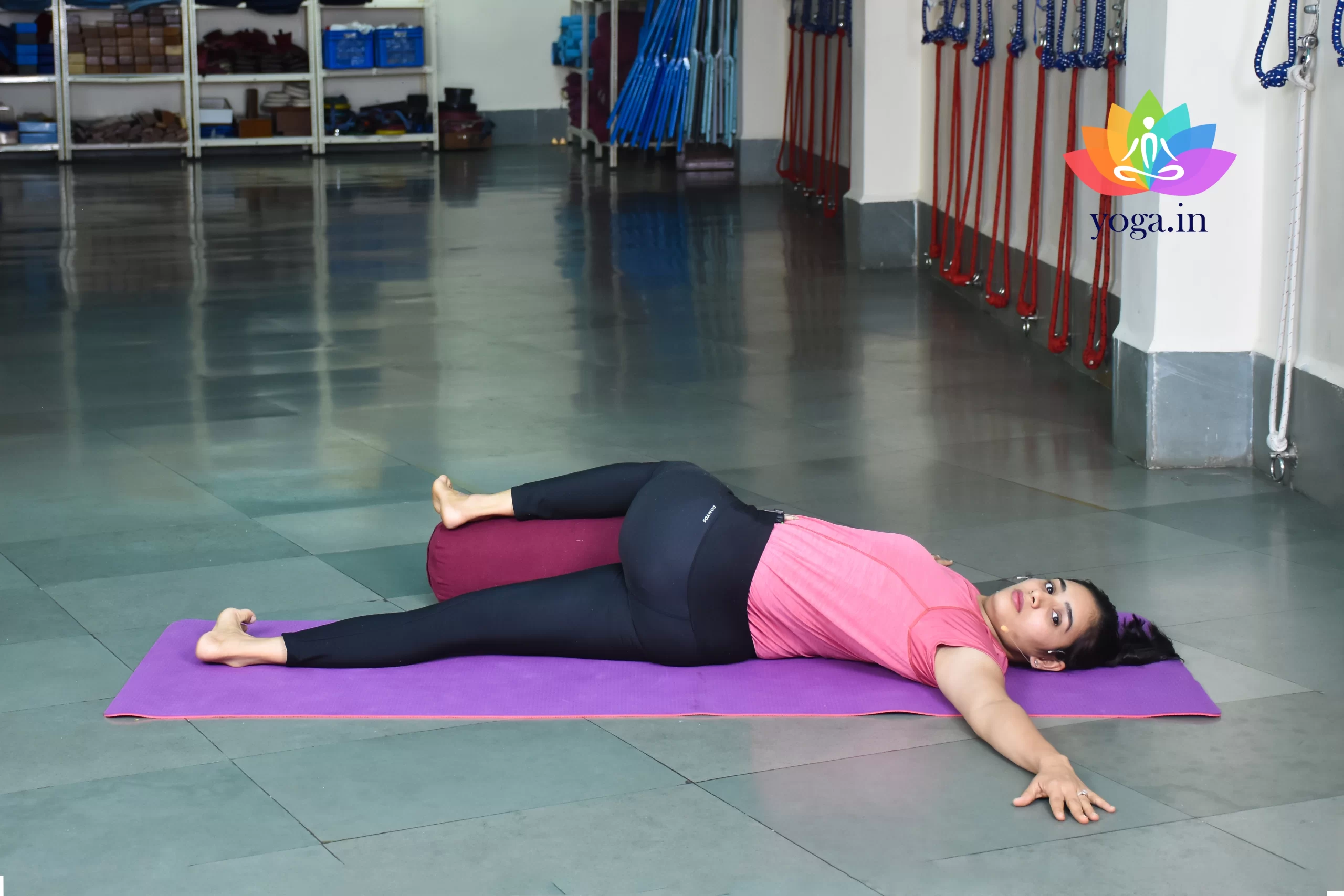
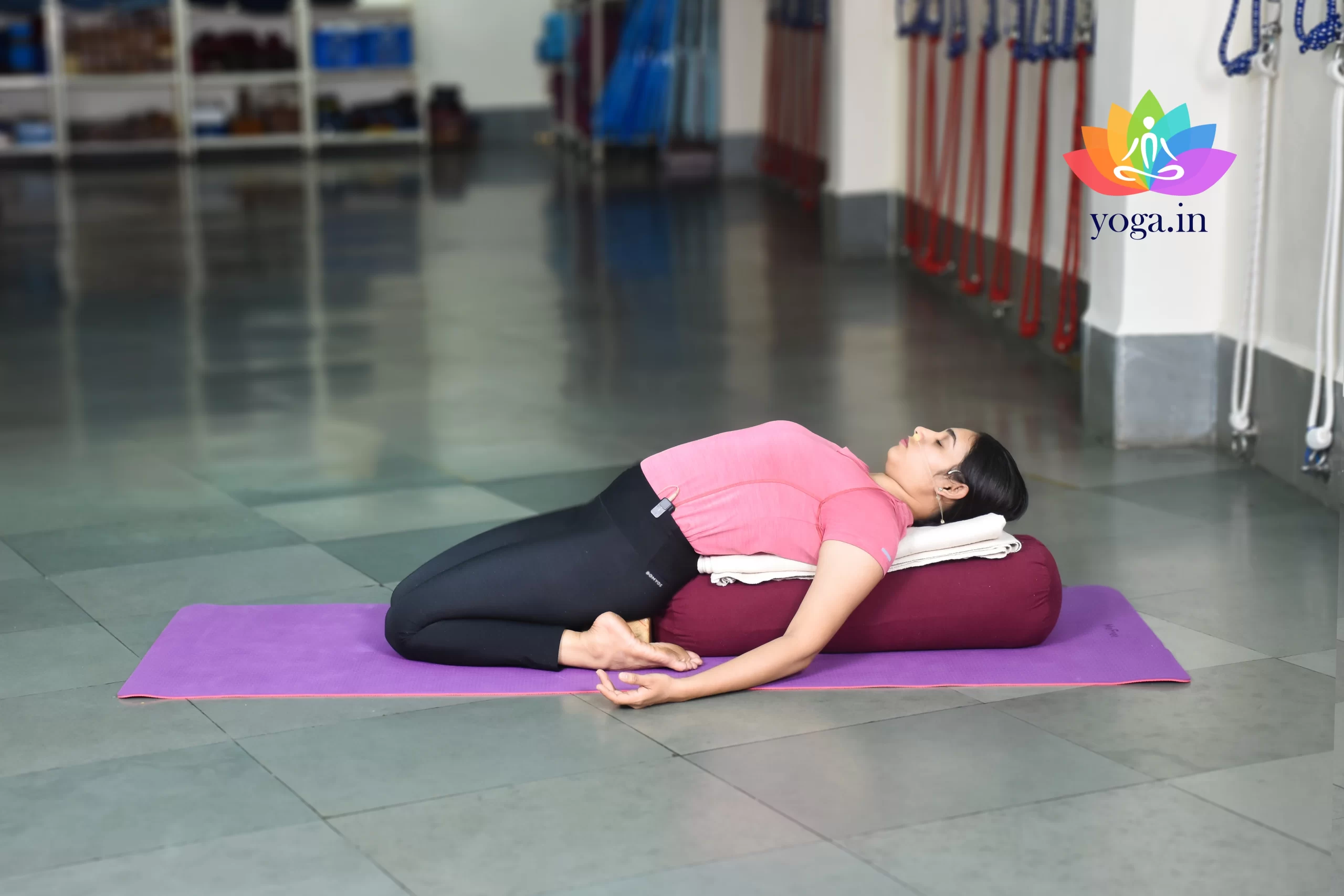
Steps to perform the Asana: Supta Matsyendrasana (Therapy)
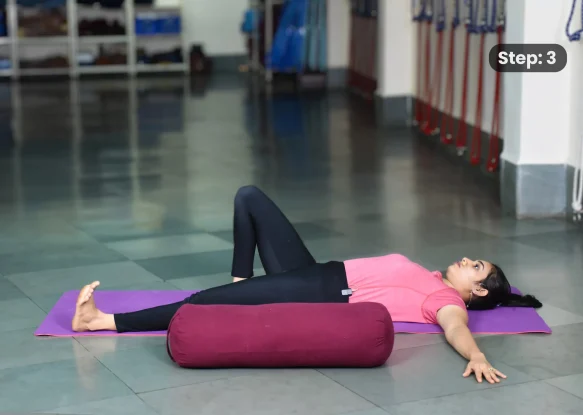
Start by lying down on your back in a supine position on the yoga mat.
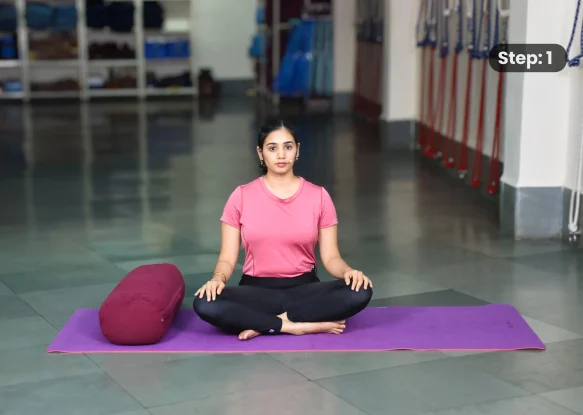
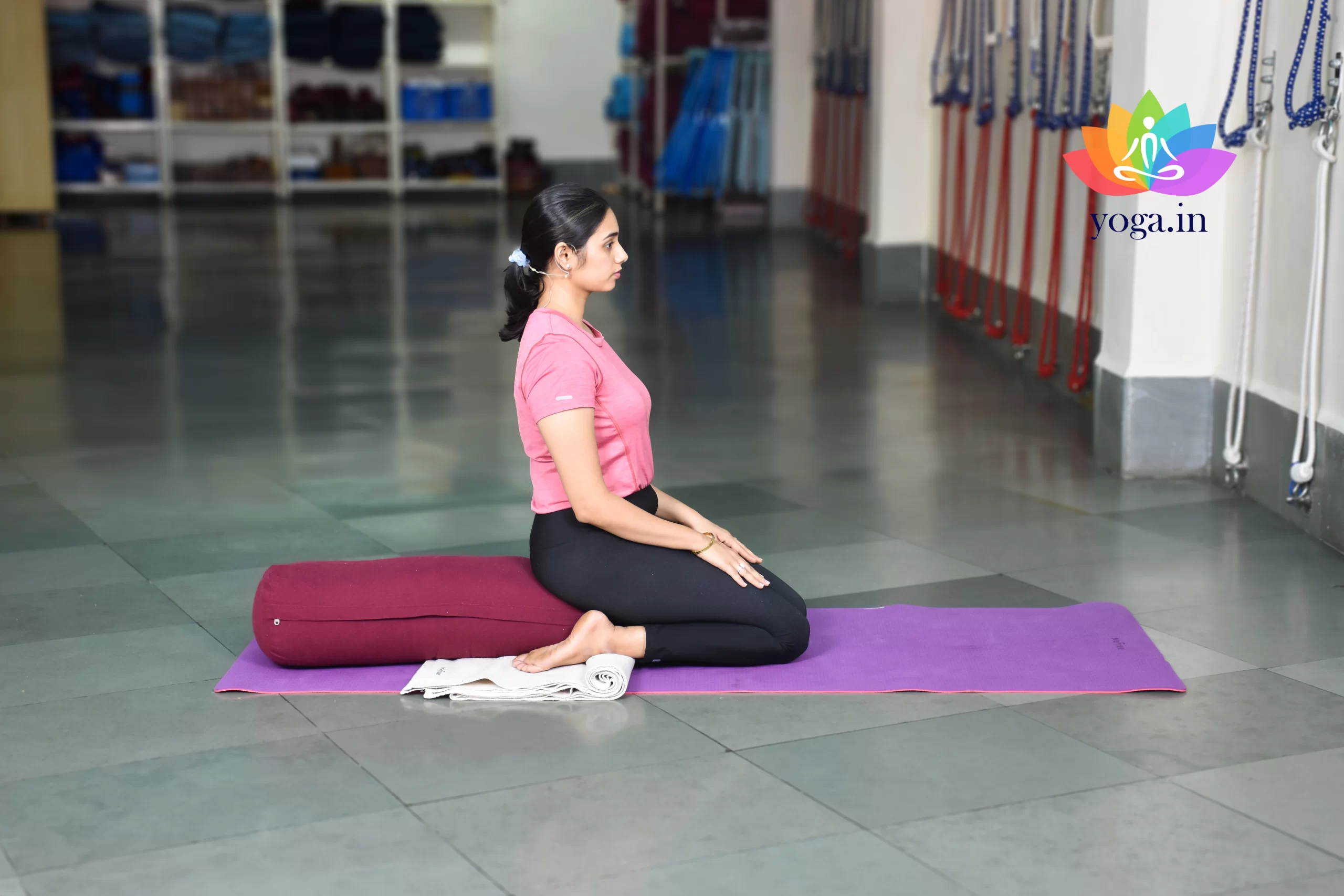
Keep the bolster beside your mat.
Bend your knees and bring your feet flat on the mat, hip-width apart. This helps to stabilize your lower back.
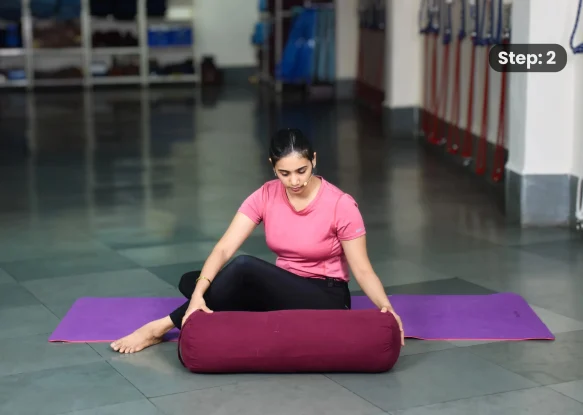
Position the bolster horizontally across your mat, perpendicular to your torso. The middle of the bolster should align with the midline of your body.
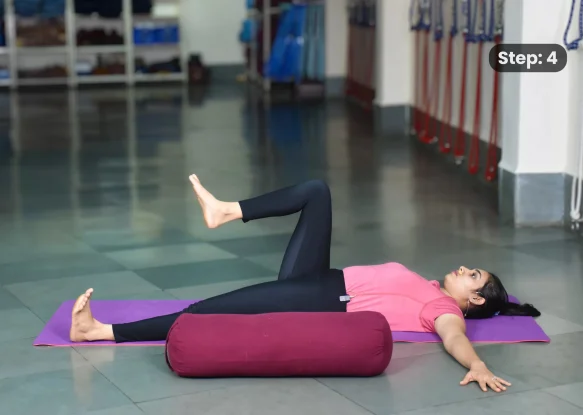
Exhale as you gently twist your torso to the right, bringing your knees towards your chest.
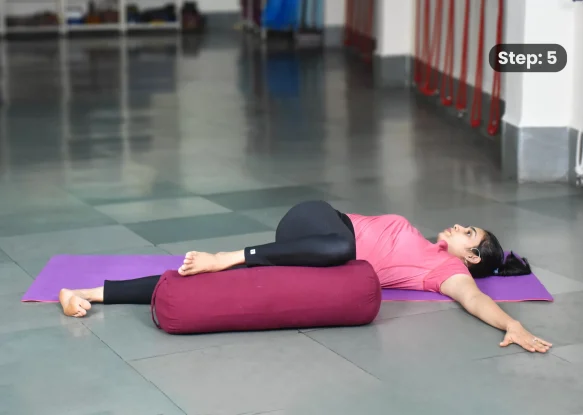
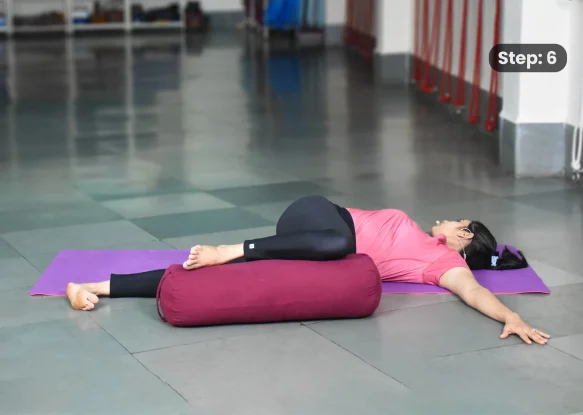
Once you’ve twisted to the right, lower your knees towards the left side of the bolster. Your right hip may lift slightly off the mat as you do this.
Extend your arms out to the sides at shoulder height, palms facing down. This helps to stabilize your upper body and encourages a gentle opening through the chest and shoulders.
Allow your body to relax into the twist. You may adjust the position of your legs and bolster slightly to find a comfortable stretch through your spine and outer hip.
Focus on deep, slow breaths as you hold the pose. Inhale to create space in the spine, and exhale to deepen the twist.
Hold Supta Matsyendrasana for several breaths, allowing your body to soften and release tension with each exhale.
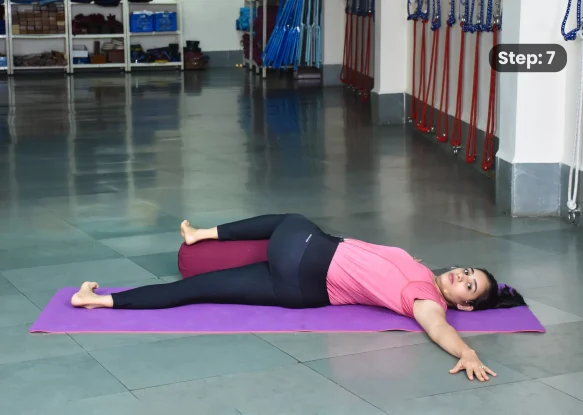
After holding the pose on one side, gently release the twist by bringing your knees back to the center. Then, repeat the pose on the opposite side, twisting to the left.
After practicing both sides, you can release your legs and arms.
Key Alignment Points
Try to keep both shoulders flat on the mat.
Ensure that your neck is comfortable and not strained.
Common Misalignments / (Mistakes)
Avoid holding your breath
Don’t force your knee to touch the ground
Contraindication / Cautions
Avoid in case of spondylitis and slip disc
Avoid if any injury to the neck, back, shoulders, hips and knees