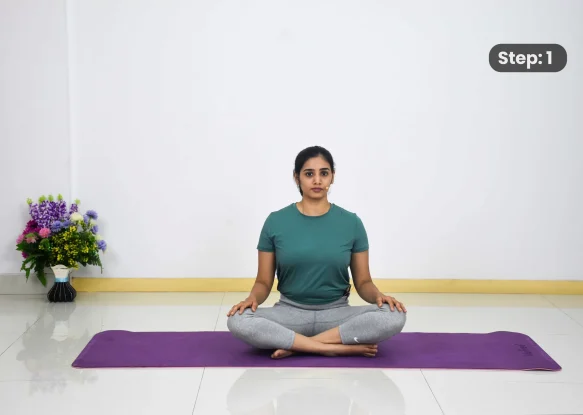
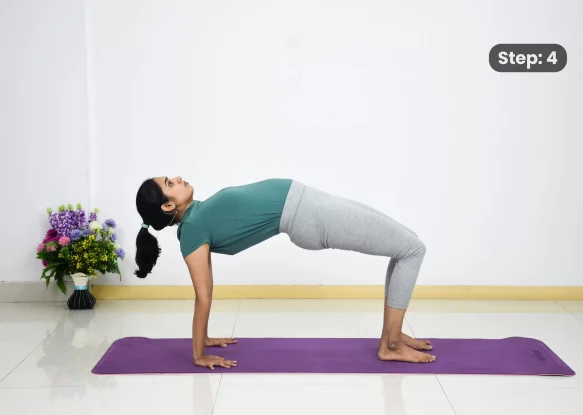
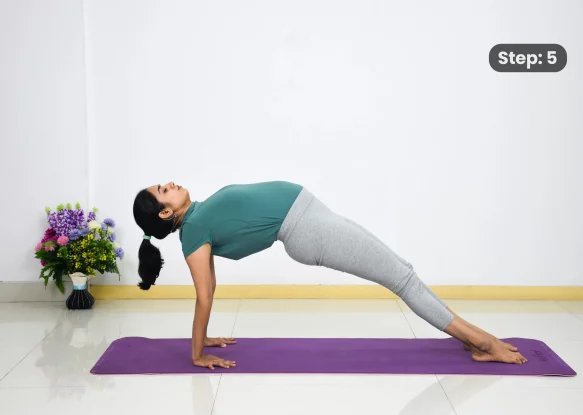
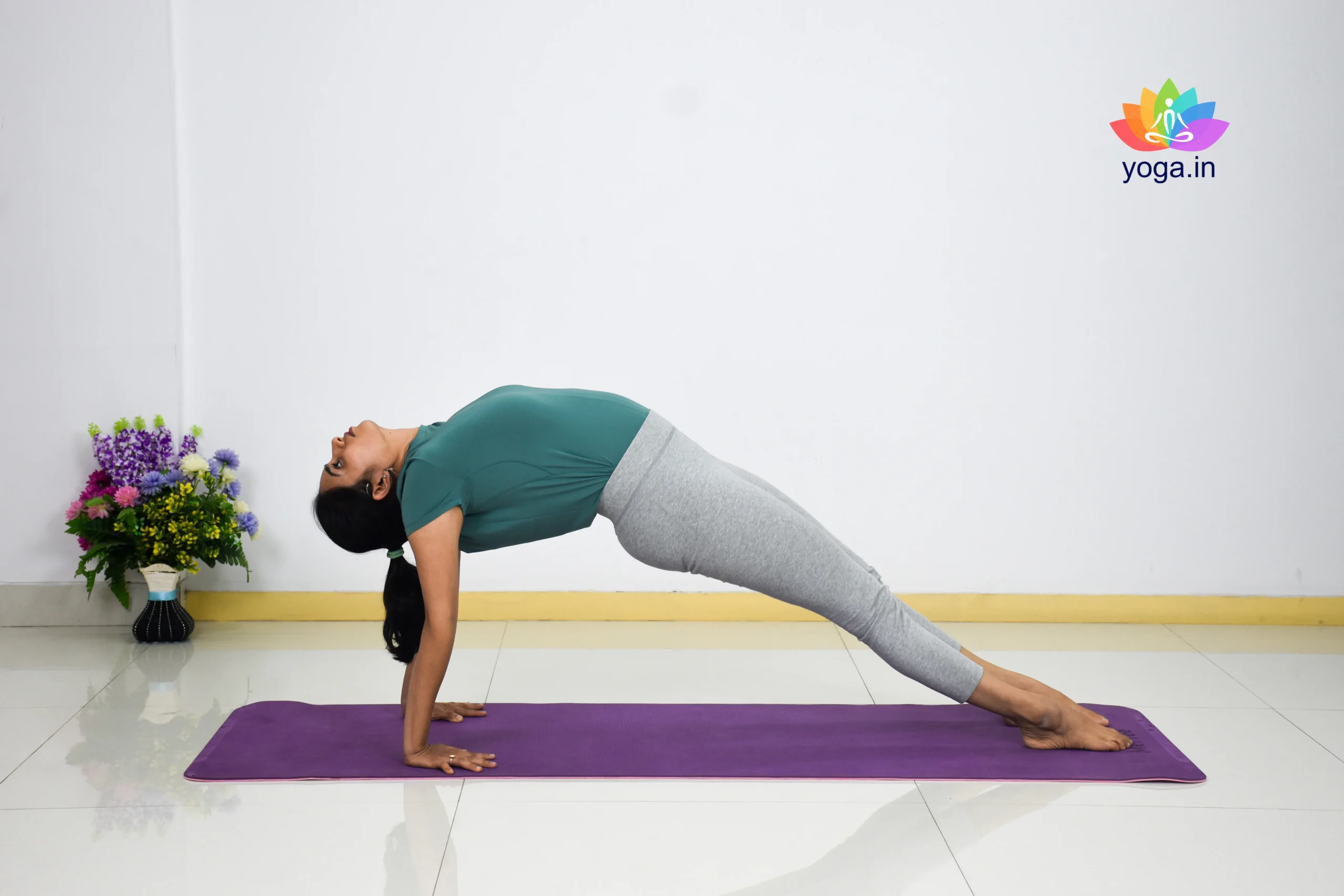
Purvottanasana, or Reverse Plank Pose, translates to “Intense East Stretch Pose” in Sanskrit. In this pose, the body is lifted into a plank-like position with the face up, stretching the front of the body and strengthening the back.
Purvottanasana, or Reverse Plank Pose, translates to “Intense East Stretch Pose” in Sanskrit. In this pose, the body is lifted into a plank-like position with the face up, stretching the front of the body and strengthening the back.
Steps to perform the Asana: Purvottanasana (Therapy)
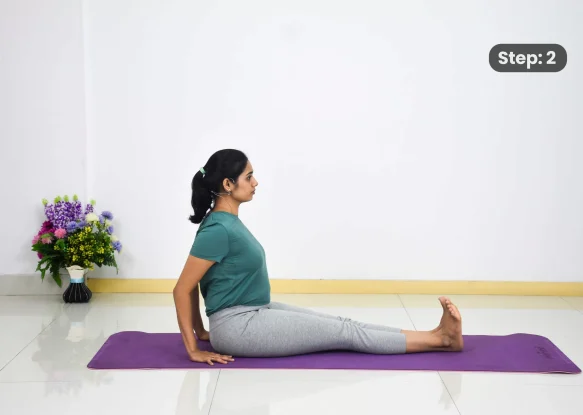
Begin by sitting on the floor with your legs extended in front of you (Dandasana). Place your hands a few inches behind your hips with your fingers pointing towards your feet. Keep your hands shoulder-width apart.
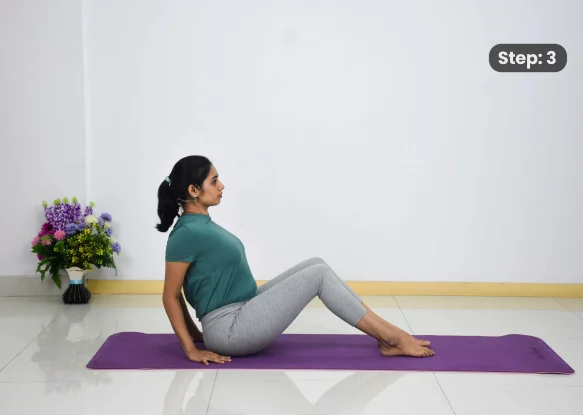
Press your palms firmly into the ground and engage your arm muscles. Draw your shoulder blades down your back to open your chest.
Press into your hands and feet as you lift your hips towards the ceiling. Your body should form a straight line from your heels to your shoulders.
Continue to press down through your hands as you lift your chest towards the ceiling. Keep your gaze straight ahead or slightly upwards, avoid straining your neck.
Keep your legs active and engaged. Press through your heels and flex your toes towards your shins.
Ensure that your arms are straight and strong, with your elbows not locked but firm.
Check that your shoulders are directly above your wrists and your hips are in line with your shoulders. Avoid sagging in the hips or overarching in the lower back.
Hold Purvottanasana for several breaths, aiming to maintain a strong and steady posture. Keep breathing deeply and evenly throughout the pose.
To come out of the pose, slowly lower your hips back to the ground with control. and relax yourself.
Key Alignment Points
Keep your elbows straight but not locked
Activate your core muscles by drawing your navel in towards your spine
Avoid allowing your hips to sag or drop towards the floor.
Keep your legs active and engaged
Point your toes and press firmly into the balls of your feet.
Common Misalignments / (Mistakes)
Allowing the shoulders to hunch up towards the ears or collapsing them forward
Allowing the wrists to collapse or hyperextend can strain the wrists and compromise stability in the pose
Contraindication / Cautions
Avoid in case of high blood pressure or severe migraine
Avoid in cervical spondylitis
Avoid in any kind of injury in the wrists, neck, or back