The Sanskrit name is derived from Salabha (शलभा) meaning locust and āsana (आसन) meaning “posture” or “seat” *The pose resembles that a locust resting on the ground.
The Sanskrit name is derived from Salabha (शलभा) meaning locust and āsana (आसन) meaning “posture” or “seat” *The pose resembles that a locust resting on the ground.
Steps to perform the Asana: Shalabhasana (Therapy)
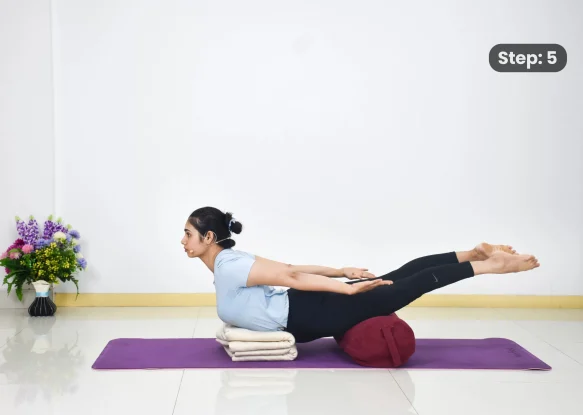
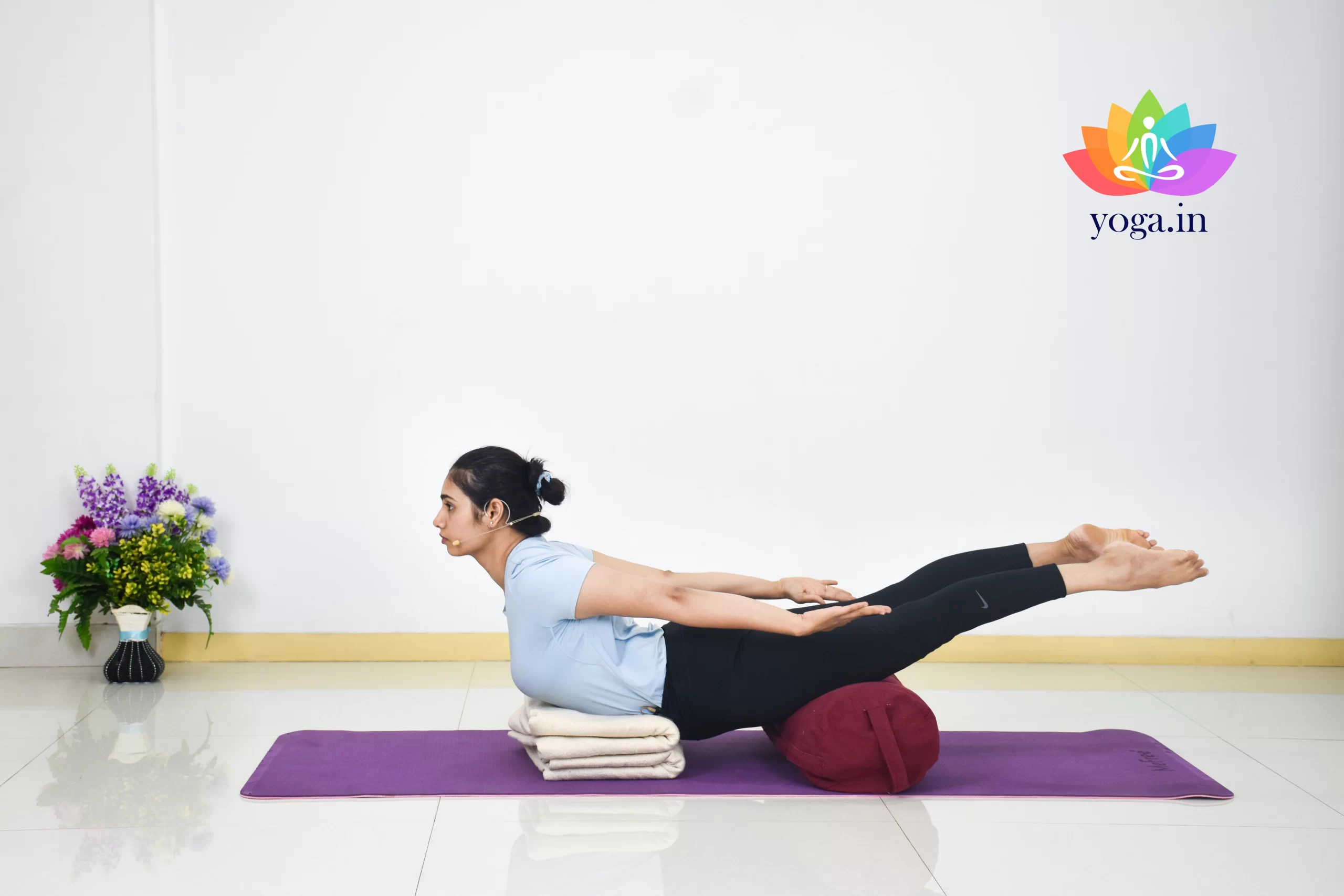
Begin by lying on your abdomen (prone position) on a yoga mat with your legs extended and your arms resting alongside your body.
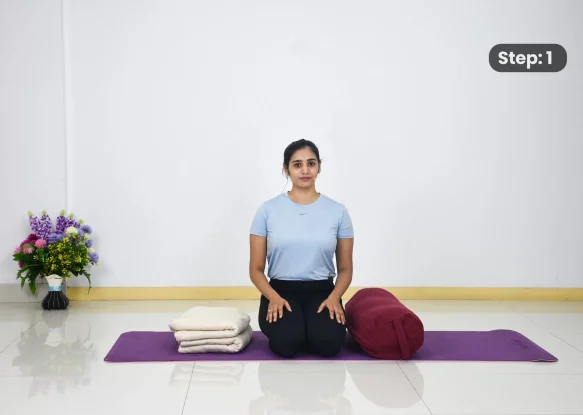
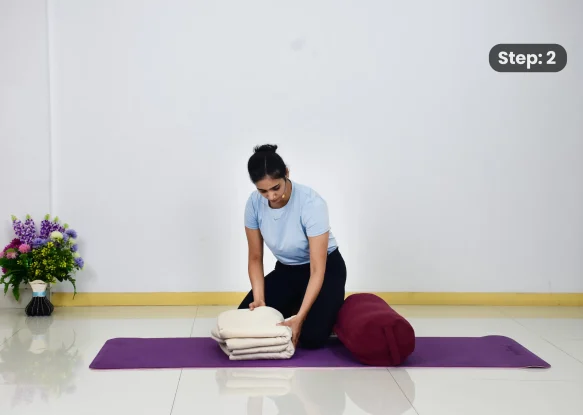
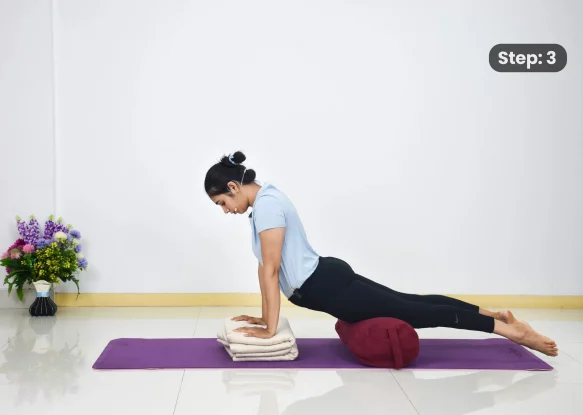
Place a folded blanket under your lower abdomen and pelvis to provide gentle support and comfort.
Position a pillow as shown in the accompanying images or video to provide additional support during the practice.
Keep your forehead resting on the mat and your chin slightly tucked to maintain length in the back of your neck.
Press your pelvis gently into the support and engage your buttocks to provide stability to your lower back.
Rest your arms alongside your body with your palms facing down.
Place your hands underneath your pelvic area for additional support, as shown in the accompanying images.
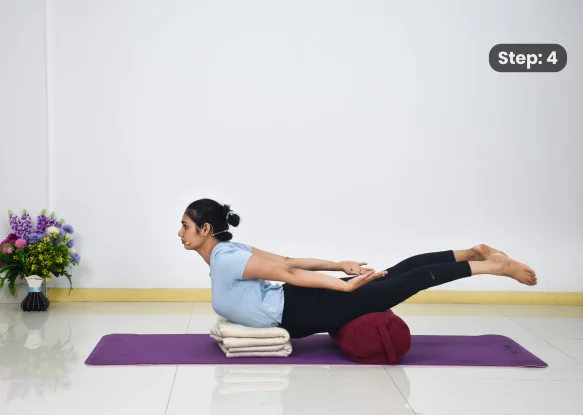
On an exhalation, slowly lift your legs off the mat while keeping them straight and engaged.
Keep your gaze directed downward and maintain a long neck to avoid unnecessary strain or compression in the cervical spine.
Keep your legs straight and active, with your toes pointing outward.
Maintain steady and even breathing while holding the position.
Hold the pose for 15–30 seconds, or for a duration that is comfortable for you.
Focus on maintaining stability and strength throughout your body without straining the lower back.
Slowly lower your legs back down to the mat with control.
Carefully remove or adjust the props as needed.
Rest for a few breaths in Makarasana (Crocodile Pose) to release tension and allow the lower back to relax.
Key Alignment Points
Engage your abdominal muscles by drawing your navel toward your spine.
Common Misalignments / (Mistakes)
Don’t raise your shoulders toward your ears, which can strain neck muscles
Don’t bend your knees, which will compromise the action of your legs and adds pressure to your lower back
Avoid collapsing into your lower back by maintaining engagement in your core muscles.
Contraindication / Cautions
Avoid if suffering from ulcers or hernia, hypertension, heart ailments