The Sanskrit name is derived from Upavistha (उपविष्टा) means open/seated, Kona (कोना) means angle and Asana (आसन) meaning posture or seat.
Steps to perform the Asana: Upvishta konasana (Therapy)
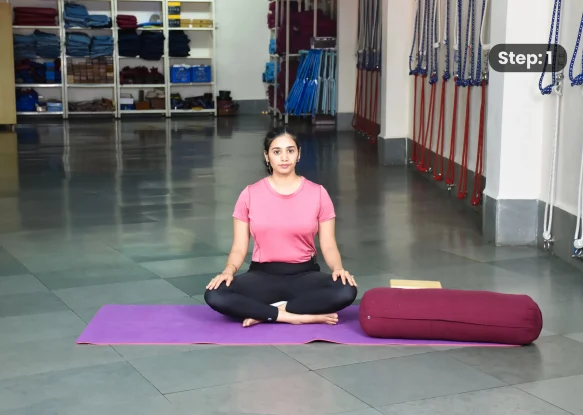
Place your yoga mat on a flat surface.
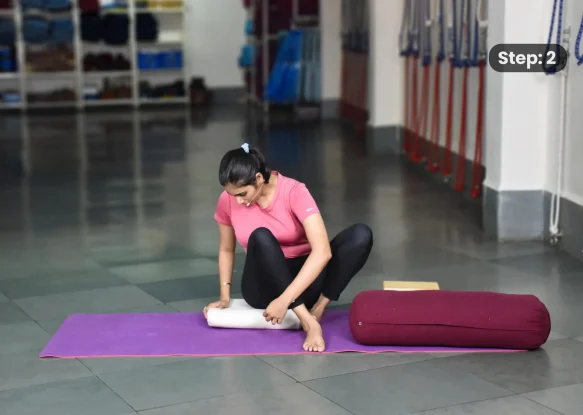
Fold a blanket and place it on the mat where you’ll be sitting to elevate the hips, especially if you have tight hamstrings.
Place a bolster lengthwise in front of you to support your torso if needed.
Have a block handy to support your hands or head if you need additional support.
Sit on the folded blanket with your legs extended straight in front of you.
Ensure your spine is long and upright, and your shoulders are relaxed.
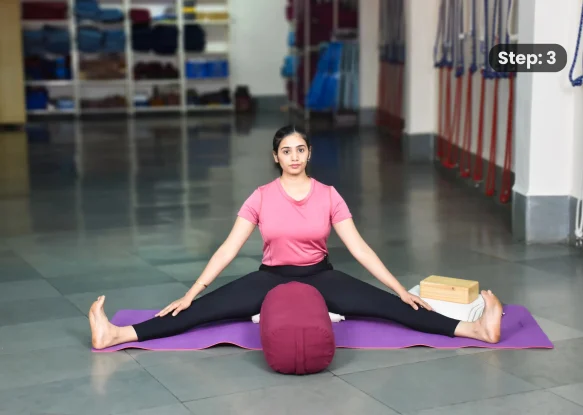
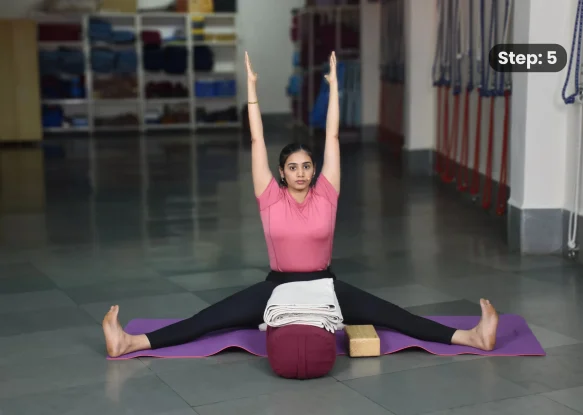
Slowly spread your legs wide apart in a comfortable position. Your legs should form a V shape.
Keep your toes pointing upward and flex your feet to engage the leg muscles.
If you have tight hamstrings or struggle to keep your back straight, place a block under your sit bones for additional elevation.
Press the thighs down towards the mat and engage the muscles of the legs.
Keep the kneecaps pointing straight up.
Place your hands on the mat in front of you.
Inhale, lengthen your spine, and sit up tall. Imagine lengthening from the tailbone through the crown of your head.
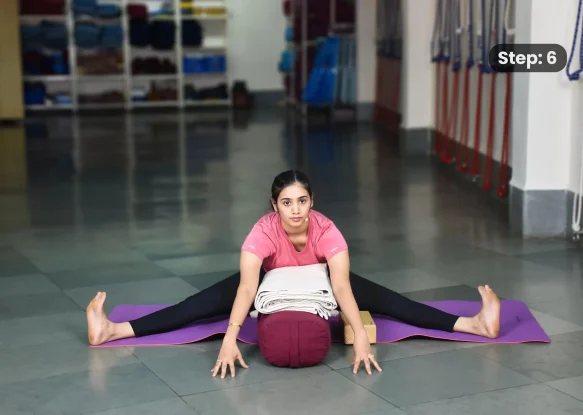
On an exhale, start to hinge at the hips and lean forward. Keep the spine long and avoid rounding your back.
Walk your hands forward on the mat, leading with your chest.
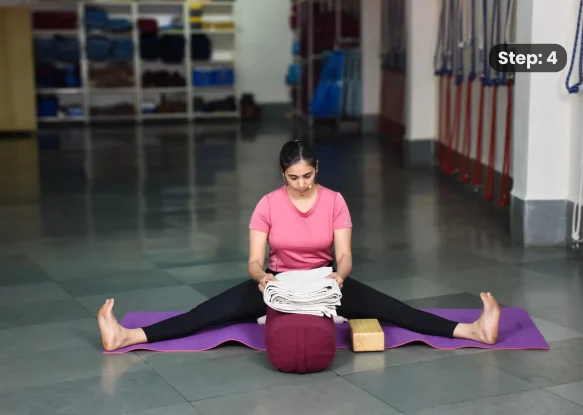
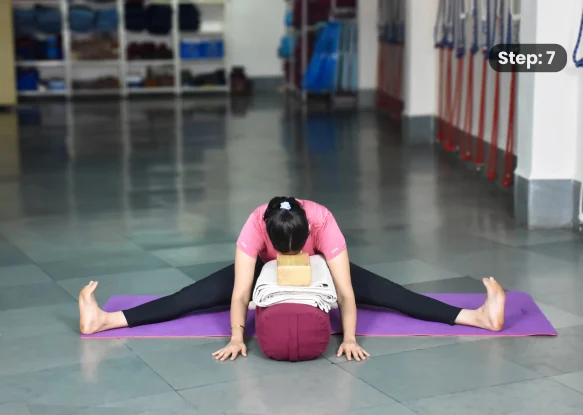
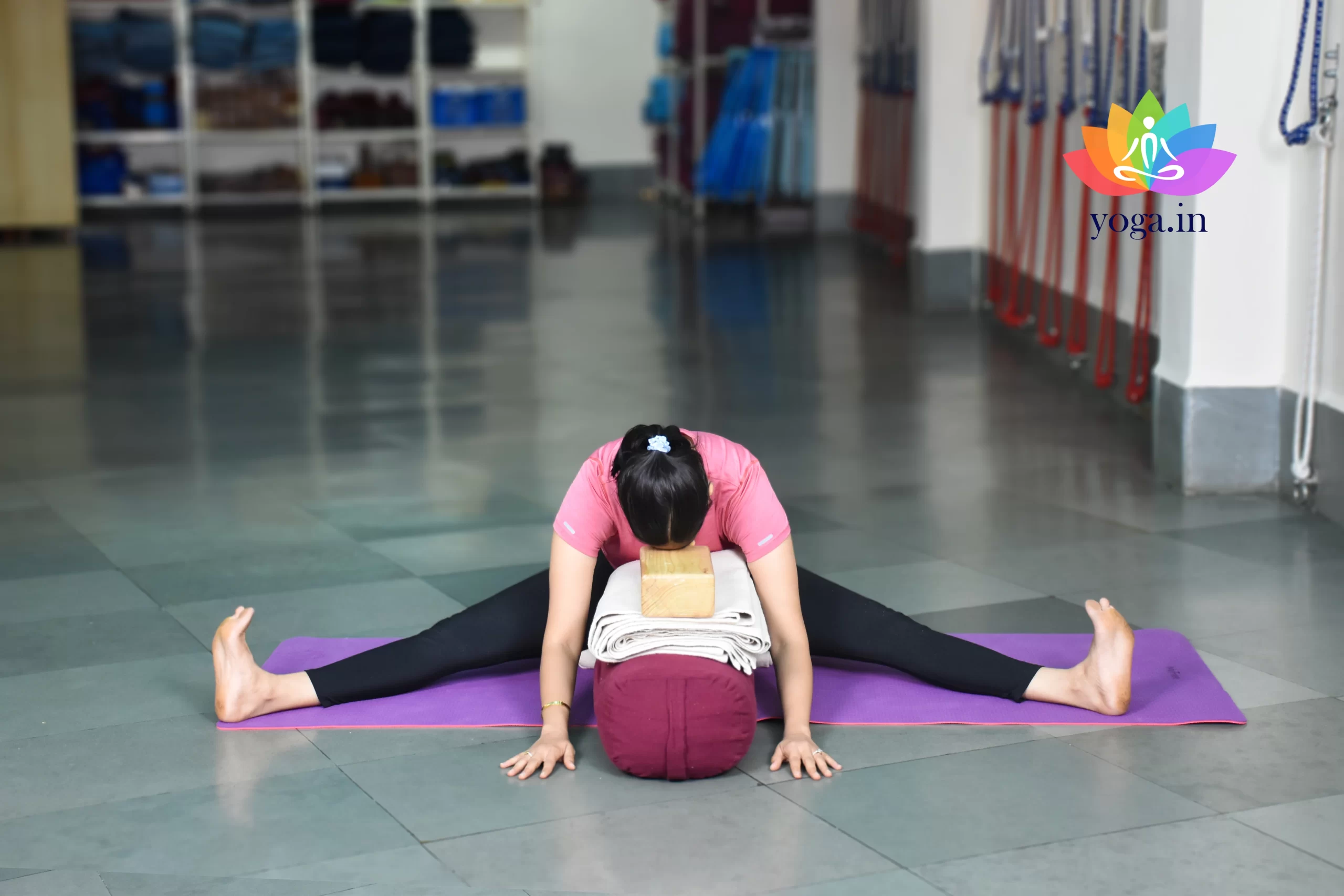
Place the bolster in front of you. Keep the blanket & block up on that and then rest your head on it. Adjust the height of the props to ensure a comfortable stretch without straining.
Keep your shoulders relaxed and away from your ears.
Allow your chest to remain open and broad.
Hold the pose for few seconds, breathing deeply and steadily.
With each inhale, lengthen the spine. With each exhale, gently deepen the forward bend.
To come out of the pose, inhale and slowly walk your hands back towards your body and bringing the torso up release the pose.
Key Alignment Points
Ensure that both sit bones are firmly grounded into the mat
Keep the chest open and broad
Engage the leg muscles, pressing the thighs down towards the mat. Ensure the kneecaps point towards the ceiling
Engage the core muscles to support the spine and help maintain the length and alignment of the torso
Avoid tucking the tailbone under or excessively arching the lower back