The name comes from the Sanskrit word “Paschim” meaning west, “Namaskar” meaning greeting and “asana” meaning pose.
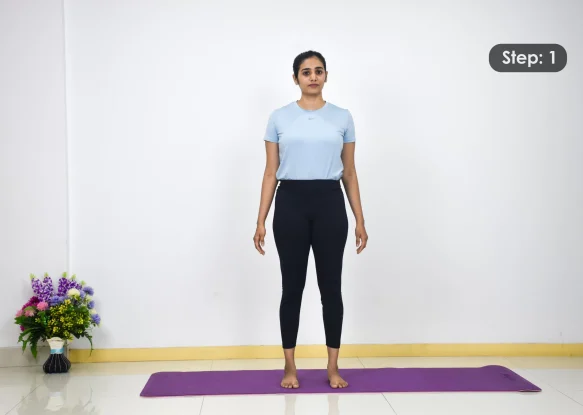
Stand in Tadasana on the floor. Keep your spine tall and your shoulders relaxed.
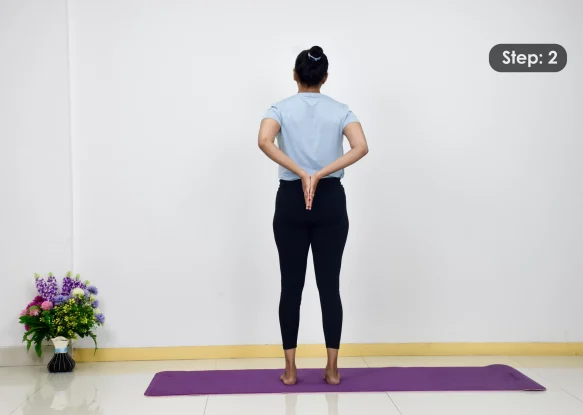
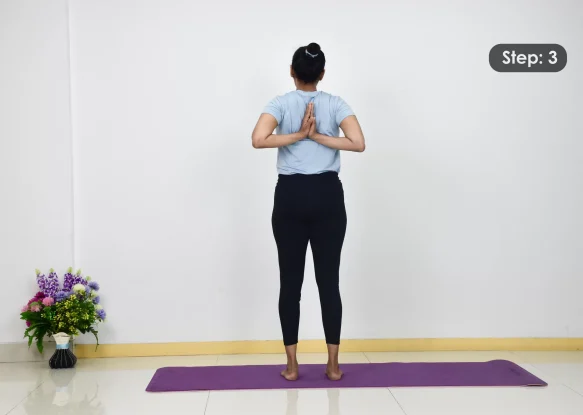
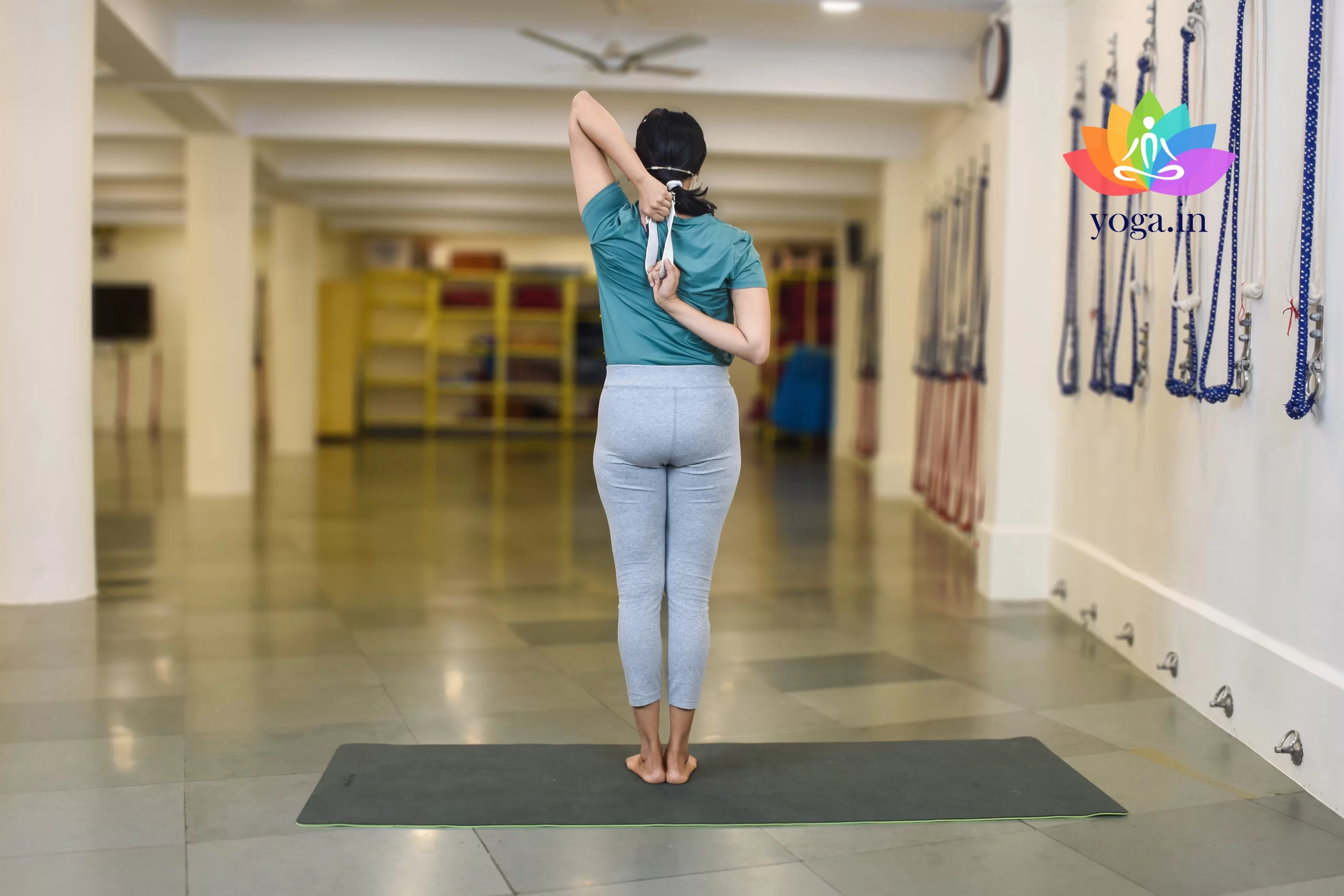
Bend both elbows and bring your palms together behind your back in a prayer position.
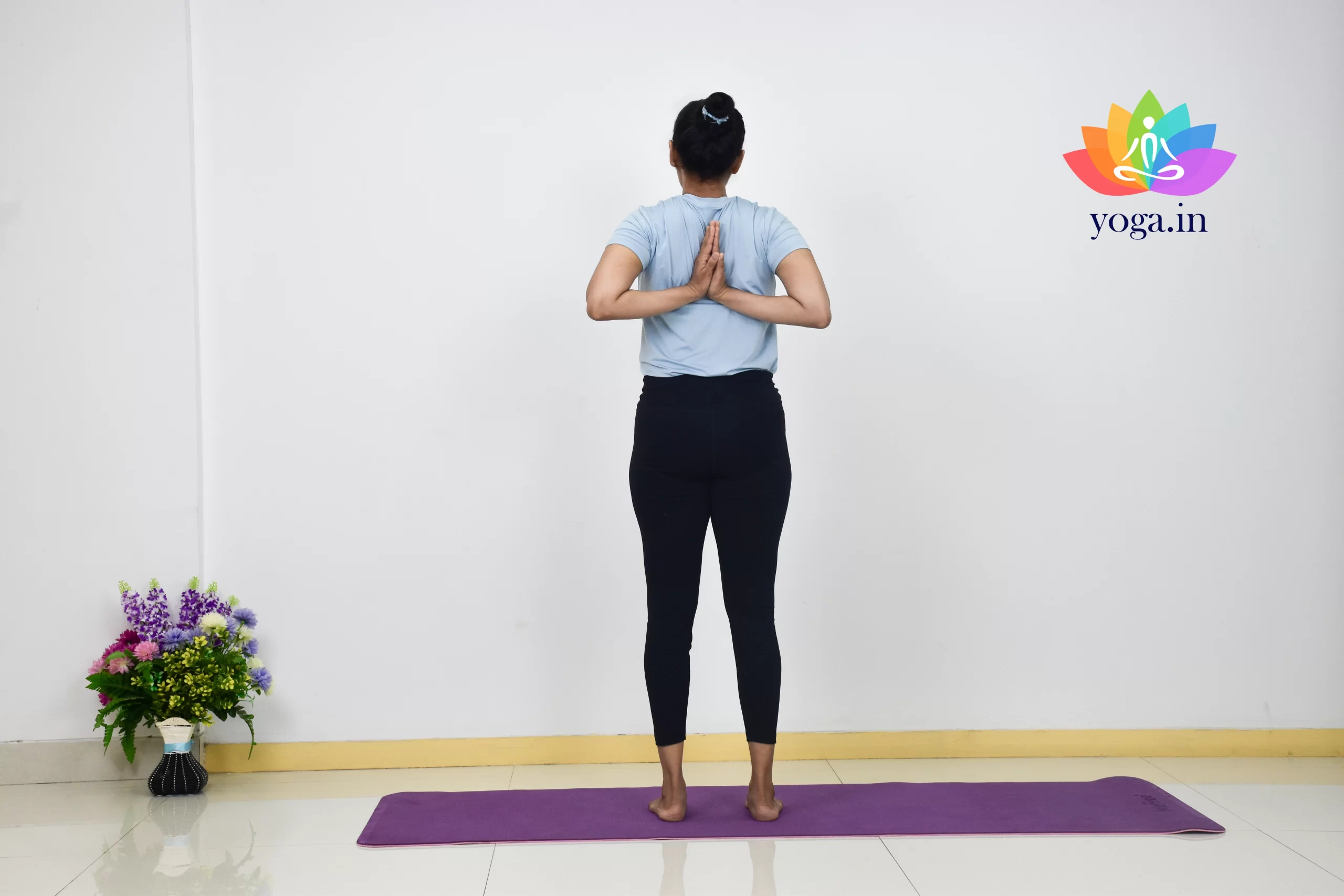
Press your palms together firmly, fingers pointing upwards, and thumbs resting against your spine.
Focus on opening your chest and drawing the shoulder blades together.
Lift your sternum slightly to maintain a tall, elongated spine.
Keep your shoulders relaxed and away from your ears. Avoid shrugging.
Engage your core muscles to support your spine and maintain stability in the pose.
Hold the pose for several breaths, maintaining smooth and steady breathing throughout.
To release, gently bring your hands back to the front of your body.
Straighten your arms and relax your shoulders.
Ensure that the wrists are not strained or forced into an uncomfortable position.
Engage your core muscles to support your spine and prevent slouching.
One of the most common issues is rounding of the shoulders
Tightness in the shoulders by tensing the neck muscles
Avoid in case of wrist, hand, or shoulder injuries
Avoid in case of Carpal Tunnel Syndrome
Avoid if suffering from high blood pressure
Avoid during pregnancy
The Sanskrit name is derived from Salabha
The Sanskrit name is derived from Setu
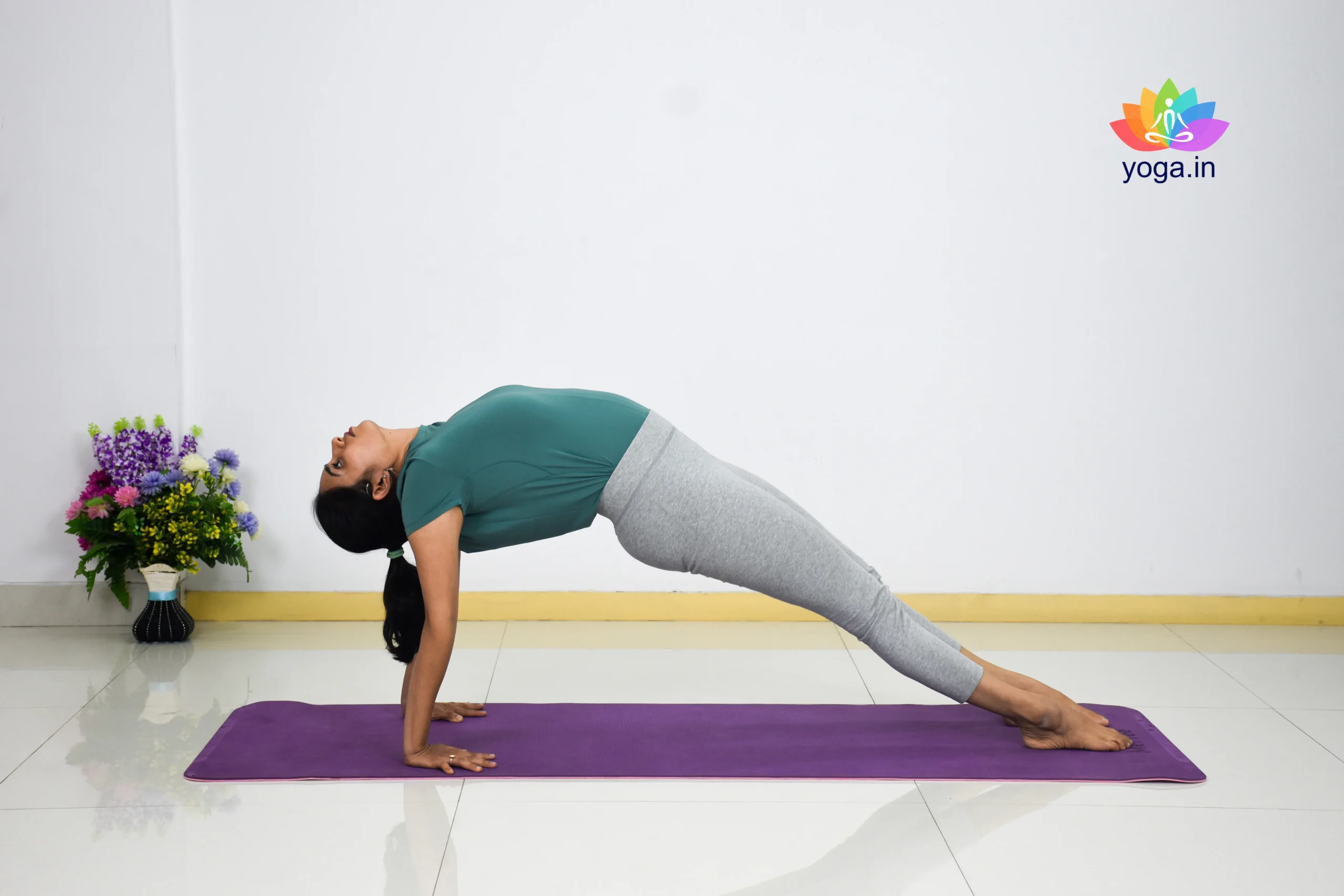
Purvottanasana, or Reverse Plank Pose, translates to
The Sanskrit name is derived from Gau
The Sanskrit name is derived from Dhanur
Please login with social account to support this post.