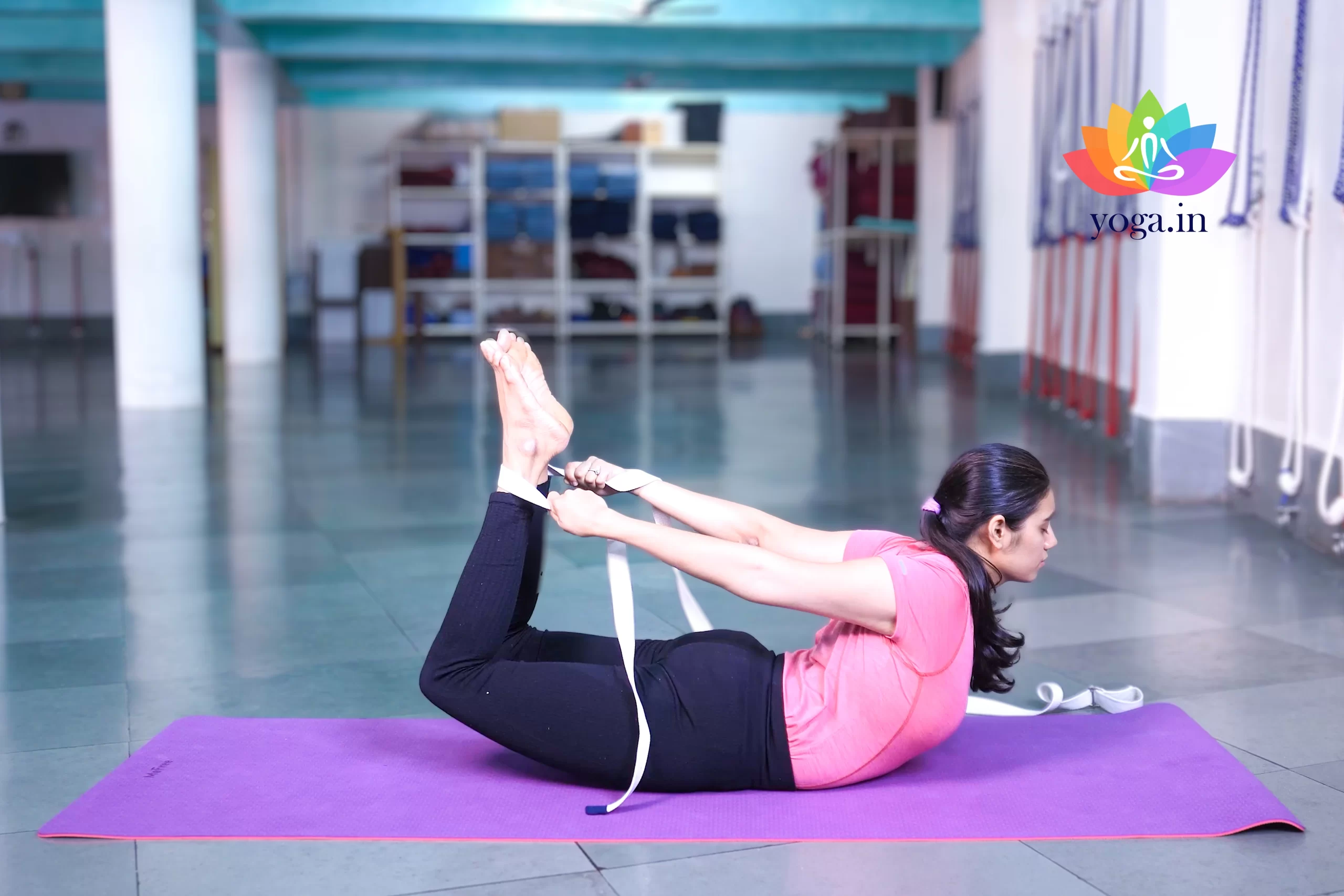
The Sanskrit name is derived from Gau (गो) meaning cow, Mukh meaning face and asana (आसन) meaning posture or seat.
Steps to perform the Asana: Gomukhasana (Therapy)
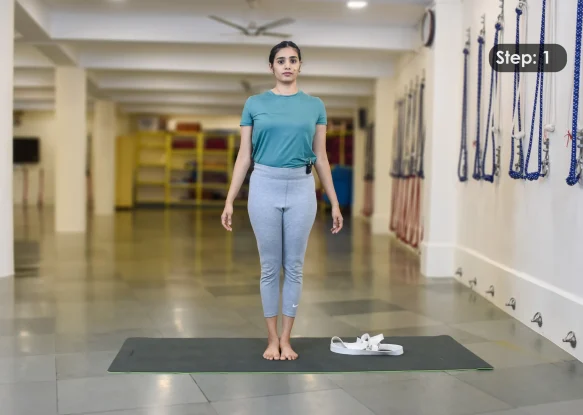
Stand on your yoga mat like Tadasana.
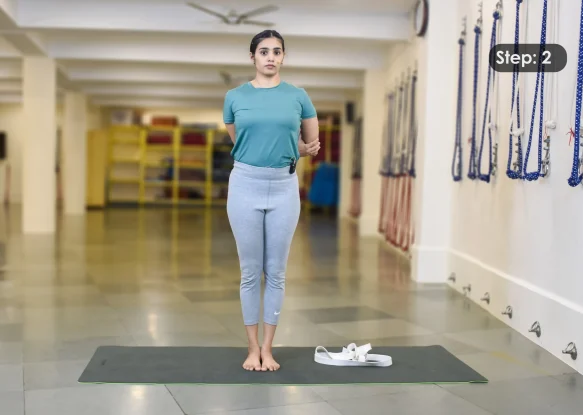
Extend your right arm out to the side at shoulder height, palm facing down.
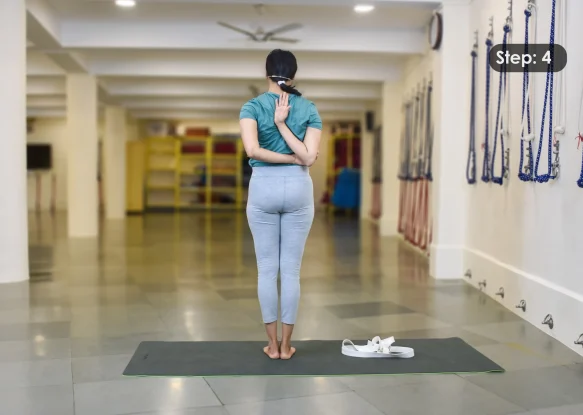
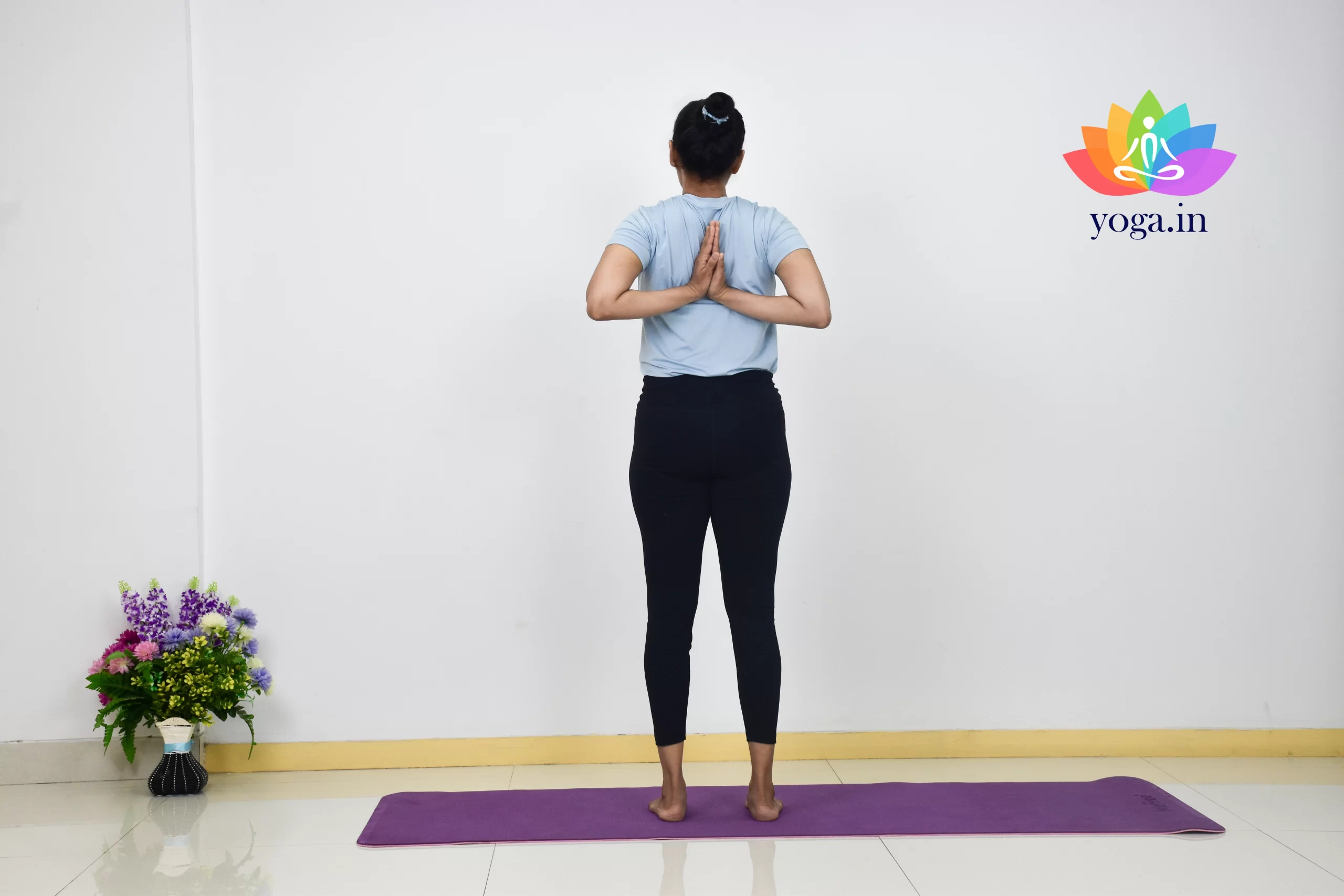
Bend your right elbow and bring your right hand behind your back, reaching towards the centre of your shoulder blades.
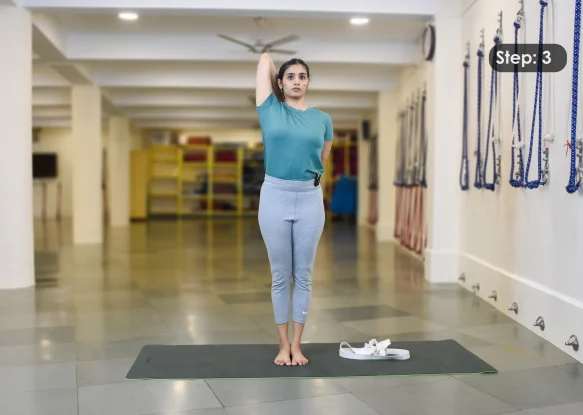
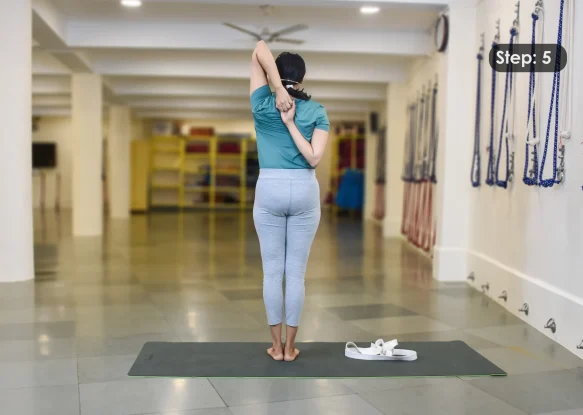
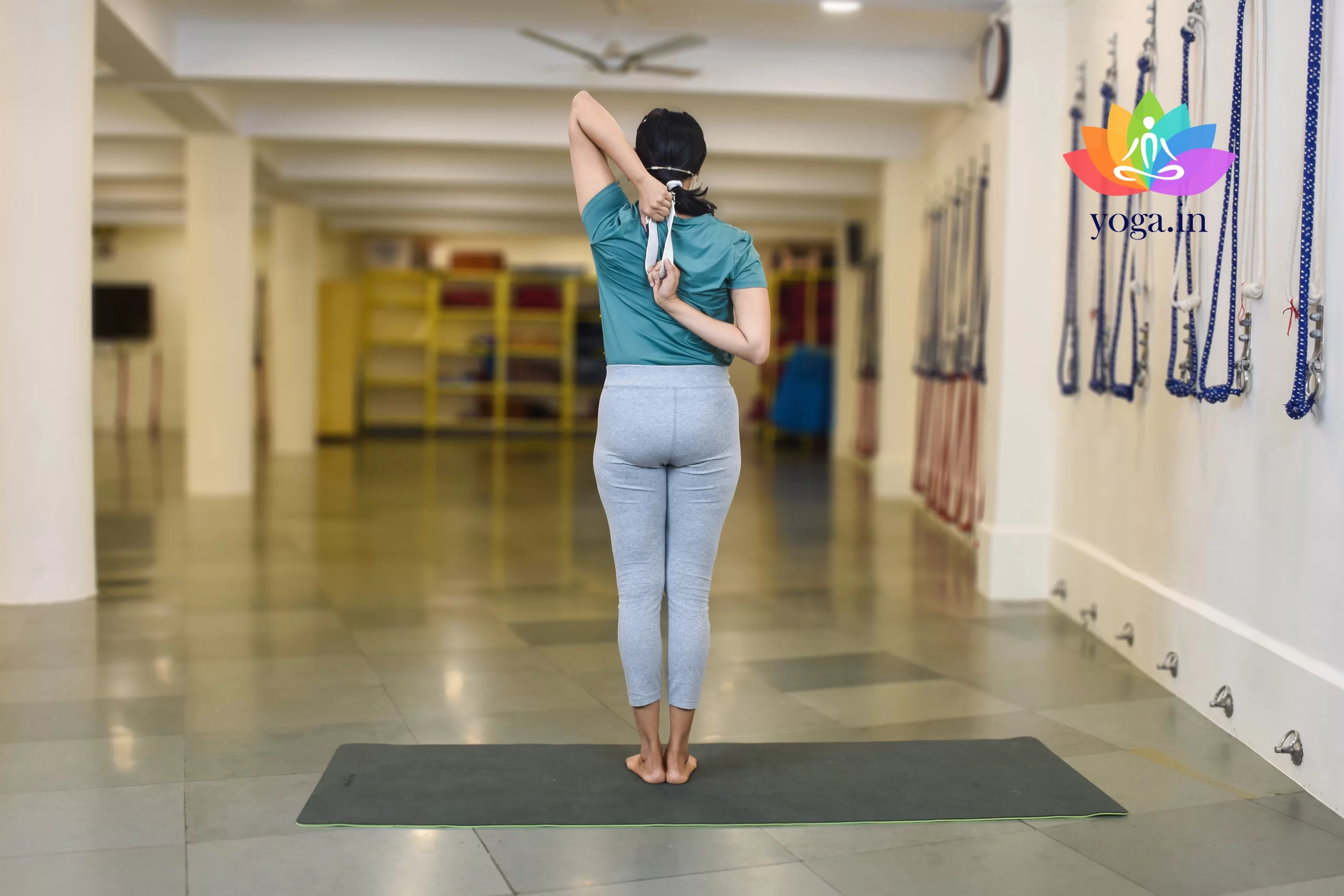
Extend your left arm up toward the ceiling, then bend your left elbow and bring your left hand behind your back, reaching toward your right hand.
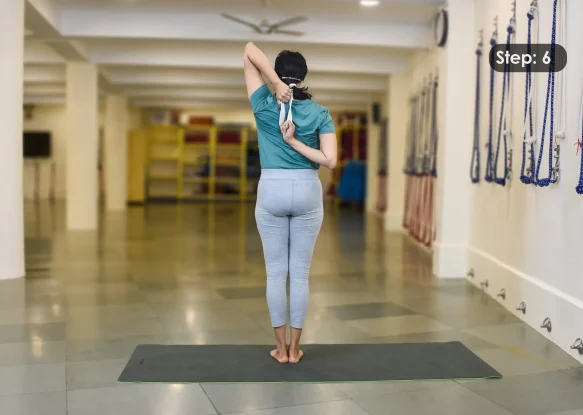
If you’re unable to clasp your hands behind your back, hold onto a yoga strap with both hands. Gradually work on bringing your hands closer together over time.
Keep your chest lifted and your shoulders relaxed away from your ears.
If you’re comfortable and want to deepen the stretch, gently hinge forward from your hips, keeping your spine long.
Stay in Gomukhasana for 30 seconds to 1 minute, or longer if desired, breathing deeply and evenly.
Gently release the pose.
Repeat the pose by switching the position of your arms.
Release both the hands and relax yourself.
Key Alignment Points
Sit up tall with your spine straight and elongated.
Keep your chest open and lifted.
Engage your core muscles to support your spine and maintain balance.
Common Misalignments / (Mistakes)
While your hands are clasped, do not stick your ribs out
Contraindication / Cautions
Avoid in case of shoulder injury
Avoid in case of severe pain in thighs, hip, knee, shoulder, hands and legs