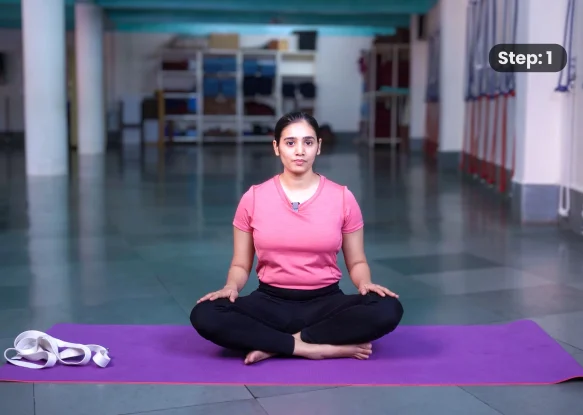
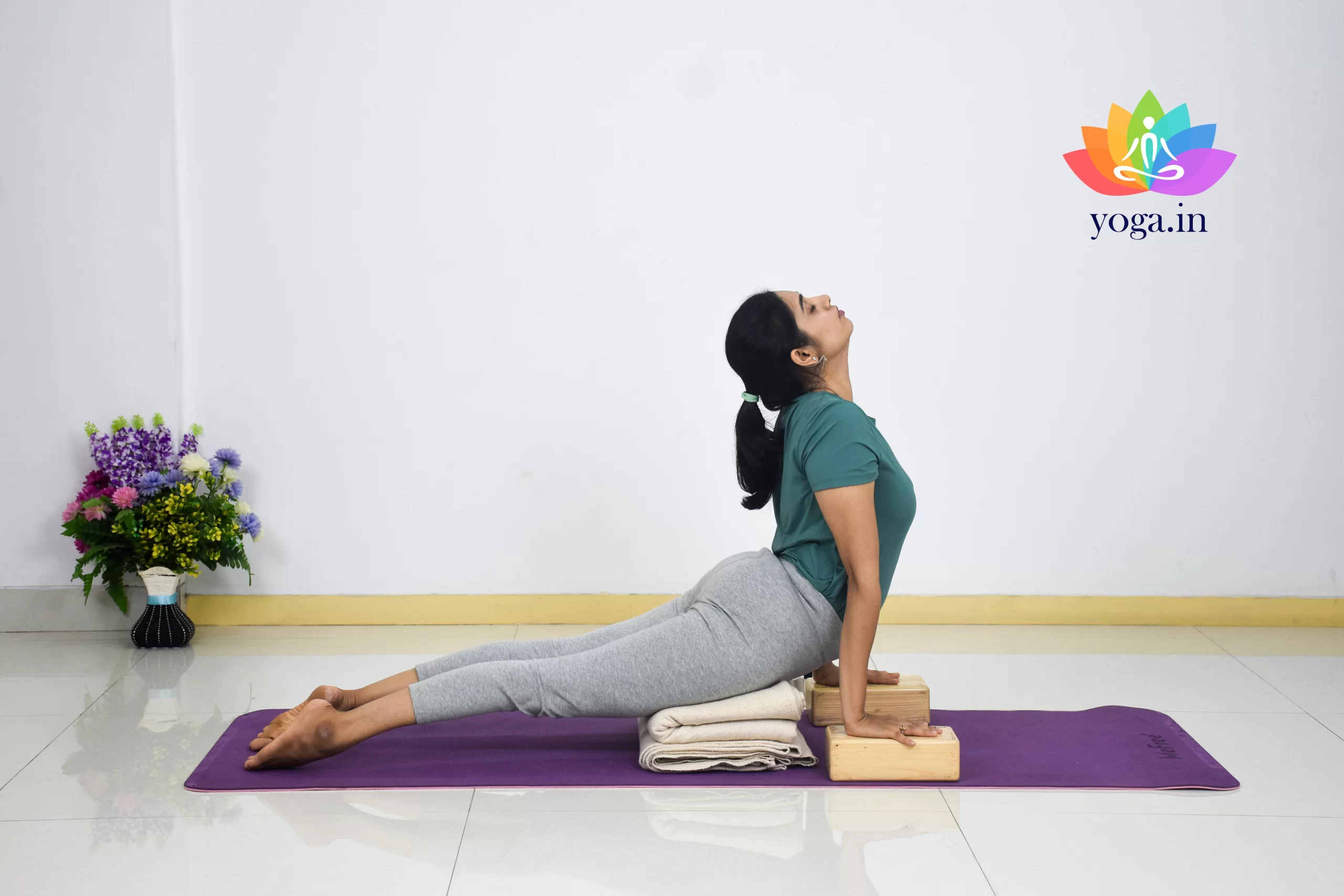
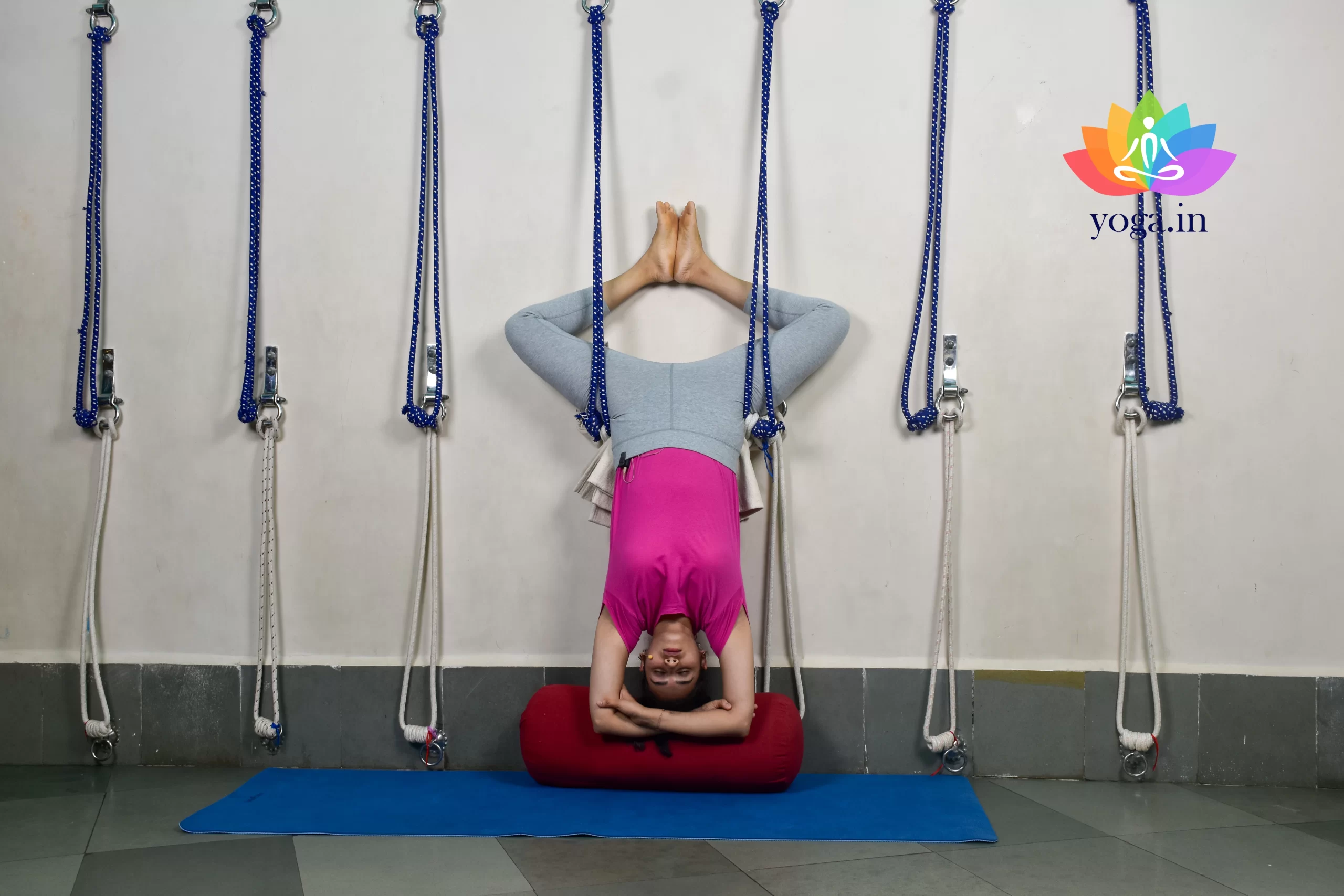
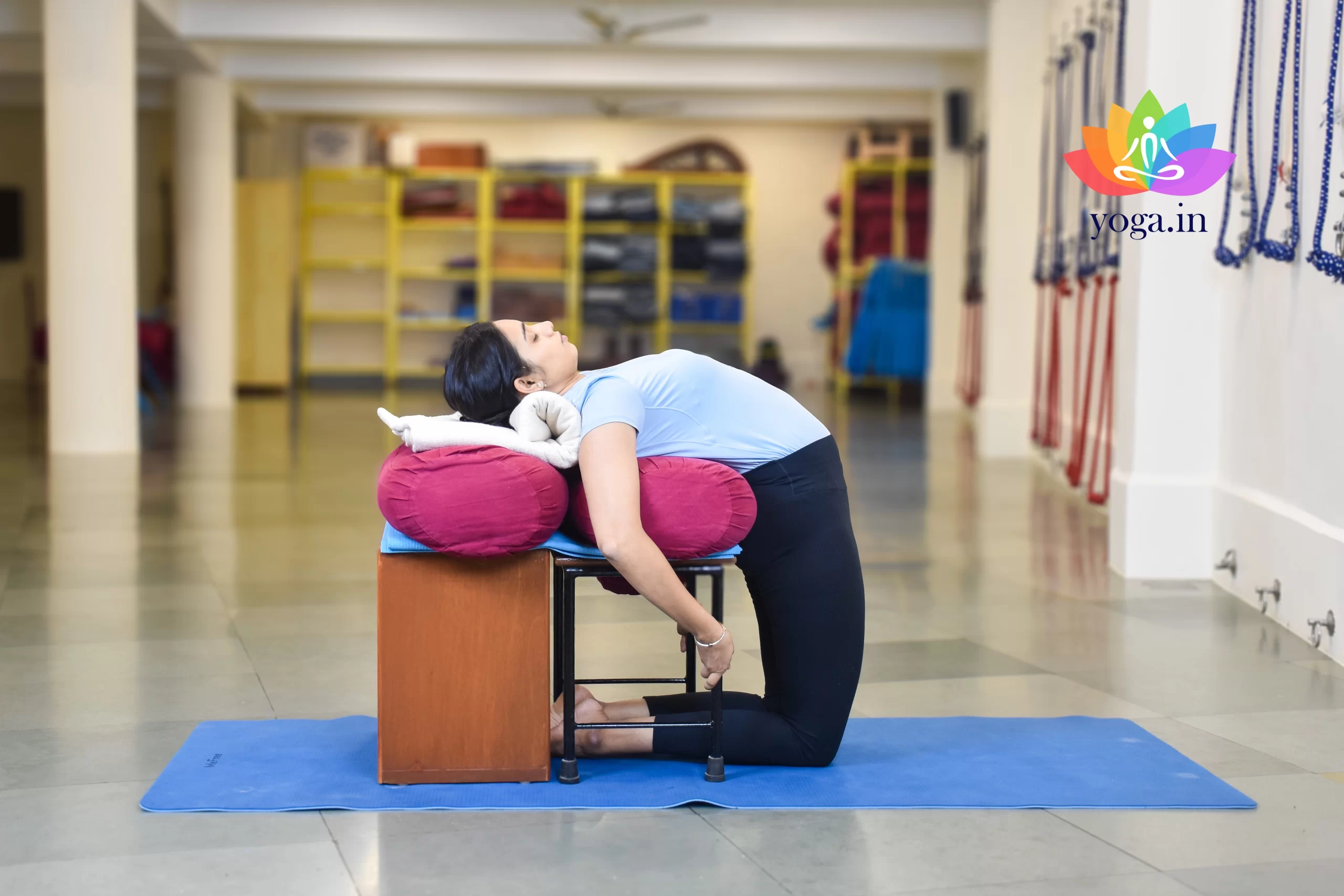
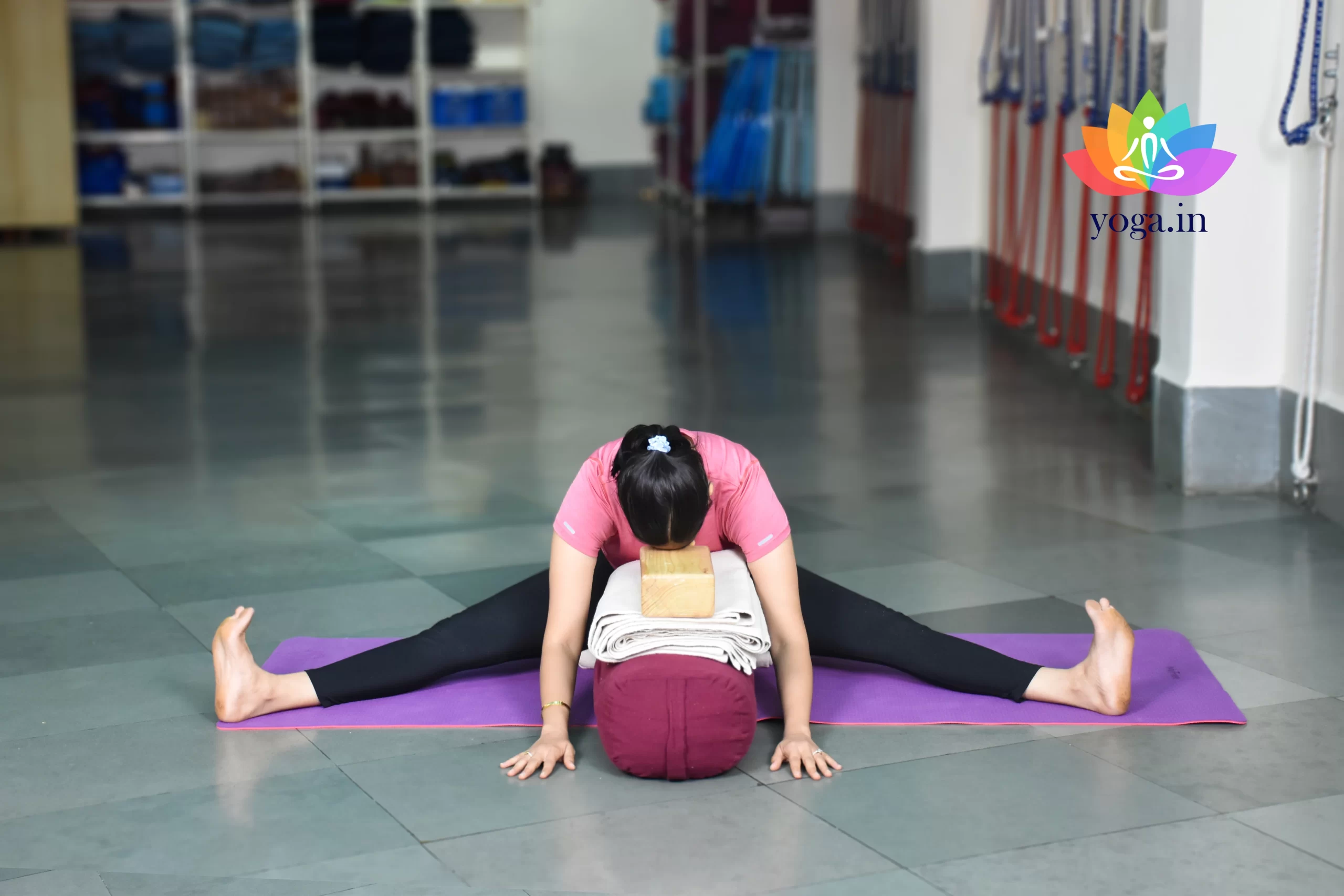
The Sanskrit name is derived from Dhanur (धनुर) means bow and āsana (आसन) meaning posture or seat
Steps to perform the Asana: Dhanurasana (Therapy)
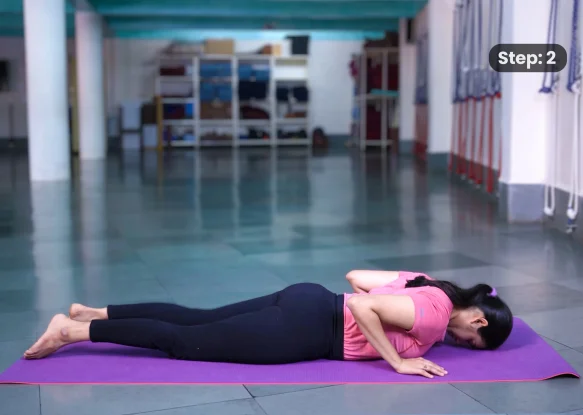
Begin by lying on your stomach on a yoga mat with your legs extended and your arms resting alongside your body.
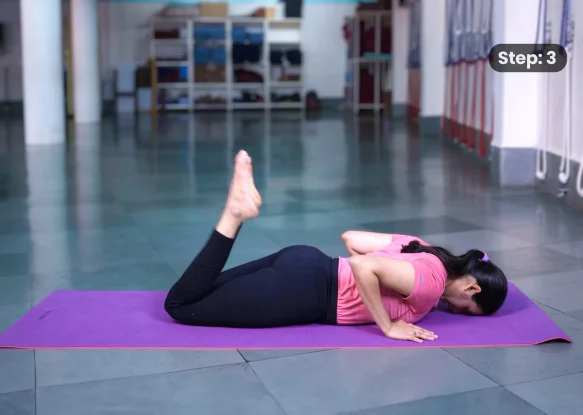
Bend your knees and bring your heels toward your buttocks. Keep your knees hip-width apart.
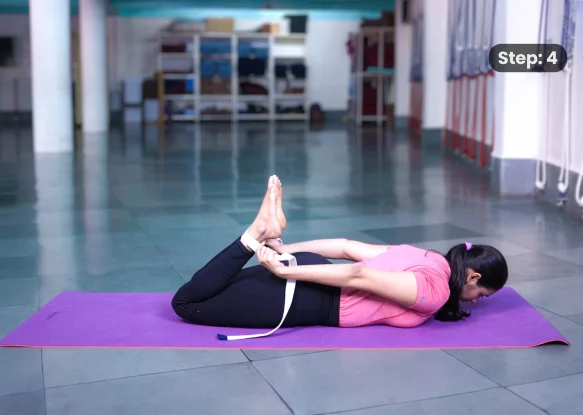
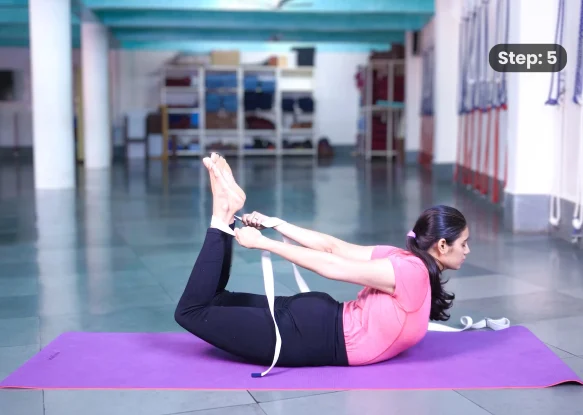
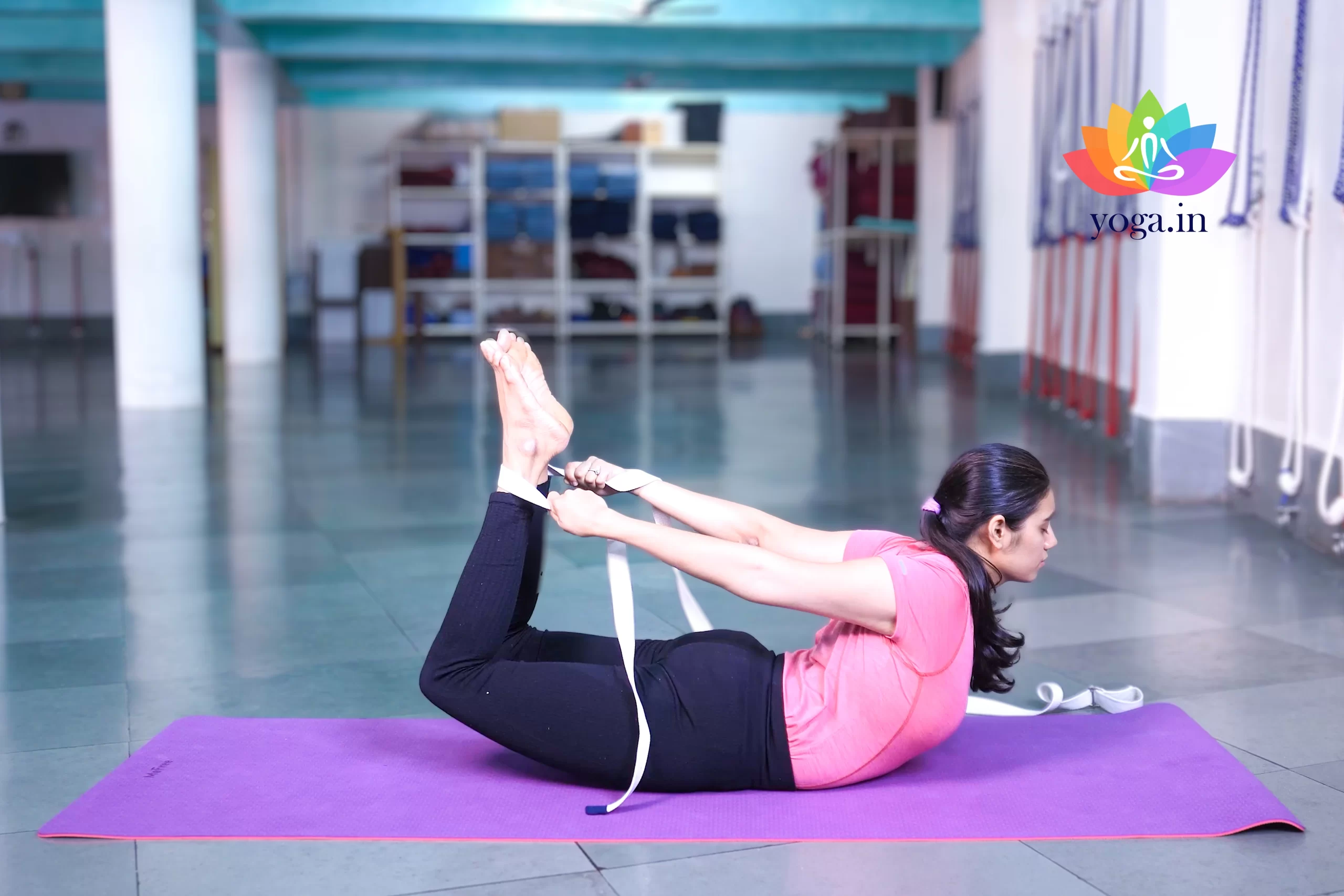
Reach your hands back and grasp your ankles or feet. If you can’t reach your ankles, you can use a yoga strap looped around your ankles to hold onto.
Inhale deeply, and as you exhale, lift your chest and thighs off the mat by pressing your feet into your hands. This action will create a bow shape with your body.
Lift your thighs as high as comfortable, aiming to create a gentle curve in your spine. Keep your knees close together and avoid splaying them outward.
Draw your shoulder blades toward each other to open your chest. Lift your chest up and forward, lengthening your spine.
Keep your neck in a neutral position, neither straining upward nor dropping downward. Your gaze can be slightly forward.
Engage your core muscles to support your lower back and stabilize your torso.
Maintain steady and controlled breathing throughout the pose. Breathe deeply into your chest and abdomen.
Hold the pose for several breaths, maintaining the alignment and engagement of muscles. To release, exhale and gently lower your chest and thighs back to the mat.
After releasing the pose, rest in a comfortable position, such as Child’s Pose or lying flat on your stomach, to allow your body to relax.
Key Alignment Points
Keep your knees close together and avoid splaying them outward.
Keep your neck in a neutral position, neither straining upward nor dropping downward.
Engage your core muscles to support your lower back and stabilize your torso.
Common Misalignments / (Mistakes)
If your knees are too close together, that may lead to discomfort in the back.