
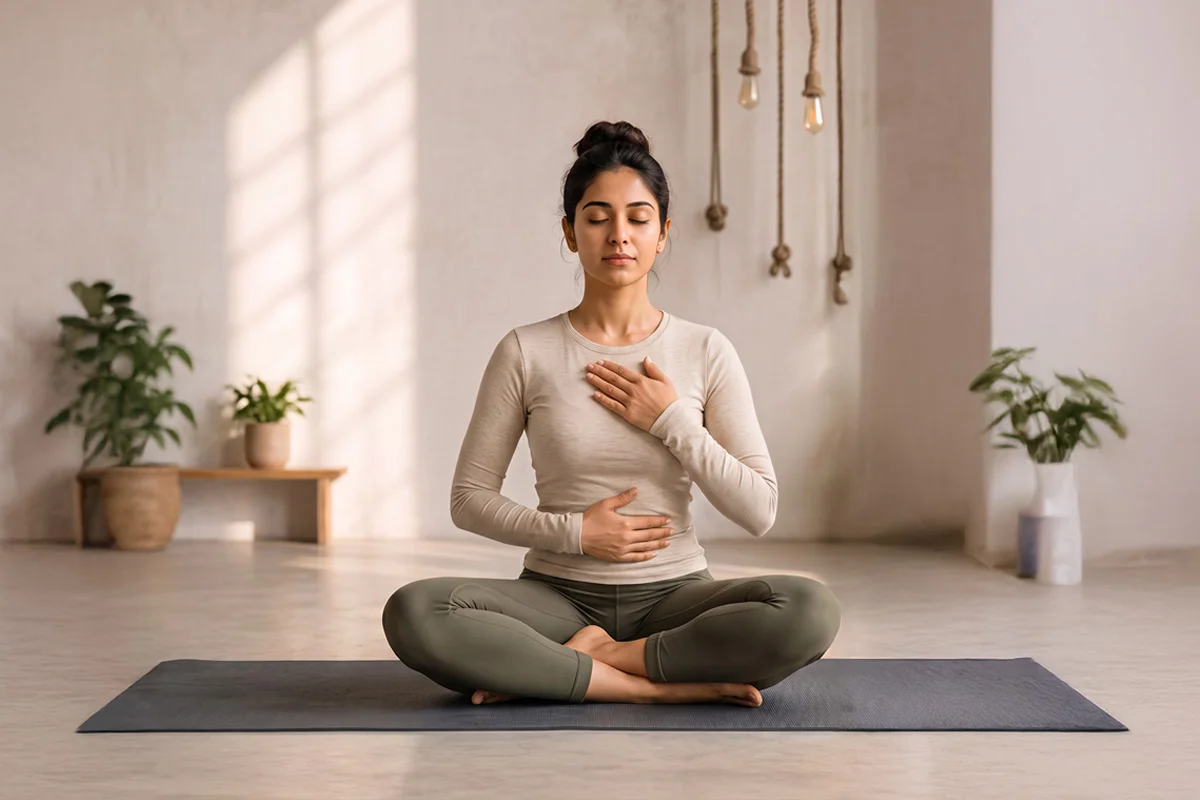
Breath is often described as the essence of life, while Prana refers to the vital energy that flows within us. Bringing awareness to one’s breath can help to clear blockages from the body’s energy pathways (Nadis) and allow the Prana to flow through those pathways more freely and create a stronger link between body and mind (this link leads to greater sensation and experience of being one with oneself). The great sage Patanjali suggests that the practice of Pranayama will enhance one’s ability to concentrate, improve mental clarity, and prepare one’s brain for a more relaxed state; subsequently, it prepares one for deeper relaxation.
A lot of individuals embarking on their yoga journey tend to concentrate on asanas as the highlight of their practice. However, one of the principal elements of yoga is breathing, which, much like asanas, helps create a more profound connection between body and mind.
We all make mistakes when we first begin; within each beginner’s error is an opportunity for improvement. The following list identifies the 5 most common mistakes made by new yogis, along with easy solutions.
1. Holding the Breath During Challenging Poses
Have you ever noticed yourself unconsciously freezing your breath while holding a difficult pose? This is more common than many people realise. Whether balancing in Tree Pose or holding Warrior II a little longer, beginners often tense up and lose awareness of their breath, causing it to become shallow, restricted, or unconsciously held.
2. Relying on Shallow Chest Breathing
Another common mistake is relying only on shallow chest breathing instead of allowing the breath to expand naturally through the abdomen and ribs. Since this pattern is common in everyday life, many beginners carry it into their yoga practice without realising it.
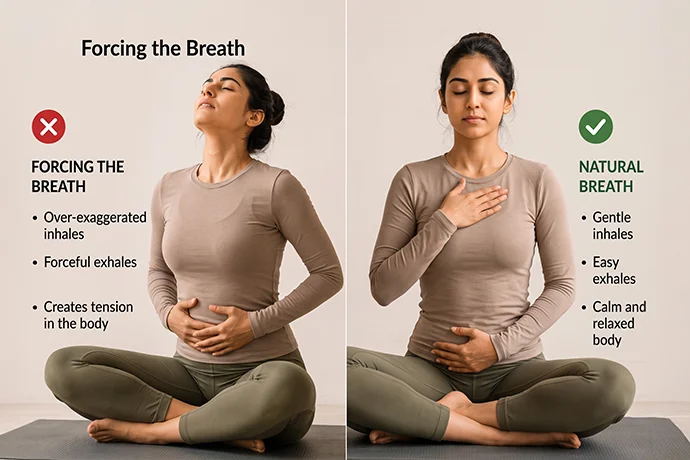
3. Forcing the Breath
After learning about the importance of breath, some beginners begin trying to control it too much through exaggerated inhales, forceful exhales, or creating unnecessary tension while breathing.
4. Breathing Through the Mouth
Another common mistake is switching to mouth breathing when practice starts to feel physically demanding, rather than maintaining a steady and controlled breathing pattern.
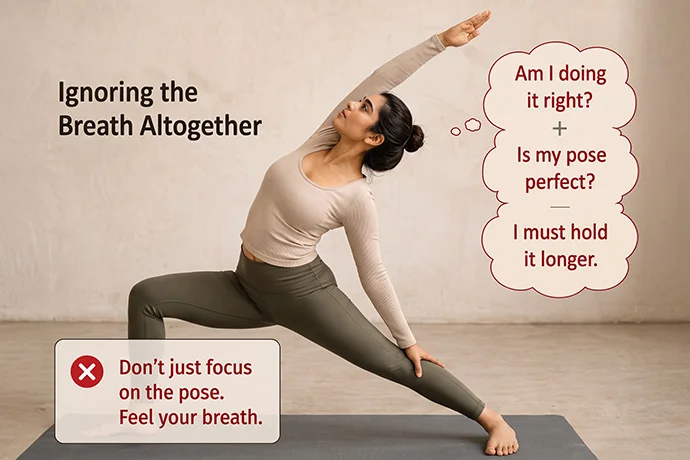
5. Ignoring the Breath Altogether
Perhaps the most common mistake is treating breath as an afterthought and focusing only on flexibility, balance, or alignment while forgetting to pay attention to breathing throughout the practice.
How to Improve Your Breathing While Practising Yoga
Breathing awareness happens gradually through repeated practice; your breathing doesn’t have to feel perfect the first time you do it! Just adjusting (small change) your breath will give you a much greater sense of comfort, connection, and enjoyment from your yoga practice. You should begin by just noticing and observing your breath as it occurs naturally; do not try to control how you breathe, as this will create more tension.
A good place to start is by developing the habit of breathing through the nose and letting your diaphragm expand. Eventually, you will be able to take a full, deep breath using your ribs as well as your abdomen rather than just relying on your chest to breathe.
As you move into more challenging postures, if you notice that you’re holding on to any tension in your body or restricting the amount of air you’re taking in, gently guide yourself back towards the breath, focusing on steady, comfortable, relaxed breath flow.
In addition, you can help yourself develop better breath control by moving more slowly and allowing each transition motion between positions to match the rate of your breath rather than trying to do movements quickly. Eventually, you will have established an awareness of your breath that will have turned your yoga practice into something much more engaged and focused on the mind and body.
For beginners, it can also be helpful to understand when to inhale and when to exhale during asana practice. As a general guideline, inhale when you are lifting, lengthening, or opening the body, such as raising the arms, lifting the chest, or extending the spine. Exhale when you are folding forward, twisting, lowering the body, or engaging the core.
While some yoga styles and postures may use specific breathing techniques, coordinating your breath with your movements can help create a smoother flow, reduce unnecessary muscle tension, and make your practice feel more comfortable.
Conclusion
Breath is one of the most powerful tools in yoga, yet it is often the most overlooked. While flexibility and alignment may improve with time, learning to breathe with awareness can completely change the quality of your practice. The next time you step onto the mat, focus less on how the pose looks and more on how the breath feels. With consistent attention, better breathing habits can support a calmer mind, greater ease in movement, and a deeper yoga experience.
References
- Yoga Sutras of Patanjali (II.49–II.53). Translated by Swami Satchidananda. Integral Yoga Publications.
Supports: The role of pranayama in improving concentration and preparing the mind for meditation.
- Hatha Yoga Pradipika. Translated by Swami Muktibodhananda. Bihar School of Yoga.
Supports: Traditional concepts of prana, nadis, and breath regulation.
- Nagendra, H. R. (2014). The Art and Science of Pranayama. Vivekananda Yoga Prakashana.

