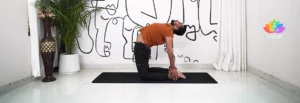
Upward Facing Dog Pose (Urdhva Mukha Svanasana)

Sanskrit: Urdhva Mukha Svanasana (ऊर्ध्वमुखश्वानासन) ·  Pronunciation: OORD-vah MOO-kah shvah-NAH-sah-nah ·  Chakras: Anahata, Vishuddha, Svadhisthana, Manipura

This page is your complete guide to Urdhva Mukha Svanasana (Upward Facing Dog Pose) — the backbend at the heart of every Sun Salutation and Vinyasa sequence. Learn its four-word Sanskrit etymology, Krishnamacharya’s origin story, step-by-step entry from both prone and Chaturanga positions, critical alignment cues, the key difference from Bhujangasana, all variations, and clear contraindications.

Overview

What Is Upward Facing Dog Pose?

Urdhva Mukha Svanasana is a prone backbend in which the thighs, knees, and hips are lifted clear of the floor — supported only by the palms and the tops of the feet — while the chest opens forward and upward like a dog stretching through its front body. Introduced to modern yoga by Krishnamacharya in the mid-20th century, it is today the most-practised backbend in the world, appearing in every Sun Salutation B, Vinyasa, Ashtanga, and Power Yoga sequence globally.

Sanskrit Name
Urdhva Mukha Svanasana (ऊर्ध्वमुखश्वानासन)
Meaning
Upward Facing Dog
Pose Type
Prone Backbend, Chest Opener, Arm Strengthener
Strengthens
Arms, Wrists, Spine
Also Known As
Upward Dog, Up Dog, Up-Dog Pose
Chakras Activated
Anahata, Vishuddha, Svadhisthana, Manipura
Stretches
Chest, Abdomen, Shoulders, Hip Flexors
Pronunciation
OORD-vah MOO-kah shvah-NAH-sah-nah
Warm Up First

Preparatory Poses

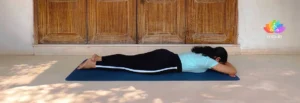
Banner Makarasana
Makarasana

Prone rest — aligns the body before the lift.

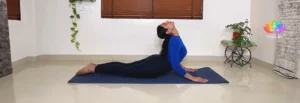
Banner Bhujangasana
Bhujangasana (Cobra Pose) 

Low Cobra — teaches the same backbend with lower body down.

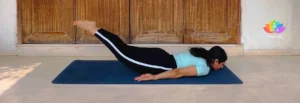
Banner shalabhasana
Shalabhasana (Locust Pose)

Builds posterior chain strength for the full lift.

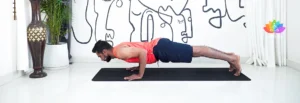
Banner Chaturanga Dandasana
Chaturanga Dandasana

The direct preceding pose in every Vinyasa transition.

Banner Ushtrasana
Ushtrasana (Camel Pose)

Opens the thoracic spine for the chest-forward arch.

Step by Step

How to Do Upward Facing Dog Pose — Step-by-Step Instructions

Entry Option A — From Prone (Makarasana)

  1. Lie face-down. Extend both legs, tops of feet on the floor, feet hip-width apart.
  2. Place palms beside the lowest ribs, fingers forward, elbows tucked close to the sides.
  3. On an inhale, press the palms firmly and straighten both arms fully.
  4. Simultaneously lift the chest, abdomen, hips, thighs, and knees clear of the floor.
  5. Only the palms and the tops of the feet remain in contact with the mat.

Entry Option B — From Chaturanga Dandasana (Vinyasa Transition)

  1. From Chaturanga, roll over the toes so the tops of the feet press into the mat.
  2. In one fluid motion, press through the palms and straighten the arms to Up Dog.
  3. The toes flip from tucked to flat in a single breath — this is the classic Vinyasa link.

Final Position — Both Entry Options

  1. Arms are straight, elbows slightly soft — not fully locked under body weight.
  2. Shoulders roll back and down — blades draw toward each other; chest opens forward.
  3. The spine extends from the tailbone to the crown — lengthen before arching.
  4. Gaze is straight ahead or gently upward — chin parallel to floor; neck long and free.
  5. Hold for 1–5 breaths. Exhale into Adho Mukha Svanasana (Downward Dog) to exit.
Alignment Cues

Key Alignment Cues

  • Wrists stack directly under shoulders — forward placement collapses the shoulder girdle.
  • Elbows have a micro-bend — fully locked elbows under body weight hyperextend the joint.
  • Shoulder blades draw toward each other and slide down the back — away from the ears.
  • Thighs, knees, and hips are fully off the floor — contact means it is Cobra, not Up Dog.
  • Inner thighs rotate slightly inward — this broadens the sacrum and protects the lower back.
  • Tailbone lengthens toward the heels before the chest lifts — prevents lumbar compression.
  • Chest presses forward through the arms — do not allow it to sink between the shoulders.
  • Tops of the feet press into the mat — activate the legs to support the lifted body.
  • Gaze is forward or very gently upward — neck remains long; never craned sharply back.
  • Breath stays free throughout — if the breath is strained, lower the height of the lift.
Watch Out

Common Mistakes

Thighs touching the floor

Lift everything from the navel down — this is not Cobra Pose.

Shoulders shrug to ears

Roll shoulders back and down — create space between ear and shoulder.

Wrists placed too far forward

Stack wrists under shoulders — forward hands collapse the chest.

Elbows fully locked

Maintain a micro-bend — locked joints hyperextend under load.

Lower back compressed

Lengthen tailbone toward heels first; then lift the chest forward.

Head thrown sharply back

Keep neck long — gaze forward or gently up, never sharply back.

Feet splay outward

Keep feet hip-width and parallel — inner thighs rotate inward.

Breath held during hold

Breath-holding signals the body is past its current capacity.

Benefits

Benefits of Upward Facing Dog Pose

Spine and Chest

  • Extends the thoracic spine
  • Opens the chest and heart space
  • Counters kyphosis and slouching
  • Improves spinal extension range

Arm and Shoulder Strength

  • Strengthens wrists and forearms
  • Tones triceps and biceps
  • Builds shoulder stabilisers
  • Strengthens erector spinae

Anterior Body

  • Stretches hip flexors (psoas)
  • Opens the abdominal wall
  • Lengthens the quadriceps
  • Stretches front ankle extensors

Digestion and Organs

  • Stimulates abdominal organs
  • Aids constipation and flatulence
  • Improves appetite and digestion
  • Stimulates adrenal glands

Posture and Alignment

  • Corrects forward head posture
  • Counters rounded upper back
  • Strengthens posterior shoulders
  • Improves scapular stability

Mind and Energy

  • Activates Anahata (Heart) Chakra
  • Stimulates Vishuddha (Throat)
  • Builds energy and confidence
  • Reduces fatigue and low mood
Variations

Upward Facing Dog Pose Variations to Consider

Low Cobra (Bhujangasana) Lower body remains on floor — accessible beginner alternative.
Urdhva Mukha Svanasana on Fists Hands in fists — reduces wrist angle for wrist-sensitive students.
Urdhva Mukha with Yoga Wedge Wedge under palms — reduces extension angle at the wrist joint.
Elbows Bent Variation Elbows remain slightly bent — reduces load on wrists and shoulders.
Supported Up Dog (Bolster) Bolster under thighs — reduces effort; makes the pose restorative.
Dynamic Up Dog to Down Dog Flow between Up Dog and Down Dog — the classic Vinyasa core link.
After the Pose

Counter Poses for Urdhva Mukha Svanasana

Always neutralise the spine after any backbend. Practice one or two of these counter poses immediately after Urdhva Mukha Svanasana:

Adho Mukha Svanasana Adho Mukha Svanasana — immediately counters by decompressing the spine.
Balasana Balasana (Child's Pose) — forward fold releases the back after the extension.
Paschimottanasana Paschimottanasana — seated forward fold neutralises the lumbar backbend fully.
Avoid If

Who Should Avoid This Pose

  • Wrist injury, sprain, or Carpal Tunnel Syndrome — full body weight on wrists.
  • Shoulder injury or rotator cuff damage — the press-up loads the shoulder joint.
  • Acute lower back injury or disc herniation — spinal extension aggravates these.
  • Cervical spondylosis or neck herniation — avoid neck extension; modify gaze.
  • Scoliosis or acute lumbar spondylitis — spinal loading may worsen these.
  • High blood pressure or heart conditions requiring restricted exertion.
  • Severe osteoporosis — wrist and spine load are contraindicated.
  • Ankle injury — the tops of the feet bear load in active dorsiflexion.
  • Pregnancy (second and third trimester) — prone abdominal position is contraindicated.
Therapeutic Uses

Ailments That May Benefit from Urdhva Mukha Svanasana

  • Postural kyphosis — thoracic extension and chest opening directly counter forward rounding.
  • Mild lower back pain — spinal extension strengthens the erector spinae over time.
  • Mild sciatica — inner thigh rotation and lumbar lengthening can reduce nerve compression.
  • Sluggish digestion and constipation — abdominal organ stimulation improves motility.
  • Mild depression and fatigue — chest opening, Anahata activation, and energy lift counter low mood.
  • Forward head posture — the backbend and shoulder-blade retraction directly address this pattern.
  • Mild asthma and shallow breathing — chest and rib cage expansion improve lung capacity.
FAQ

Frequently Asked Questions

What is Urdhva Mukha Svanasana?

A prone backbend with thighs off the floor, balancing on palms and tops of feet. It is the heart of every Vinyasa and Sun Salutation B sequence.

What does Urdhva Mukha Svanasana mean in Sanskrit?

Four words: Urdhva (upward), Mukha (face), Svana (dog), Asana (posture). Together: the pose of a dog facing and stretching upward through its front body.

Who originated Urdhva Mukha Svanasana?

Krishnamacharya introduced it in mid-20th century yoga, incorporating it into Sun Salutation. It was popularised globally by Iyengar and Pattabhi Jois.

What is the difference between Urdhva Mukha Svanasana and Bhujangasana?

In Bhujangasana the thighs, knees, and hips remain on the floor. In Urdhva Mukha Svanasana they lift completely off — requiring greater arm and core strength.

How does Urdhva Mukha Svanasana fit into a Vinyasa?

It links Chaturanga Dandasana and Adho Mukha Svanasana. From Chaturanga, flip the toes on the inhale into Up Dog; exhale into Downward Dog to complete the vinyasa.

Which chakras does Urdhva Mukha Svanasana activate?

Anahata (Heart) through chest opening. Vishuddha (Throat) through the neck stretch. Svadhisthana (Sacral) and Manipura (Solar Plexus) through the torso lift.

Can beginners do Urdhva Mukha Svanasana?

Yes, with Bhujangasana (Low Cobra) as the starting point. Practice lifting the thighs progressively. Use fists or a wedge if the wrists are uncomfortable.

Why do my wrists hurt in Urdhva Mukha Svanasana?

Wrists placed too far forward and weight shifted onto the heel of the hand. Stack wrists under shoulders, spread all 10 fingers, and use a yoga wedge if needed.

✕

Login to Like

Please login with social account to support this post.

[nextend_social_login]

Find Your Videos

Choose a category