The Sanskrit name is derived from Supta (सुप्त) meaning ‘supine or recline’, ‘pada’ meaning foot’, ‘Angustha’ meaning ‘Big toe’ and āsana (आसन) meaning “posture” or “seat”.
The Sanskrit name is derived from Supta (सुप्त) meaning ‘supine or recline’, ‘pada’ meaning foot’, ‘Angustha’ meaning ‘Big toe’ and āsana (आसन) meaning “posture” or “seat”.
Steps to perform the Asana: Supta padangushthasana – 2 (Therapy)
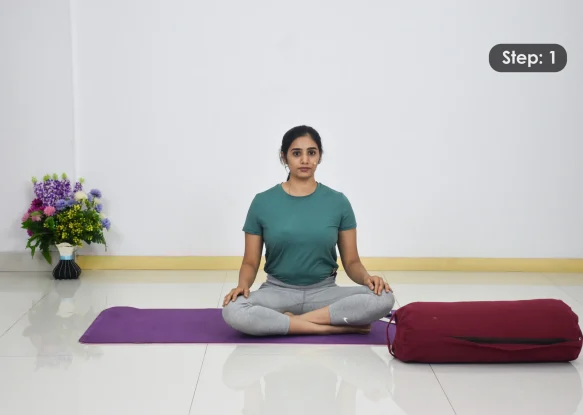
Begin by lying on your back (supine position) on a yoga mat.
Start by lying down on your back on the yoga mat with your legs extended.
Bend your right knee and hug it towards your chest.
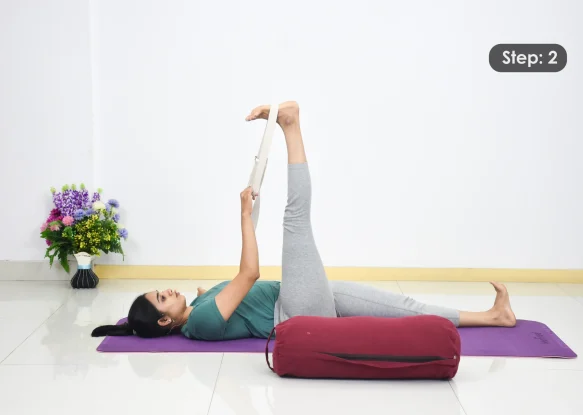
Loop the yoga belt around the arch of your right foot. Hold the belt firmly in your hands.
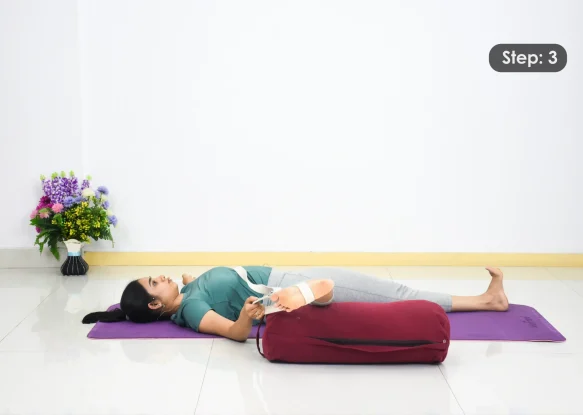
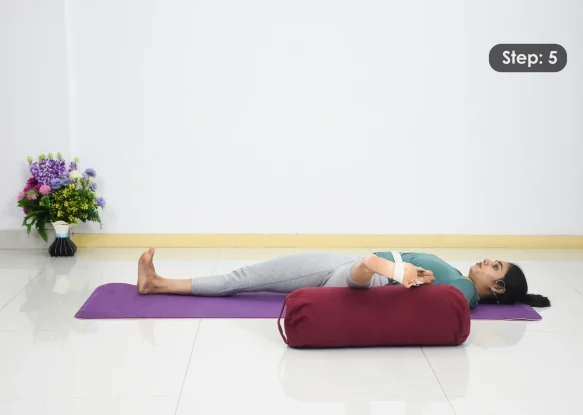
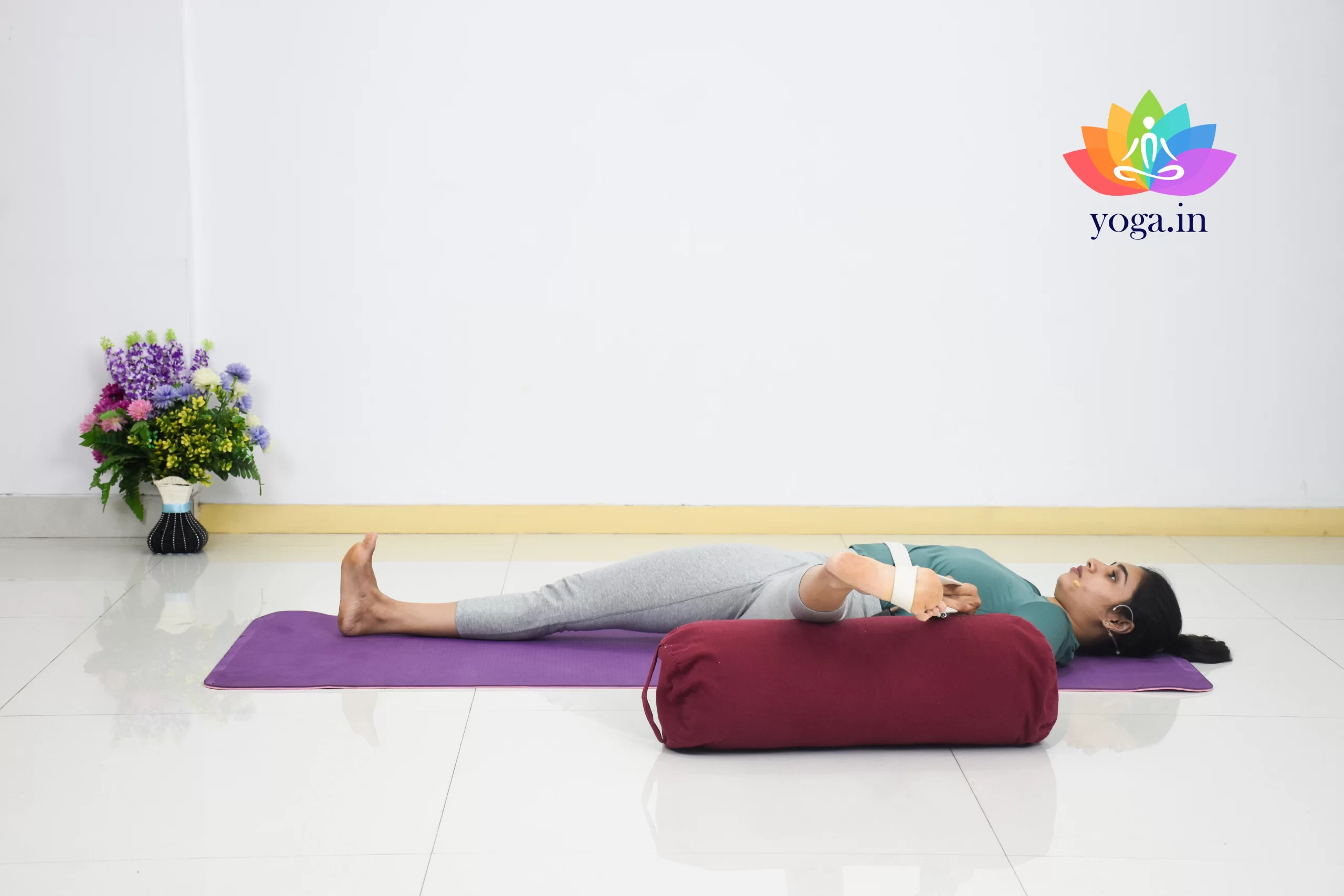
Place the bolster under your right thigh, perpendicular to your body.
Slowly extend your right leg towards the ceiling while holding onto the belt. Keep the knee straight but not locked and gradually drop it on the bolster.
If your leg cannot fully straighten, you can slightly bend the knee or adjust the position of the belt until you feel a comfortable stretch.
The bolster should support your thigh and buttock comfortably.
Keep your left leg extended along the mat, pressing the thigh down towards the floor.
Ensure your shoulders are relaxed and grounded on the mat. Avoid lifting them off the ground.
Hold the pose for 30–50 seconds, or as long as feels comfortable and beneficial for your body.
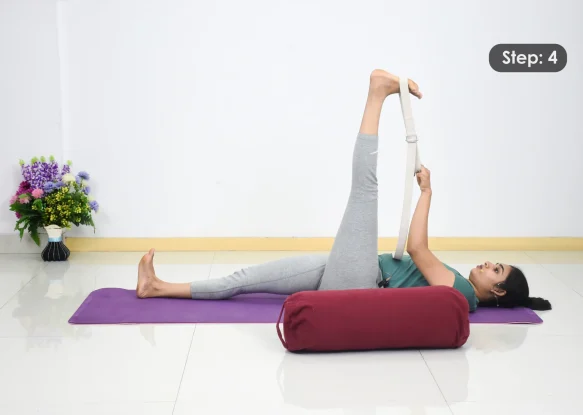
Gently release the belt from your foot and bend your right knee, returning your foot to the mat.
Repeat the same steps with your left leg to balance the stretch on both sides of your body.
Key Alignment Points
Engage your abdominal muscles by drawing your navel towards your spine. This helps stabilize your pelvis and lower back.
Keep both hips grounded on the mat. Avoid lifting the left hip off the mat as you stretch the right leg.
Keep both hips grounded on the mat and level with each other.
Keep your left leg engaged and pressed down into the mat, ensuring that it remains active throughout the pose.
Keep your neck long and relaxed, avoiding any tension in the throat or jaw.
Common Misalignments / (Mistakes)
When dropping one leg sidewards, there may be a tendency for the opposite hip to lift off the ground.
Lack of engagement in the core muscles can lead to instability in the pelvis and lower back.
Contraindication / Cautions
Avoid in case of injury at the hamstrings or quadriceps
Not to practice in case of Injury at the shoulders
Cautious in case of herniated discs or cervical spine injuries