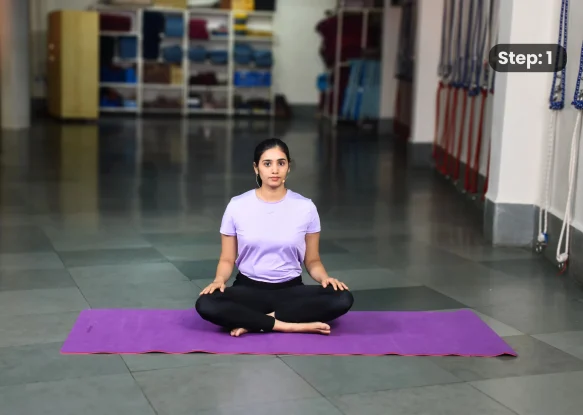
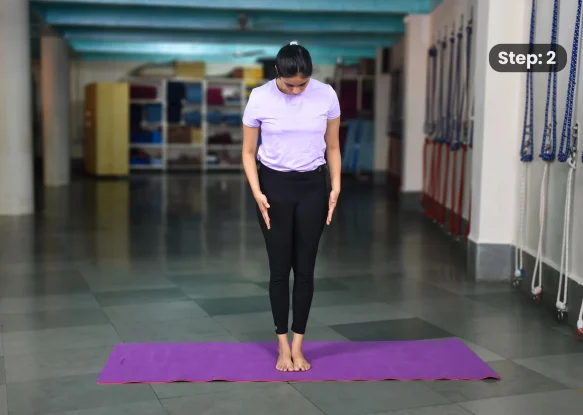
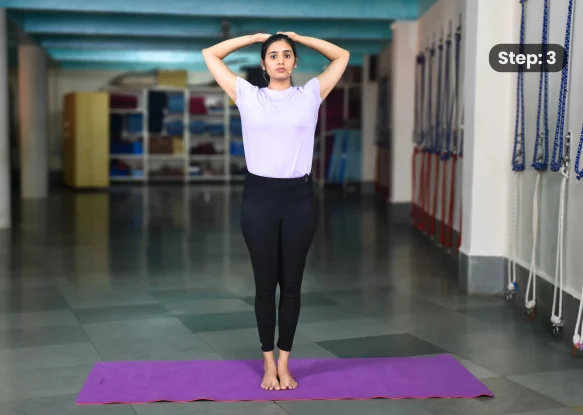
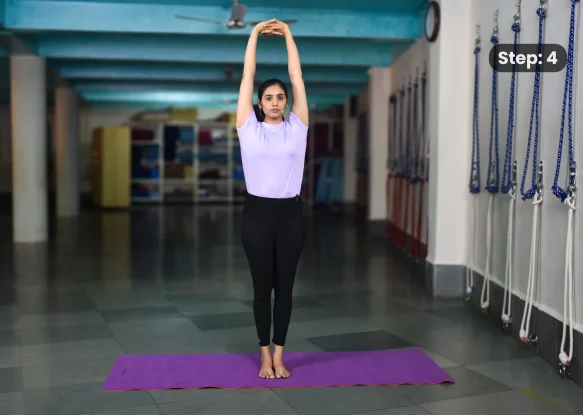
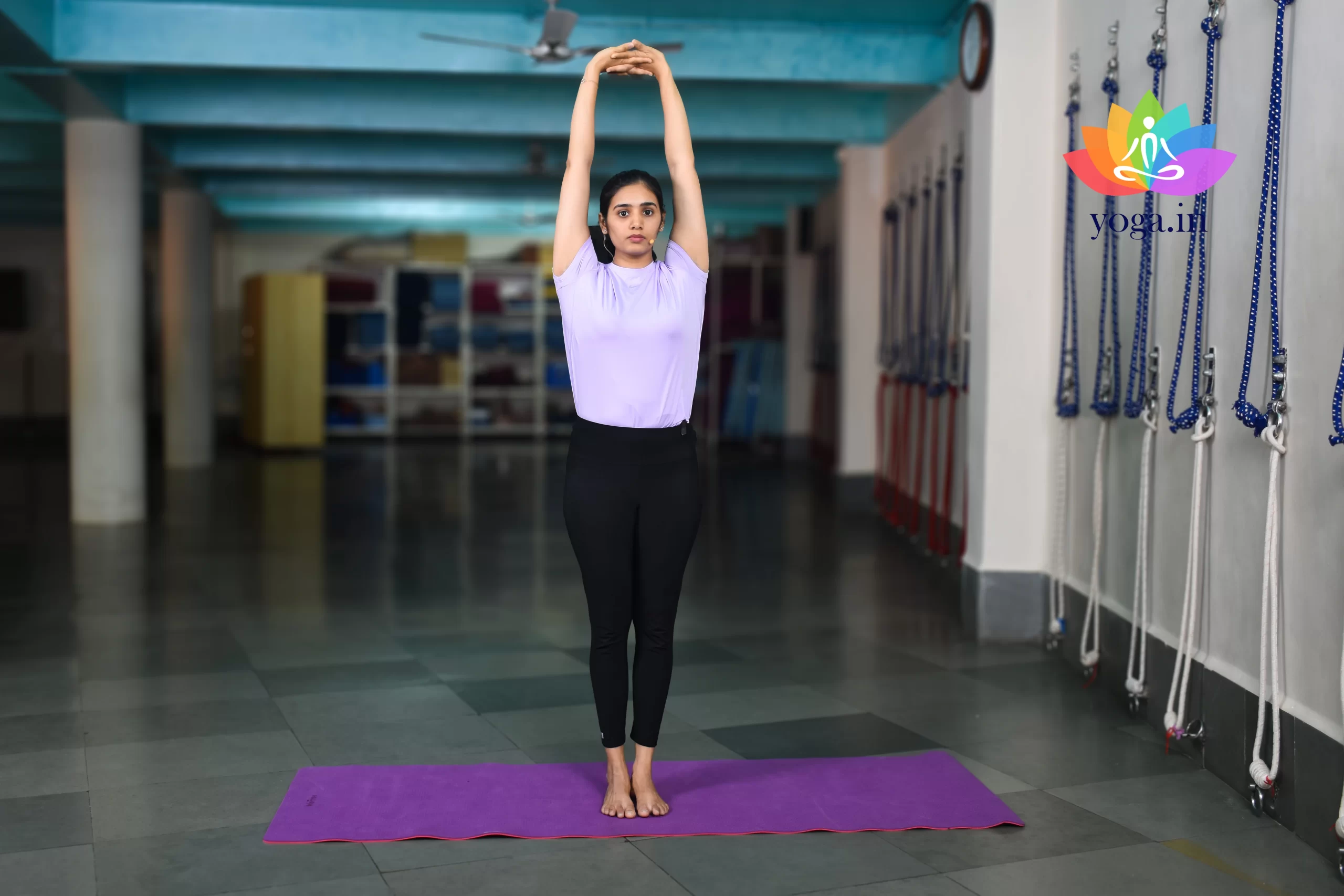
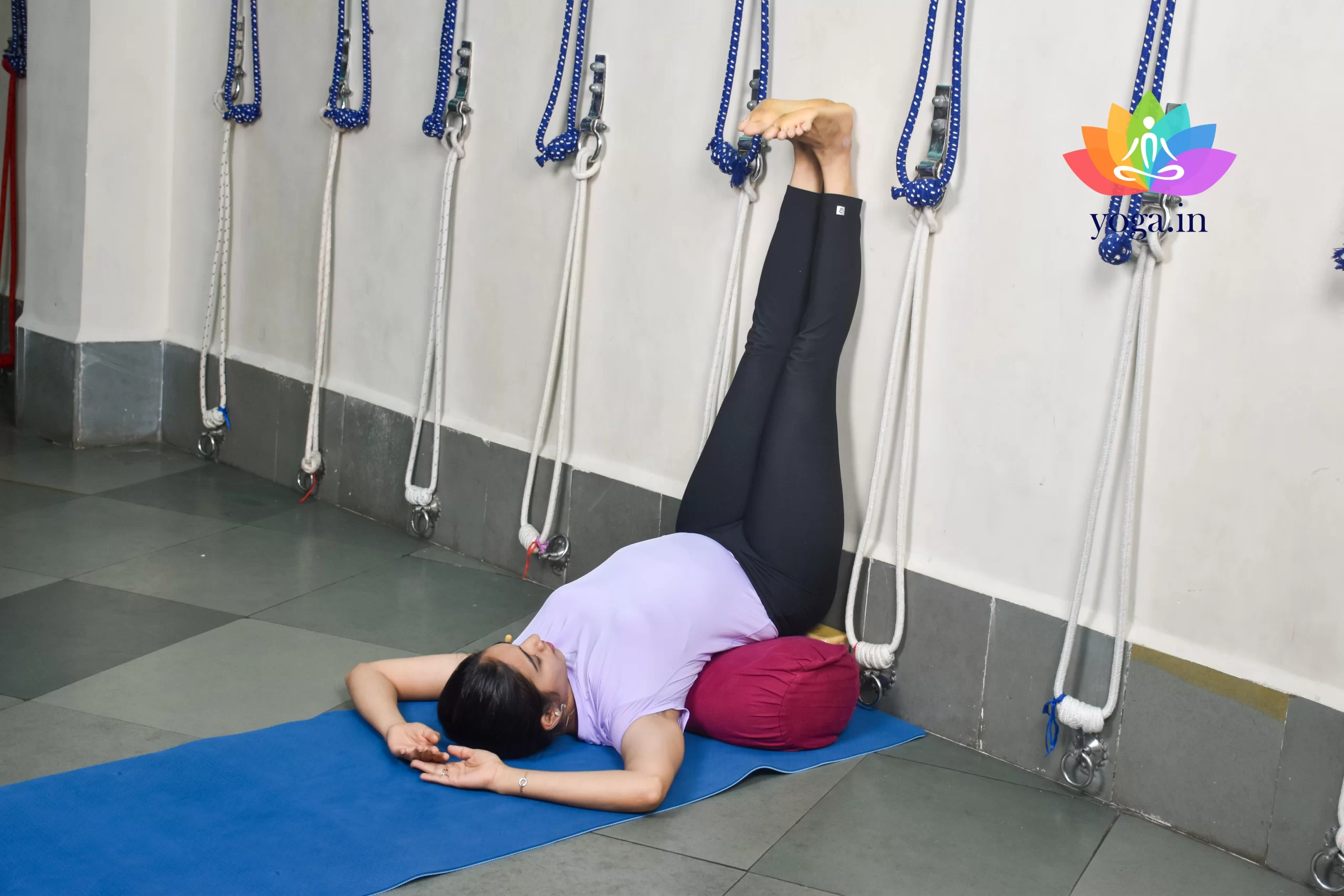
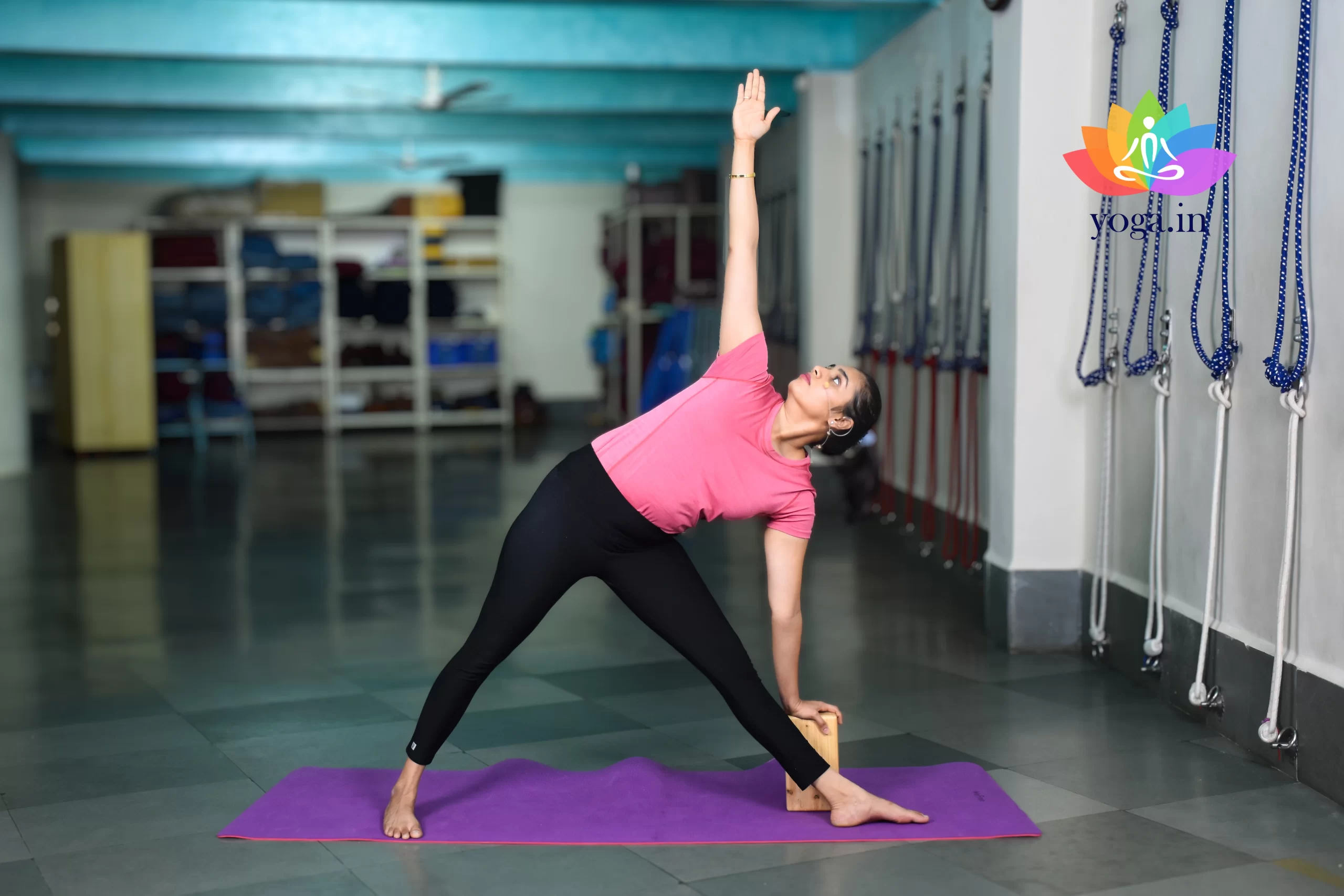
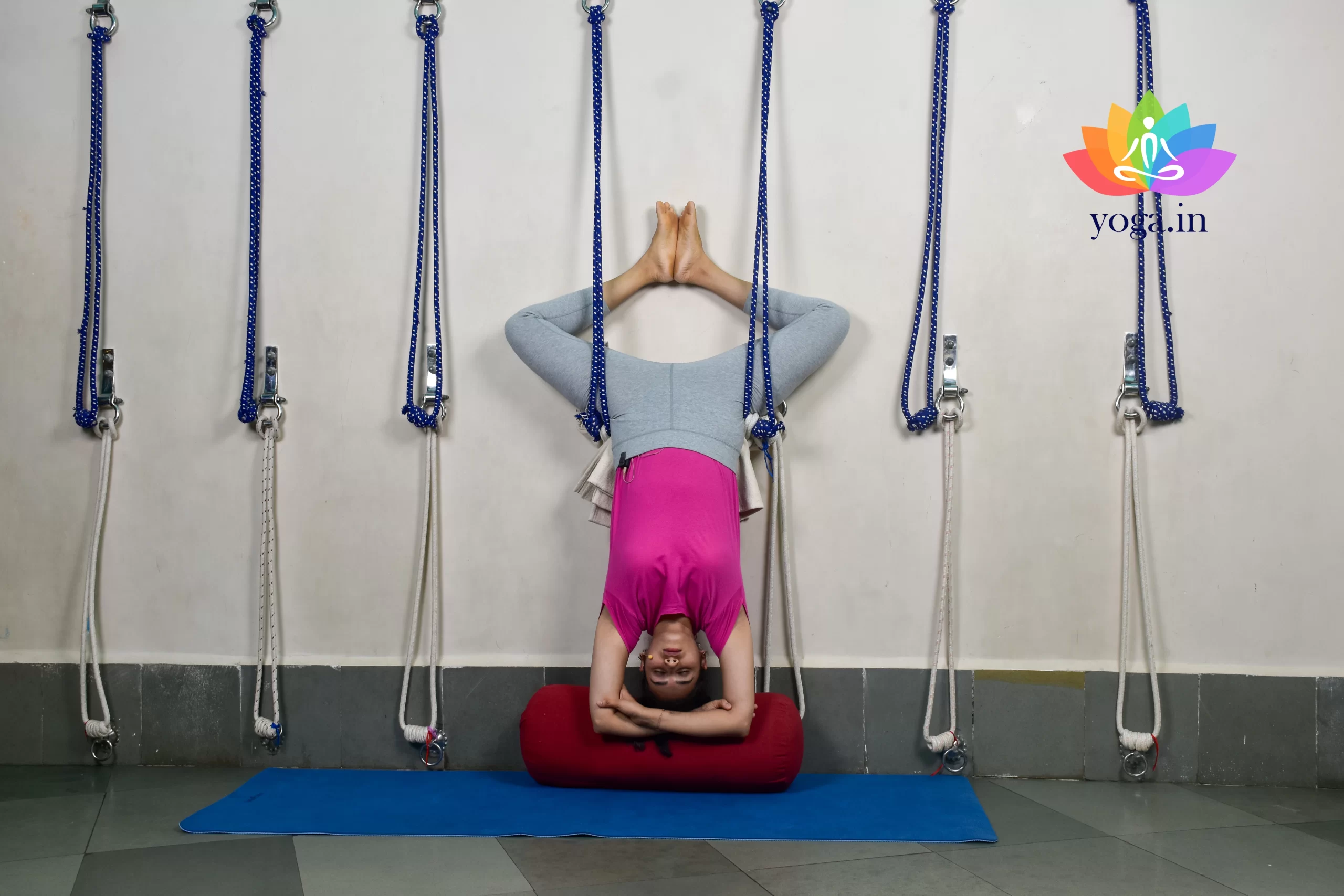
The name comes from the Sanskrit word Urdhva means “upward” and baddha indicates “caught” or “bound,” while anguli translates as “fingers” & asana meaning pose.
The name comes from the Sanskrit word Urdhva means “upward” and baddha indicates “caught” or “bound,” while anguli translates as “fingers” & asana meaning pose.
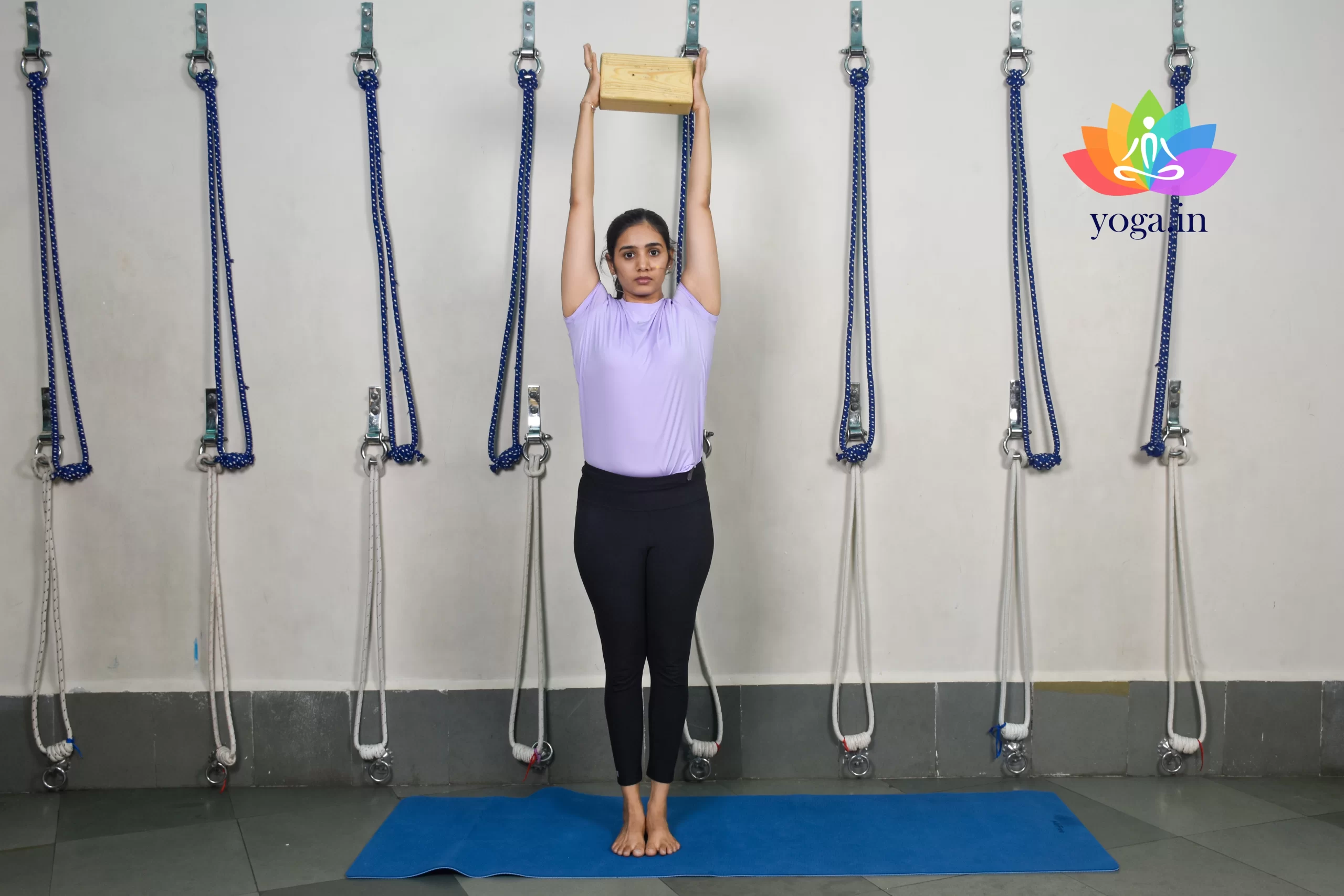
Steps to perform the Asana: Urdhva Baddhanguliyasana (Therapy)
Inhale deeply and engage your core muscles.
Exhale and bring your hands behind your back, interlacing your fingers together.
Press your palms together outside and straighten your arms as much as possible.
Keep your chest lifted and your shoulders relaxed away from your ears.
Inhale and lengthen your spine, lifting your chest towards the sky.
Exhale and gently lift your clasped hands away from your tailbone, feeling a stretch across the front of your shoulders and chest.
Keep your gaze forward or slightly upwards, avoiding straining your neck.
Hold the pose for 20-30 seconds, breathing deeply and evenly.
To release, gently unclasp your hands and bring them back to your sides.
Shake out your arms and shoulders if needed to release any tension.
Key Alignment Points
Not keeping your Shoulder straight when doing the asana
Common Misalignments / (Mistakes)
Collapsing the shoulders: Avoid lifting the shoulders toward the ears. Keep the shoulder blades relaxed and create length through the arms.
Overarching the lower back: Do not push the hips forward or exaggerate the lumbar curve. Keep the abdomen gently engaged and maintain a neutral spine.
Bending the elbows: Keep the elbows straight while extending the interlocked fingers upward. Avoid forcing the arms beyond a comfortable range.
Forcing the fingers or wrists: Do not pull aggressively on the interlocked fingers. The movement should create length without causing strain in the wrists or fingers.
Rib cage flaring: Avoid pushing the ribs forward as the arms move overhead. Keep the ribs controlled while maintaining an even breath.
Losing balance: Keep the feet firmly grounded and distribute the weight evenly through both feet, especially when the arms are lifted overhead.
Forcing the range of motion: Do not try to take the arms farther back than your shoulder mobility allows. Focus on maintaining proper alignment rather than achieving a deeper position.