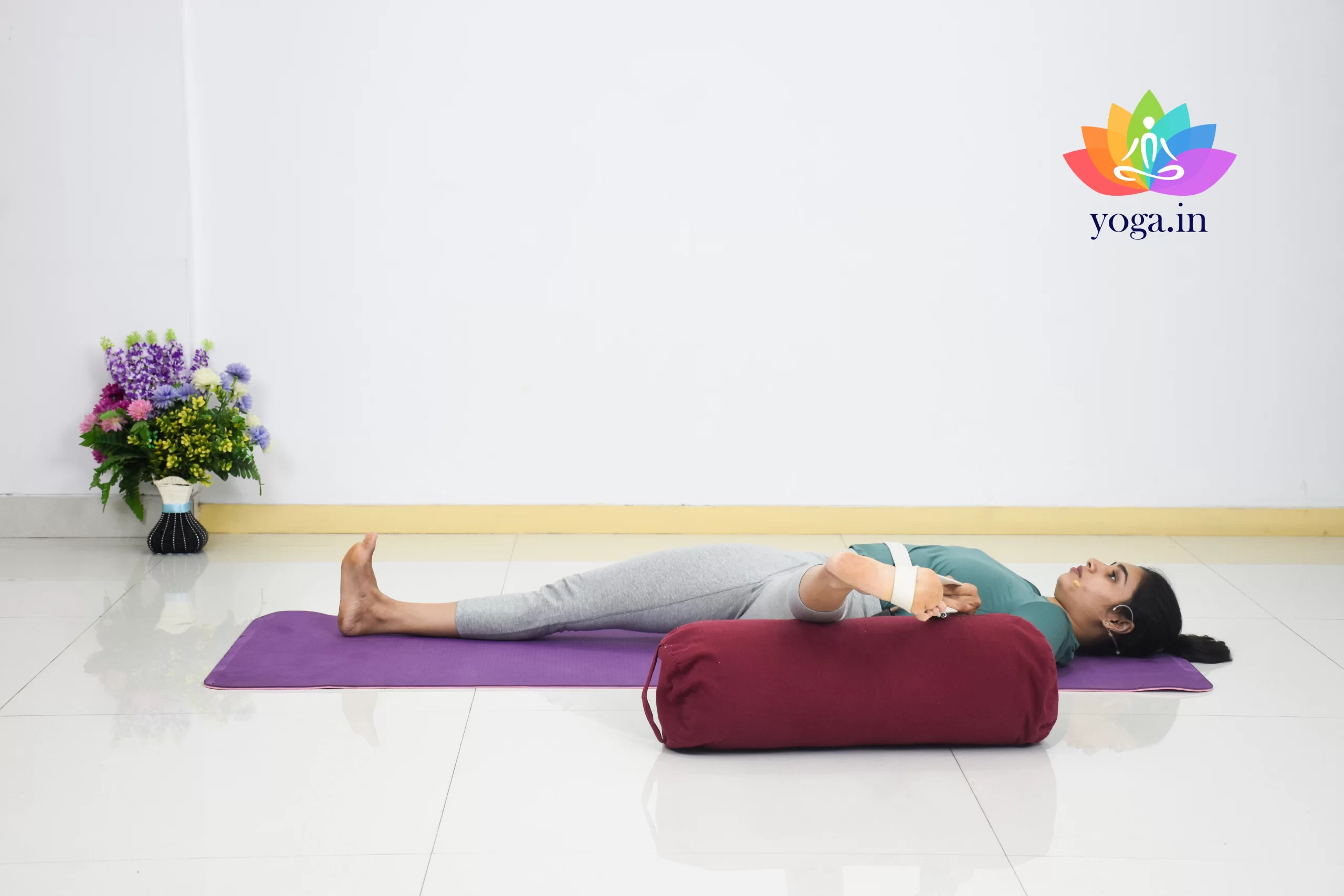
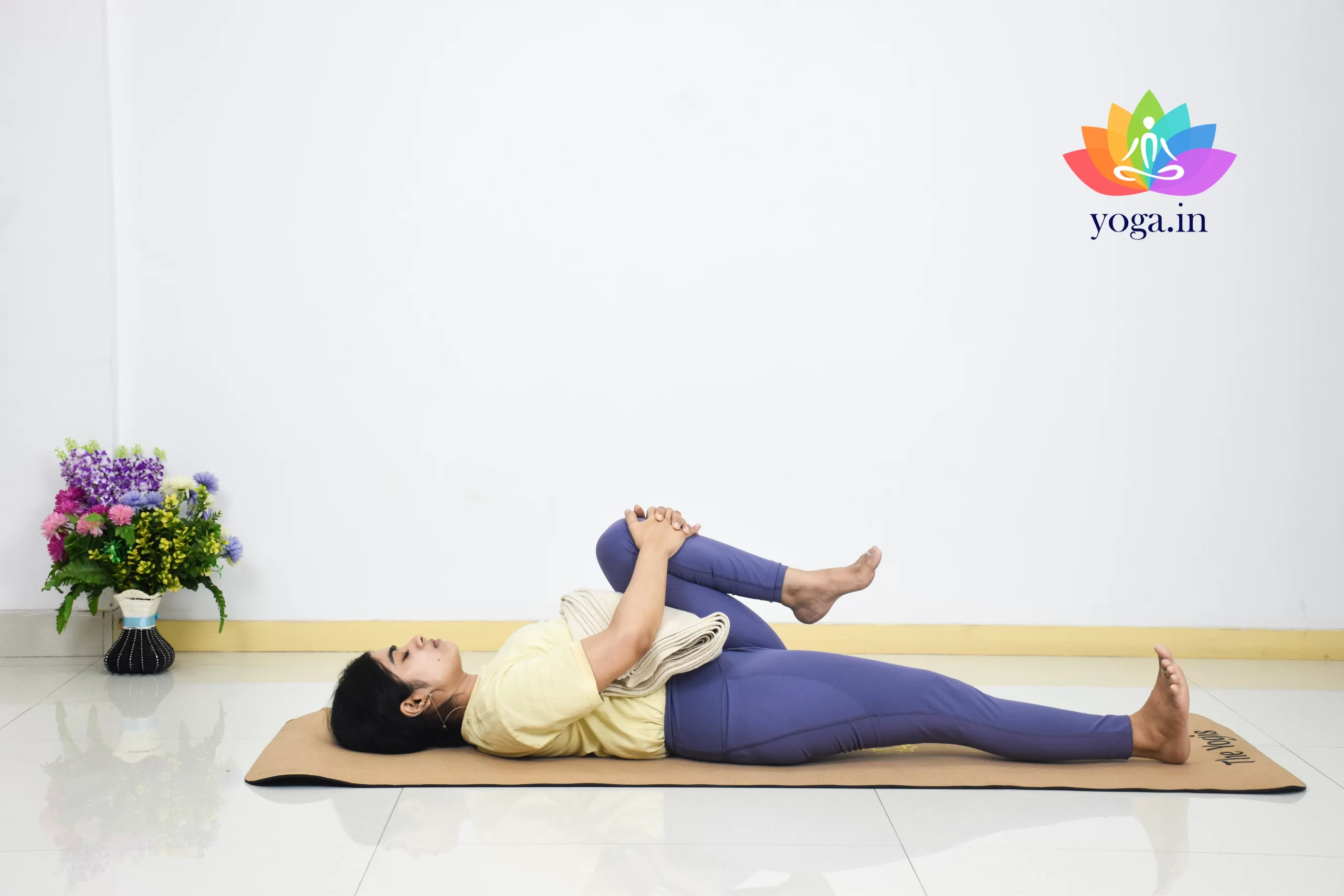
The Sanskrit name is derived from Supta (सुप्त) meaning ‘supine or recline’, ‘pada’ meaning foot’, ‘Angustha’ meaning ‘Big toe’ and āsana (आसन) meaning “posture” or “seat”.
The Sanskrit name is derived from Supta (सुप्त) meaning ‘supine or recline’, ‘pada’ meaning foot’, ‘Angustha’ meaning ‘Big toe’ and āsana (आसन) meaning “posture” or “seat”.
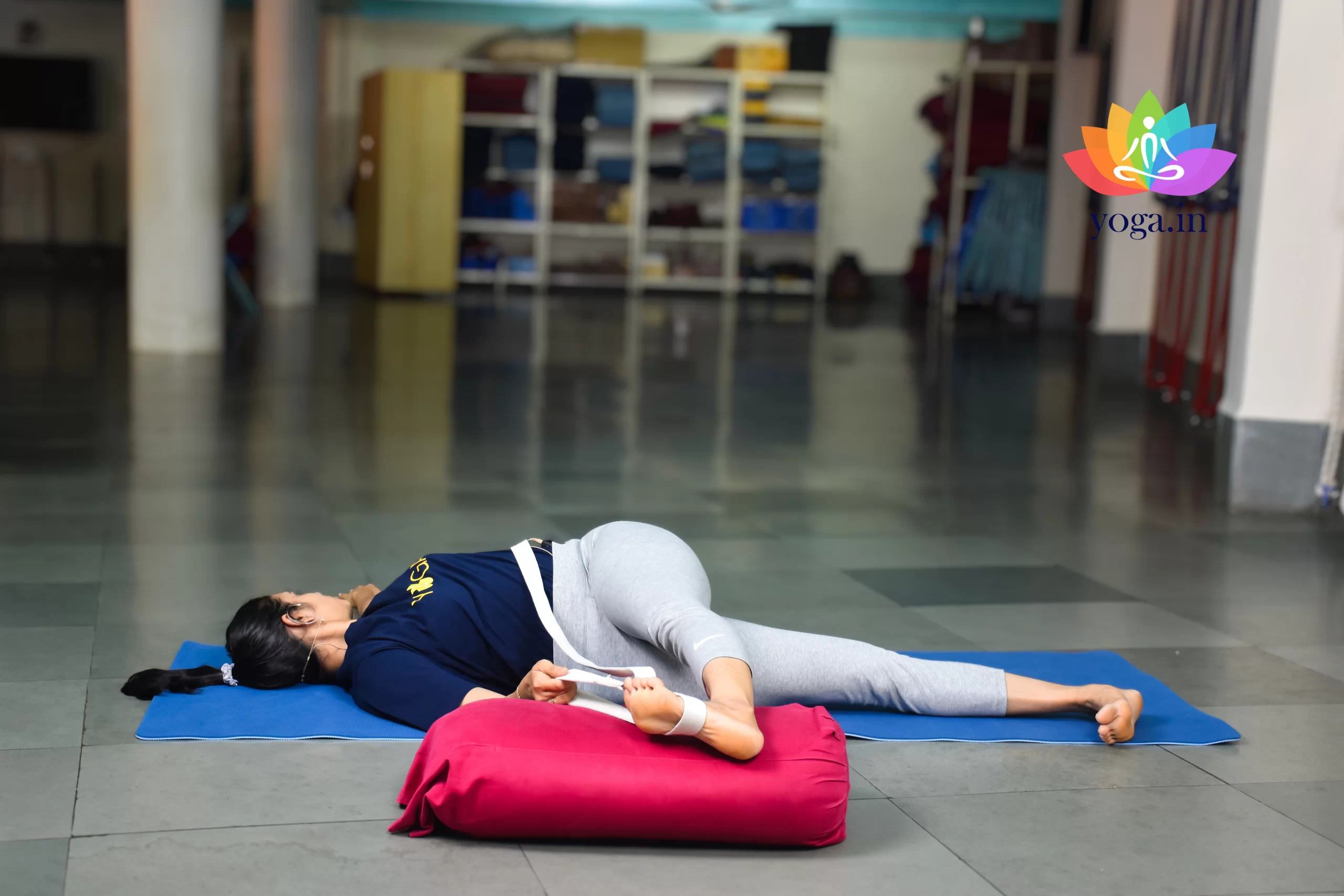
Steps to perform the Asana: Supta padangushthasana (Therapy)
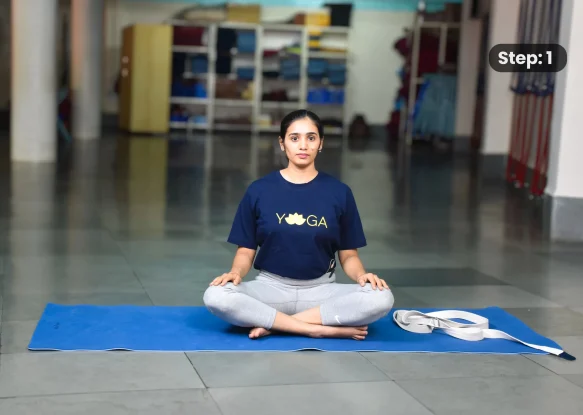
Begin by lying on your back (supine position) on a yoga mat.
Extended your legs and feet flexed towards the ceiling.
Ensure that your spine is in a neutral position, with a natural curve in your lower back and the back of your neck long.
Gently engage your abdominal muscles to support your lower back and stabilize your pelvis.
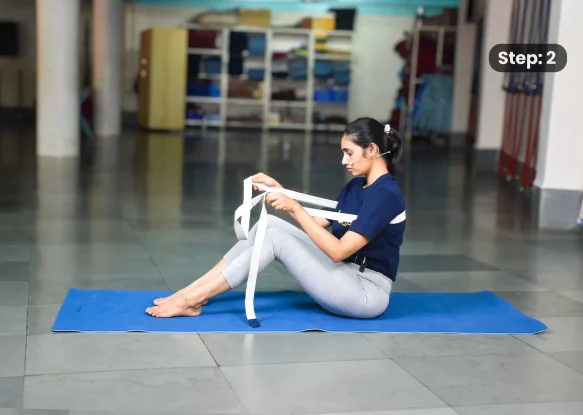
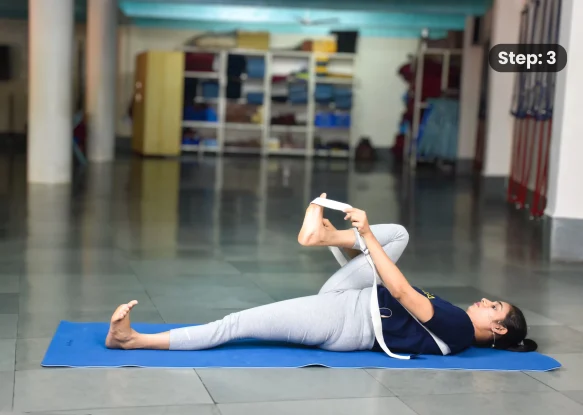
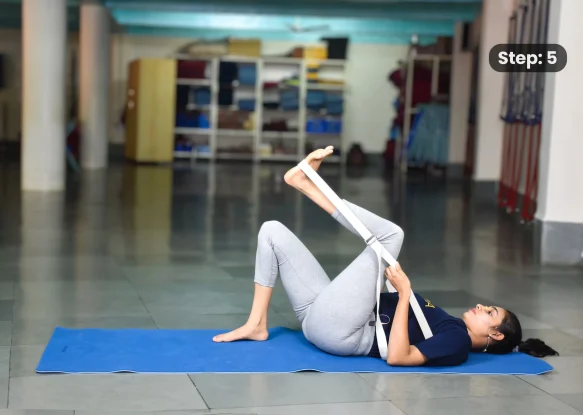
Bend one knee towards your chest, keeping the sole of your foot flat on the mat.
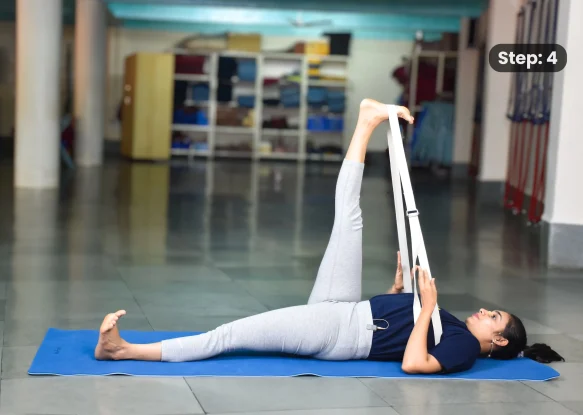
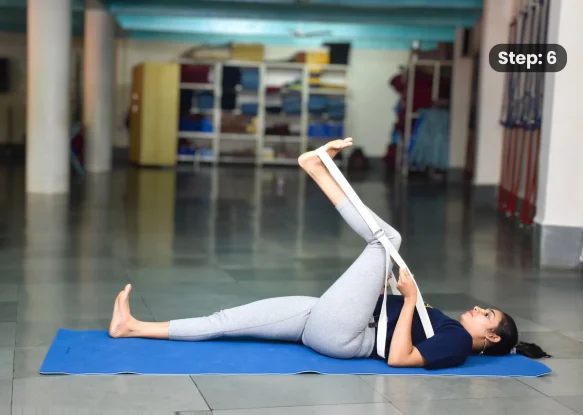
Use a yoga strap or belt looped around the sole of your foot to extend your reach.
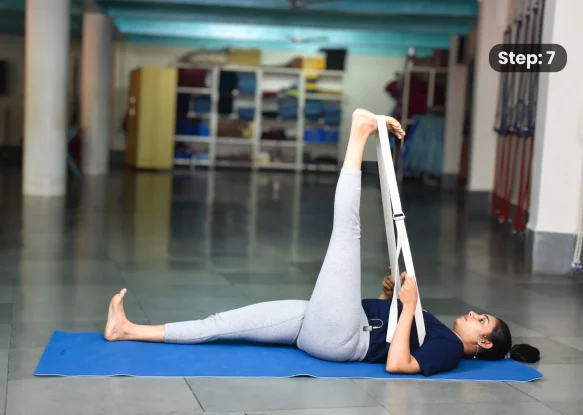
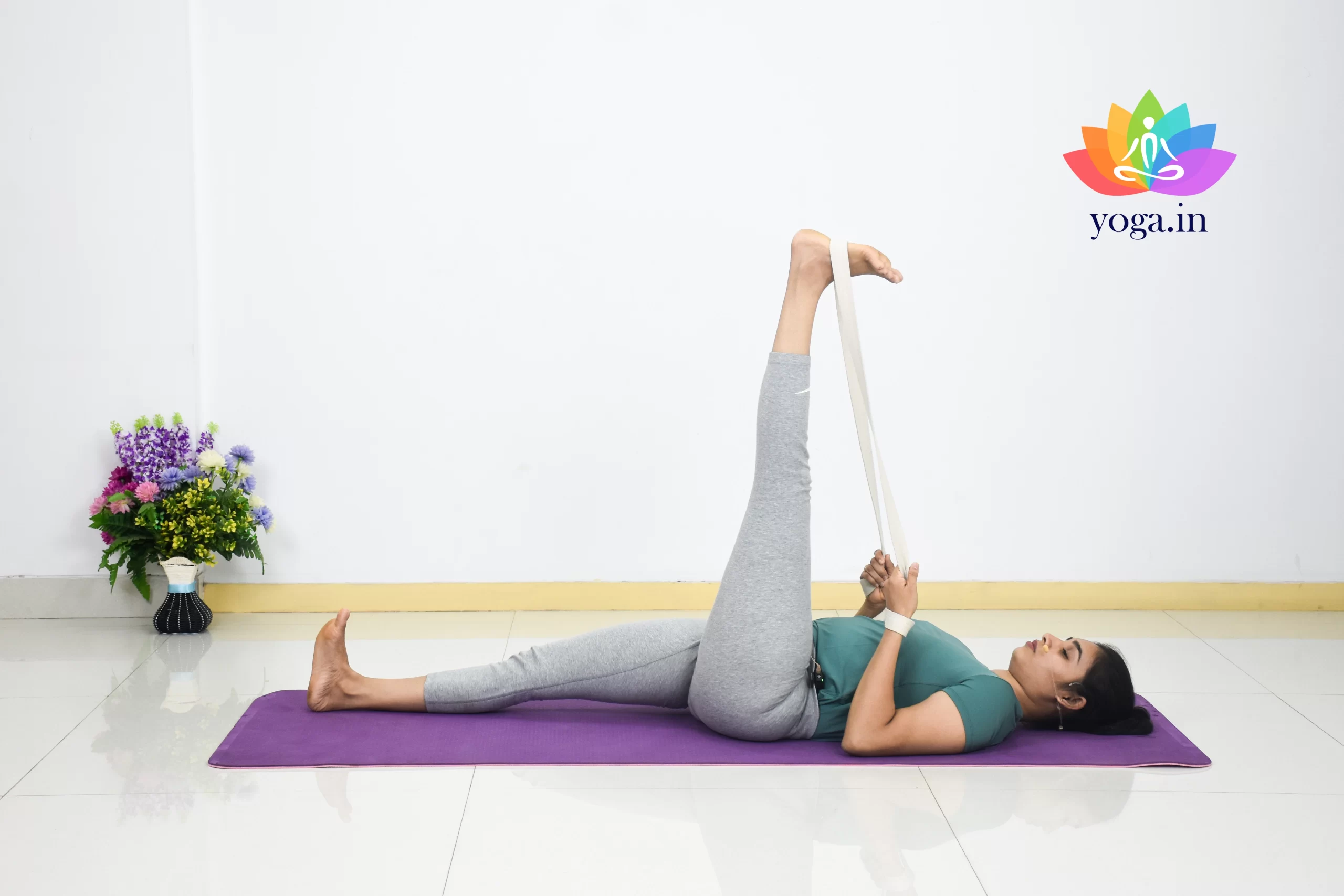
Flex the foot of the extended leg and keep the heel actively pressing away from you.
Straighten the other leg along the mat, pressing the back of the knee down towards the ground.
Use a yoga belt looped around the sole of your foot to extend your reach.
Keep both hips grounded evenly on the mat. Avoid letting the hip of the extended leg lift off the mat.
Keep your shoulders relaxed and grounded on the mat throughout the pose.
Reach your arm on the same side as the extended leg along the floor, palm facing down.
Lengthen through your spine, creating space between each vertebra.
Keep your gaze directed towards the ceiling or towards the extended leg.
Maintain smooth and steady breathing throughout the pose.
Hold the pose for 30-50 Seconds.
Key Alignment Points
Engage your abdominal muscles by drawing your navel towards your spine. This helps stabilize your pelvis and lower back.
Keep both hips grounded on the mat. Avoid lifting the left hip off the mat as you stretch the right leg.
Common Misalignments / (Mistakes)
When extending one leg upwards, there may be a tendency for the opposite hip to lift off the ground.
Straining the neck by lifting the head too high can cause discomfort or compression in the cervical spine.
Contraindication / Cautions
Avoid in case of injury at the hamstrings or quadriceps
Not to practice in case of Injury at the shoulders
Cautious in case of herniated discs or cervical spine injuries