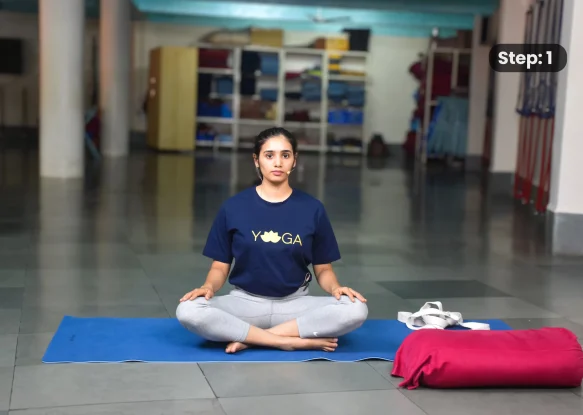
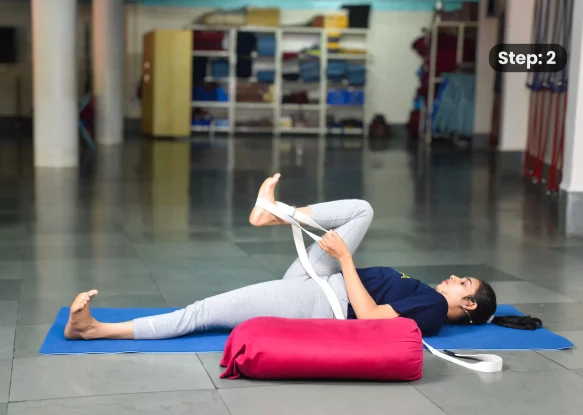
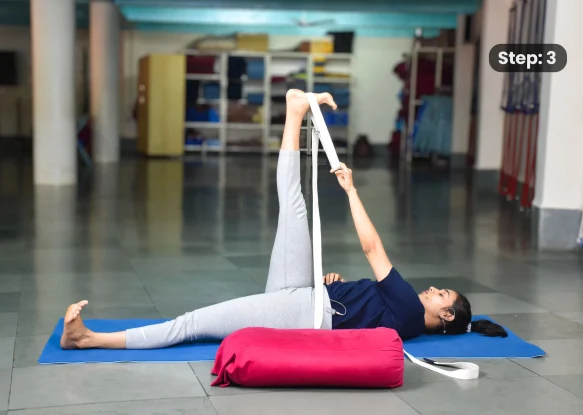
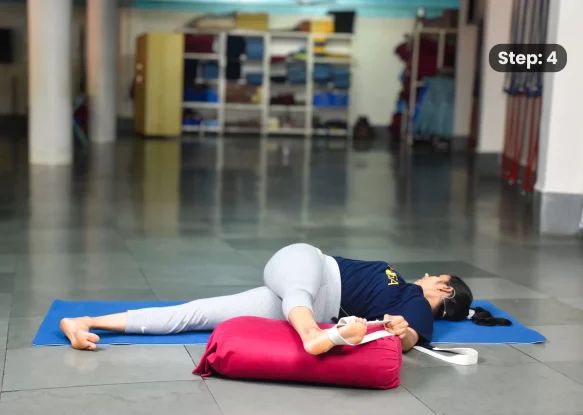
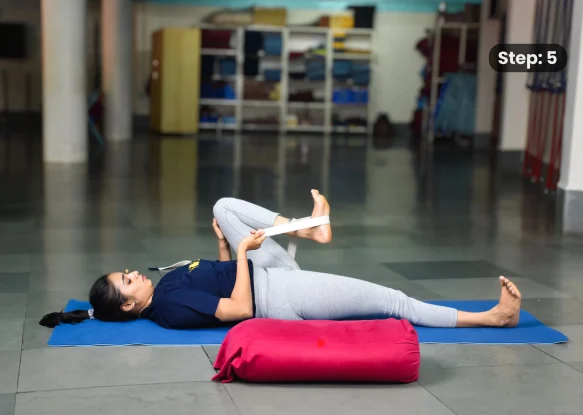
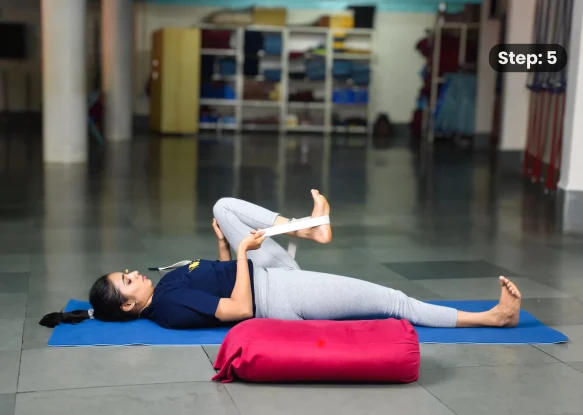
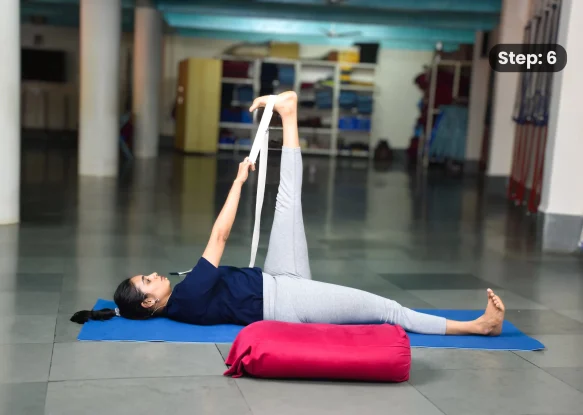
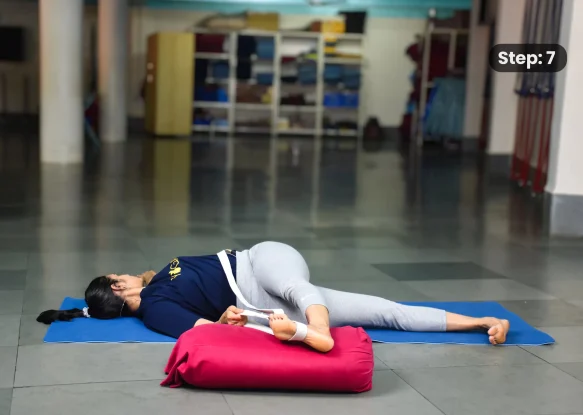
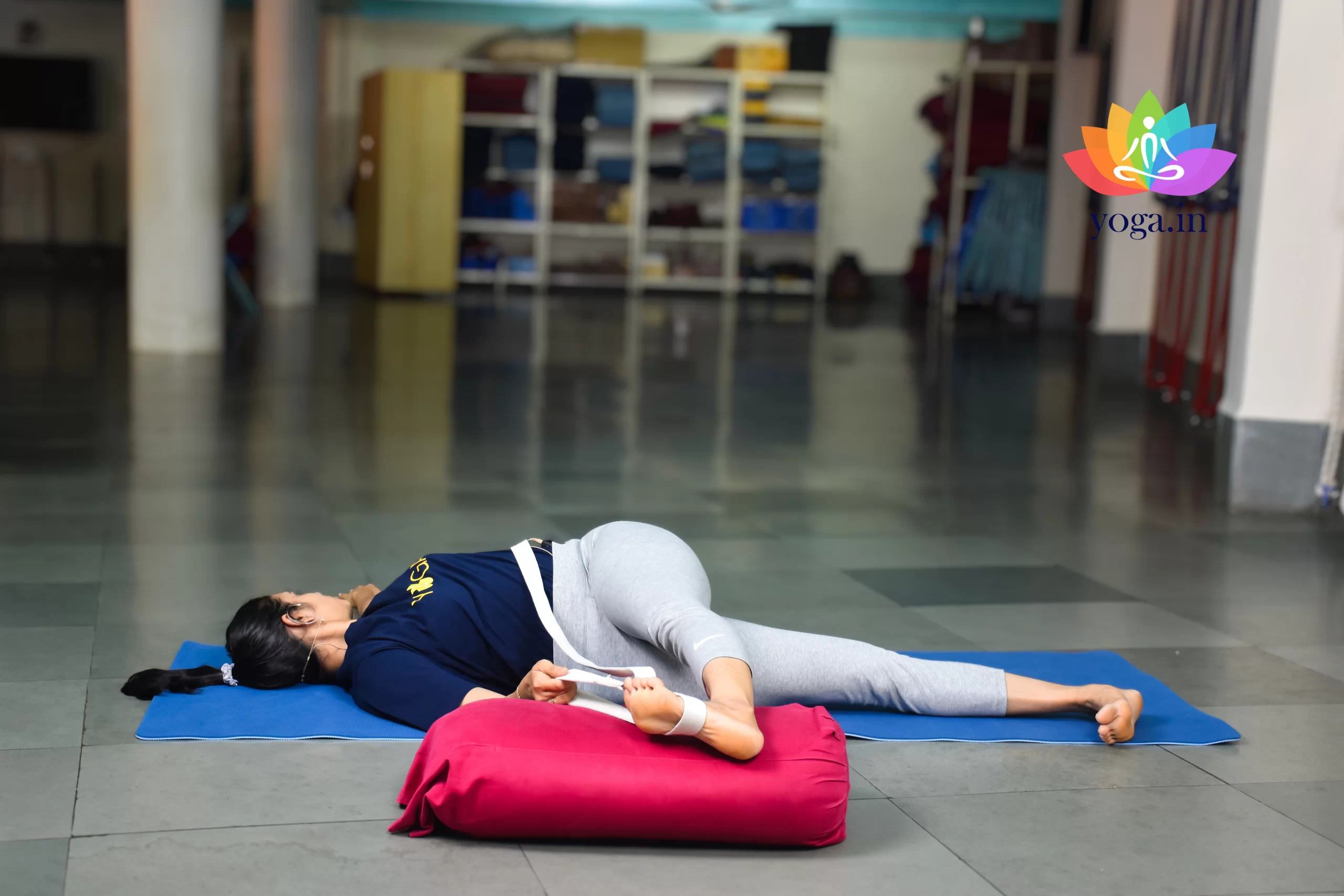
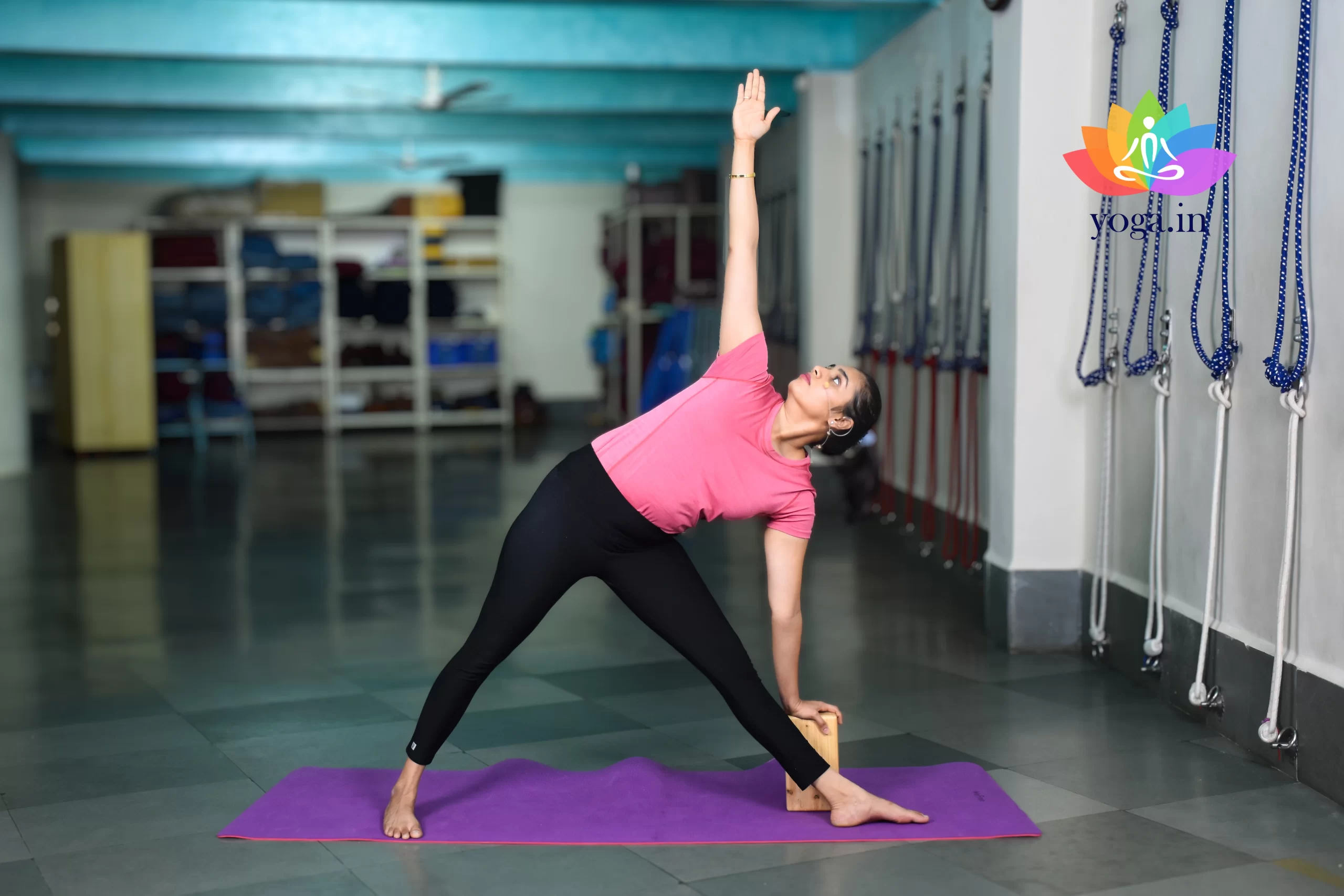
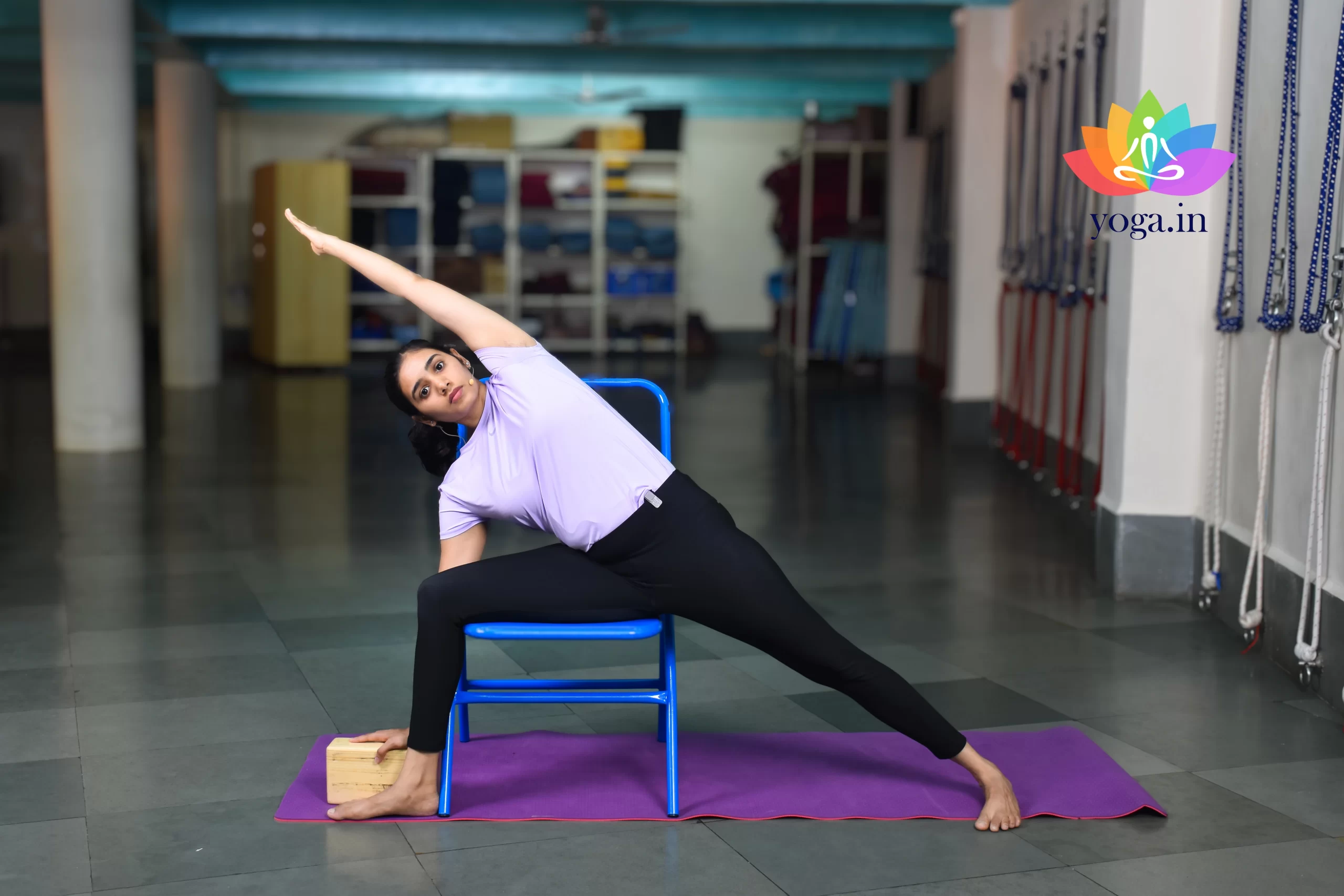
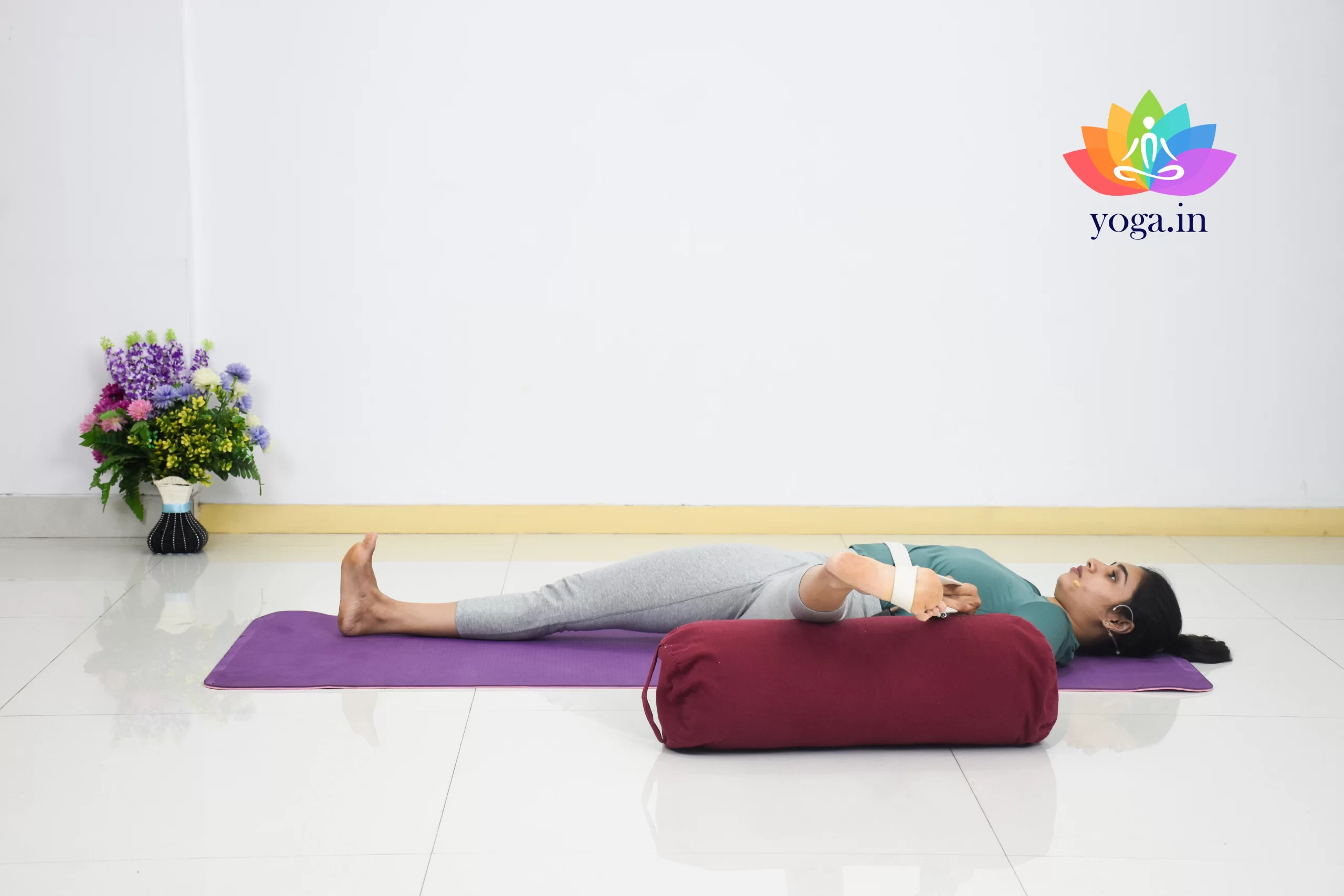
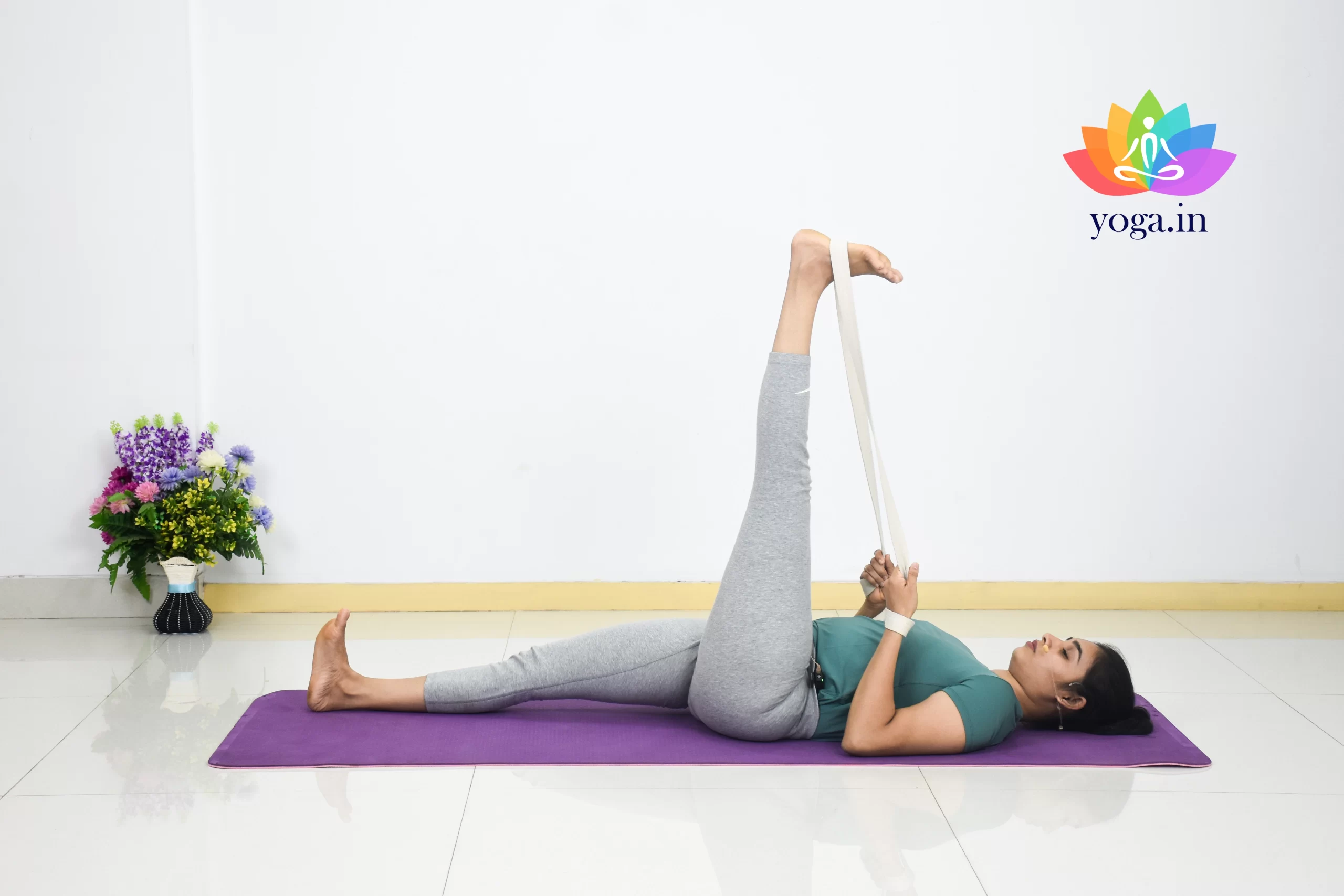
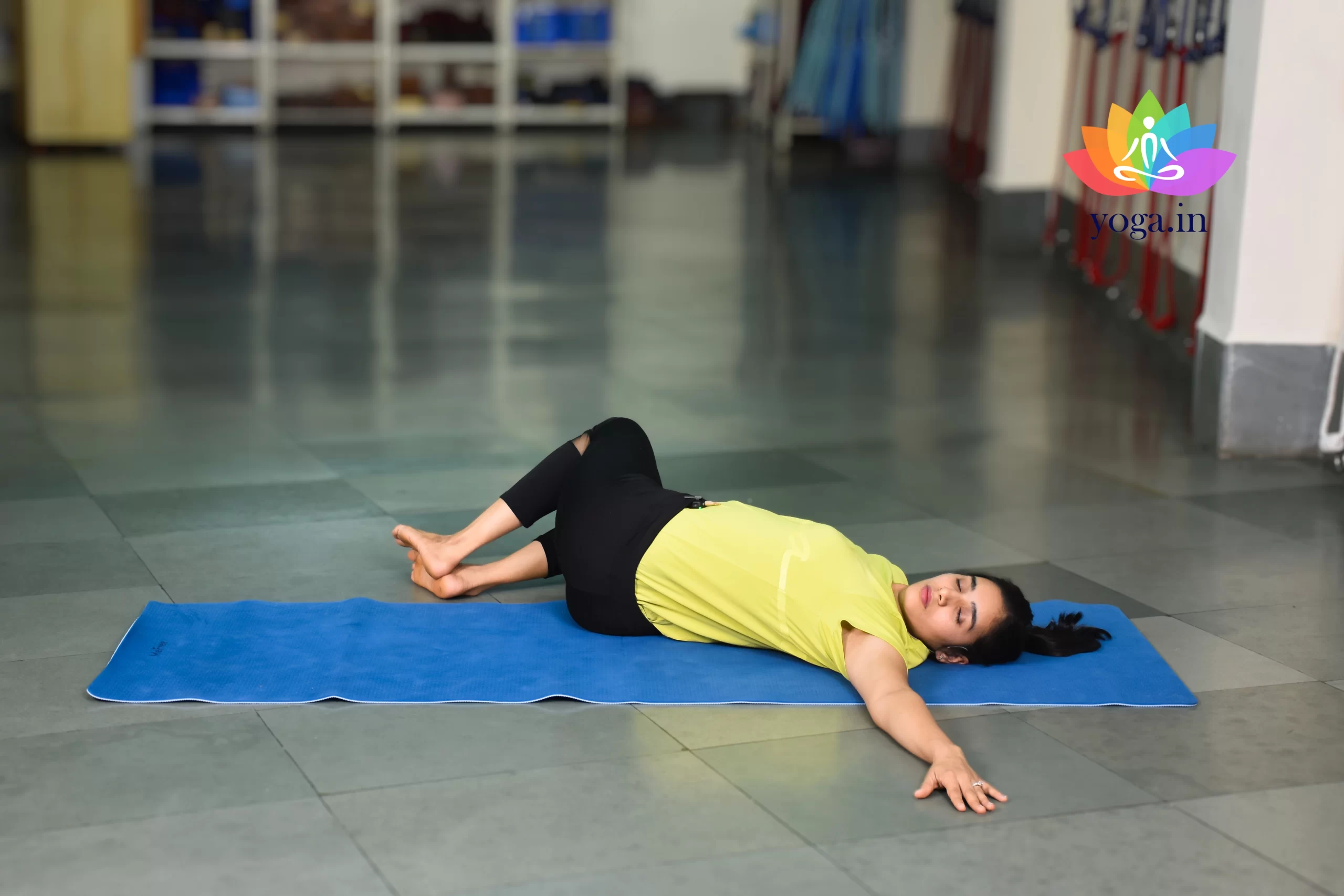
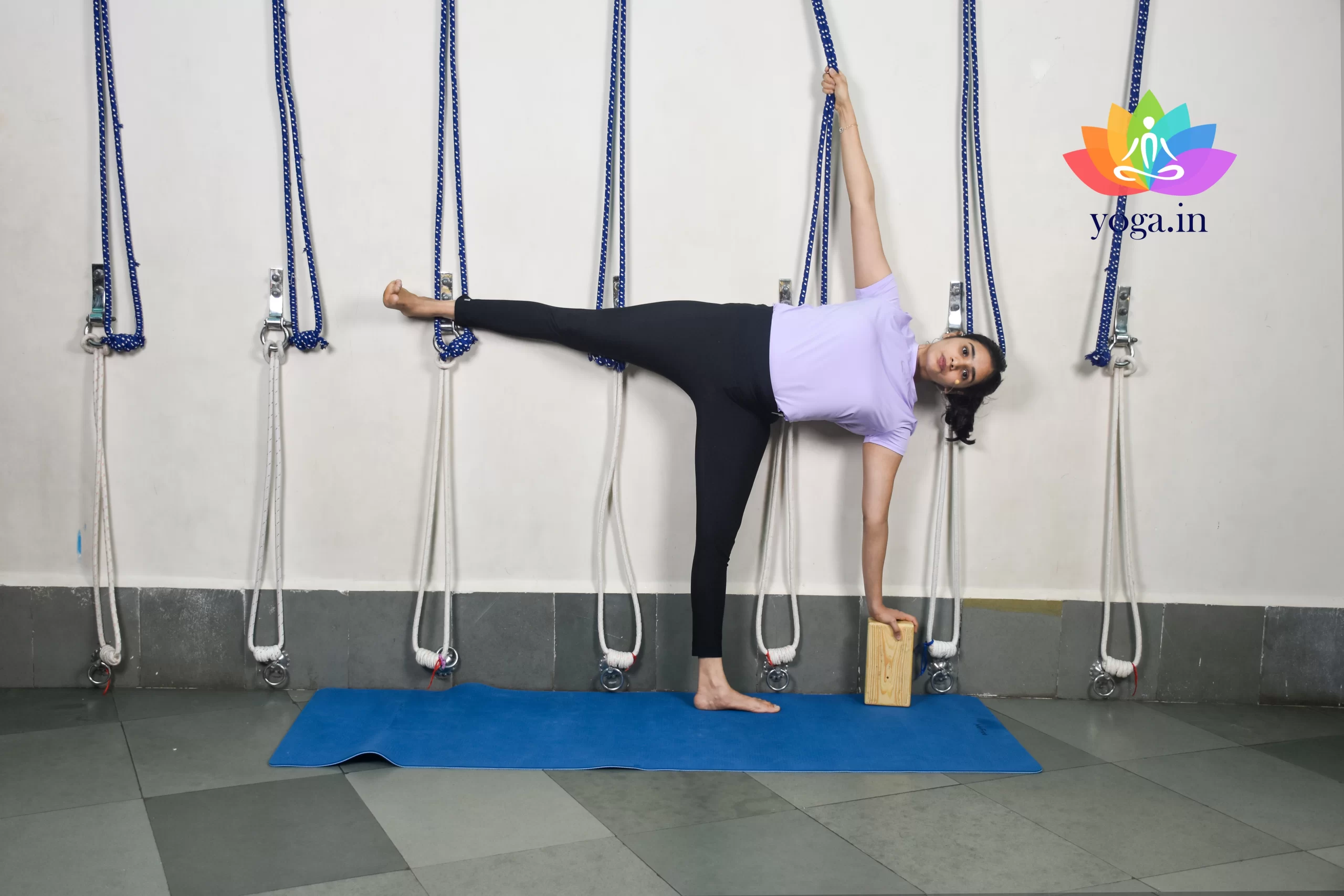
The Sanskrit name is derived from Supta (सुप्त) meaning ‘supine or recline’, ‘Pada’ meaning foot’, ‘Angustha’ meaning ‘Big toe’ and āsana (आसन) meaning “posture” or “seat”.
The Sanskrit name is derived from Supta (सुप्त) meaning ‘supine or recline’, ‘Pada’ meaning foot’, ‘Angustha’ meaning ‘Big toe’ and āsana (आसन) meaning “posture” or “seat”.
Steps to perform the Asana: Supta padangushthasana – 3 (Therapy)
Place a sturdy chair on your yoga mat with the back of the chair facing towards you. Ensure that the chair is stable and will not slide or tip over during the pose.
Position yourself on the mat facing the wall, with your hips a few inches away from the Chair.
Stand with spine erected.
Now touching the wall with both the palms, extend your right leg towards the ceiling, resting your right foot on the backrest of the chair. Adjust the distance between you and the chair so that your leg is fully extended without straining.
Ensure that your arms are fully extended, and your shoulders are relaxed away from your ears.
Keep your pelvis neutral and both hips grounded evenly on the mat. Maintain a straight line from your heel to your hip and shoulder on the extended leg side.
Engage your core muscles by gently drawing your navel towards your spine to stabilize your lower back and pelvis.
Press your right foot into the chair to activate the muscles of the leg and maintain stability.
Take deep, steady breaths as you hold the pose. Inhale to create space in the body, exhale to relax and release tension.
Hold the pose for several breaths.
To release the pose, gently release your grip on the big toe and bend the extended leg, returning both feet to the mat.
Gently lower your right leg back to the mat and repeat the pose on the opposite side.
Key Alignment Points
Engage your abdominal muscles by drawing your navel towards your spine. This helps stabilize your pelvis and lower back.
Straighten your right leg towards the ceiling, flexing the foot to engage the muscles of the leg.
Common Misalignments / (Mistakes)
Bending the knee of the extended leg.
Lack of engagement in the core muscles can lead to instability in the pelvis and lower back.
Avoid pointing the toes of the extended leg towards the ceiling.
Contraindication / Cautions
Avoid in case of injury at the hamstrings or quadriceps
Not to practice in case of Injury at the shoulders
Cautious in case of herniated discs or cervical spine injuries