The Sanskrit name is derived from Jathara (ञठर) meaning belly or abdomen, Parivarta (परिवर्त) meaning revolving and asana (आसन) meaning posture or seat.
The Sanskrit name is derived from Jathara (ञठर) meaning belly or abdomen, Parivarta (परिवर्त) meaning revolving and asana (आसन) meaning posture or seat.
Steps to perform the Asana: Jathara Parivartanasana (Therapy)
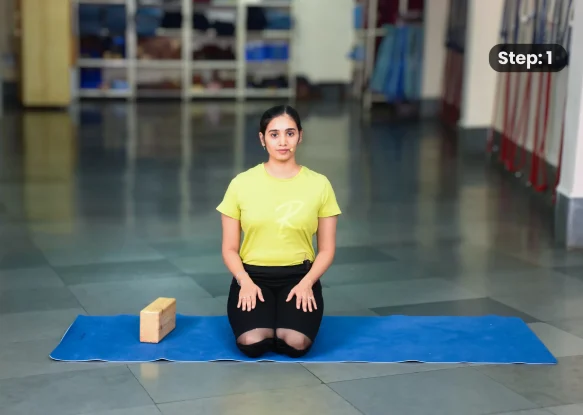
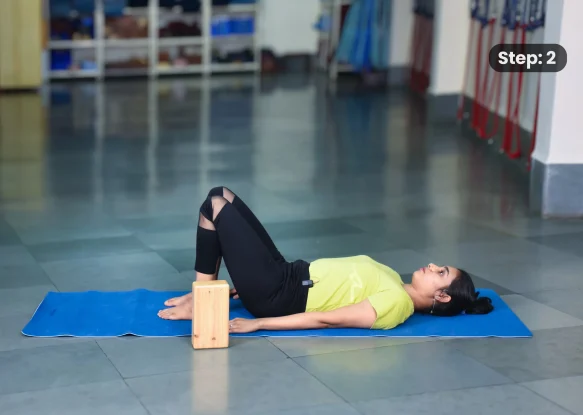
Begin by lying on your back (supine position) on a yoga mat with your legs extended and your arms resting comfortably at your sides.
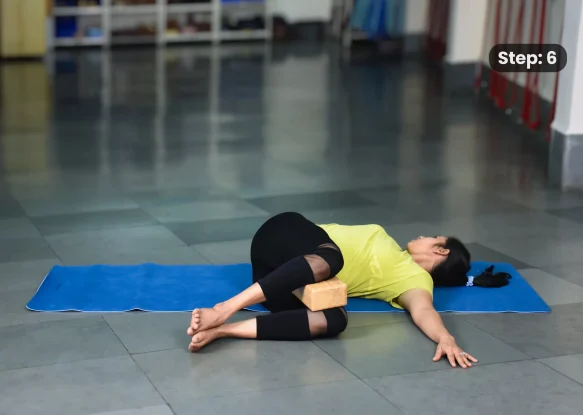
Place a yoga block alongside your right hip, parallel to your torso.
Ensure that the prop is at a comfortable height and distance from your body.
Extend your arms out to the sides, in line with your shoulders, with your palms facing up.
Keep your shoulders relaxed and grounded on the floor.
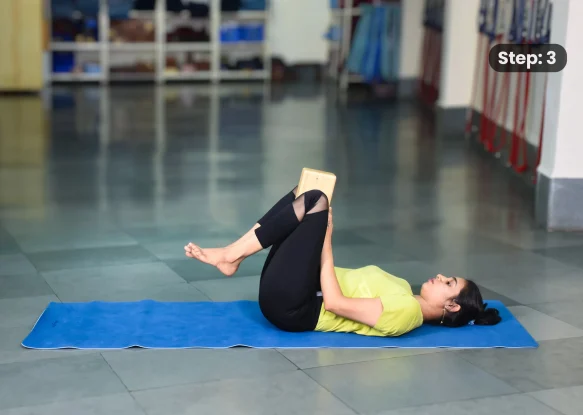
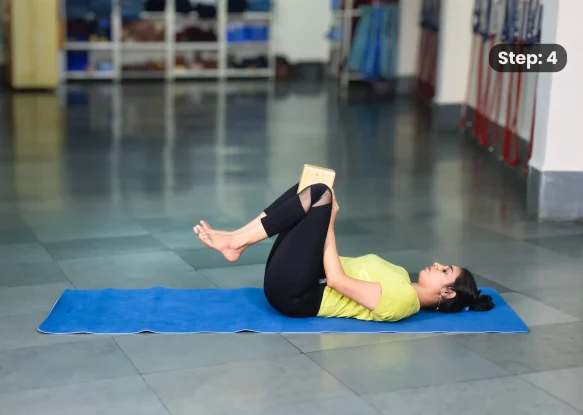
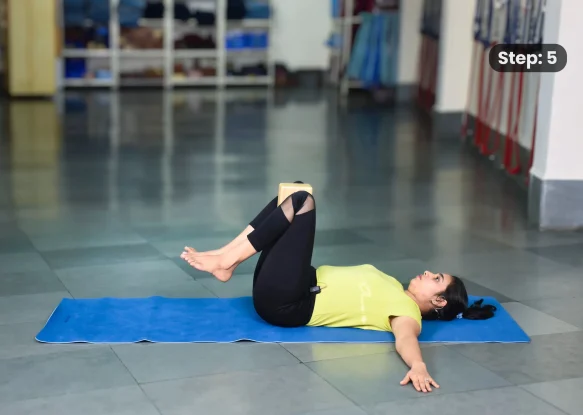
Bend your knees and draw them toward your chest.
Shift your hips slightly to the right to create space for the block to come underneath your legs.
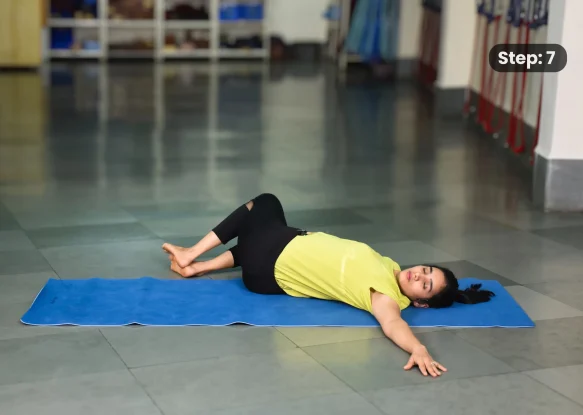
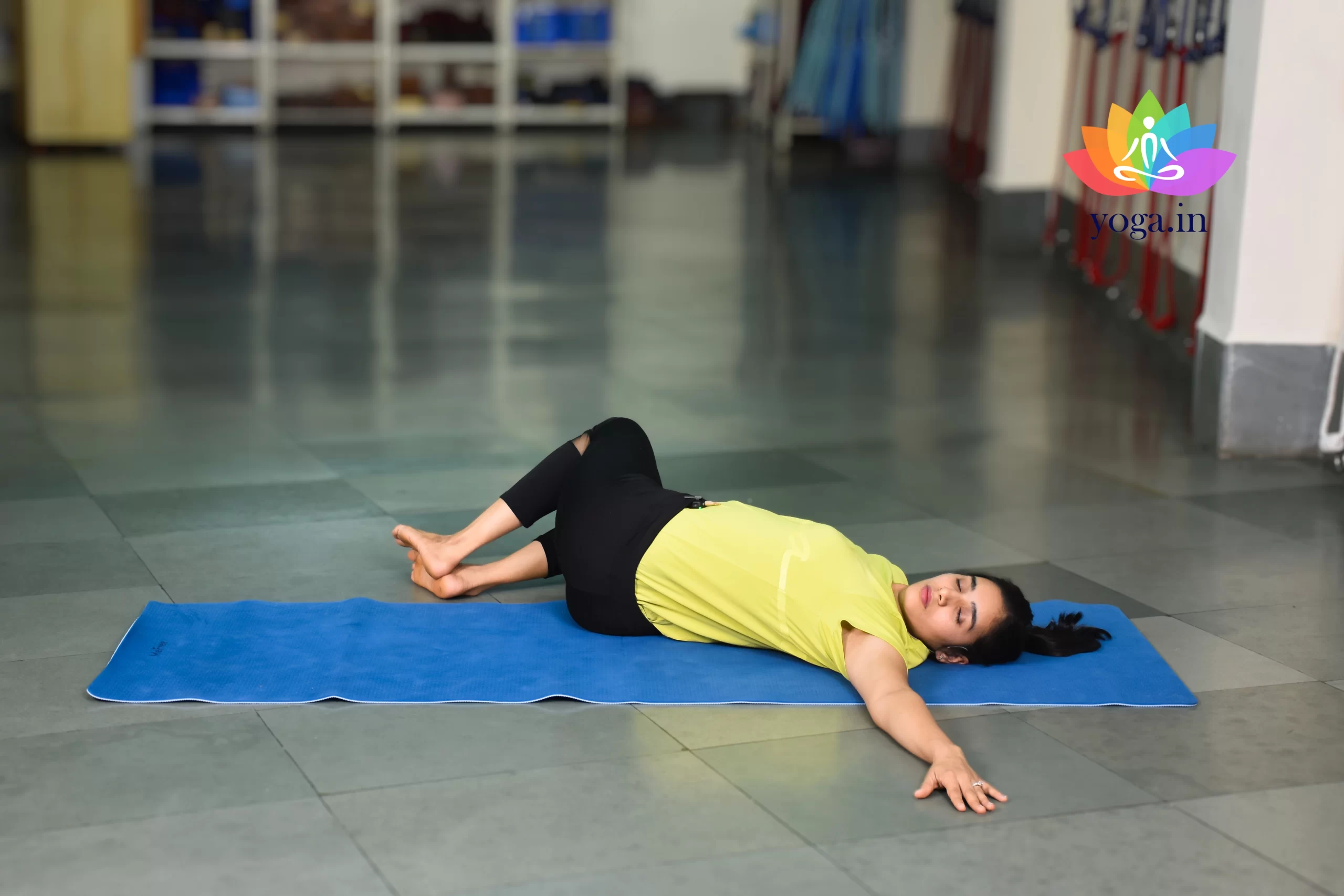
Lower both knees to the left side of your body, allowing them to come to rest on the mat. Keep your knees bent at a comfortable angle. Your legs should be stacked on top of each other.
Turn your head to gaze toward your right hand or keep it facing upward, depending on your comfort level.
Ensure that your neck feels comfortable and supported.
Hold the pose for 1-3 minutes, breathing deeply and evenly.
Slowly release the pose.
Repeat the pose on the opposite side by shifting your hips slightly to the left and lowering your legs to the right.
Finaly release the pose by extending the legs forward.
Key Alignment Points
Maintain a neutral spine throughout the pose, avoiding excessive arching or rounding.
Avoid lifting or hunching the shoulders toward the ears.
Avoid crossing one foot over the other or allowing the top foot to slide off the bottom leg.
Common Misalignments / (Mistakes)
Do not lift the shoulders off the floor while turning the head opposite to the direction of lowering the legs
Avoid lifting of the upper back while performing the twist
Contraindication / Cautions
Avoid in case of injury of the hips, spine, shoulders, neck, knees, ankles, or rib cage
Not to practice in hip replacement surgery or if suffering from a herniated disc