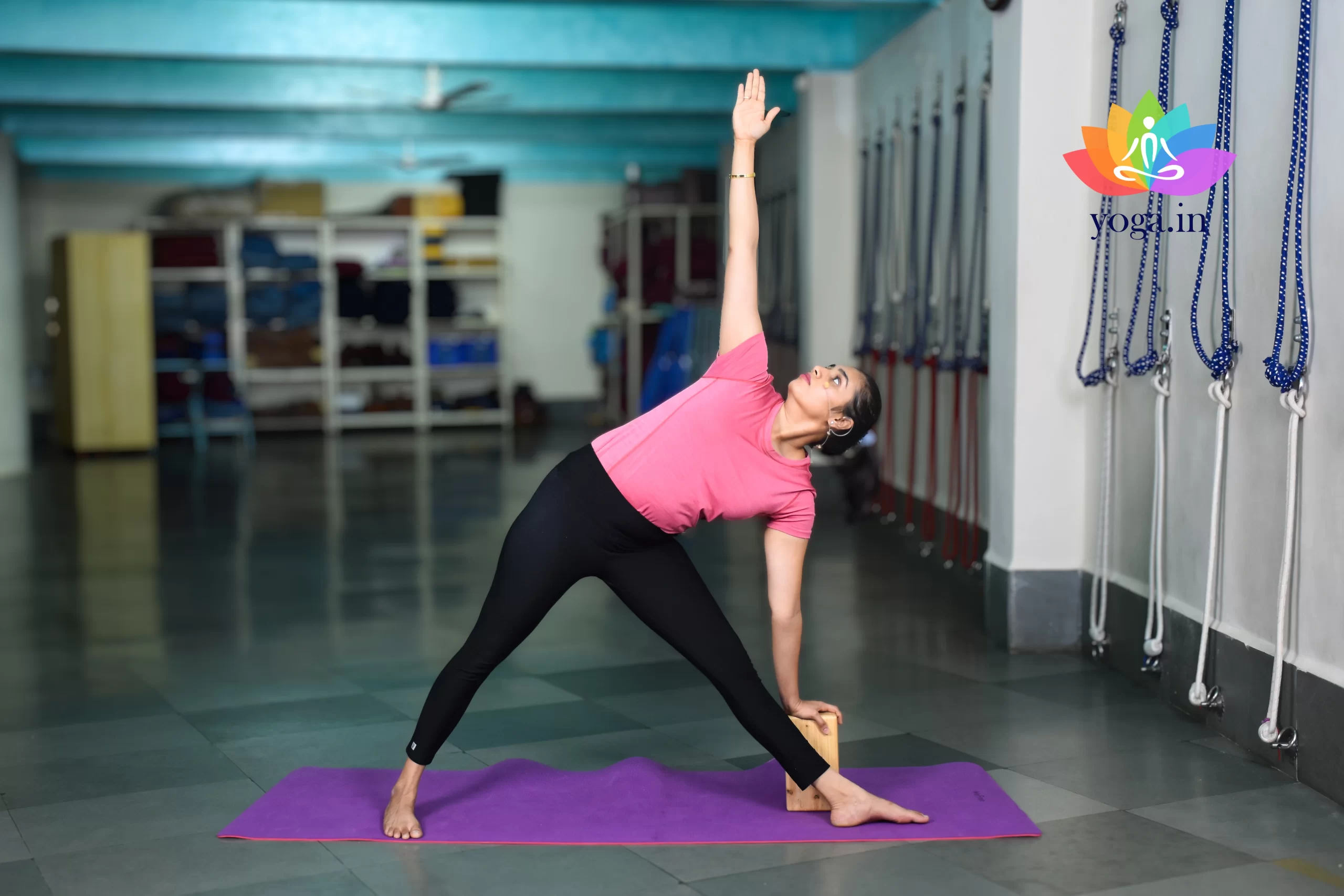
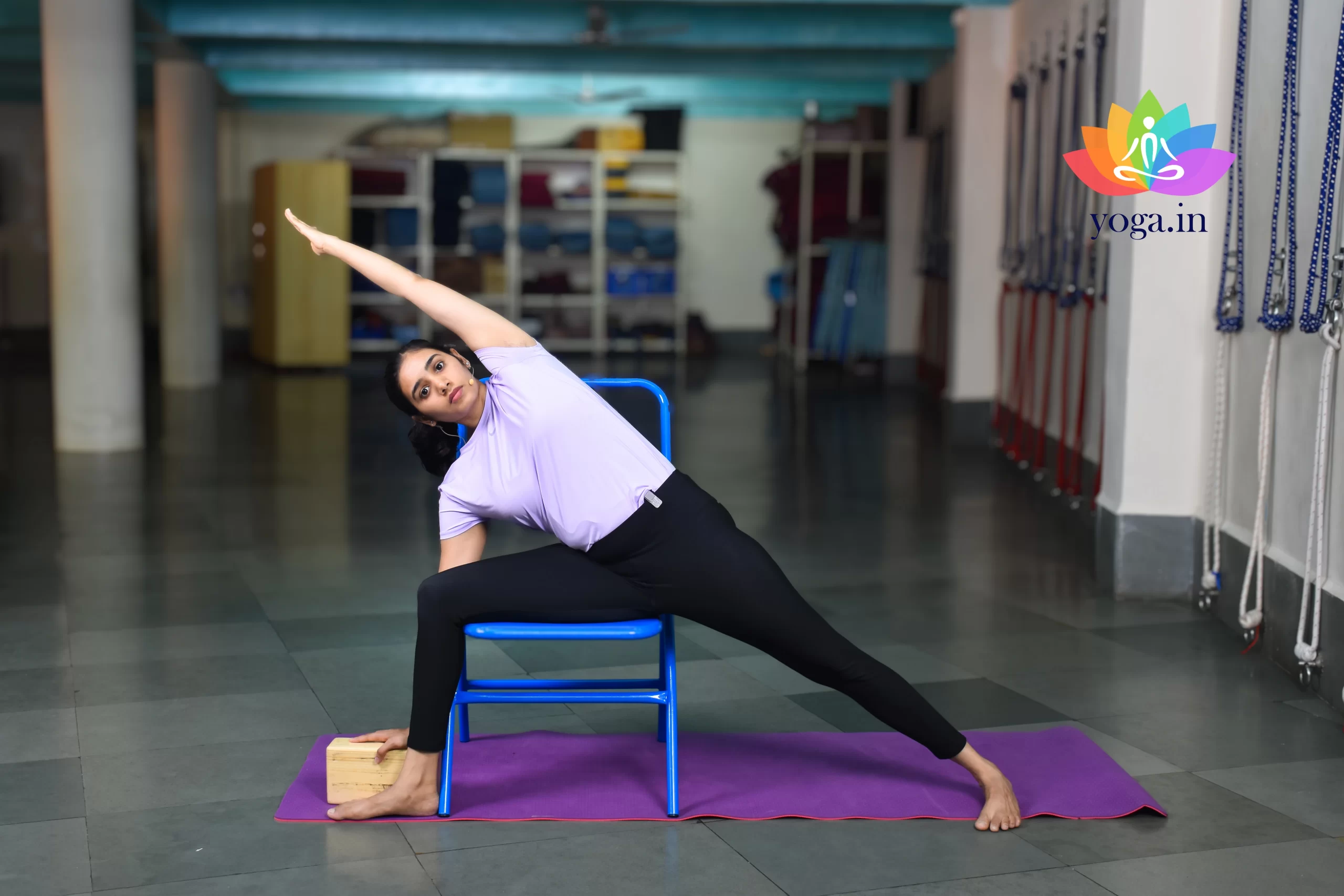
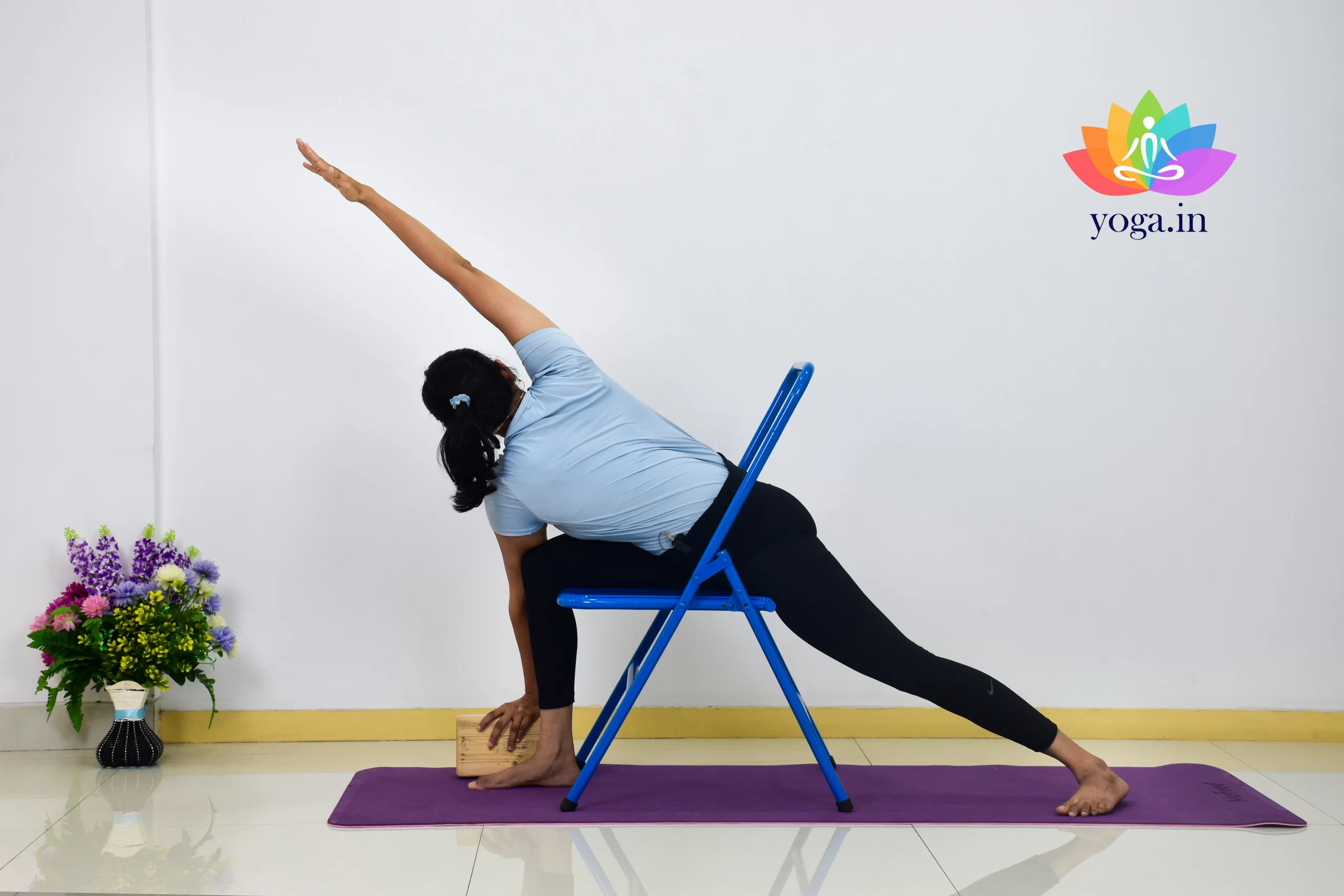
The name comes from the Sanskrit parivrtta meaning “revolve,” trikona, meaning “triangle,” and asana meaning “posture.”
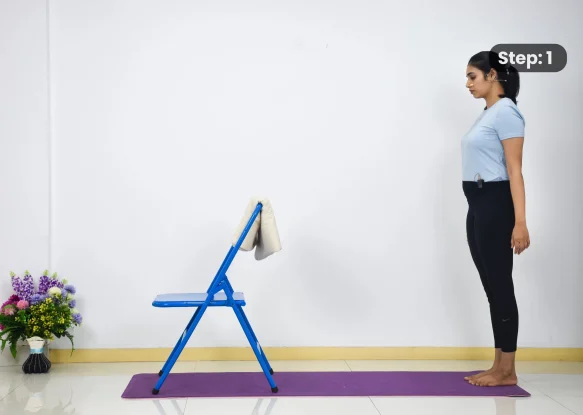
Place the chair on your mat, ensuring it is stable.
Fold the blanket and place it on the back stand of the chair for cushioning.
Stand in Tadasana (Mountain Pose) facing the side of the chair.
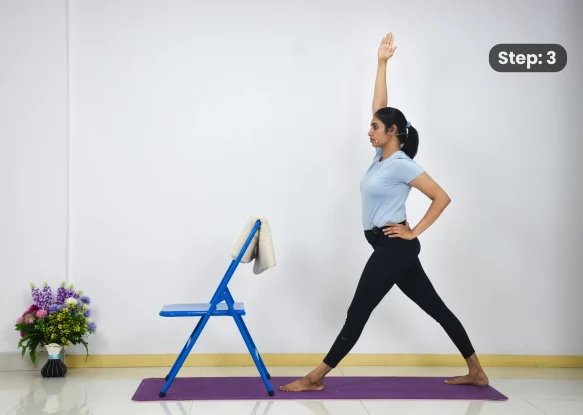
Step your feet about 3 to 4 feet apart, with your right foot facing forward and your left foot turned out about 45 degrees.
Align your heels so they are in line with each other.
Square your hips to face forward. Draw your left hip forward and your right hip back.
Inhale and extend your arms out to the sides at shoulder height, parallel to the floor, with your palms facing down.
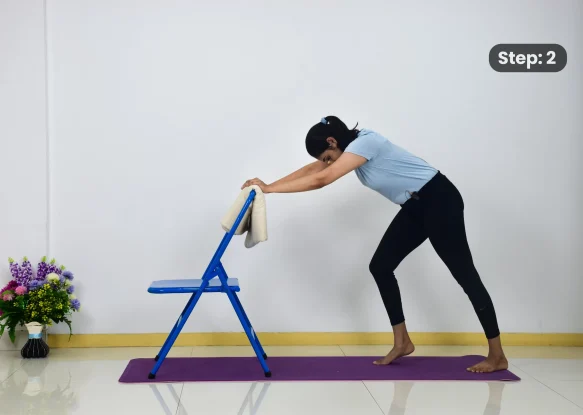
Exhale and hinge forward from your hips over your right leg.
Place your left hand on the down leg of the chair and rest your head on the blanket placed on the upper handle of the chair.
keep your gaze forward with the comfortable position for your neck.
Lengthen your spine with an inhale, and with an exhale, twist your torso to the right.
Keep your hips squared and your spine long.
If needed, adjust the blanket or the position of your hand on the chair to maintain proper alignment.
Maintain steady and even breathing throughout the pose.
To come out of the pose, inhale and return to an upright position.
Bring your feet back together and return to Tadasana.
Repeat the pose on the other side.
Point the front foot straight ahead. The heel should be in line with the arch of the back foot.
Twist from the base of the spine upwards. Avoid twisting primarily from the shoulders.
Keep the neck in line with the spine, avoiding any strain.
Twisting primarily from the lower back instead of the thoracic spine (mid-upper back)
The front knee should not be locked or hyperextended
The back heel should not get lift off the floor
Avoid in case of neck, hips, knees, legs or abdominal surgery or injury
Avoid during migraine or vertigo
Avoid practicing in low blood pressure
The Sanskrit name comes from the Utthita,
The Sanskrit name is derived from Utthita
The sanskrit name is derived from sirsa
The sanskrit name is derived from Śava
The sanskrit name is derived from Salamba
The name derives from Sanskrit terms ‘parivrtta’
Please login with social account to support this post.