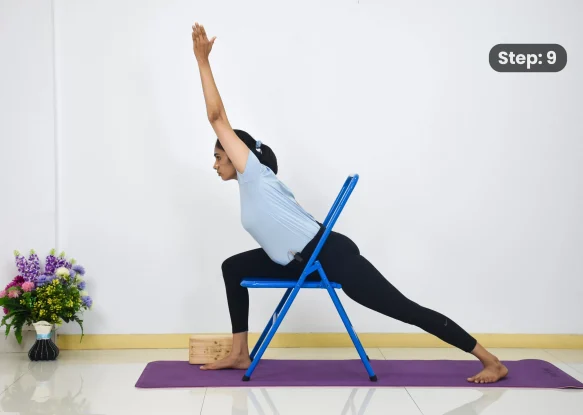
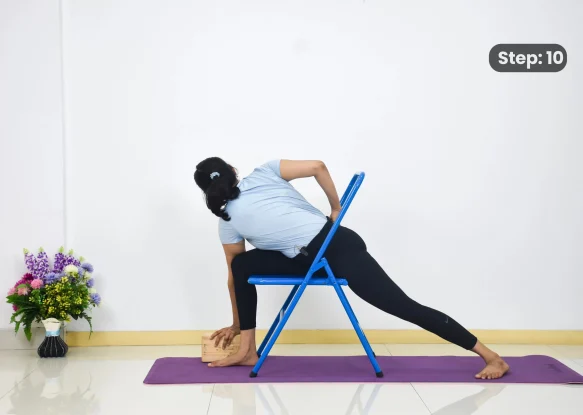
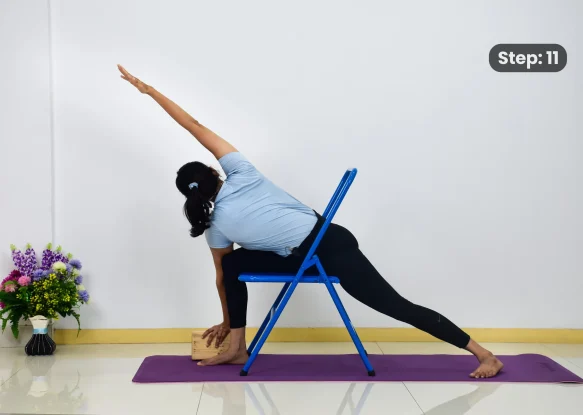
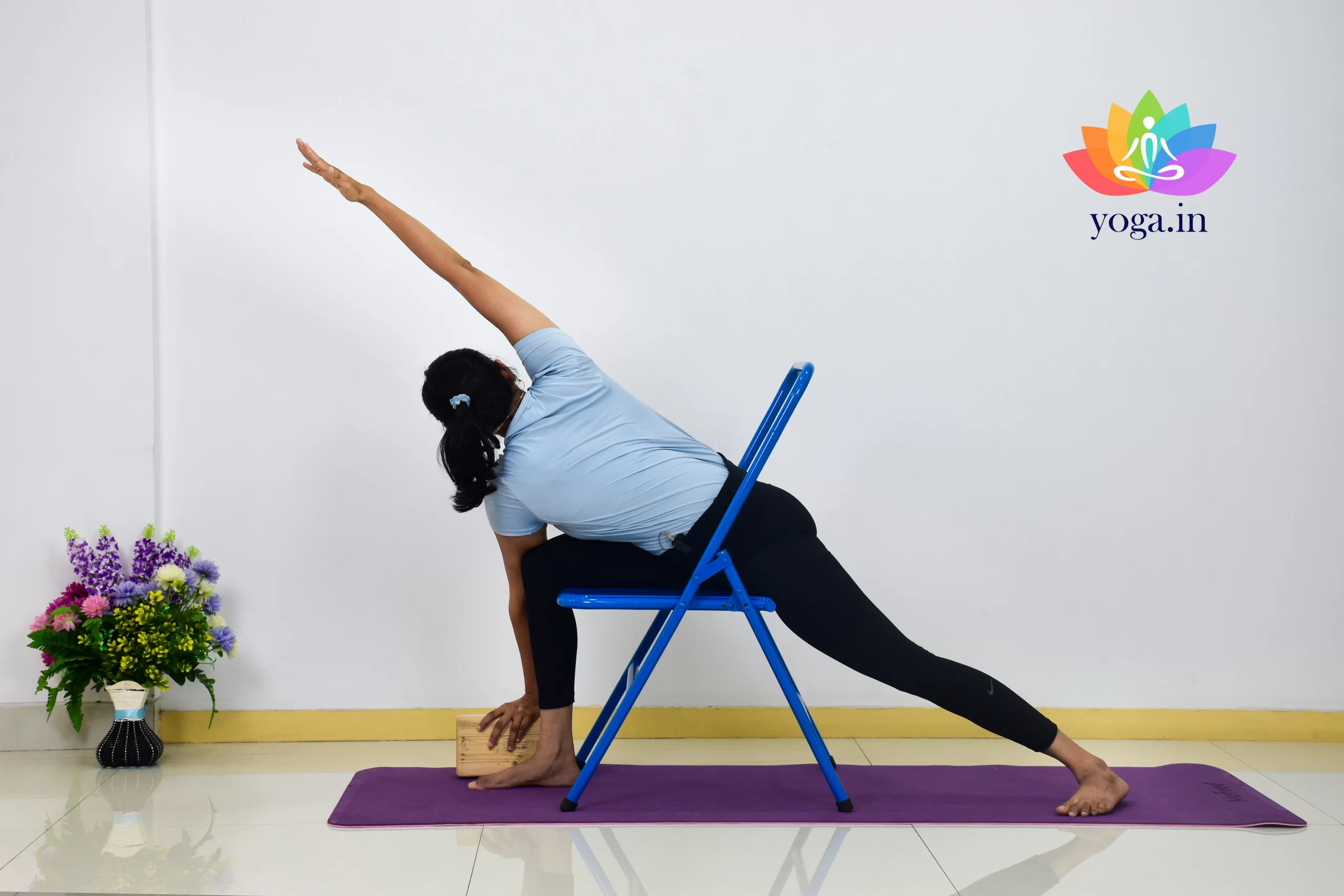
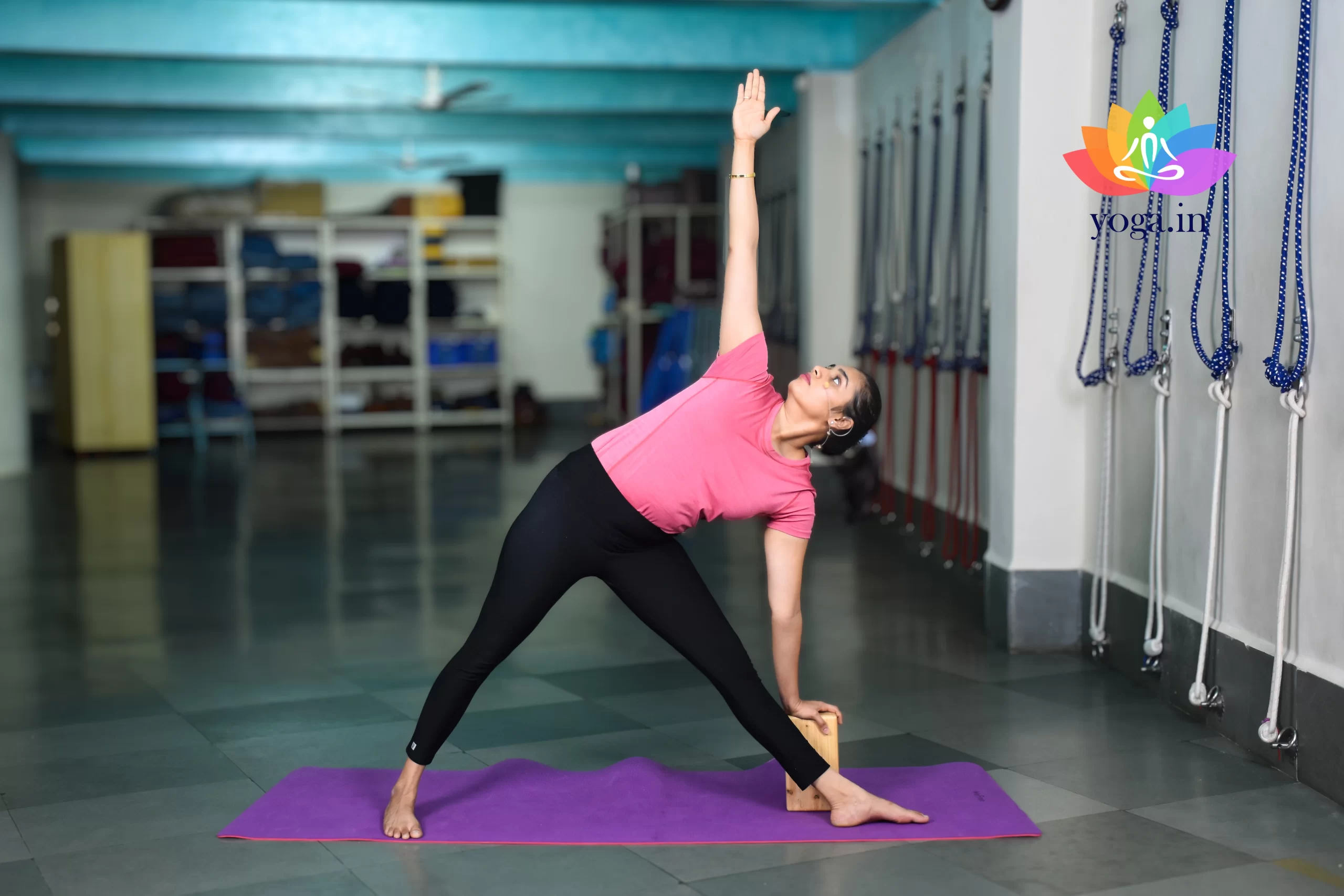
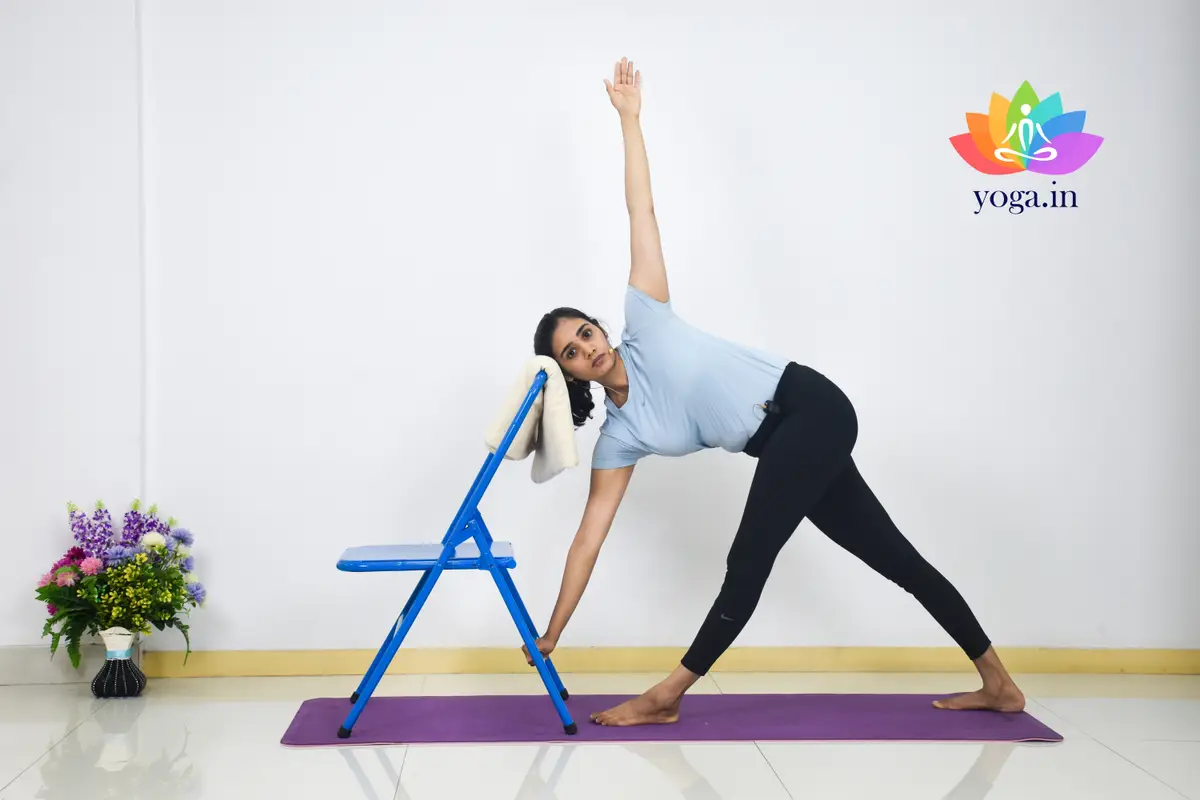
The name derives from Sanskrit terms ‘parivrtta’ meaning revolving, ‘parsva’ meaning side, ‘kona’ meaning angle, and ‘asana’ meaning posture.
Steps to perform the Asana: Parivritta parshvkonasana (Therapy)
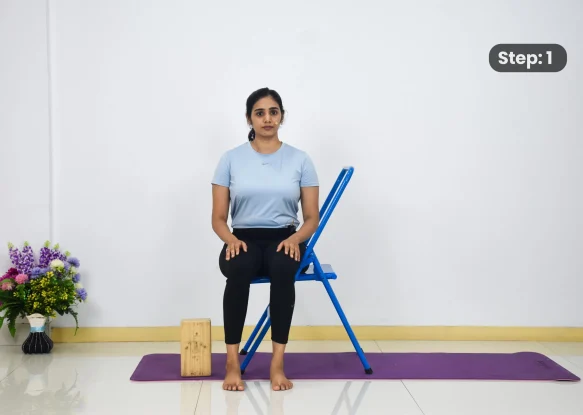
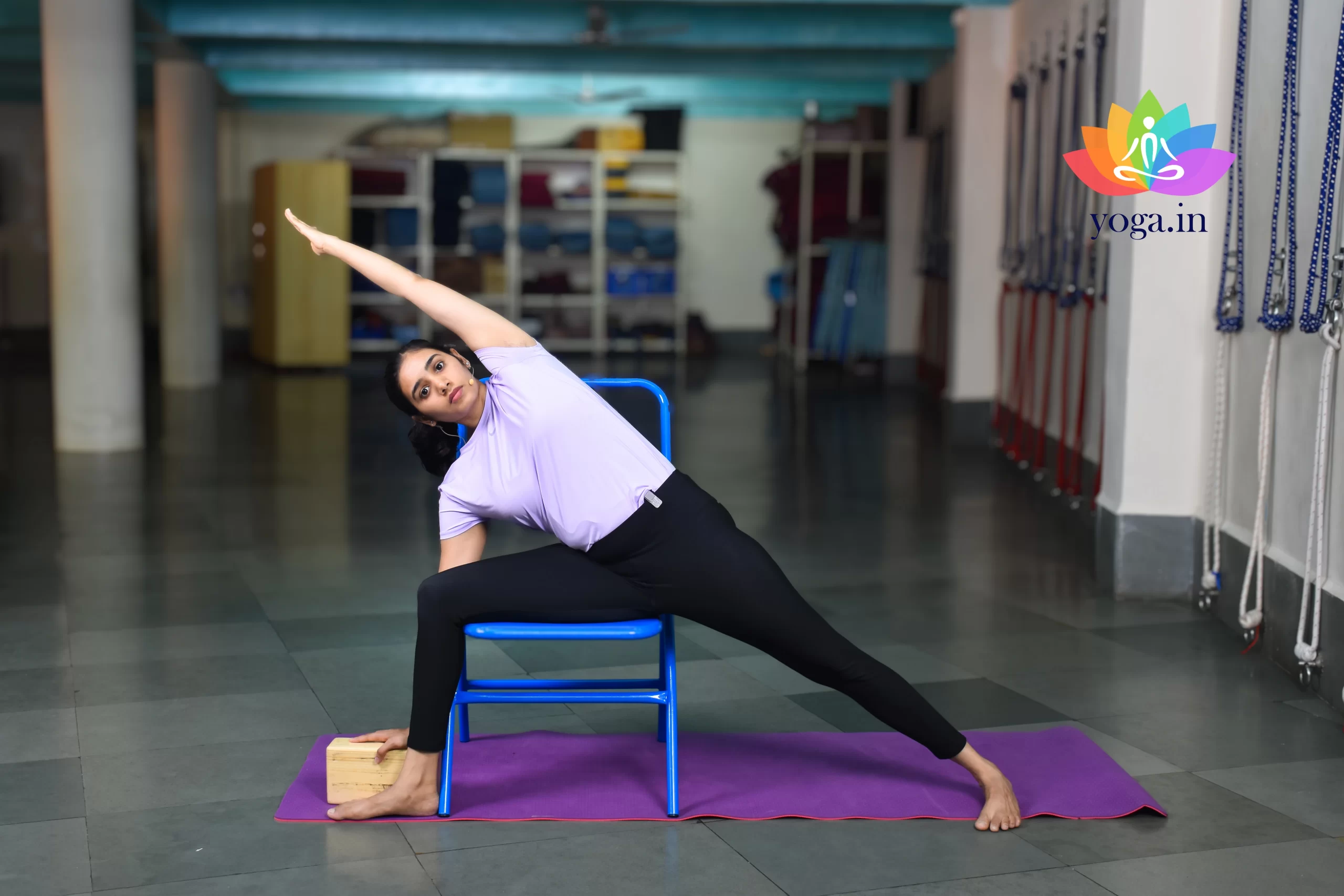
Place the yoga chair on your mat so that it is stable.
Position the yoga block within reach of where your hand will be during the pose.
Stand in Tadasana (Mountain Pose) facing the chair.
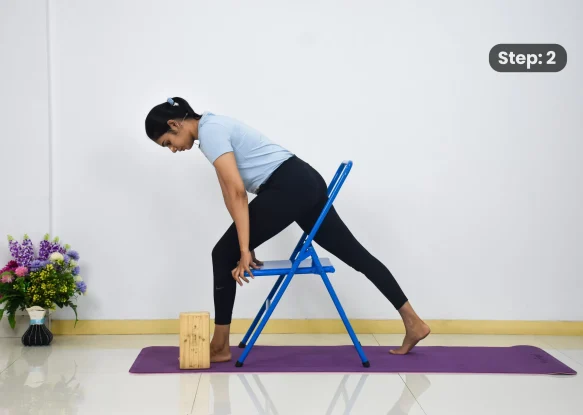
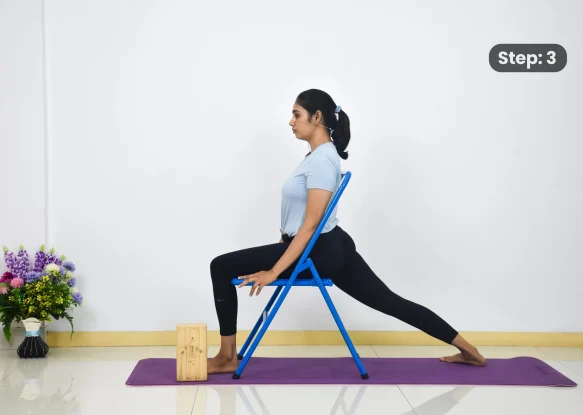
Step your feet wide apart about 3-4 feet, turning your right foot out in 90 degrees and your left foot slightly in.
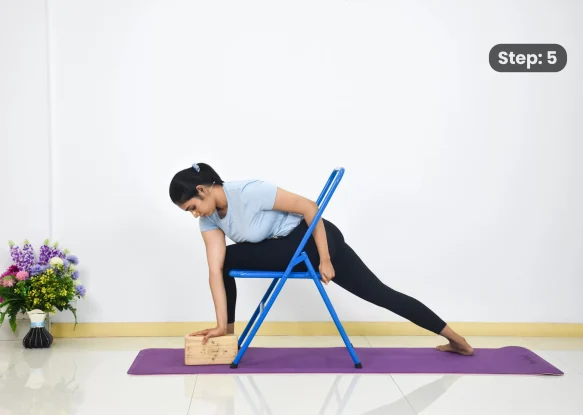
Bend your right knee to a 90-degree angle and place it on the seat of the chair, ensuring that your knee is directly above your ankle. Your thigh should be parallel to the floor.
Keep your left leg straight and strong, pressing the outer edge of your left foot into the mat.
Inhale and extend your arms out to the sides at shoulder height, parallel to the floor, with your palms facing down.
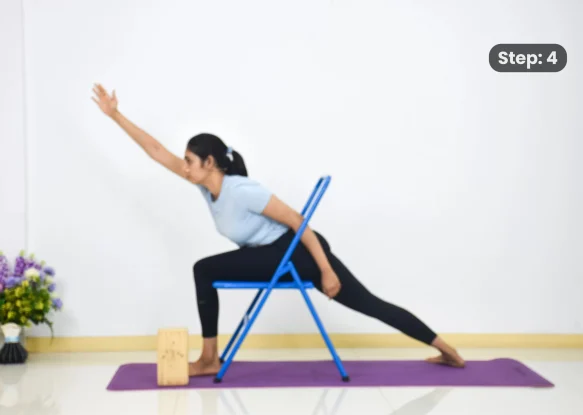
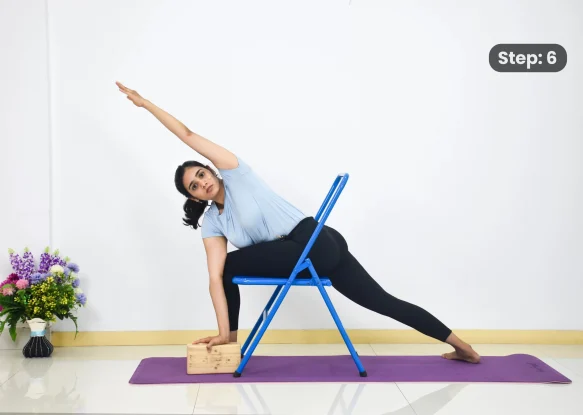
Exhale and hinge at your hips, bringing your left hand to rest on the brick kept on the floor for extra height and right hand above the head fingers pointing out.
Your hand should be directly under your shoulder.
Lengthen your spine with an inhale and with an exhale, twist your torso to the right.
Bring your right hand to your right hip or extend it up towards the ceiling.
Turn your head to look up at your top hand or keep your gaze forward or down if it’s more comfortable for your neck.
Keep your core engaged to support the twist and protect your lower back.
Hold the pose for several breaths, maintaining the twist and the length in your spine.
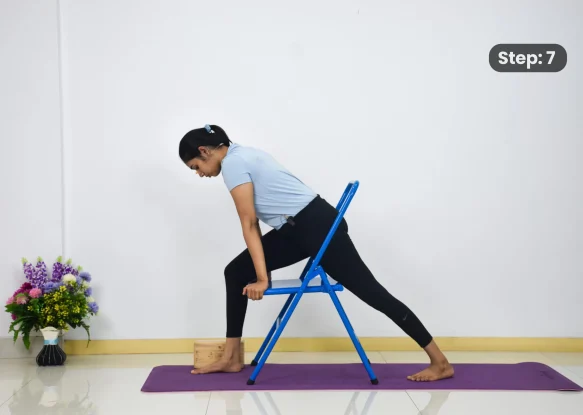
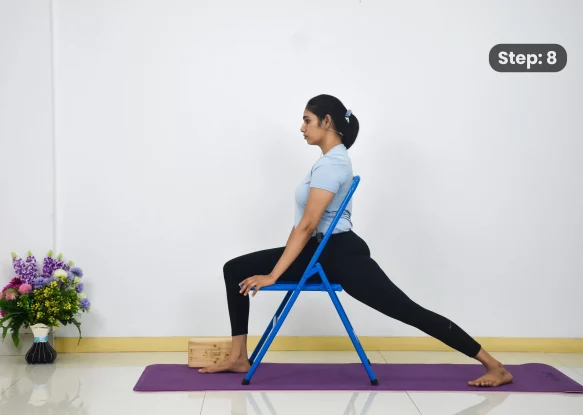
To come out of the pose, inhale and return to an upright position.
Straighten your front leg and bring your feet back together into Tadasana.
Repeat the pose on the other side.
Key Alignment Points
Both legs should be straight and strong, with the kneecaps lifted to engage the quadriceps.
Square the hips to face forward.
Engage the core muscles to support the twist and protect the lower back.
Maintain a long and straight spine, avoiding any rounding.
Common Misalignments / (Mistakes)
The hips are not squared to the front, with the back hip often falling back and the front hip collapsing forward.
The front knee locks or hyperextends, putting strain on the joint.
The neck is strained by over-rotating the head or looking up too forcefully.
Over-twisting from the shoulders rather than the spine can lead to strain.
Contraindication / Cautions
Avoid during Pregnancy
Avoid in case of High or low blood pressure
Avoid in case of Cardiovascular issues
Avoid in case of Arthritis and recent injury in hips, neck, shoulders, or arms