Introduction to the Asana: The sanskrit name is derived from Bhardvaja (भरद्वाज) means bringing about nourishment and asana (आसन) meaning posture or seat.
Introduction to the Asana: The sanskrit name is derived from Bhardvaja (भरद्वाज) means bringing about nourishment and asana (आसन) meaning posture or seat.
Steps to perform the Asana: Bhardvajasana (Therapy)
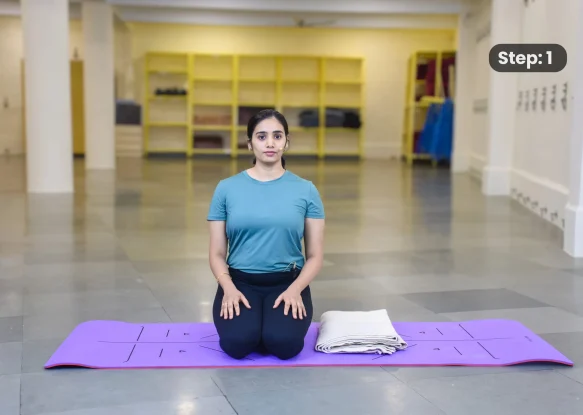
Begin by sitting on the yoga mat with your legs extended in front of you.
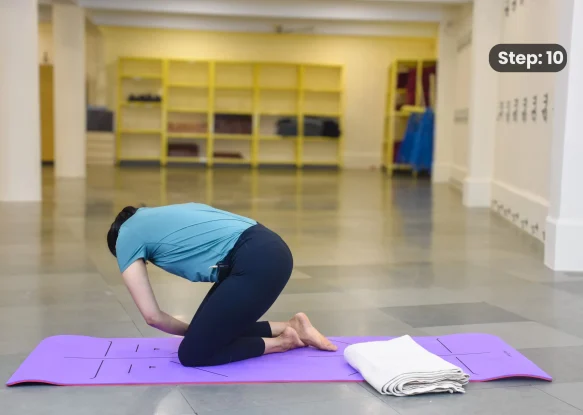
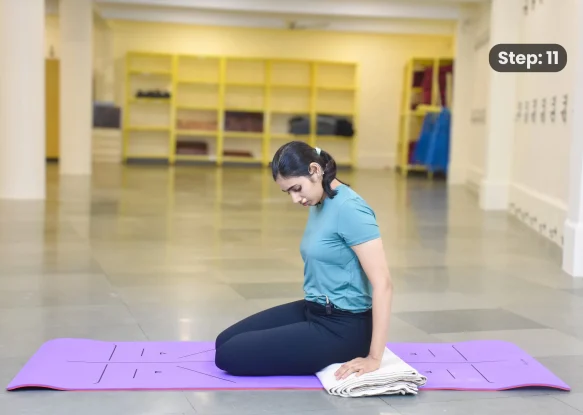
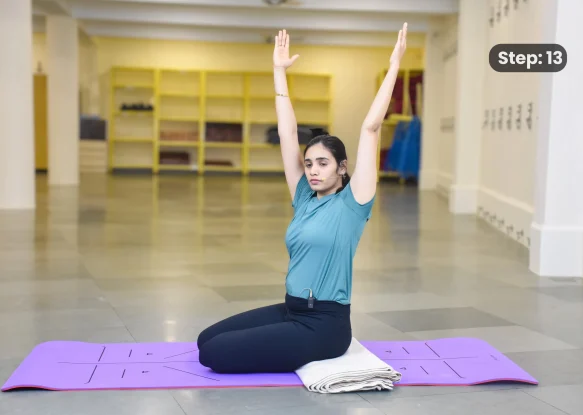
Place the folded blanket behind you horizontally, aligning it with your spine.
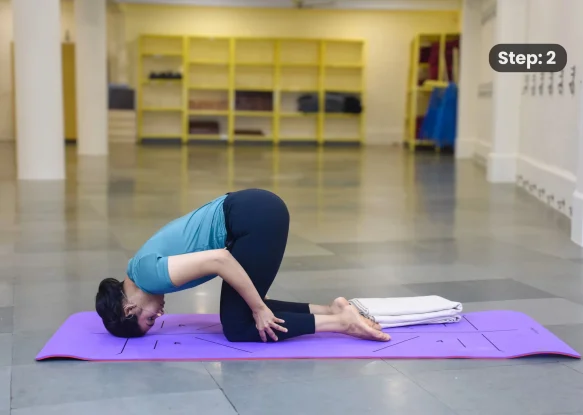
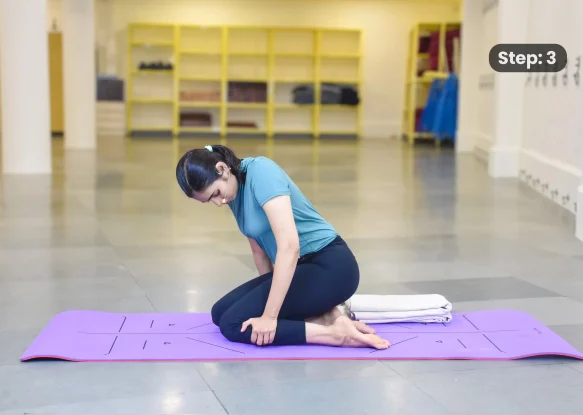
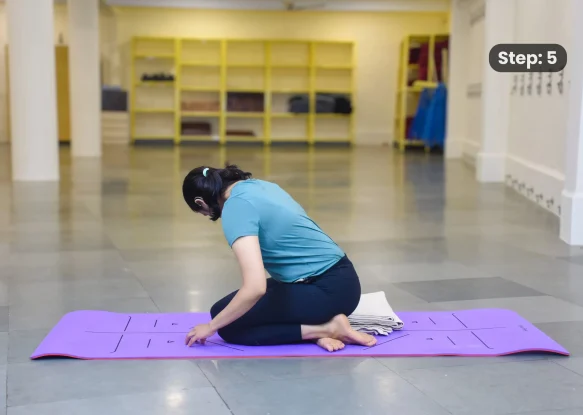
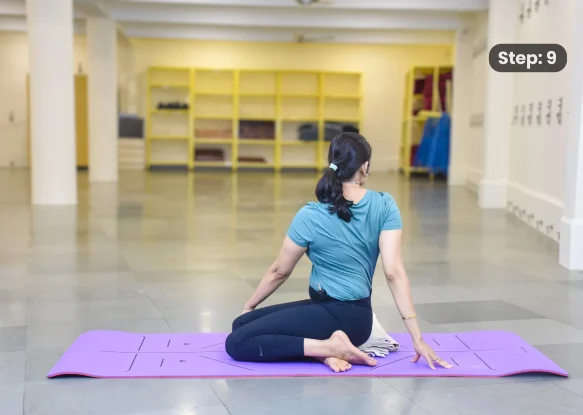
Sit on the blanket and gently swing your legs to one side, coming into a seated position with your knees bent and feet on the floor.
Centre your spine along the length of the blanket, ensuring it provides support and comfort.
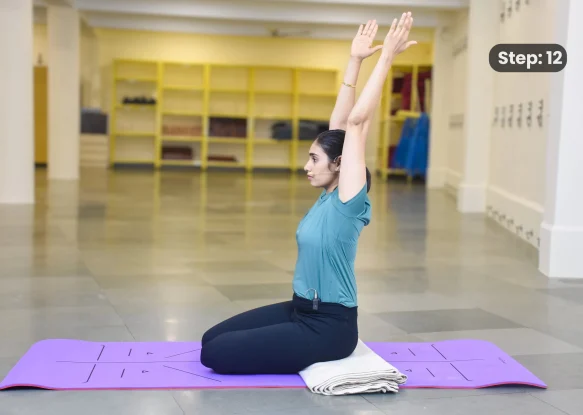
Ground down through your sitting bones and lengthen upwards through your spine.
Engage your core muscles to stabilize your torso.
Bend your knees and bring your feet toward your hips, ensuring they are parallel to each other and your knees are stacked over your ankles.
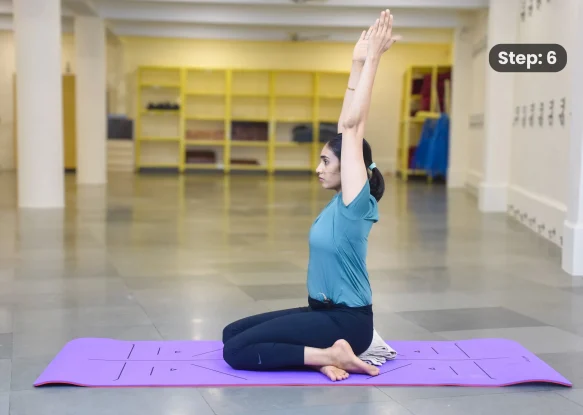
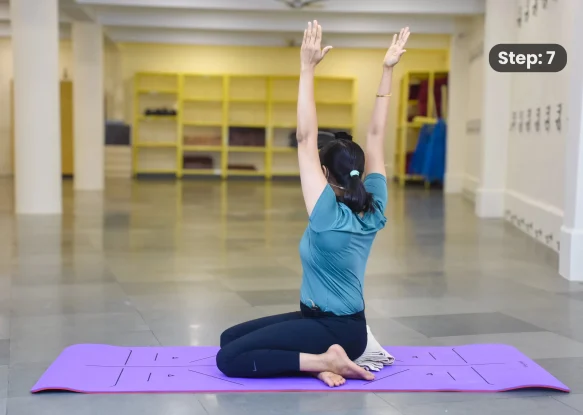
On an inhalation, raise your arms out to the sides at shoulder height, keeping them parallel to the floor.
Exhale and sweep your arms toward the right side, bringing your hands to rest on the floor.
Inhale and lengthen through your spine, creating space between each vertebra.
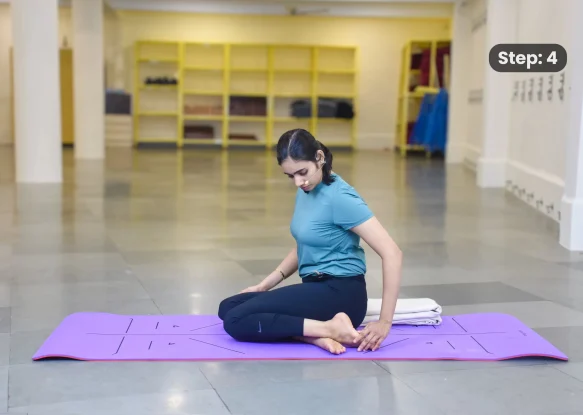
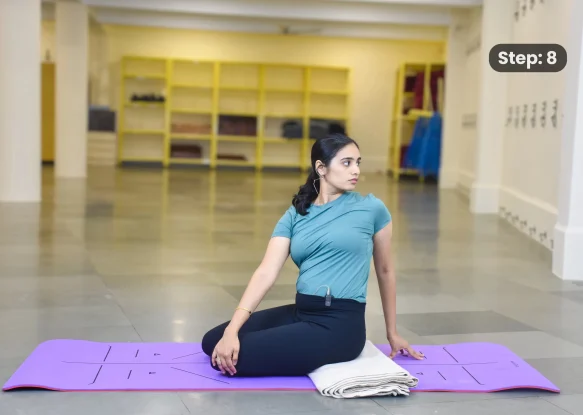
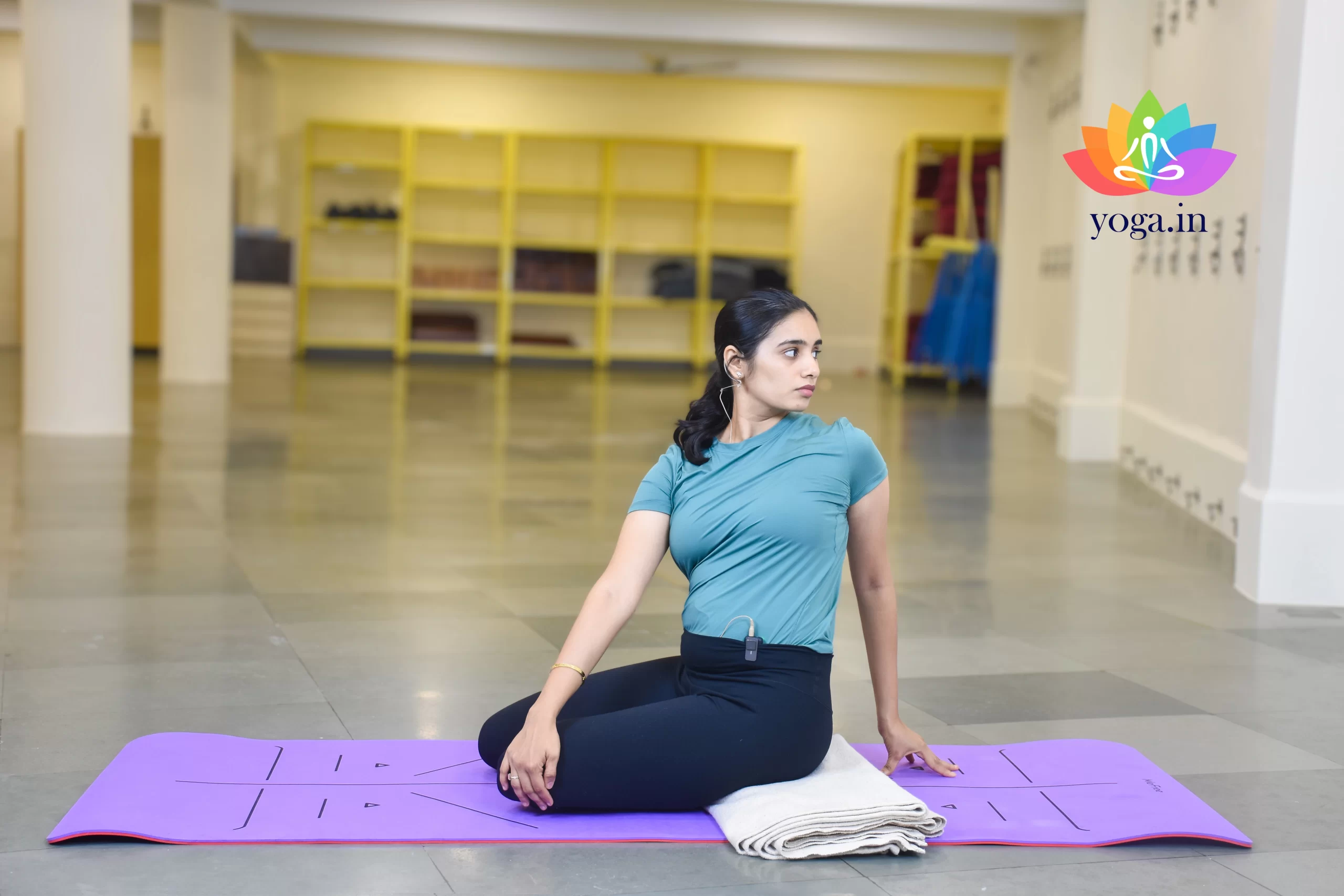
Exhale and begin to twist your torso to the right, leading with your chest and shoulders.
Bring your left hand to rest on your right knee or thigh, using it to deepen the twist if comfortable.
Turn your head to look over your right shoulder, keeping your neck aligned with your spine.
Hold the pose for 40-50 seconds, breathing deeply and evenly as you relax into the pose.
Gently return to a neutral seated position.
Repeat the pose on the opposite side.
Key Alignment Points
Lengthen upward through the crown of your head, maintaining a straight and elongated spine.
Common Misalignments / (Mistakes)
Pelvis not keeping in level
Keeping knees wider than the hips
Contraindication / Cautions
Avoid during injury at the hips
Avoid in case of diarrhoea and cardiac condition
Avoid if suffering from a hamstring injury, slipped disc, sciatica pain and backache