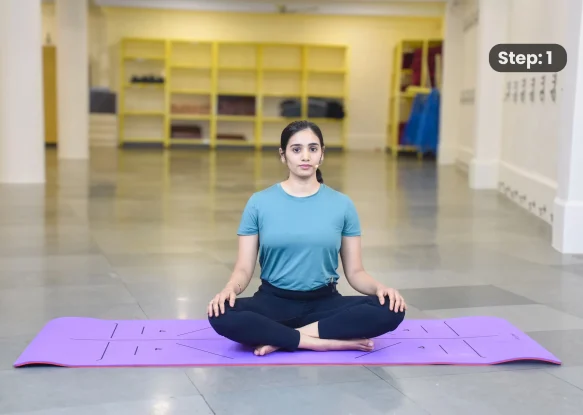
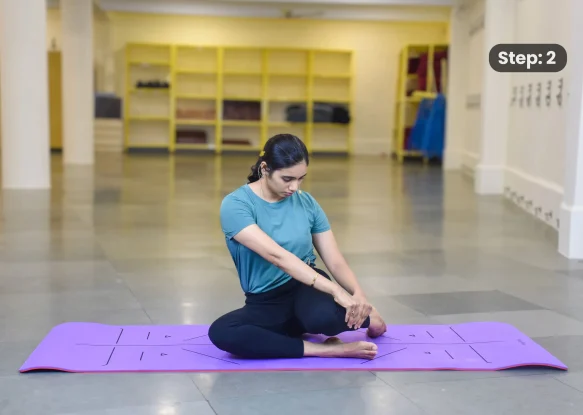
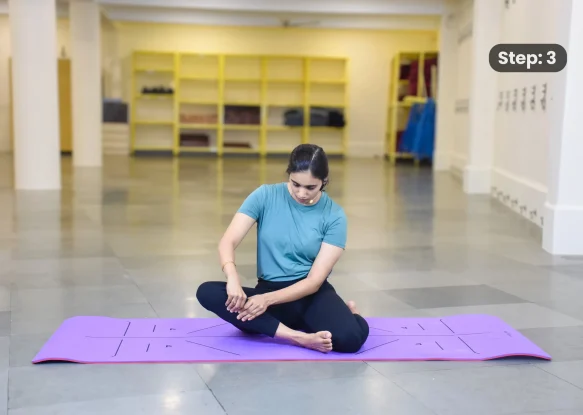
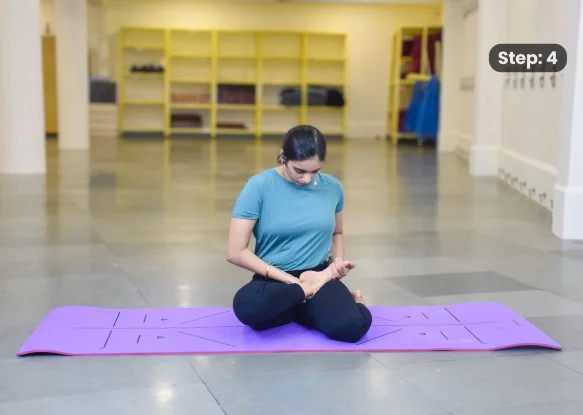
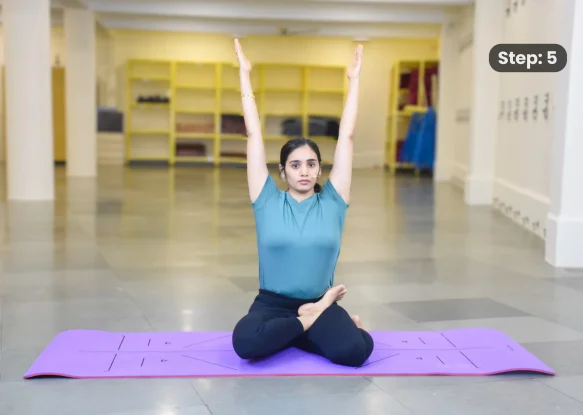
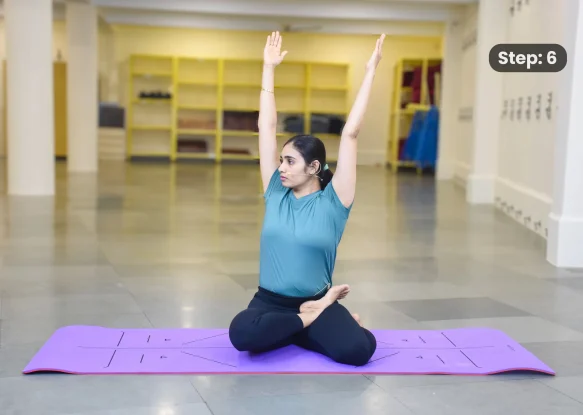
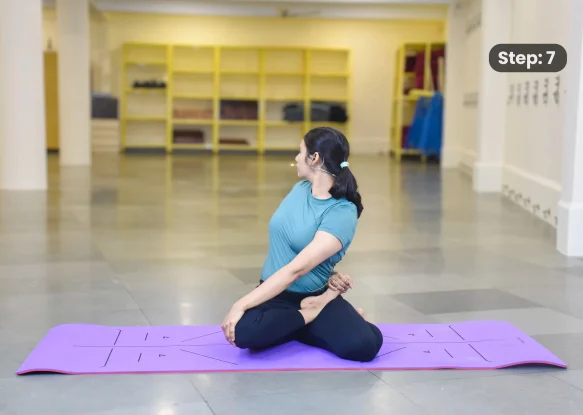
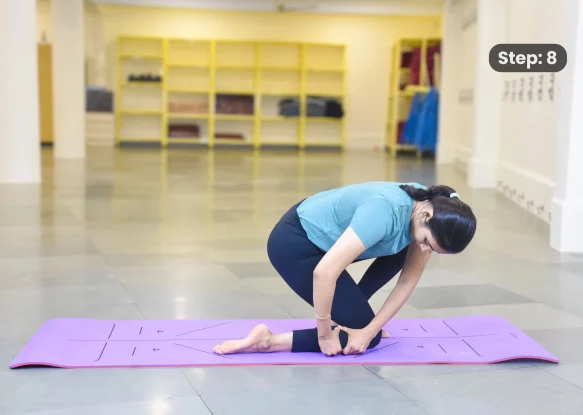
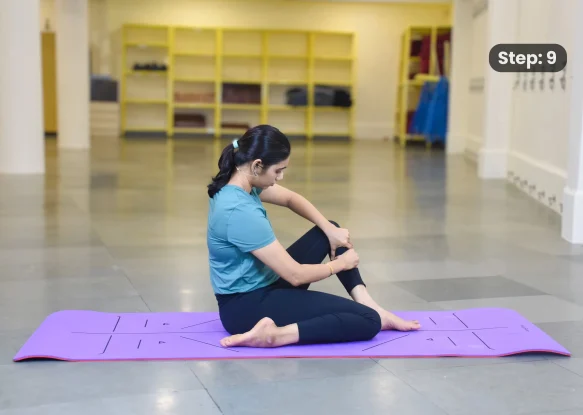
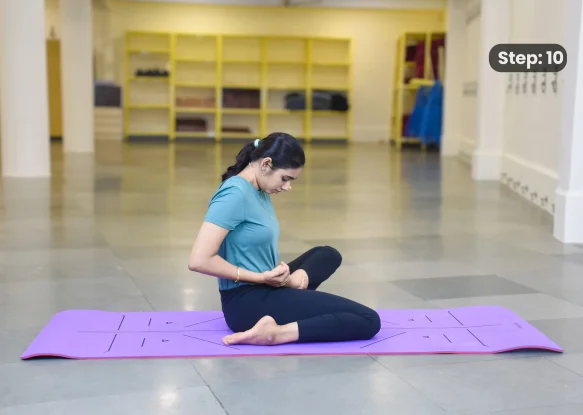
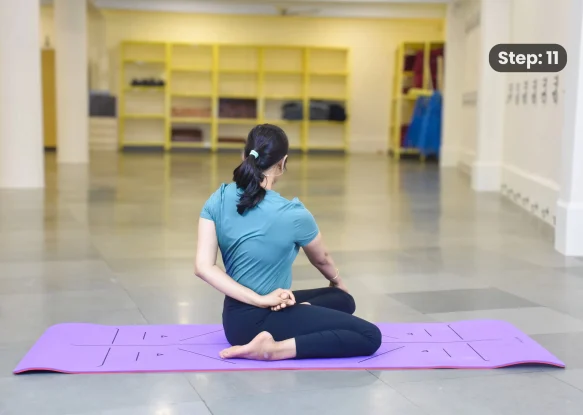
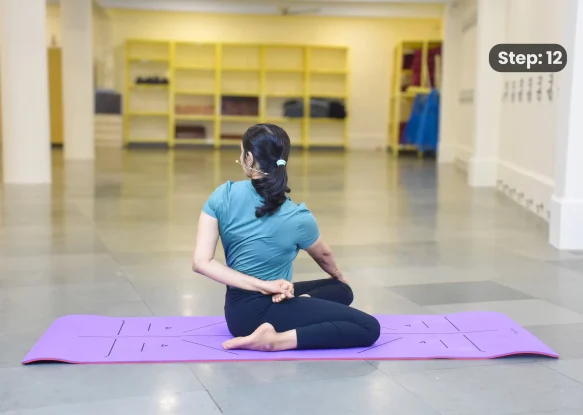
The Sanskrit name is derived from Bhardvaja (भरद्वाज) means bringing about nourishment and asana (आसन) meaning posture or seat.
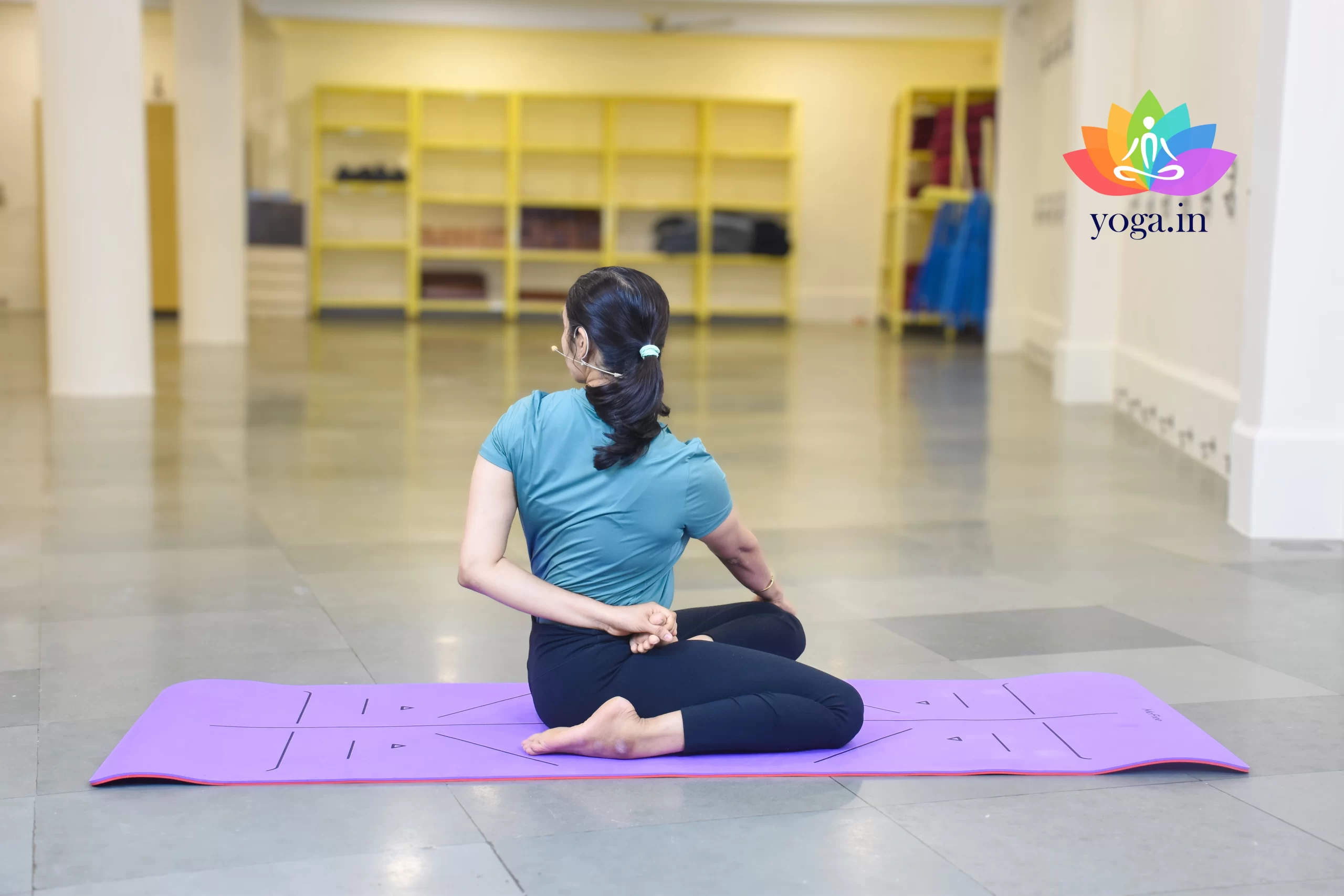
Steps to perform the Asana: Bhardvajasana 2 (Therapy)
Fold the blanket and place it on your mat. This will provide cushioning for your hips and support for your sitting bones.
Have the block within reach as you’ll use it for your hand support during the twist.
Sit on the block in Dandasana (Staff Pose) with your legs extended straight in front of you.
Bend your left knee and bring the left foot to the outside of your left hip. (similar to virasana).
Bend your right knee by taking the blanket support below the knee and place your right foot on the left thigh close to the pelvic area.
Ensure that your weight is evenly distributed on both sitting bones, using the blanket to help level your pelvis if needed.
Lengthen your spine, sitting up tall. On an inhale, create space between your vertebrae.
Exhale and twist your torso to the right, initiating the twist from the base of your spine. Move gently and mindfully into the twist.
Place your left hand on the outside of your right knee. This helps to anchor the twist and provides stability.
Loop the belt in your right foot and while twisting hold the belt with the right hand. This will help you maintain an upright spine and deepen the twist without straining.
Turn your head gently to look over your right shoulder, aligning your neck with the rest of your spine.
Stay in the pose for 5-10 deep breaths, focusing on maintaining the twist with each exhale and lengthening the spine with each inhale.
Keep your shoulders relaxed and away from your ears.
To come out of the pose, slowly untwist your torso on an exhale.
Follow the same steps on the other side, reversing the leg positions and twisting to the left.
Gently untwist your legs and back to a neutral seated position, extending them forward.
Key Alignment Points
Ensure both sitting bones are grounded evenly on the floor.
Ensure the chest is open and the heart is lifted.
Twist from the base of the spine upwards on an exhale.
Engage the core muscles to support the twist and protect the lower back.
Keep the neck in line with the spine, avoiding any strain.
Common Misalignments / (Mistakes)
Instead of initiating the twist from the spine, some people twist from the hips
Ensure both sit bones are grounded evenly
Contraindication / Cautions
Avoid during Pregnancy
Avoid in case of herniated discs and spinal stenosis
Avoid in case of Injuries or ligament tear or arthritis