The sanskrit name is derived from Utthita (उत्थित) meaning “extended”, Hasta (हस्त) meaning “hand”, Pada (पद) meaning “foot”, Angustha (ङ्गुष्ठ) meaning ” big toe” and Asana (आसन) meaning “posture”.
The sanskrit name is derived from Utthita (उत्थित) meaning “extended”, Hasta (हस्त) meaning “hand”, Pada (पद) meaning “foot”, Angustha (ङ्गुष्ठ) meaning ” big toe” and Asana (आसन) meaning “posture”.
Steps to perform the Asana: Utthita Hasta Padangusthasana (Therapy)
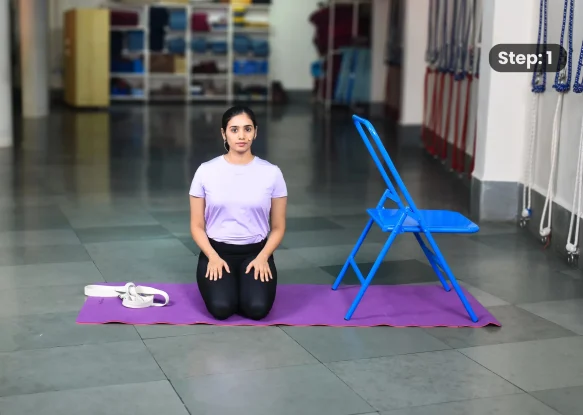
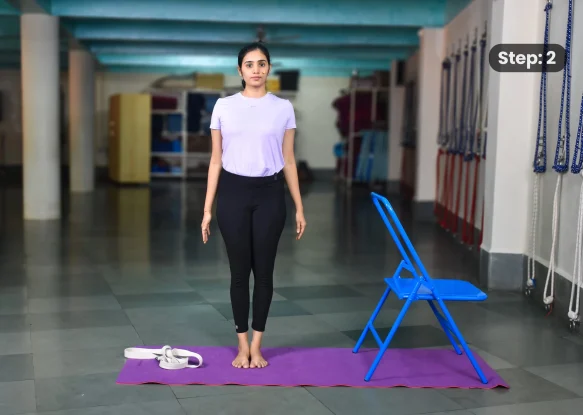
Begin by standing at the top of your yoga mat with your feet hip-width apart and parallel to each other.
Place a yoga chair at the top of your mat and a yoga belt nearby.
Situate the yoga belt near the Chair, ensuring it is easily accessible for use during the practice.
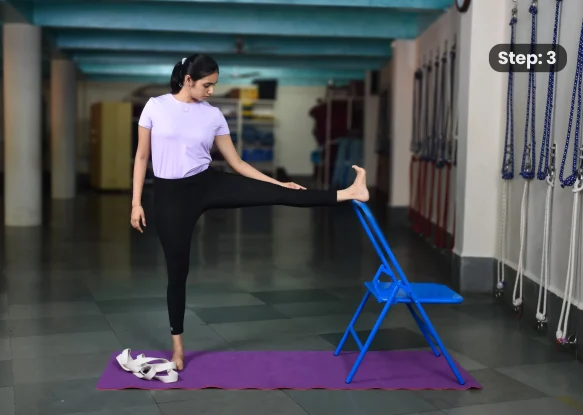
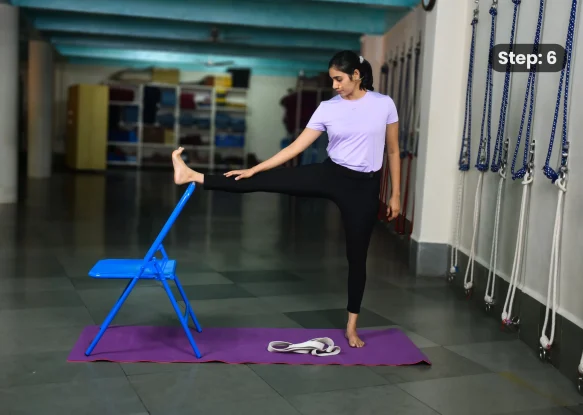
By taking the support of the chair shift your weight onto your left foot and root down through all four corners of the foot to create a stable foundation.
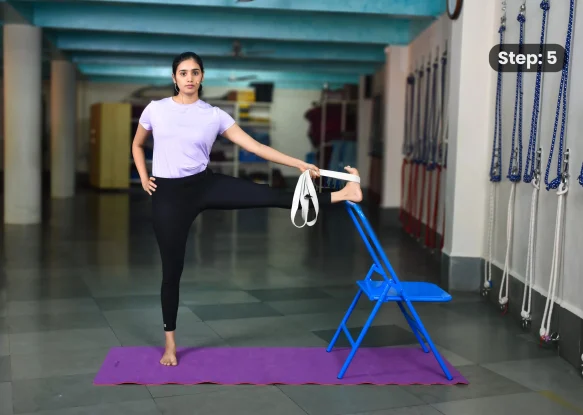
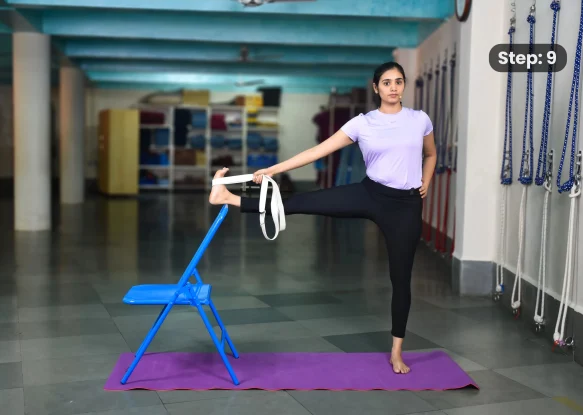
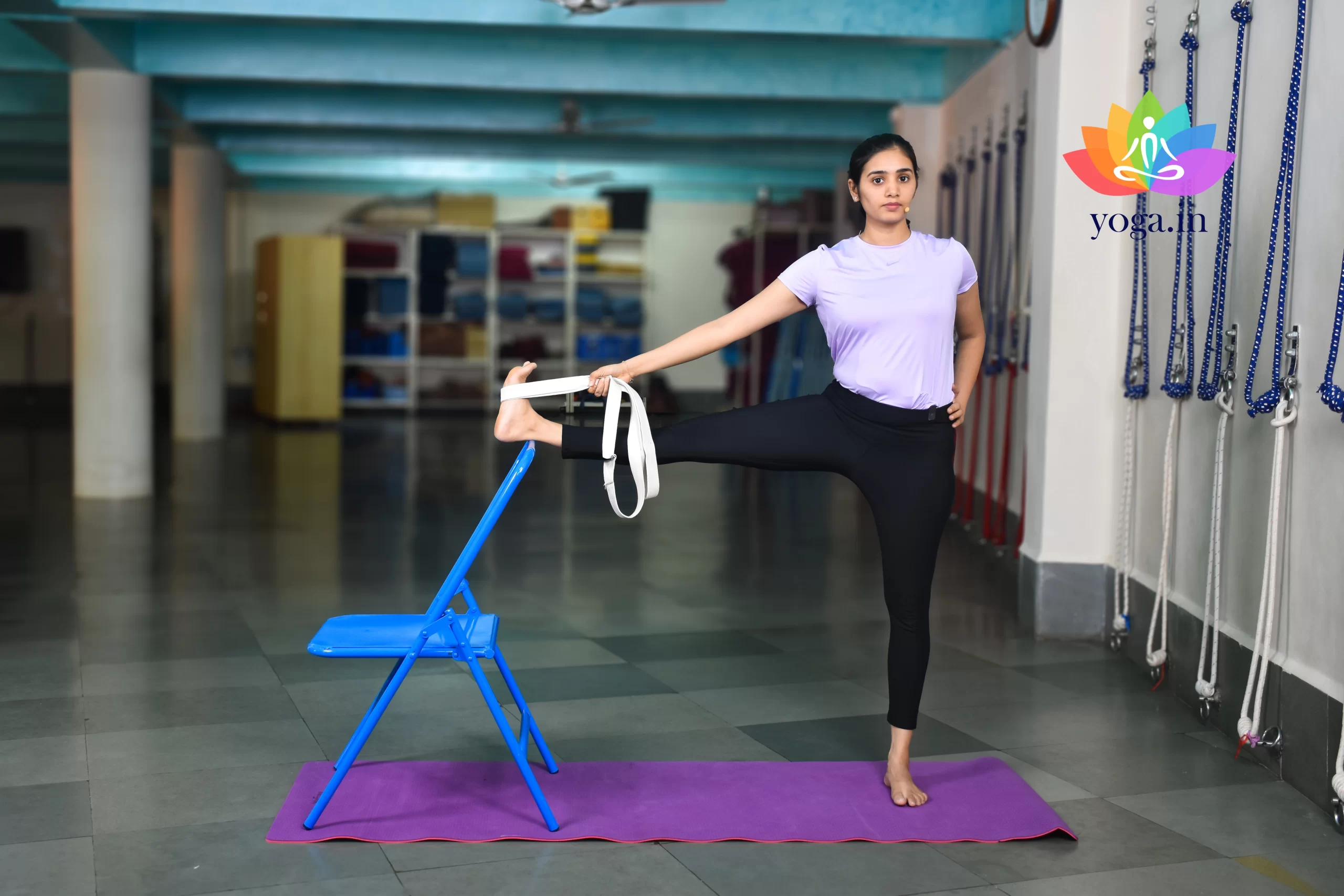
Inhale and lift your right foot off the mat, bending your knee and bringing it towards your chest and place the loop around the ball of your right foot.
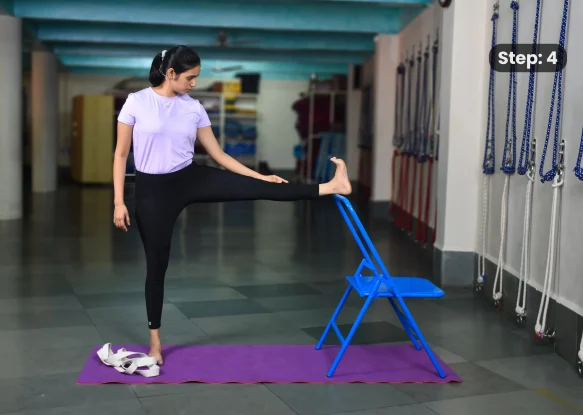
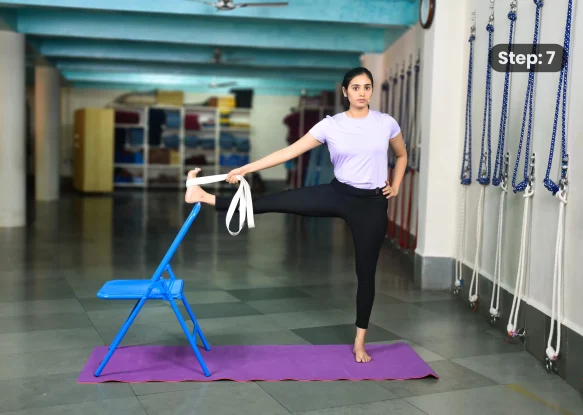
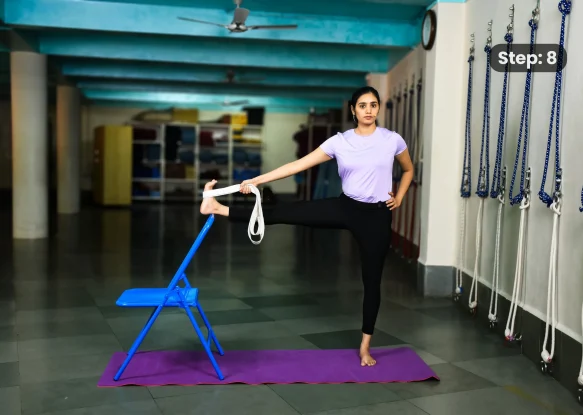
On an exhale, begin to straighten your right leg, extending it forward in front of you and place your feet above the handle of the chair. Left leg should be strongly firm on the ground.
Lengthen your spine upward.
Engage your core muscles to support your lower back and maintain stability in your torso.
Hold the pose for 30 to 40 seconds on each side, focusing on your breath and maintaining steady balance.
Keep your gaze soft and your breath steady, allowing yourself to find ease and stability in the pose.
Slowly loosen up the grip of a belt and by folding the leg bring it down to the floor, release yourself.
Key Alignment Points
Ensure that your standing leg remains stable and engaged, with your knee slightly bent to protect the joint.
Keep your hips level and squared toward the front of your mat, avoiding any twisting or rotation.
Common Misalignments / (Mistakes)
Avoid your pelvis to overly lift on the outstretched-leg side
Contraindication / Cautions
Avoid in case of low blood pressure
Avoid in case of hips, knees, shoulders or ankles injury