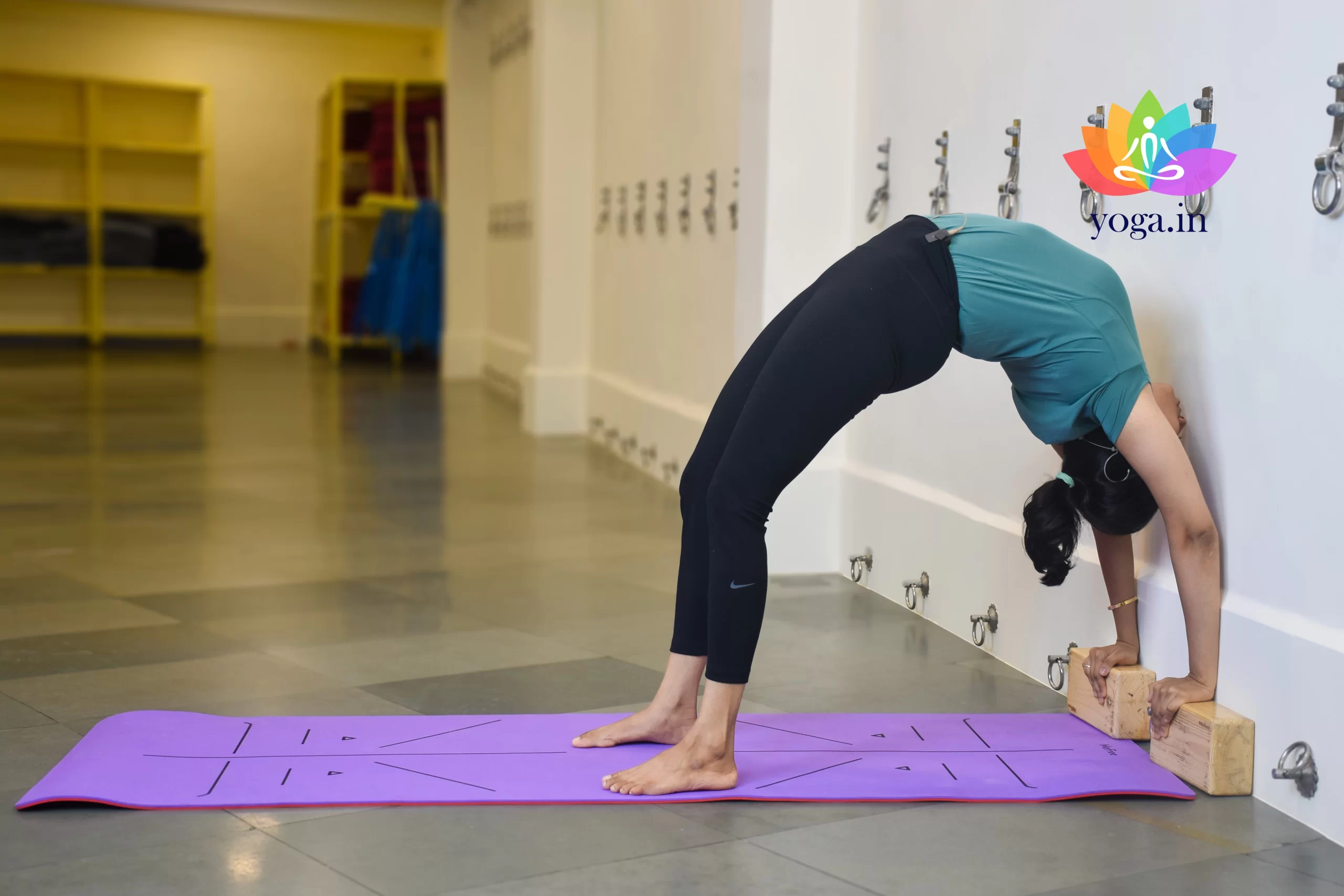
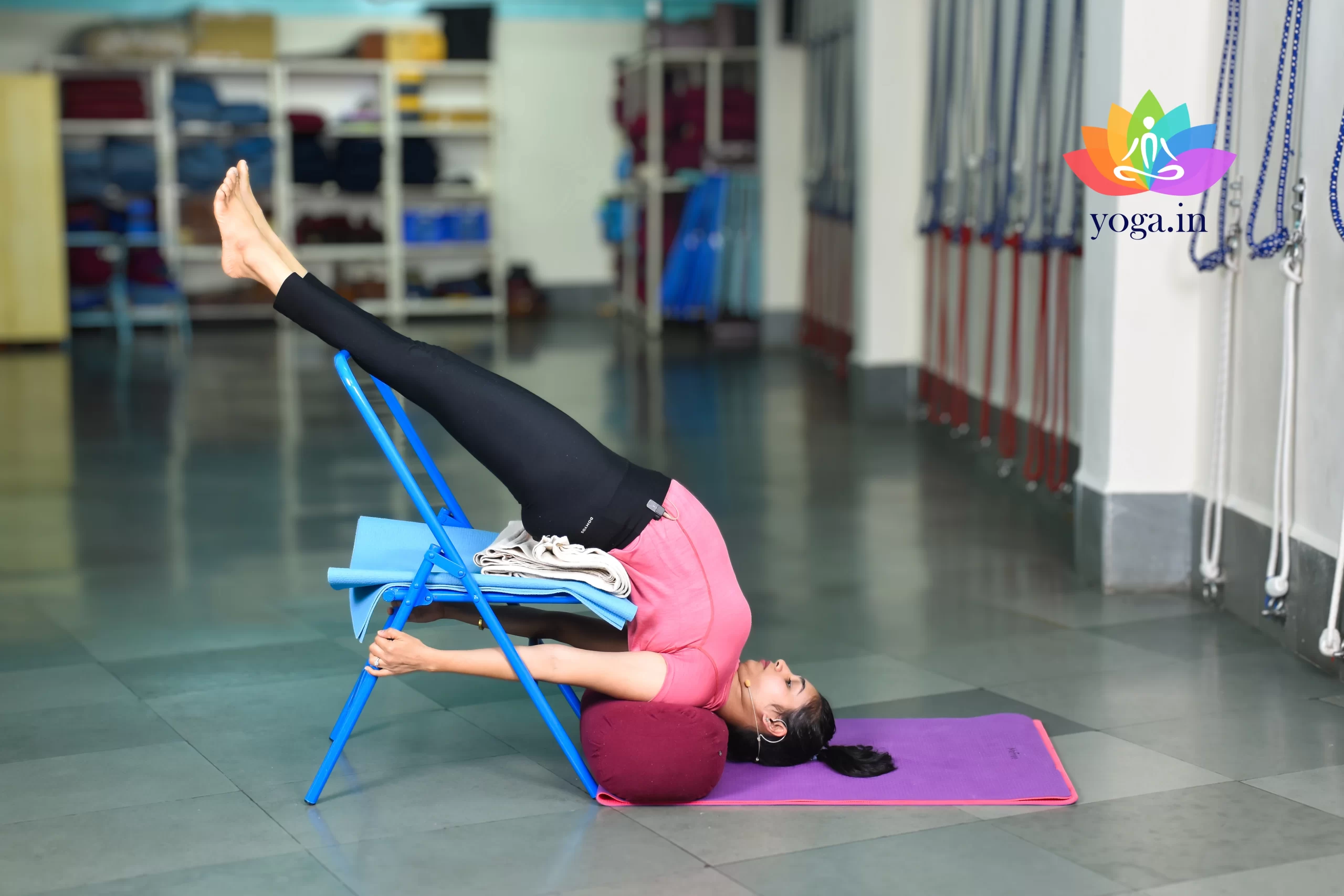
The name is derived from Sanskrit words, “Urdhva” meaning upwards, “dhanur” meaning bow and “asana” meaning posture or pose.
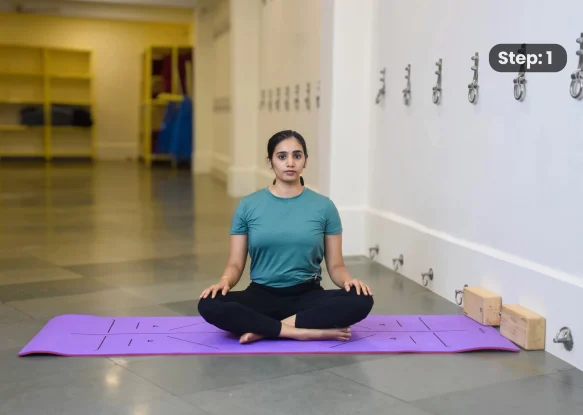
Stand on the mat. Position the blocks near the wall so that they are parallel to each other.
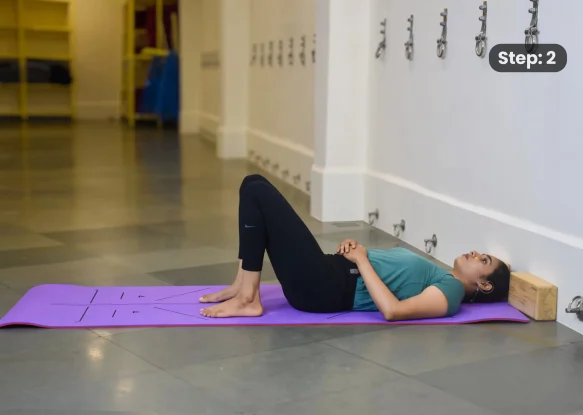
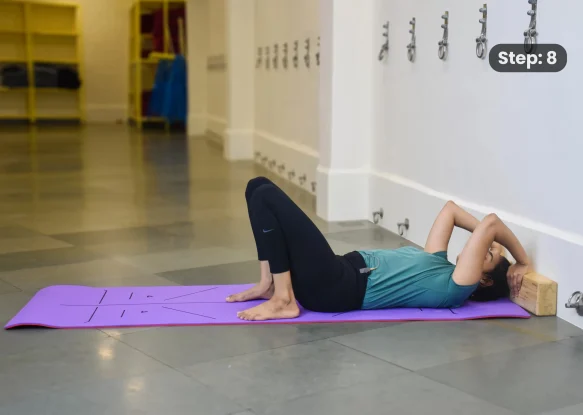
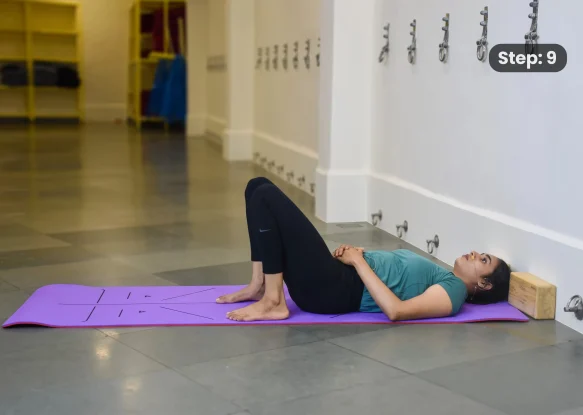
Lie on your back with your knees bent and your feet hip-width apart, close to your buttocks.
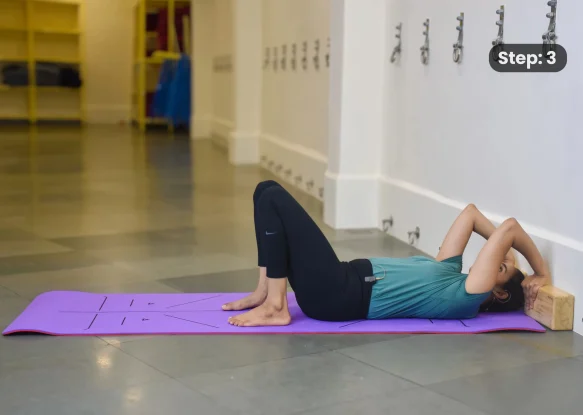
Place your hands on the blocks, with your fingers pointing towards your feet. Ensure your wrists are directly under your shoulders.
Press your palms firmly into the blocks and spread your fingers wide for stability.
Keep your feet parallel and hip-width apart.
Ensure your knees are in line with your hips and feet, avoiding any splaying out or collapsing inward.
Draw your navel towards your spine to engage your core muscles.
Press your feet firmly into the mat.
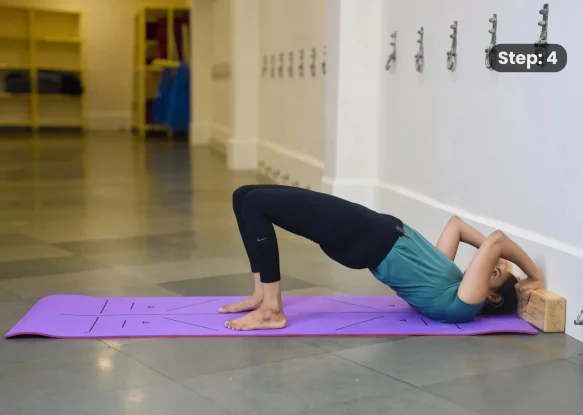
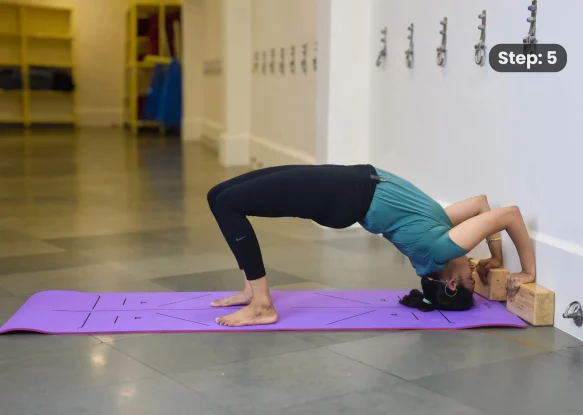
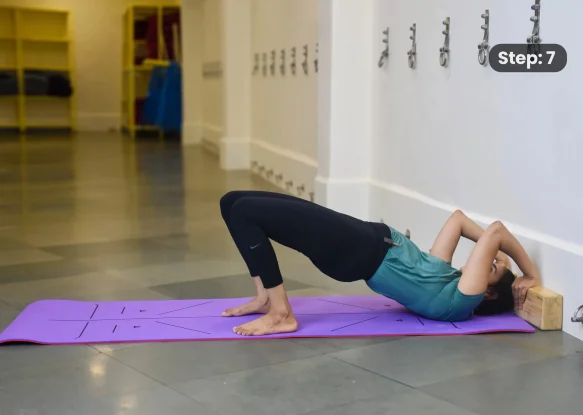
On an inhale, press firmly into your feet and hands (on the blocks) to lift your hips towards the ceiling.
Keep your thighs and inner feet parallel as you lift.
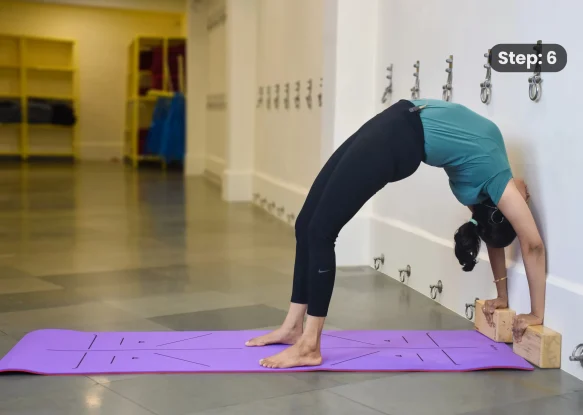
As you lift your hips, straighten your arms, pressing firmly into the blocks to lift your chest.
Draw your shoulder blades down and together to open your chest and reduce strain on your shoulders.
Keep your neck neutral, looking towards the floor or slightly forward. Avoid dropping your head back excessively.
Hold the pose for several breaths, maintaining stability and even weight distribution between your hands and feet.
Focus on lifting your chest and hips higher with each inhale, while keeping your core engaged.
To come out of the pose, slowly bend your elbows and lower your head, shoulders, and hips back to the mat.
Release the pose.
Place your hands shoulder-width apart
Keep your wrists directly under your shoulders
Fully extend your shoulders, pushing them away from your ears
Engage your core muscles to maintain a neutral spine
Keep your legs straight and active
Maintain a neutral neck position
Feet turned out or too wide apart
Knees splay out to the sides
Elbows splay out to the sides
Shoulder blades not drawing down and into the back
Dropping the head back too far or tucking the chin
Avoid in case of back and wrist injuries
Avoid in case of neck and shoulder problems
Avoid in case of high blood pressure
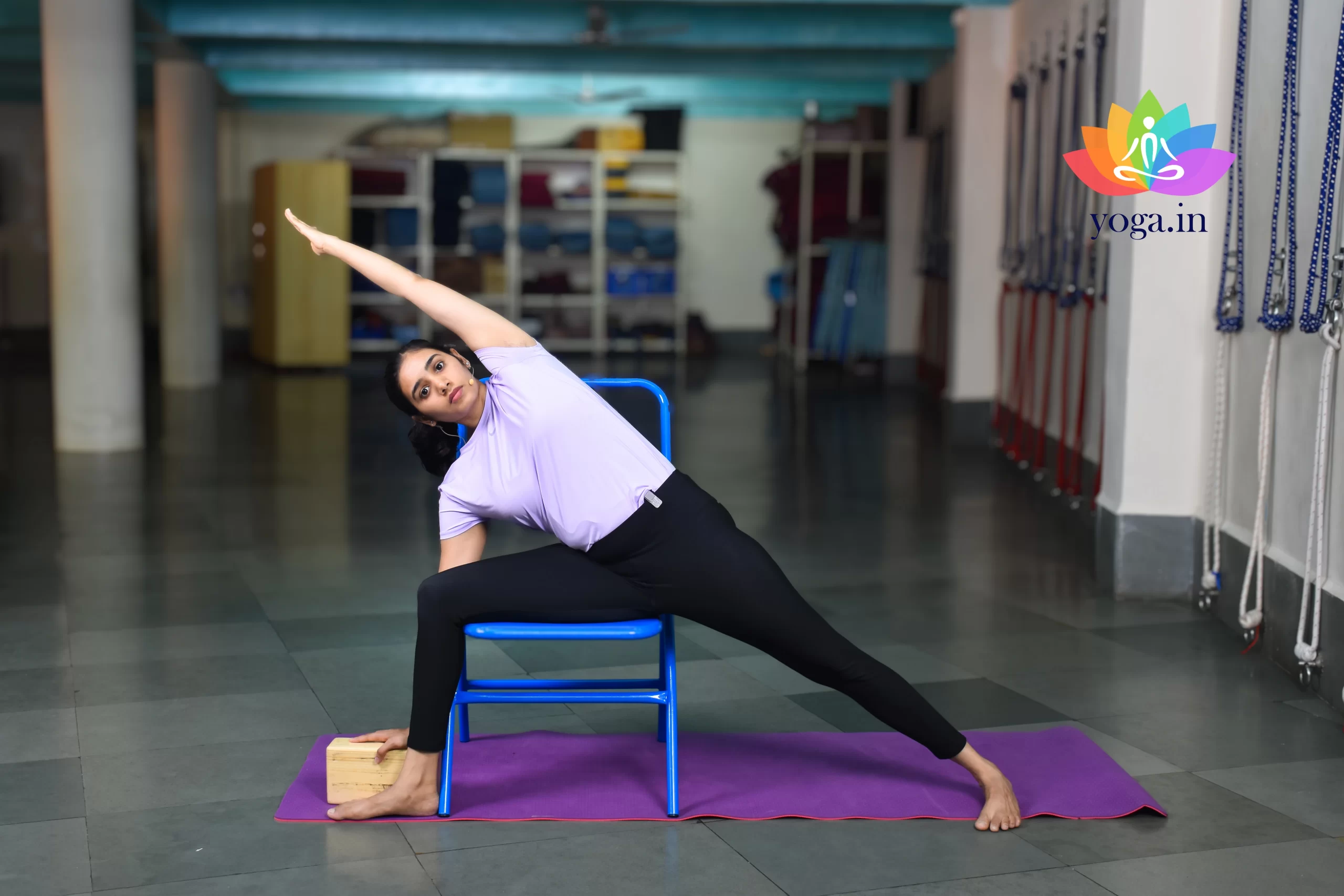
The Sanskrit name comes from the Utthita,
The Sanskrit name is derived from Utthita
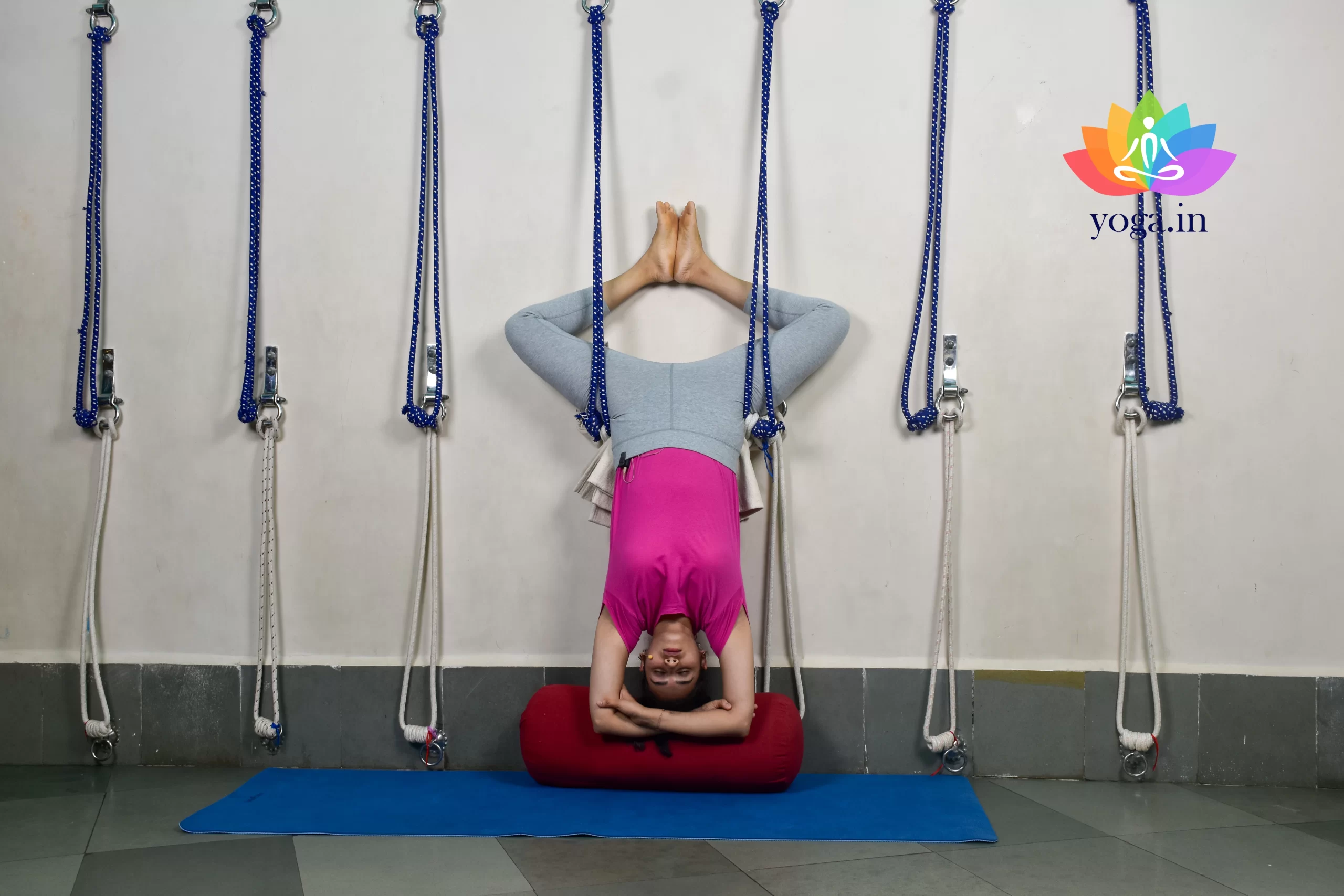
The sanskrit name is derived from sirsa
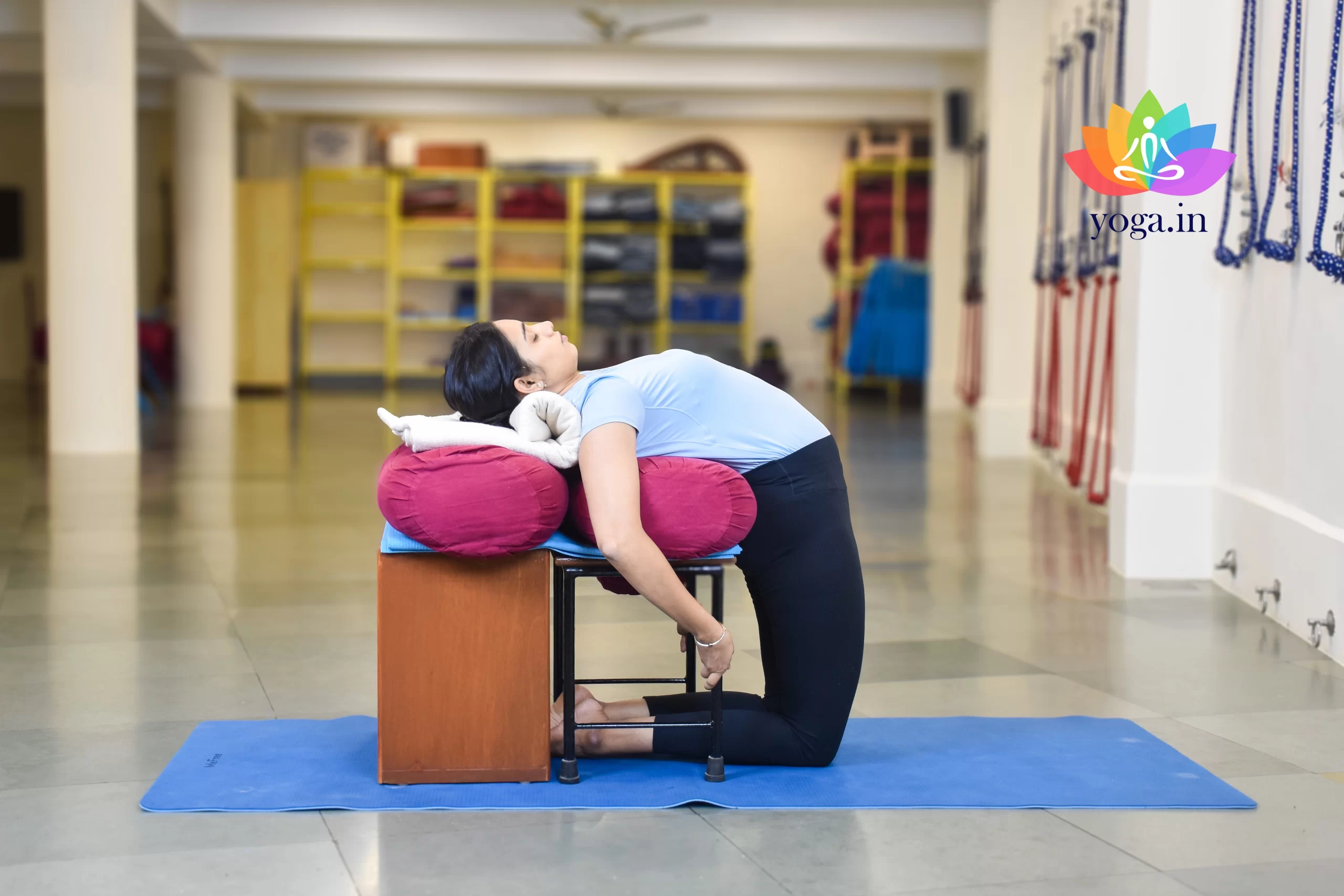
The name is derived from Ushtra (उष्ट्रासनI)
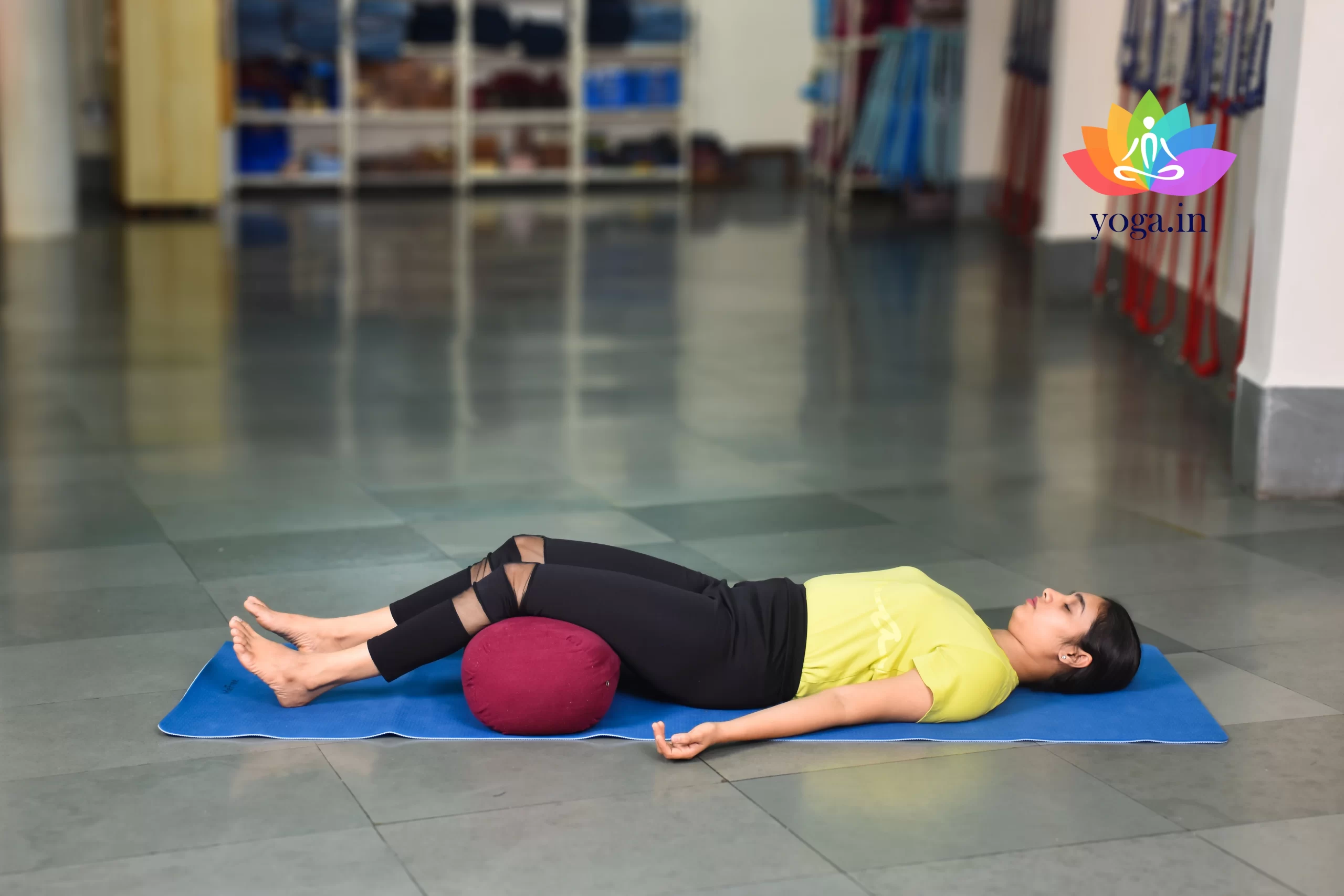
The sanskrit name is derived from Śava
The sanskrit name is derived from Salamba
Please login with social account to support this post.