The Sanskrit name is derived from Prasārita (प्रसारित) meaning spread out or extended, Pada (पाद) meaning foot, Uttan (उत्तान) meaning extended and asana (आसन) meaning posture or seat.
The Sanskrit name is derived from Prasārita (प्रसारित) meaning spread out or extended, Pada (पाद) meaning foot, Uttan (उत्तान) meaning extended and asana (आसन) meaning posture or seat.
Steps to perform the Asana: Prasarita padottanasana (Chin support) (Therapy)
Key Alignment Points
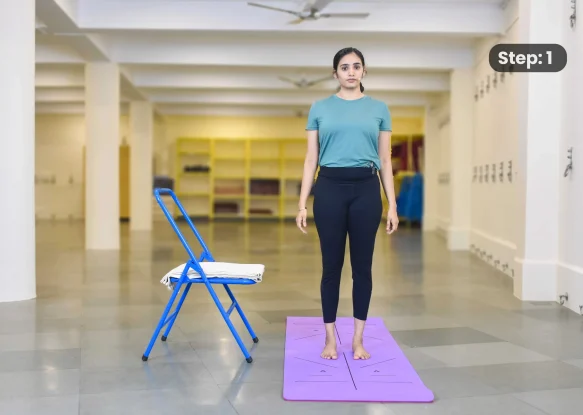
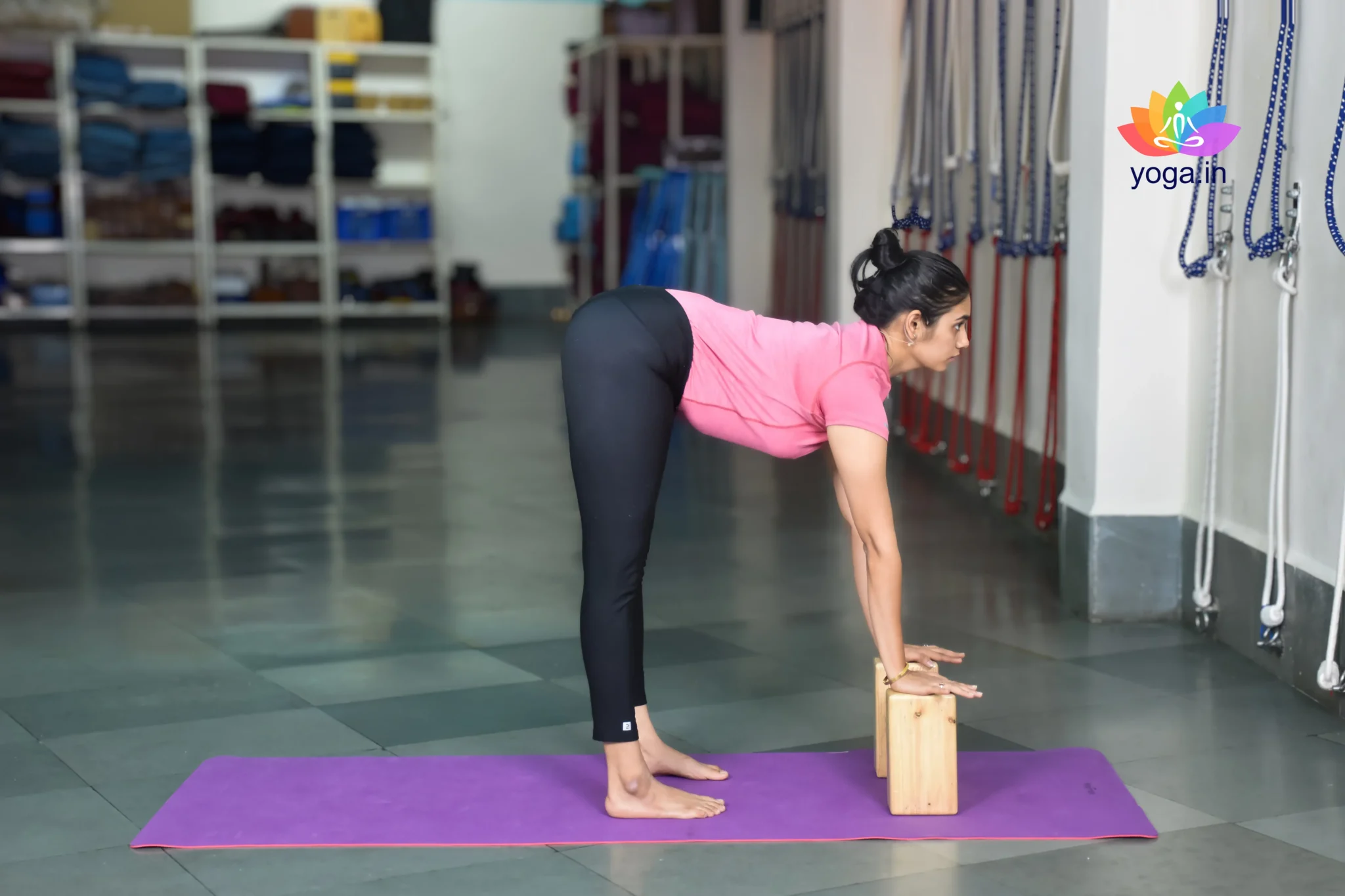
Stand at the top of your mat with your feet parallel to each other and wider than hip-width apart.
Ensure that your toes are pointing forward.
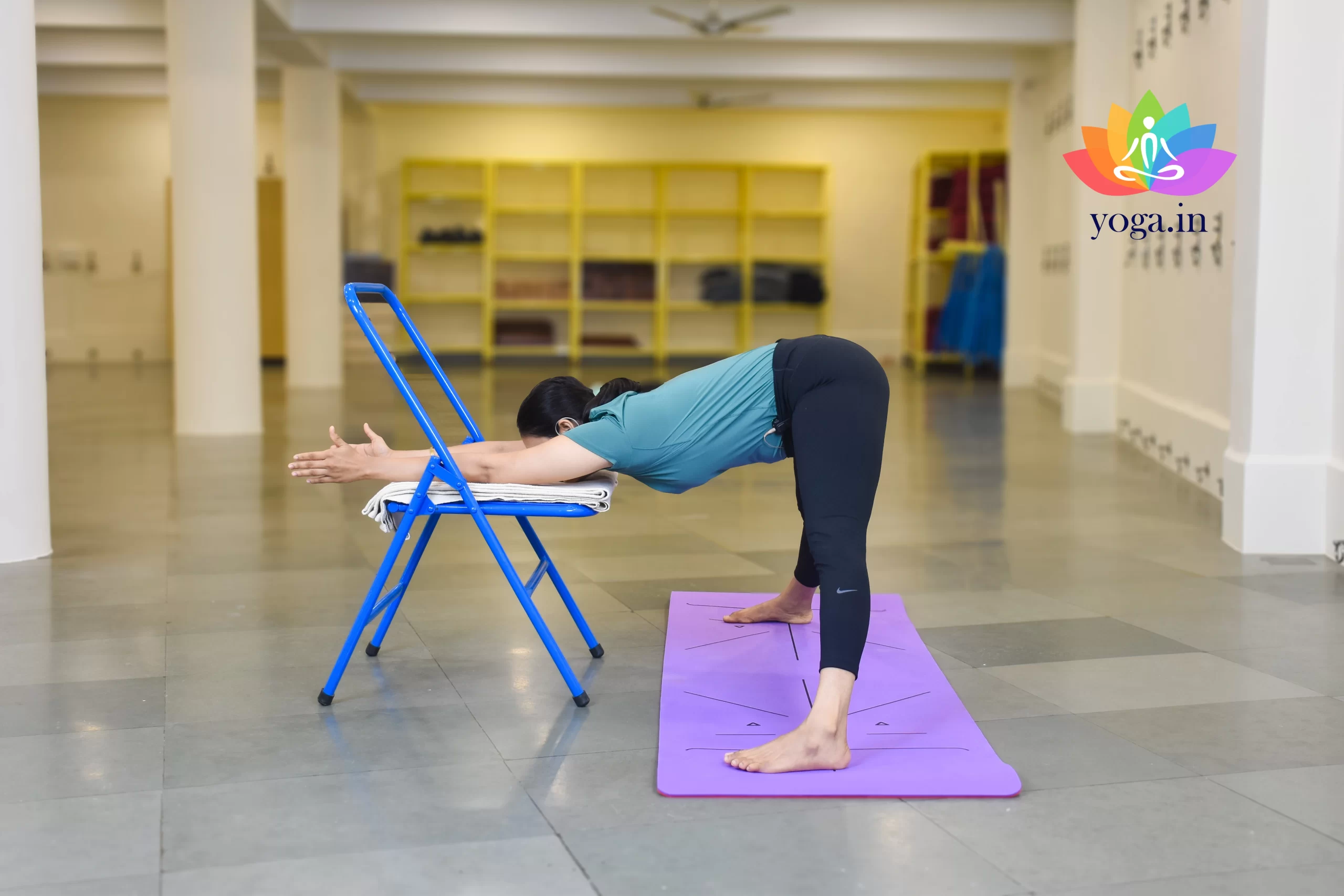
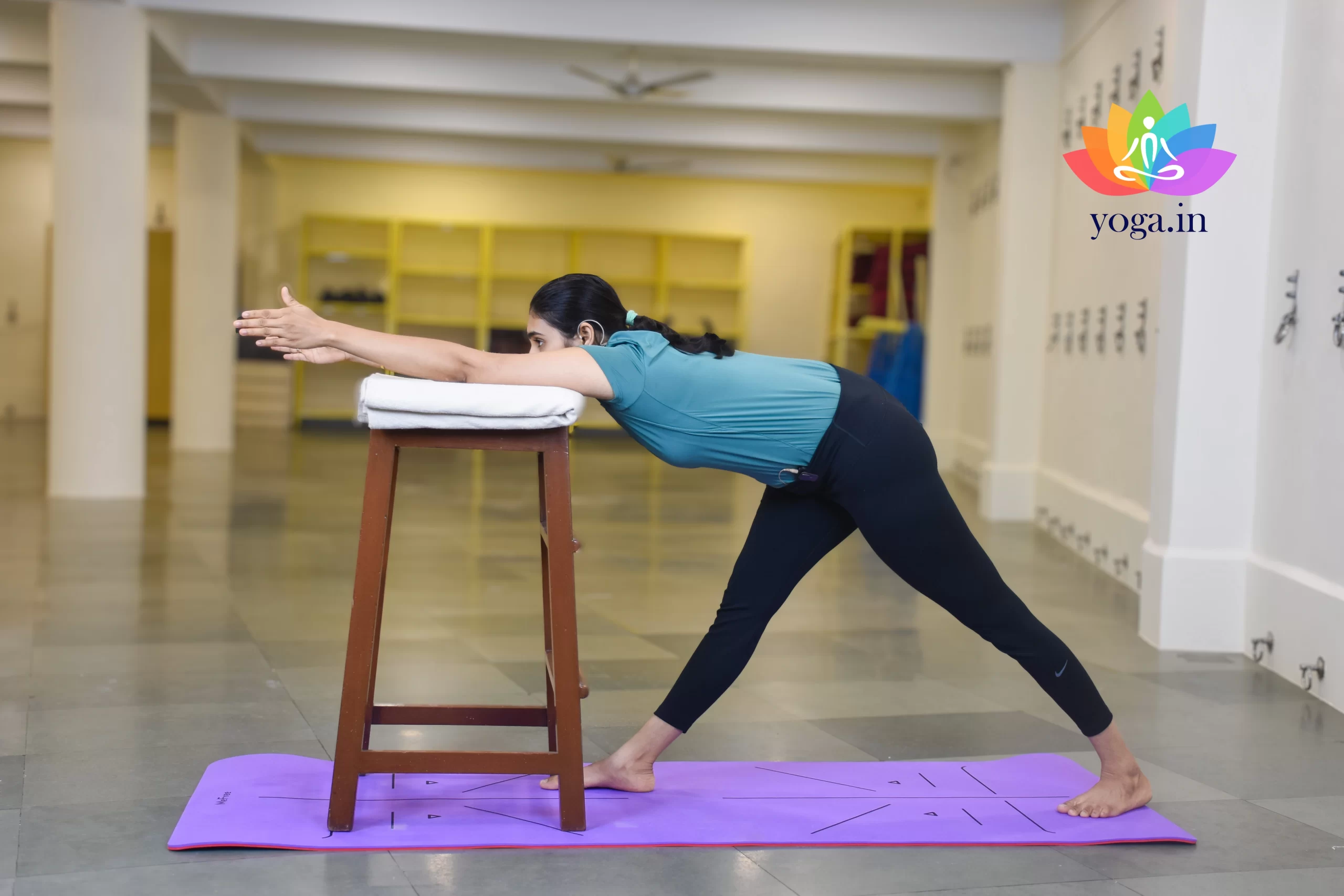
Keep the chair in front of you by placing a yoga blanket on it.
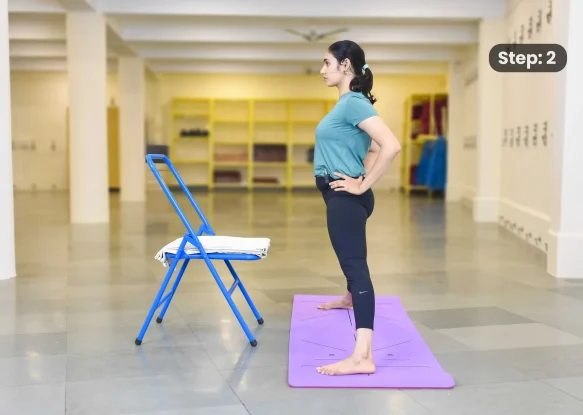
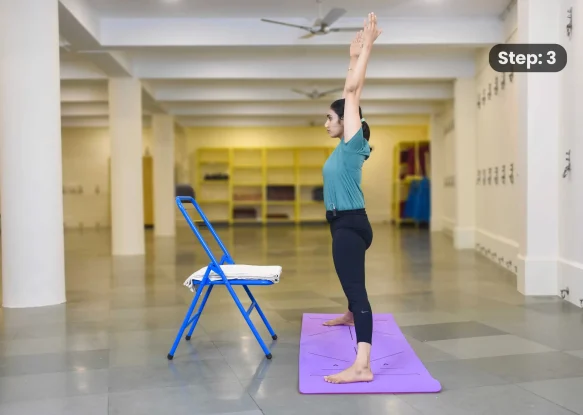
Inhale and lengthen your spine, lifting your chest and rolling your shoulders back.
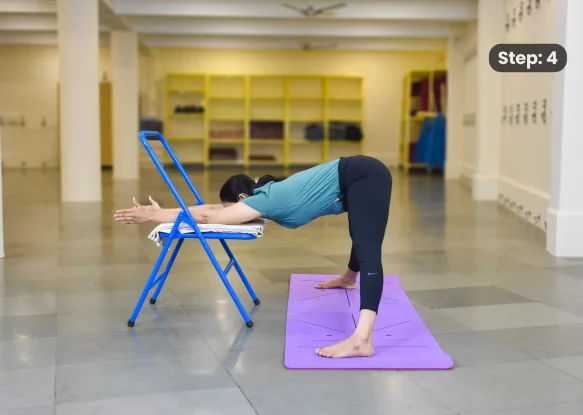
Exhale and engage your abdominal muscles as you begin to hinge at your hips, slowly folding forward.
As you fold forward, maintain the length in your spine and reach your arms straight down towards the chair.
This provides support and helps to maintain the length of your spine.
Adjust the distance between your feet as needed to ensure stability and comfort in the pose.
Keep your legs active and engaged, pressing firmly into the ground through your feet.
Allow your torso to relax over your legs, releasing any tension in your neck, shoulders, and spine.
Hold the pose for 30 –50 seconds, breathing deeply and evenly.
To release, inhale and engage your abdominal muscles to slowly lift your torso back up to a standing position.
Common Misalignments / (Mistakes)
Too much weight on your outer (or inner) foot could cause strain in your knees or ankles
Contraindication / Cautions
Avoid if suffering from leg or back Injury
Avoid deep Strech if suffering from lower back pain