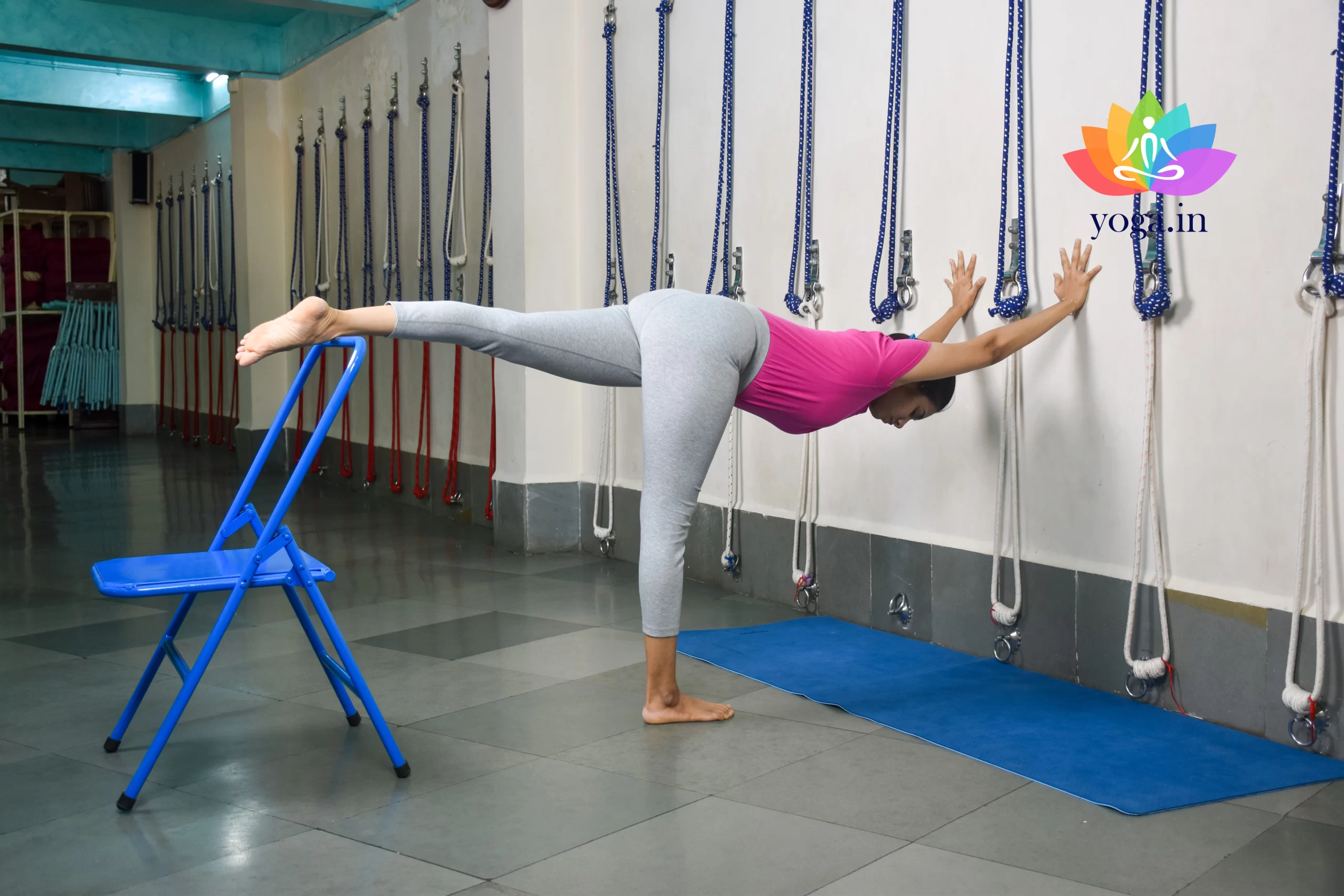
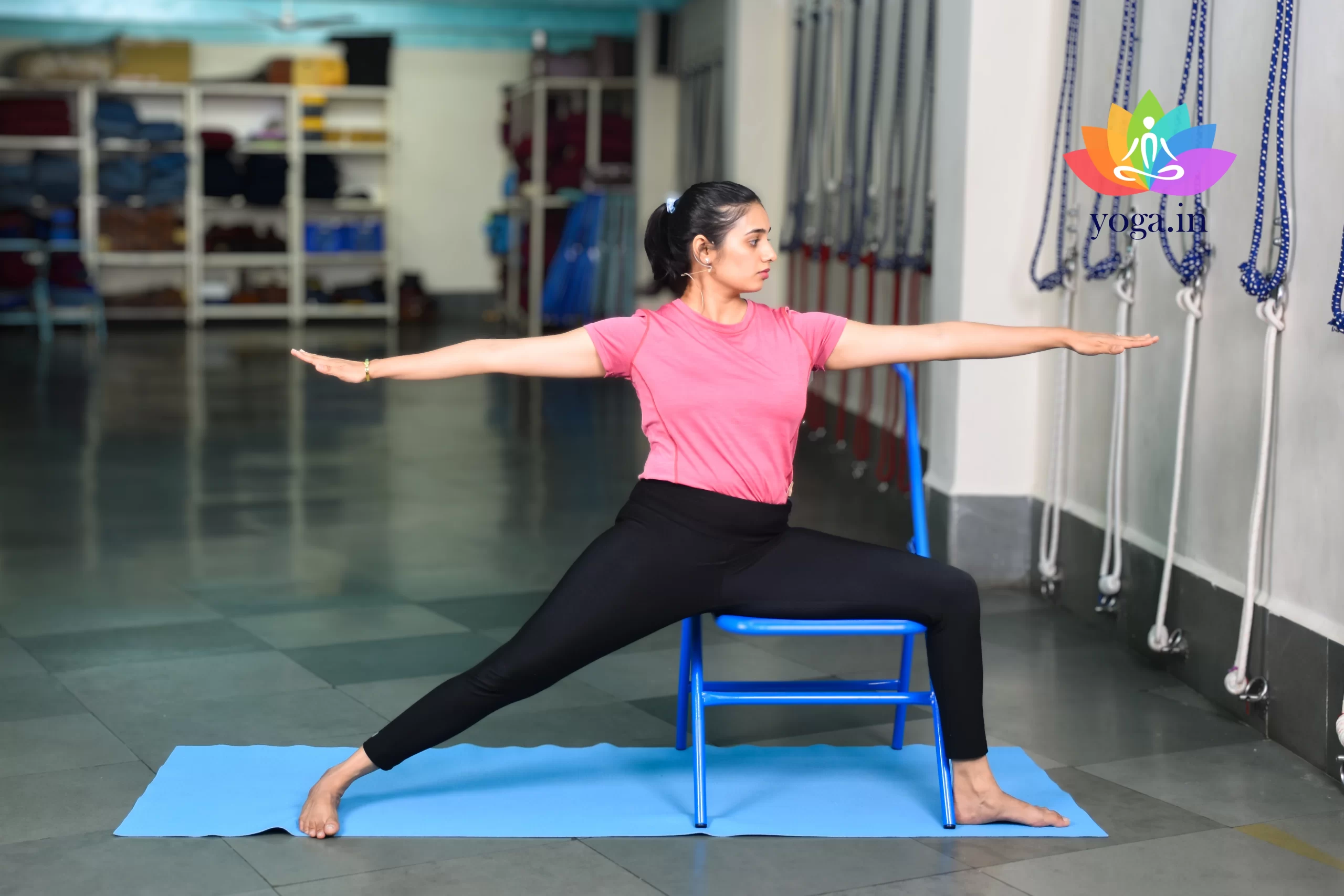
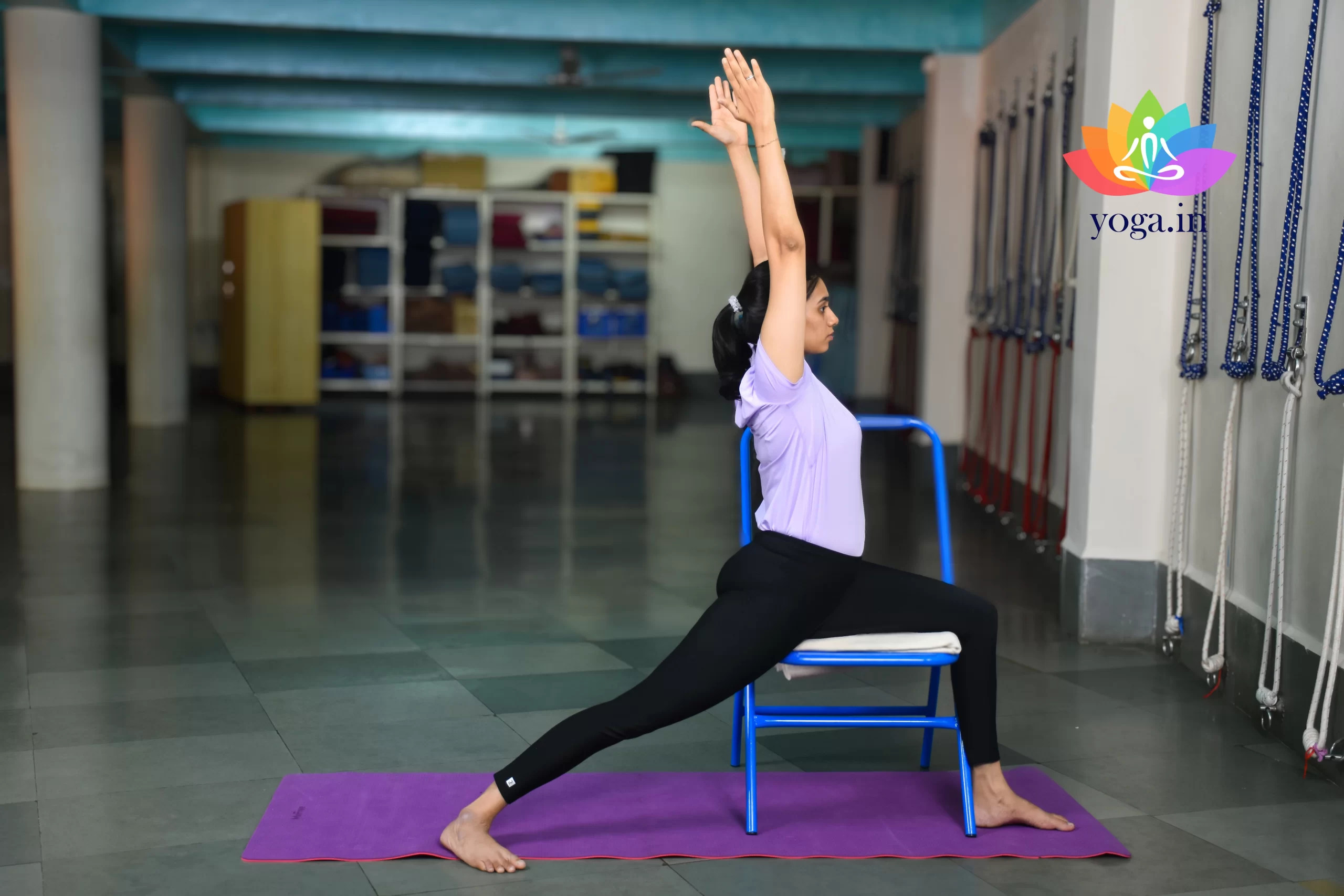
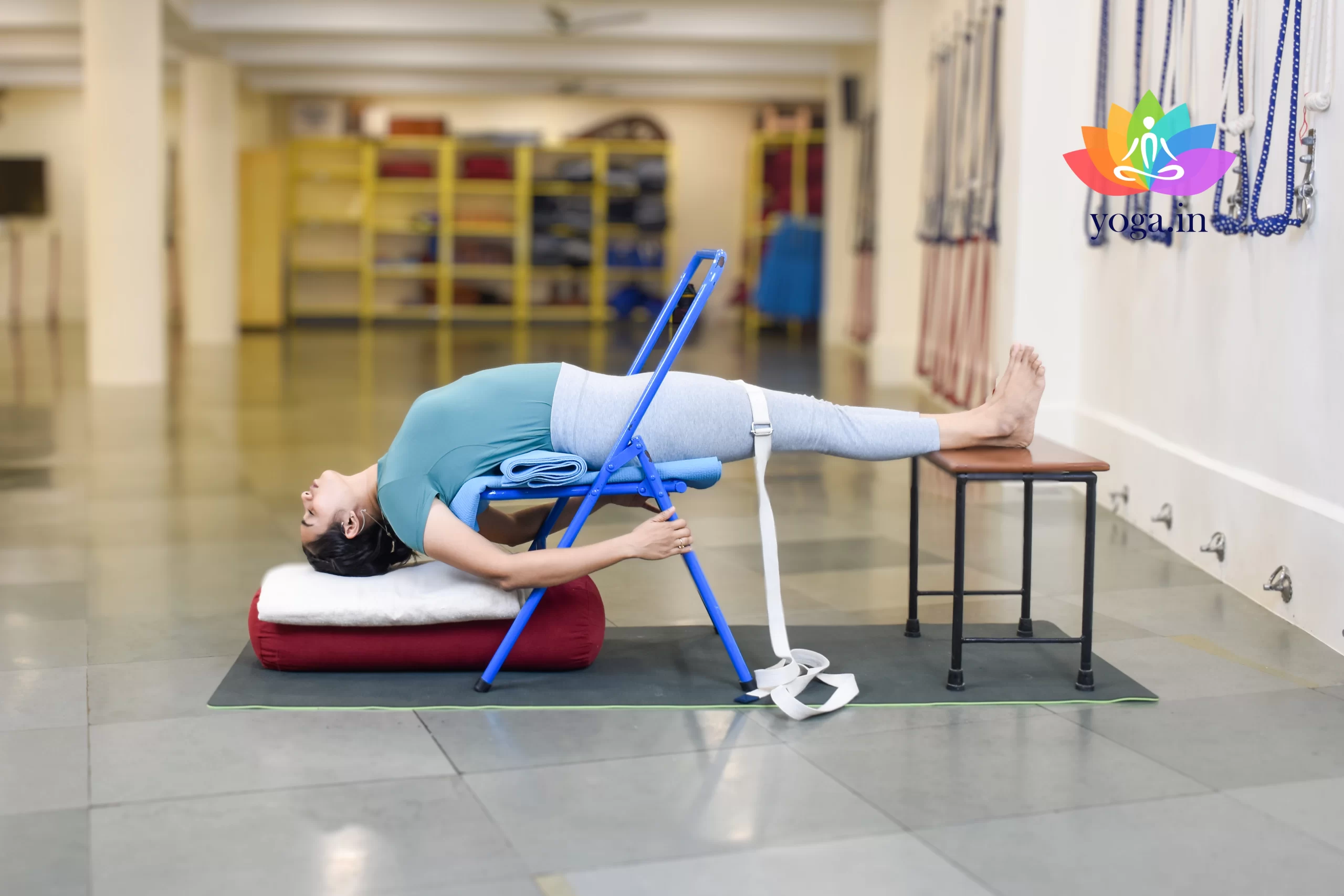
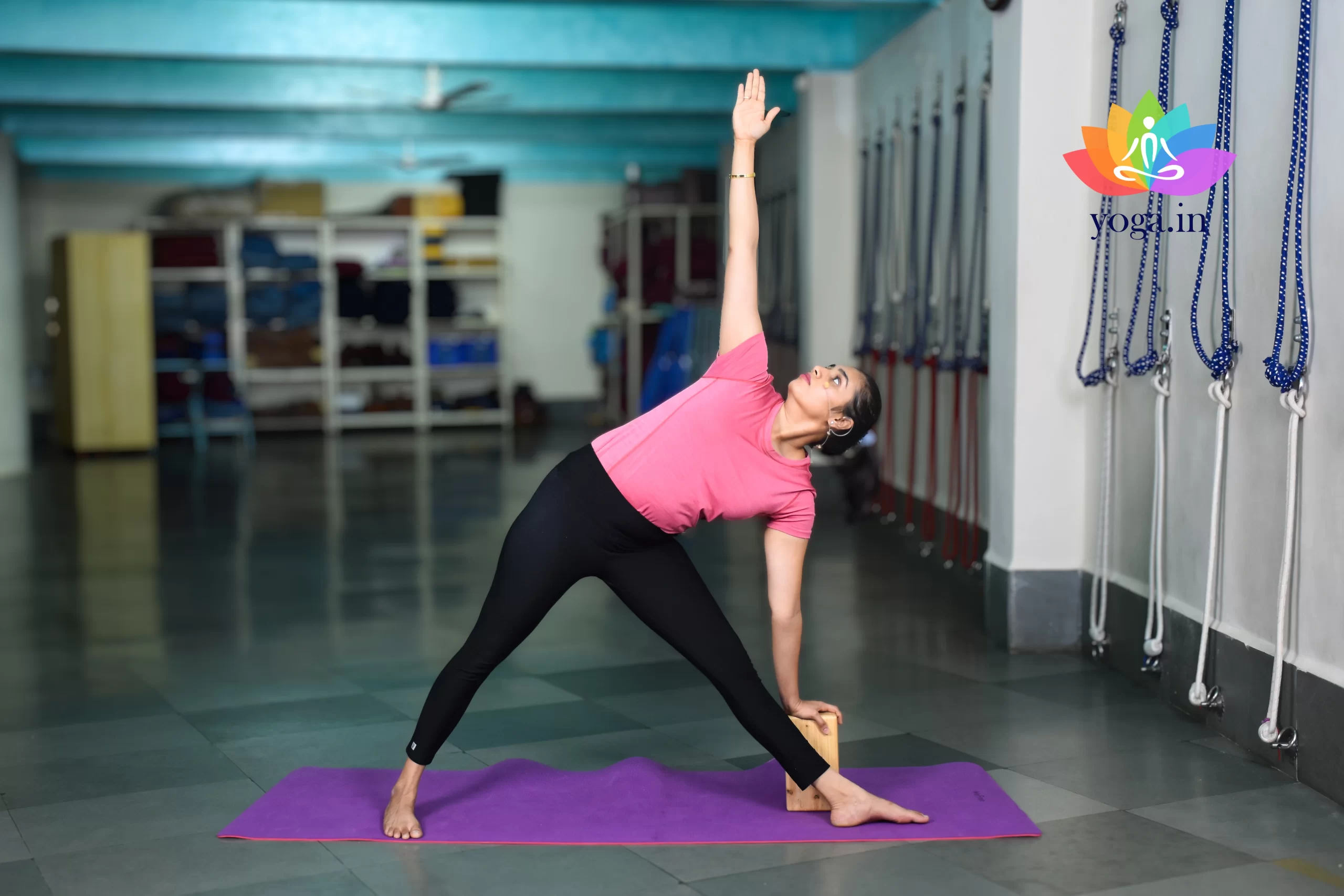
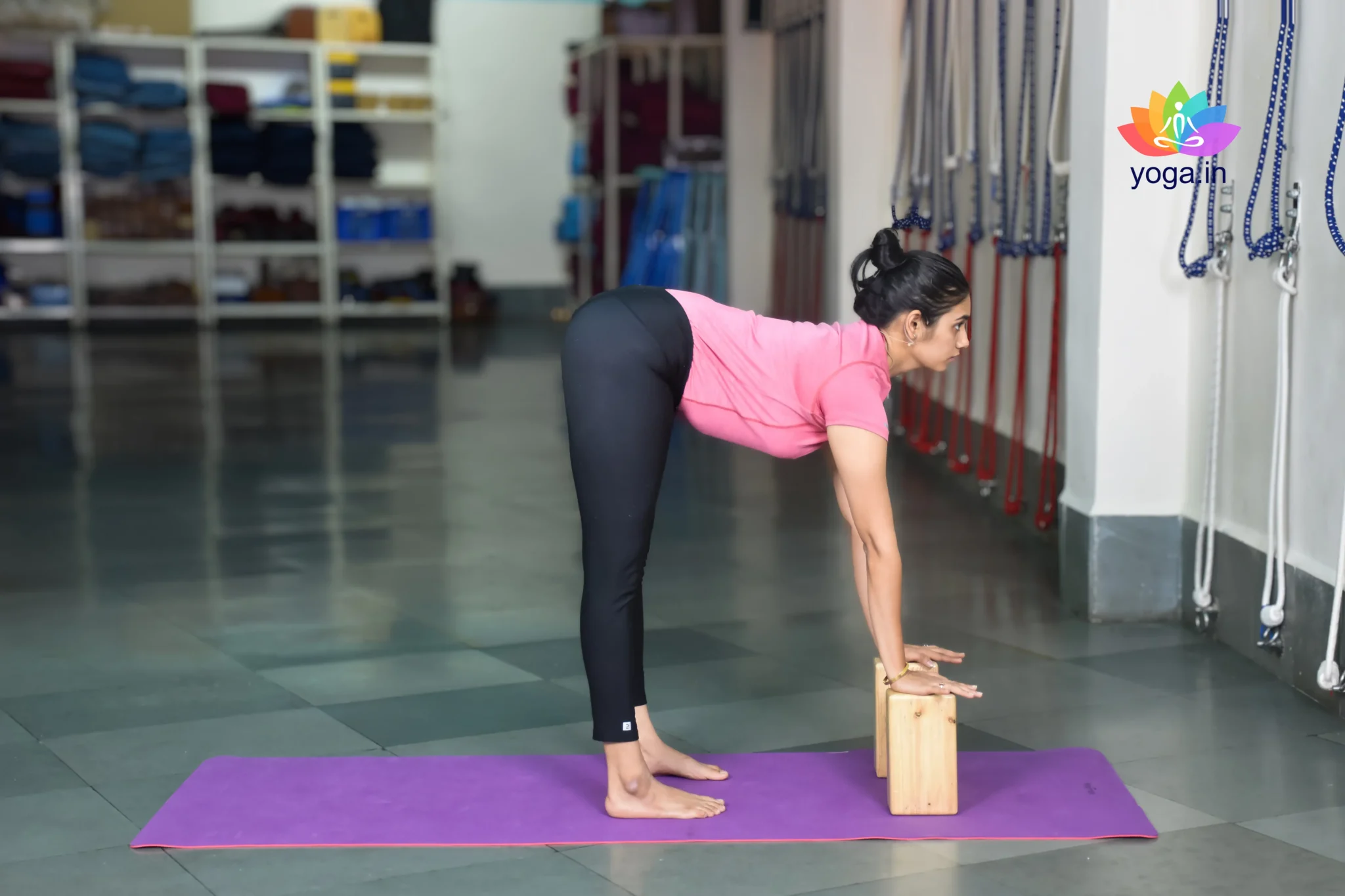
The name is derived from the Sanskrit adho, meaning “downward,” mukha, meaning “facing,” and vrksasana, meaning “tree pose.”
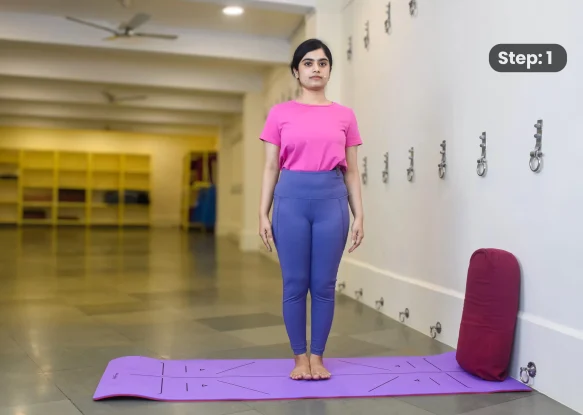
Stand on the mat.
Place a bolster against a wall. The bolster should be positioned vertically at the base of the wall.
Ensure you have enough space to practice and that the bolster is securely in place.
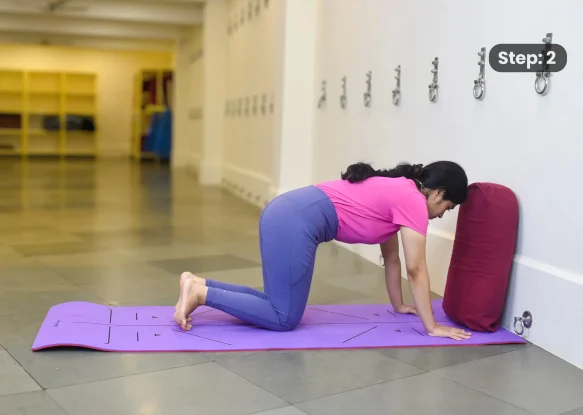
Come to a kneeling position in front of the wall, facing it.
Place your hands shoulder-width apart on the mat, about 6-12 inches away from the wall.
Spread your fingers wide and press firmly into the mat.
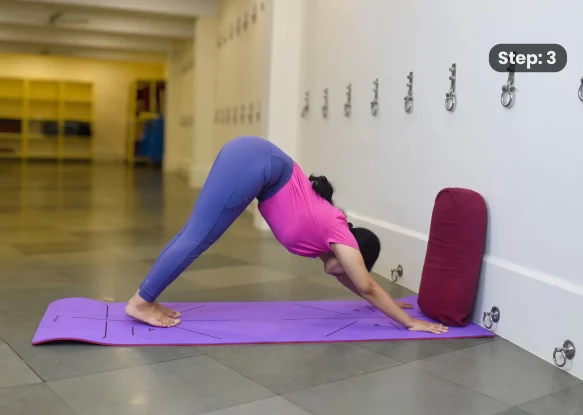
Come onto your forearms and lift your hips up into Dolphin Pose.
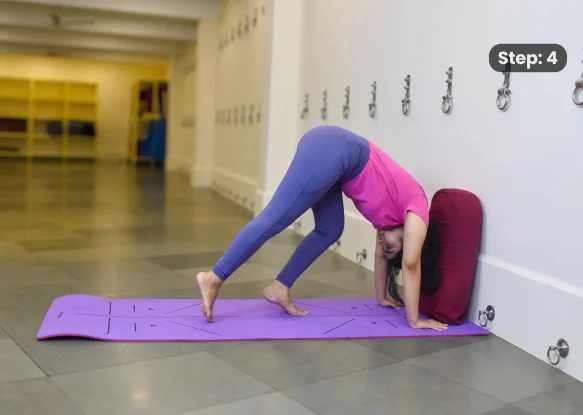
Walk your feet closer to your elbows, bringing your hips over your shoulders.
Lift one leg towards the ceiling, keeping it straight and strong.
Engage your core and prepare to kick up into Handstand.
Kick your lifted leg up towards the wall, using a small hop with your grounded foot to lift your other leg off the ground.
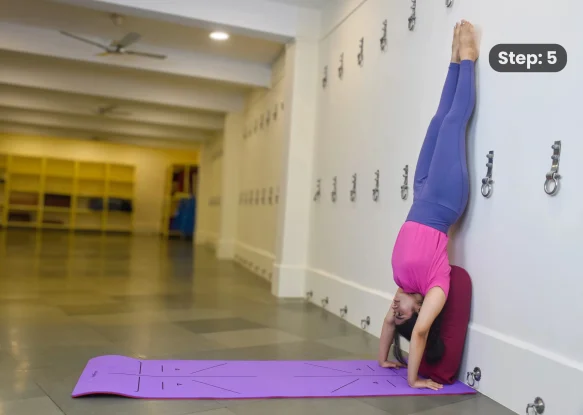
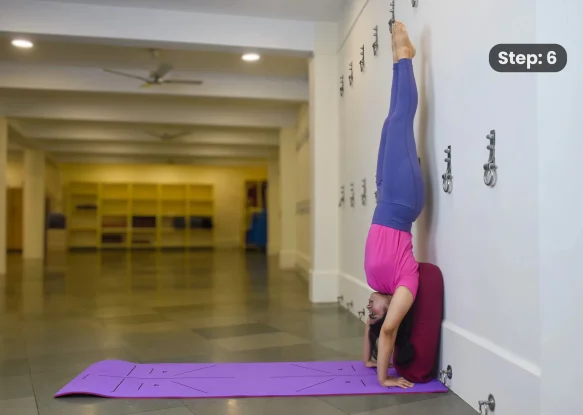
Use the bolster as a reference point to keep your body aligned and prevent over-arching your back.
Actively press through your hands and extend your shoulders away from your ears.
Engage your core to maintain a straight line from your hands to your feet.
Once you are up, let your feet touch the wall gently for support.
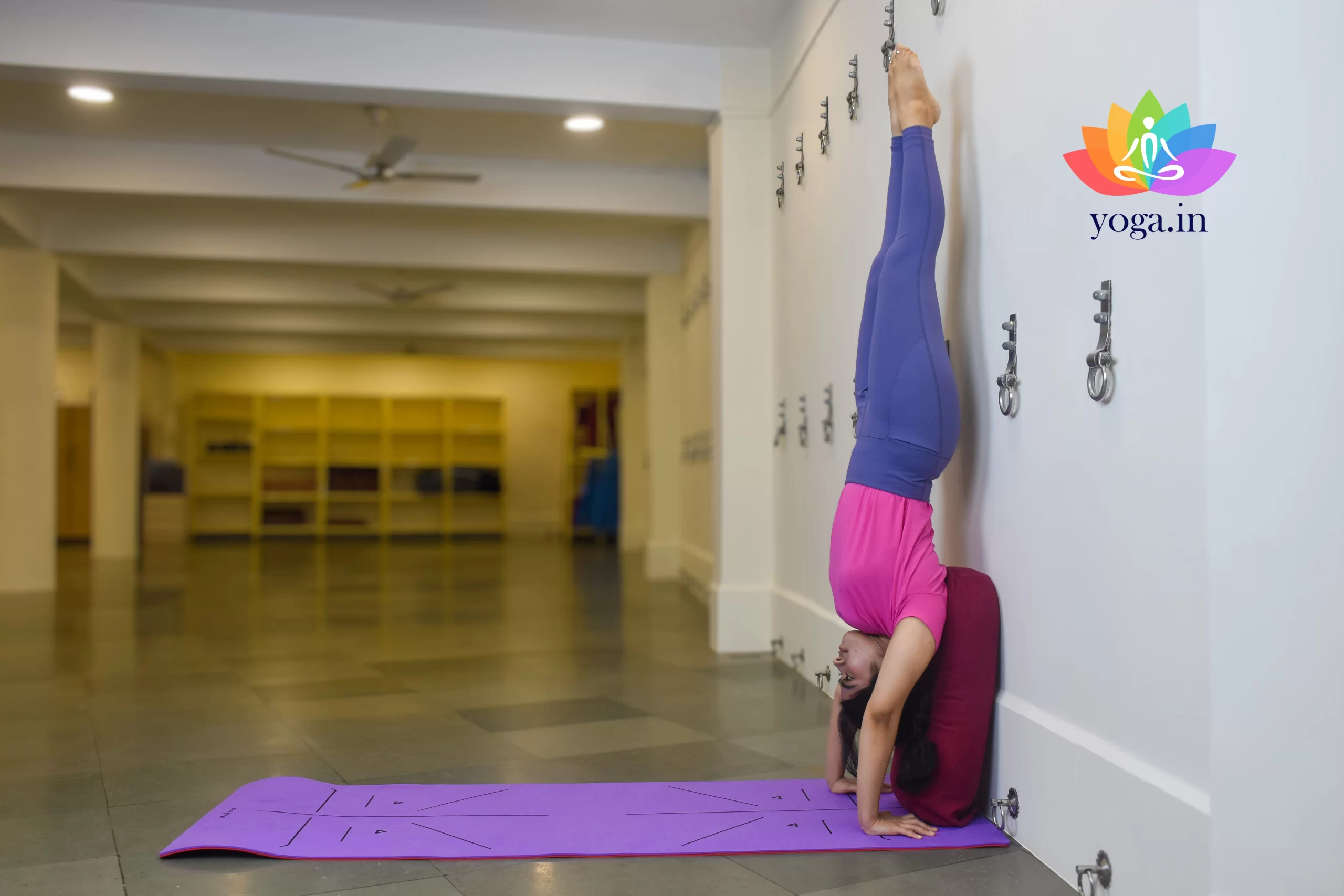
Use the wall to help you find balance and alignment. The bolster will support your lower back and prevent excessive arching.
Once stable, you can experiment with lifting one foot off the wall and then the other, engaging your core and legs to find balance.
Keep your legs straight and active, either together or slightly apart.
Breathe deeply and steadily, maintaining your alignment.
Hold the pose for a few breaths or as long as comfortable.
To come down, gently lower one leg at a time back to the mat.
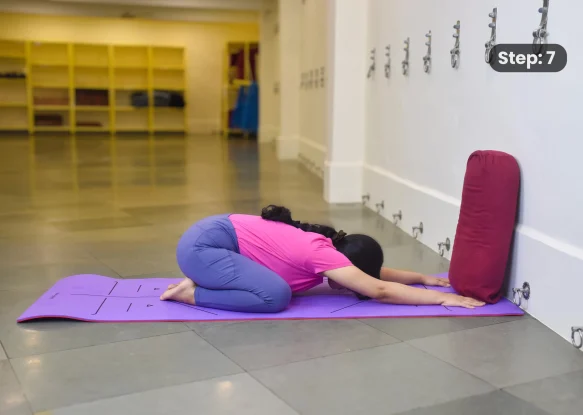
Rest in Child’s Pose (Balasana) or a seated position to recover.
Gradually come up by raising the hands up & slowly release them beside the body.
Place your hands shoulder-width apart
Keep your wrists directly under your shoulders
Fully extend your shoulders, pushing them away from your ears
Engage your core muscles to maintain a neutral spine
Keep your legs straight and active
Maintain a neutral neck position
The lower back is excessively arched, leading to a banana-shaped handstand
The shoulders are not fully extended, causing the body to lean forward or collapse
The elbows are bent, causing instability in the pose
The hands are placed too close together or too far apart, affecting balance and alignment
The head is hanging down or lifting, causing misalignment in the neck and spine
Avoid in case of Shoulder, Wrist, or Elbow Injuries
Avoid in high blood pressure
Avoid in case of glaucoma or retinal issues
Avoid during Pregnancy
Avoid in osteoporosis or having low bone density
The Sanskrit name is derived from Vira
The Sanskrit name is derived from vira
The Sanskrit name is derived from Viparita
The Sanskrit name comes from the Utthita,
The name comes from the words उत्तान
Please login with social account to support this post.