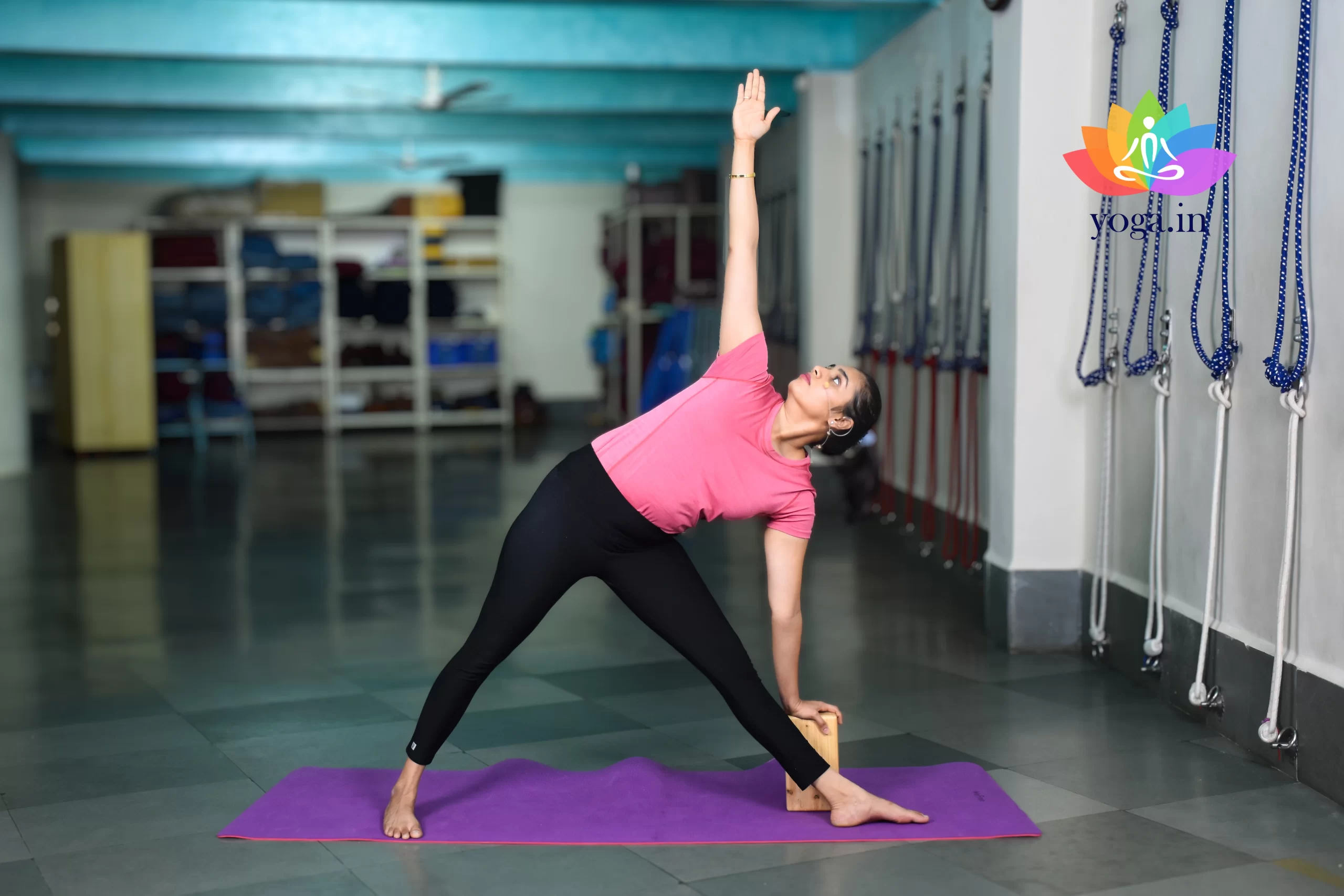
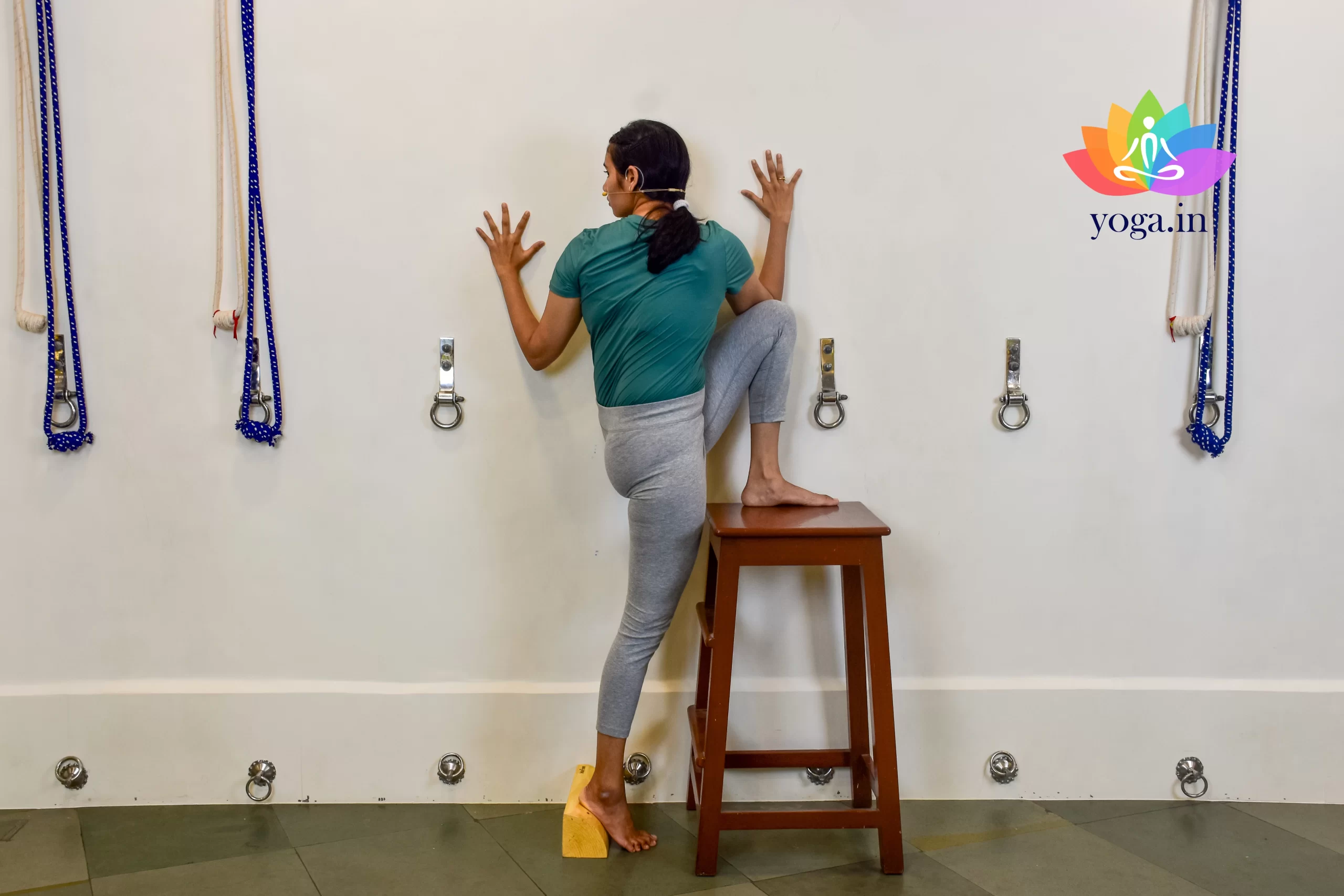
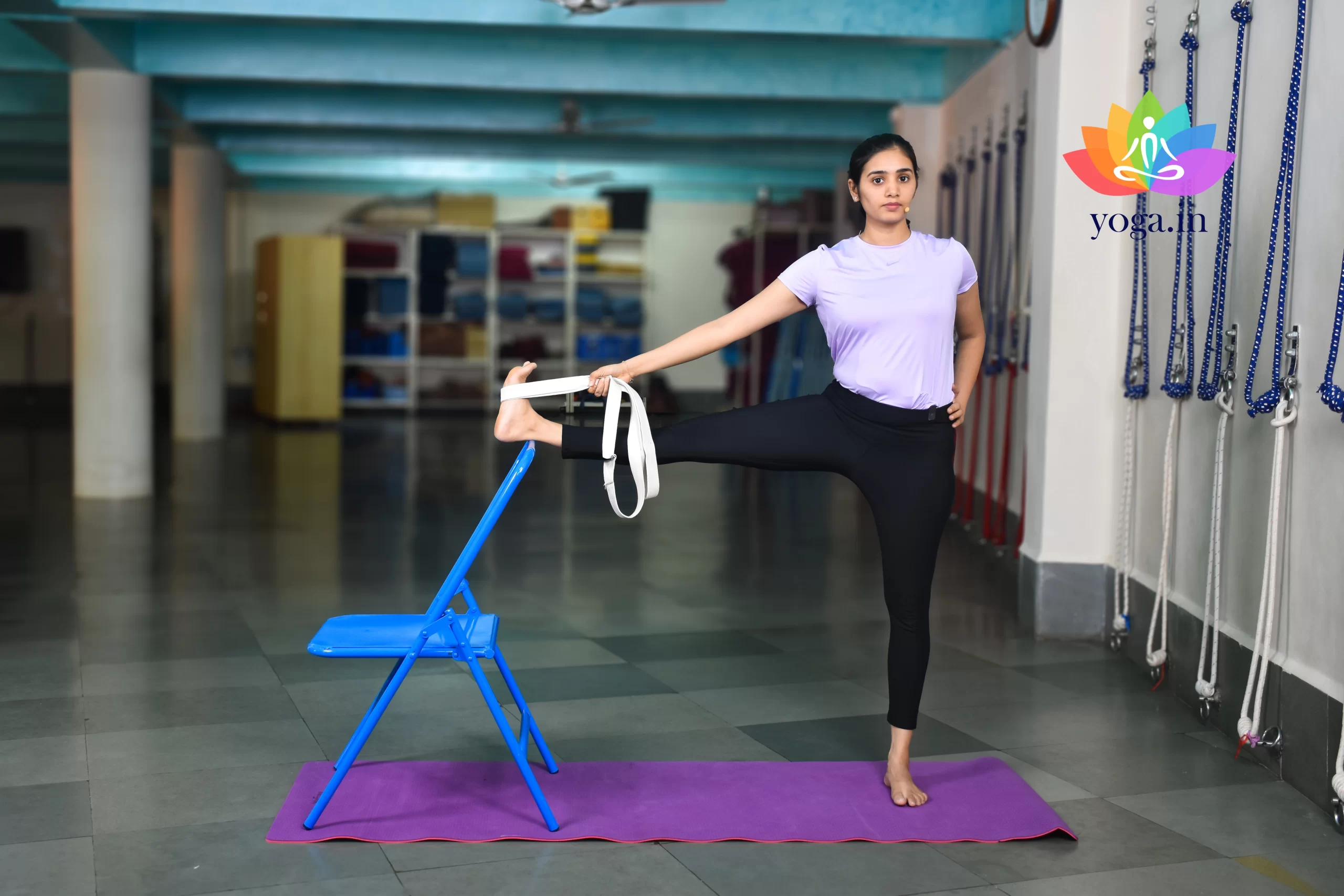
The Sanskrit name is derived from Utthita (उत्थिता), meaning “extended,” Parsva (प्रसव) meaning side, Kona (कोना) meaning angle and Asana (आसन) meaning posture or seat.
The Sanskrit name is derived from Utthita (उत्थिता), meaning “extended,” Parsva (प्रसव) meaning side, Kona (कोना) meaning angle and Asana (आसन) meaning posture or seat.
Steps to perform the Asana: Utthita Parsvakonasana (Therapy)
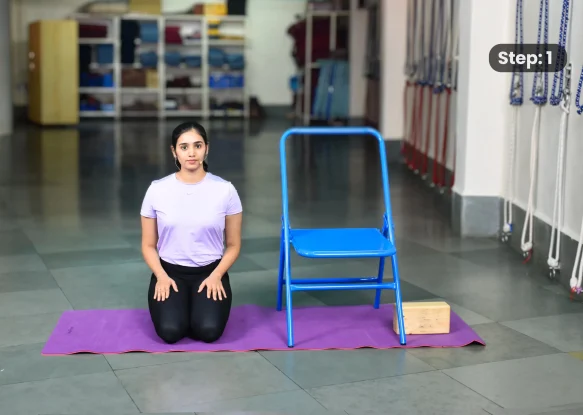
Begin by standing at the top of your yoga mat with your feet parallel to each other.
Place a yoga chair and block at the front of your mat.
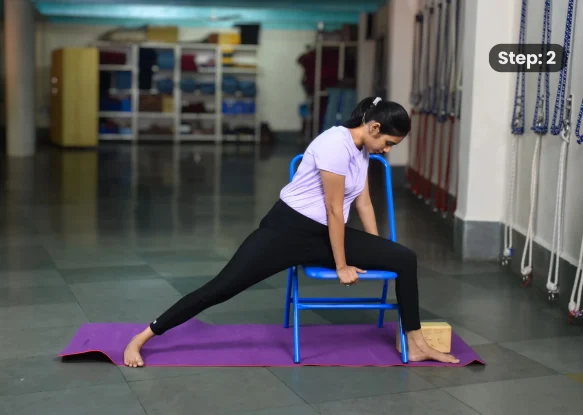
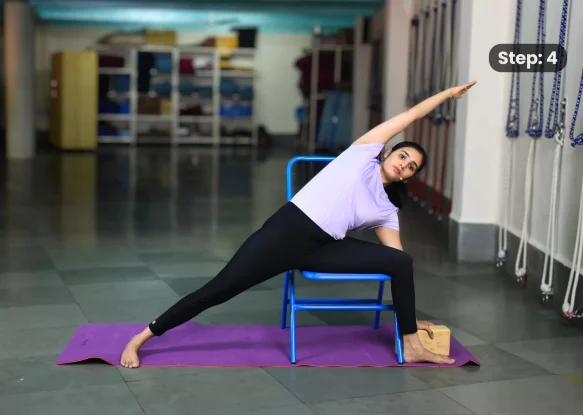
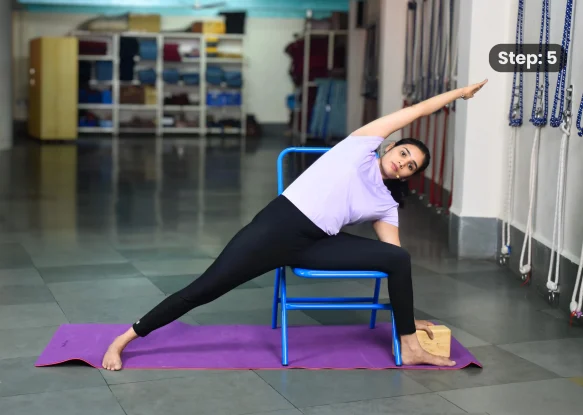
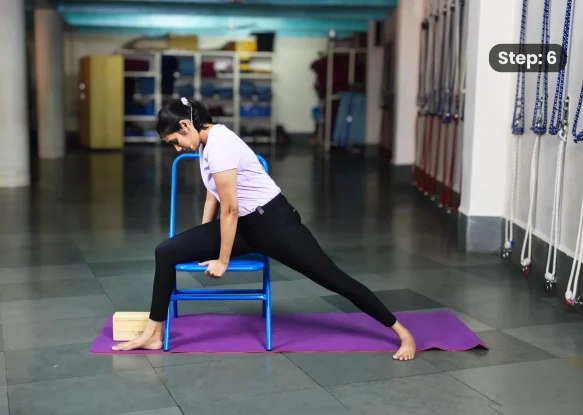
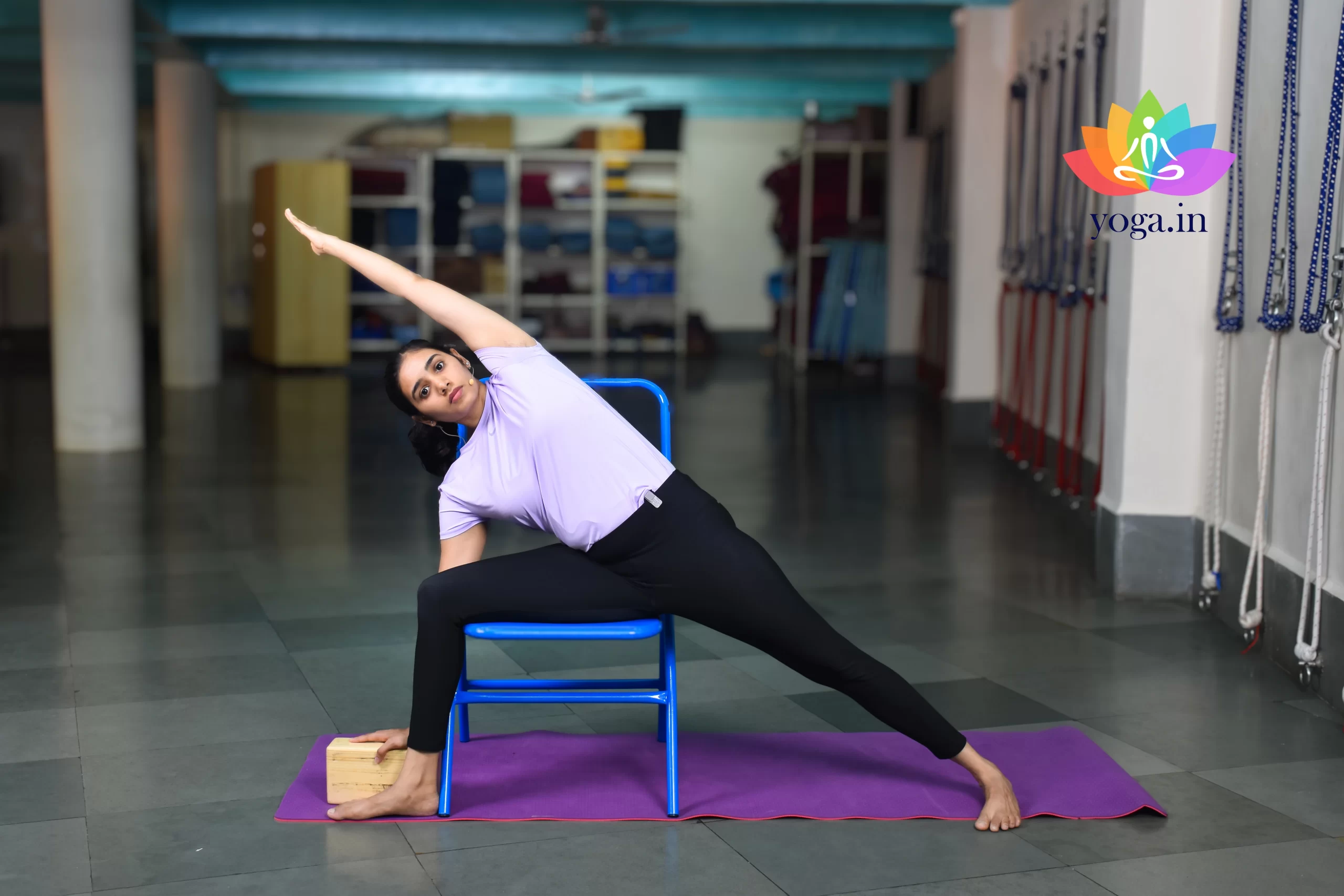
Sit on the chair. Slightly slide the left thigh on the chair seated sideways and stretch the right leg out of the chair seat stretching the knee and ankle.
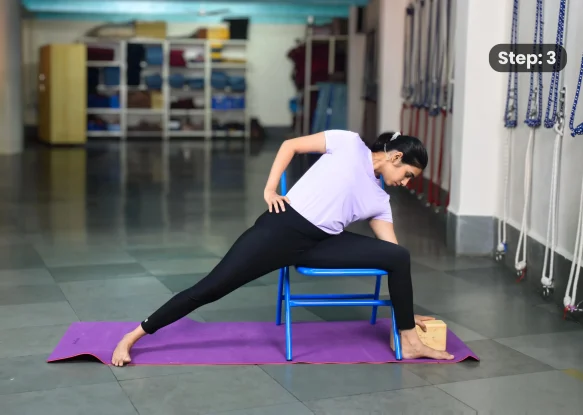
Now raise the right arm up above your head.
Place the left arm to rest on the block kept beside your left foot and look up.
If you have difficulty reaching the floor, place a yoga block under your right hand for support.
Keep your gaze soft and your breath steady, allowing yourself to find ease and stability in the pose.
Stay in the Pose for 30 to 40 Seconds.
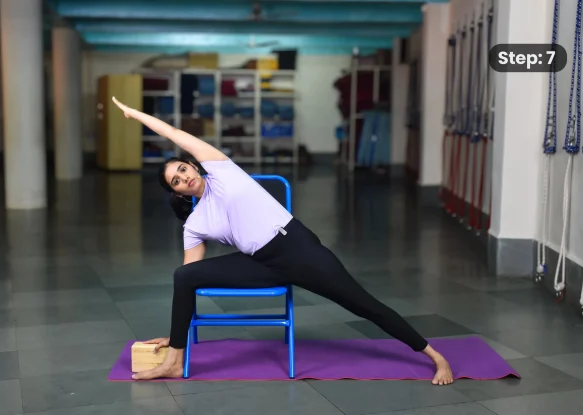
Now Release and repeat with the right leg on the chair.
The side bending of the torso while the hamstrings and lower back are stretched helps with building energy into the body.
While in this pose, feel the stretch at the hips, lower back, middle back, hamstrings and inner thighs.
Gradually come out of the pose & repeat the same with the other side.
Key Alignment Points
Engage your thigh muscles to stabilize your standing leg and support the weight of your body.
Imagine creating space between each vertebra as you elongate your spine.
Engage your core muscles to stabilize your torso and maintain balance in the pose.
Common Misalignments / (Mistakes)
Avoid bearing weight in the grounded hand or arm.
Watch for the bent knee pushing forward over the toes (past perpendicular to ground), to correct this, take a wider distance.