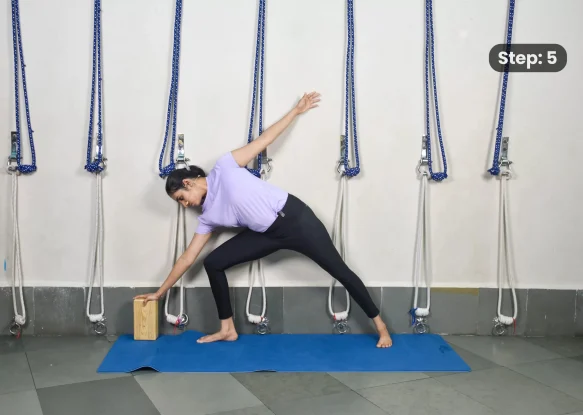
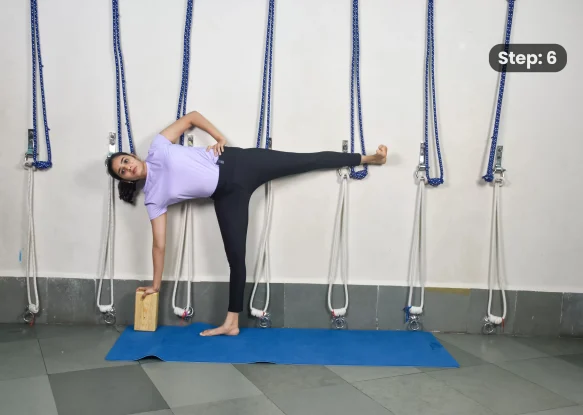
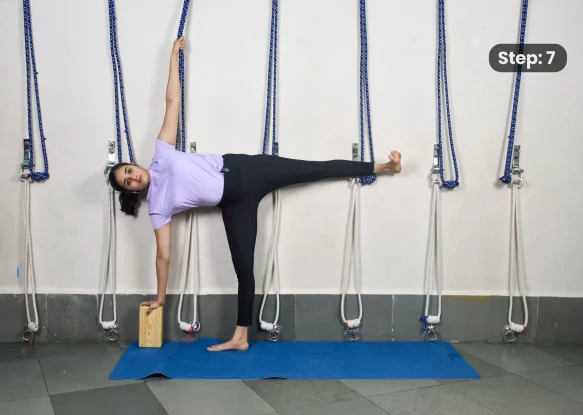
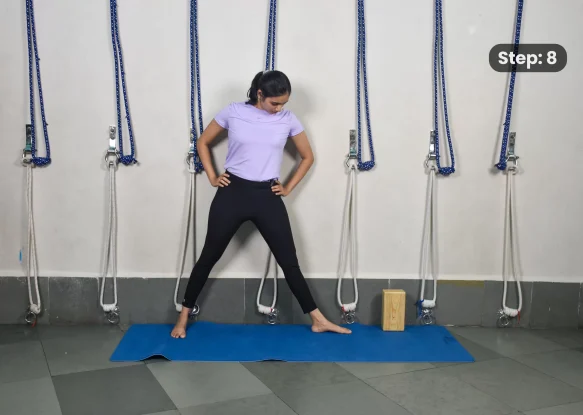
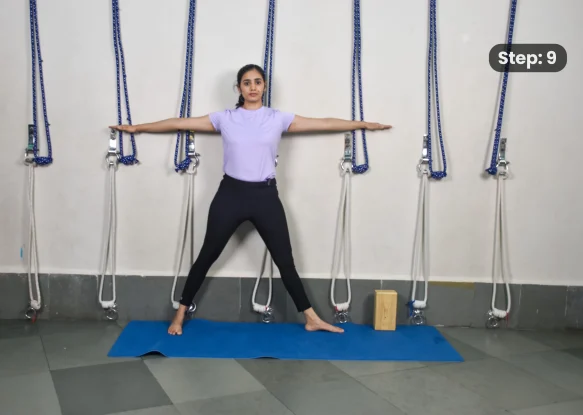
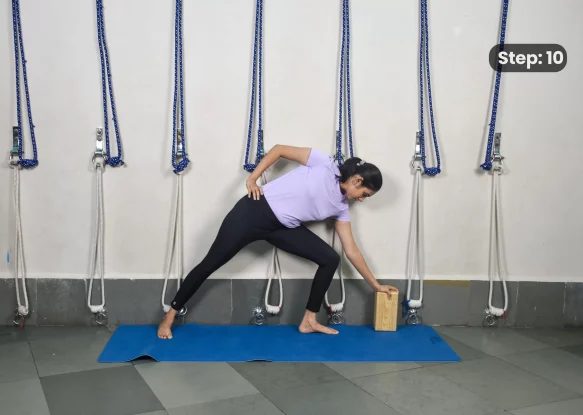
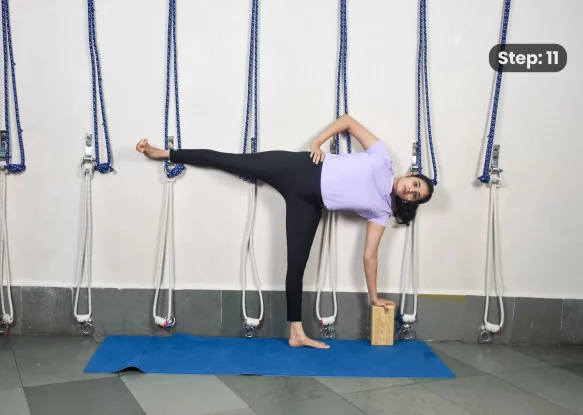
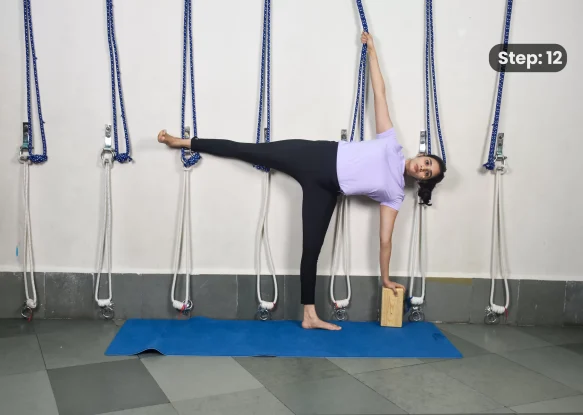
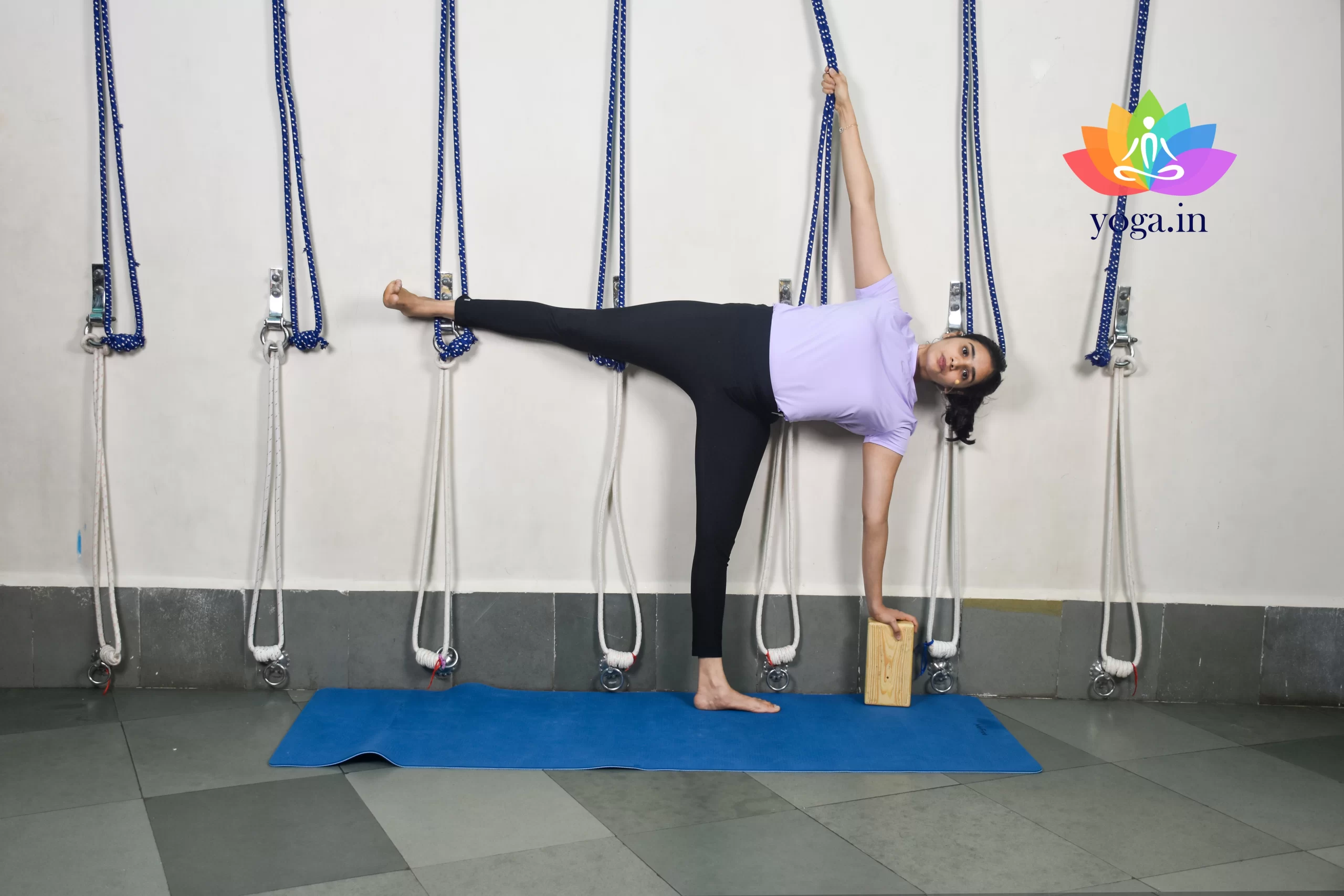
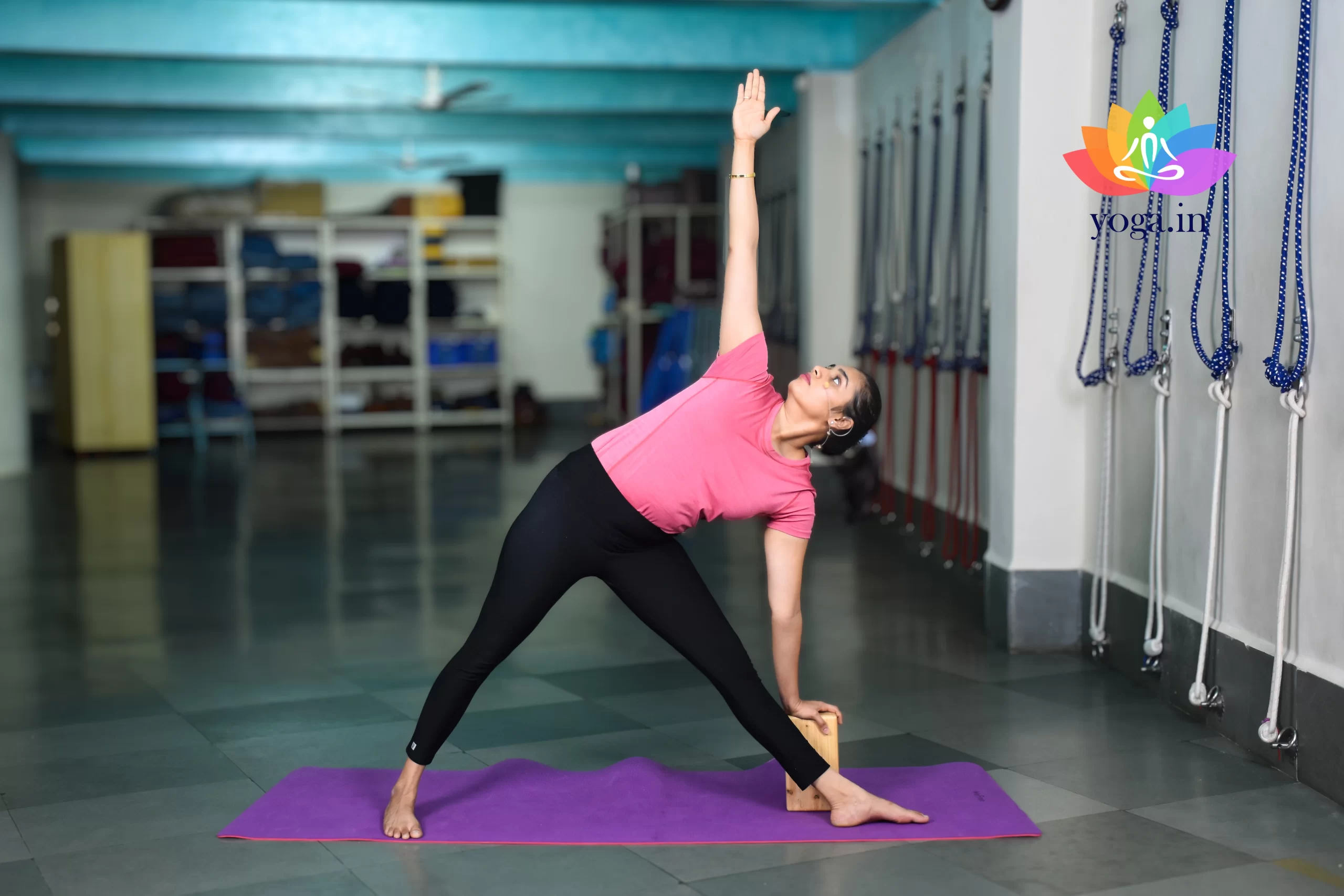
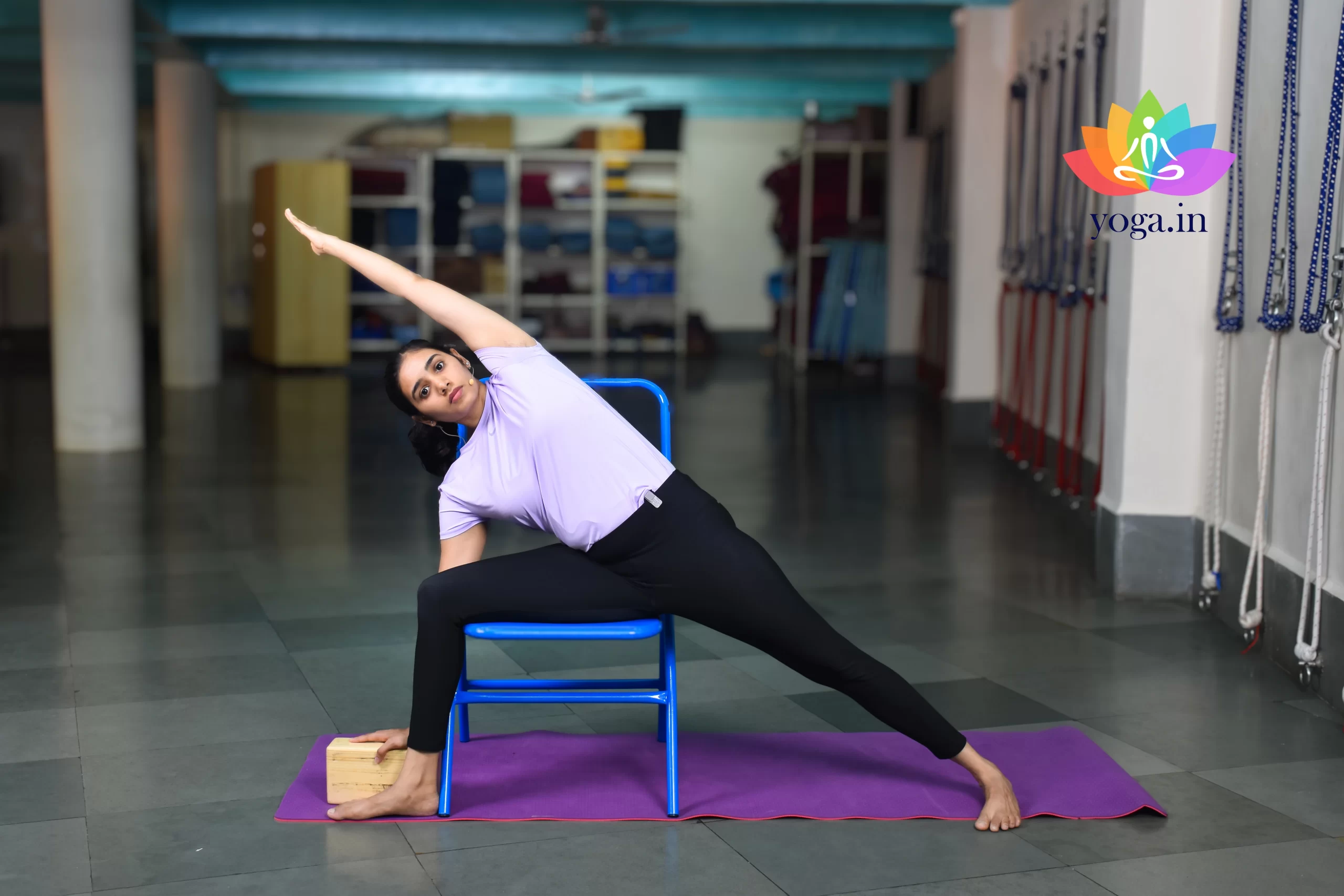
The Sanskrit name is derived from ardha (अर्ध) meaning half, chandra (चन्द्र) meaning moon and asana (आसन) meaning posture or seat.
Steps to perform the Asana: Ardha Chandrasana (Therapy)
Place your yoga mat on a flat, even surface.
Have a yoga rope and a yoga brick nearby.
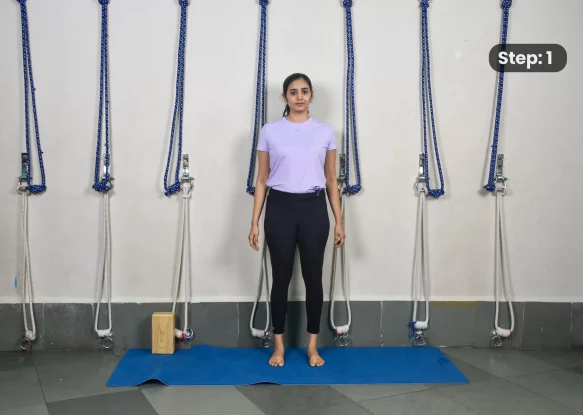
Stand at the top of yourmat with your feet hip-width apart and your arms relaxed at your sides.
Ground down through your feet, engaging your leg muscles.
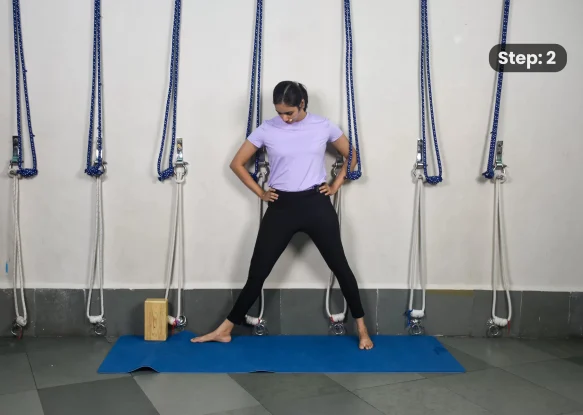
Step your left foot back, keeping it about 3-4 feet behind your right foot.
Turn your left foot out to about a 45-degree angle and keep your right foot pointing forward.
Bend your right knee, stacking it directly over your right ankle.
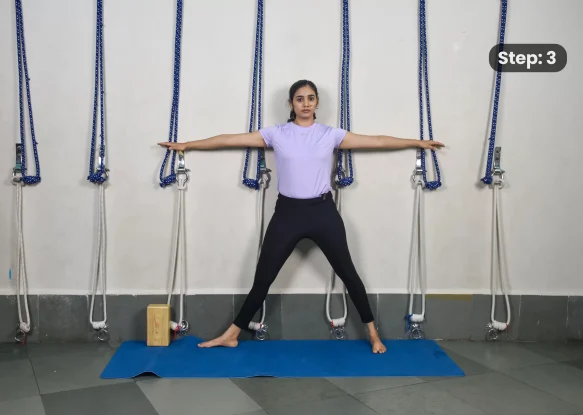
Extend your arms out parallel to the floor, reaching actively in opposite directions.
Hold one end of the rope in your right hand.
Lift your left foot off the ground, balancing on your right foot.
As you start to lean forward, use the rope for support by gently pulling on it with your right hand.
Begin to shift your weight onto your right foot.
Slowly lift your left leg behind you, keeping it parallel to the ground.
Engage your core muscles to help maintain your balance.
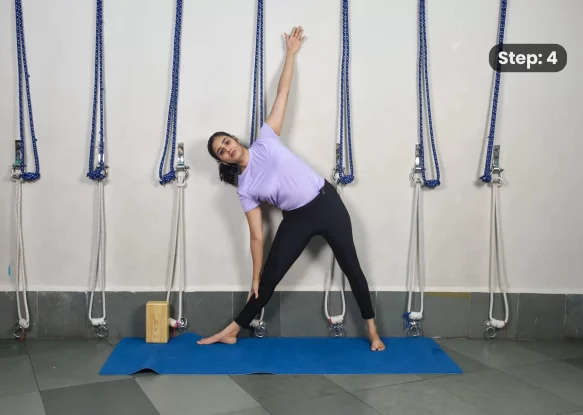
Reach your left arm up towards the ceiling, opening your chest towards the left side.
Place the brick under your right hand for additional support.
You can either keep your hand on the brick or use it to lightly press into for stability.
Find a focal point to help you maintain your balance.
Take slow, deep breaths, focusing on steady inhales and exhales.
Hold the pose for 5-10 breaths, or as long as it feels comfortable.
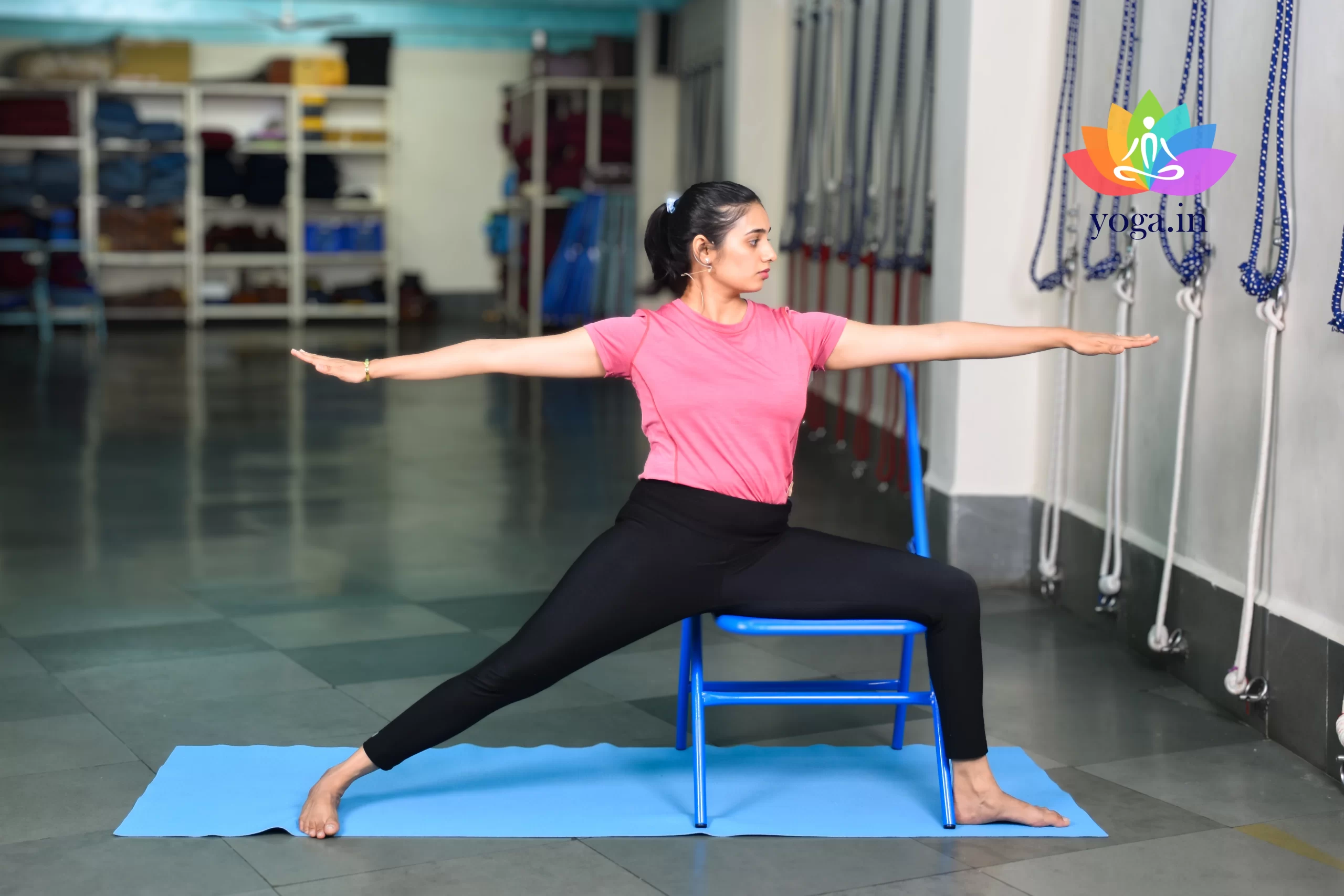
To release, gently lower your left leg back to the ground and come back to Virabhadrasana- II pose.
Repeat the pose on the opposite side.
Gently lower your raised back leg to the floor.
Align your hips and torso to face forward as you begin to straighten your standing leg.
Key Alignment Points
Square your hips towards the front of the mat. This may involve rotating your left hip slightly forward and your right hip slightly back to ensure alignment.
Press down firmly through your right foot, grounding down through the entire sole of the foot. Engage the muscles of the standing leg to maintain stability and balance.
Draw your navel towards your spine and engage your core muscles.
Common Misalignments / (Mistakes)
Avoid having your chest rotate toward the floor.
Pivoting the standing foot inward.
Letting the raised leg move behind the hip
Contraindication / Cautions
Avoid in case of injury and surgery
Avoid in case of injury in the arms, shoulders, rib cage, spine, hamstrings, ankle, foot or hip joint